Cosmetic Allergens: What They Are and How to Avoid Them
When your skin reacts to something you put on it—redness, itching, a rash that won’t go away—it’s rarely just bad luck. More often, it’s a reaction to cosmetic allergens, substances in personal care products that trigger immune responses in sensitive skin. Also known as contact allergens, these aren’t always listed clearly on labels, and they’re hiding in plain sight: in your face cream, shampoo, deodorant, even your sunscreen. Unlike food allergies, which hit fast and hard, cosmetic allergens creep in slowly. You might use a product for months before your skin finally says, ‘Enough.’
The biggest offenders? fragrance, a catch-all term for dozens of hidden chemicals added to make products smell nice. Also known as parfum, it’s in over 90% of skincare and makeup items—and it’s the number one cause of allergic contact dermatitis. Then there’s parabens, preservatives used to stop mold and bacteria from growing in creams and lotions. Also known as methylparaben or propylparaben, they’re cheap and effective—but for some people, they’re a recipe for irritation. Nickel, formaldehyde releasers, and certain dyes like FD&C Red No. 40 are also common triggers. These aren’t rare chemicals; they’re in the products you use every morning.
Here’s the thing: just because a product says ‘hypoallergenic’ or ‘for sensitive skin’ doesn’t mean it’s safe. Those terms aren’t regulated. A product can be labeled that way and still contain fragrance or preservatives that trigger reactions. The real trick is reading the ingredient list—not the marketing. Look for terms like ‘alcohol denat,’ ‘sodium lauryl sulfate,’ or ‘cocamidopropyl betaine.’ These aren’t always obvious, but they’re linked to irritation in studies.
If you’ve had a rash after using a new product, you’re not alone. About 1 in 5 adults has some form of contact allergy to cosmetics. Most don’t know why. They stop using the product, the rash fades, and they never connect the dots. But without identifying the allergen, you’ll keep running into the same problem—maybe with a different brand, same chemical.
The good news? You don’t need to give up skincare. You just need to know what to avoid. Patch testing can pinpoint your triggers. Simple swaps—like switching to fragrance-free, preservative-free, or mineral-based products—can make a huge difference. And if you’re on long-term medication or have a chronic condition like eczema or rosacea, cosmetic allergens can make things worse without you even realizing it.
Below, you’ll find real-world guides on how to spot hidden allergens, decode ingredient labels, and choose safer alternatives—without spending a fortune or giving up your routine. These aren’t theory pieces. They’re based on what people actually experience, what dermatologists recommend, and what the science shows works. Whether you’re dealing with a stubborn rash, redness after makeup, or just want to avoid future reactions, you’ll find practical steps here—not guesses.
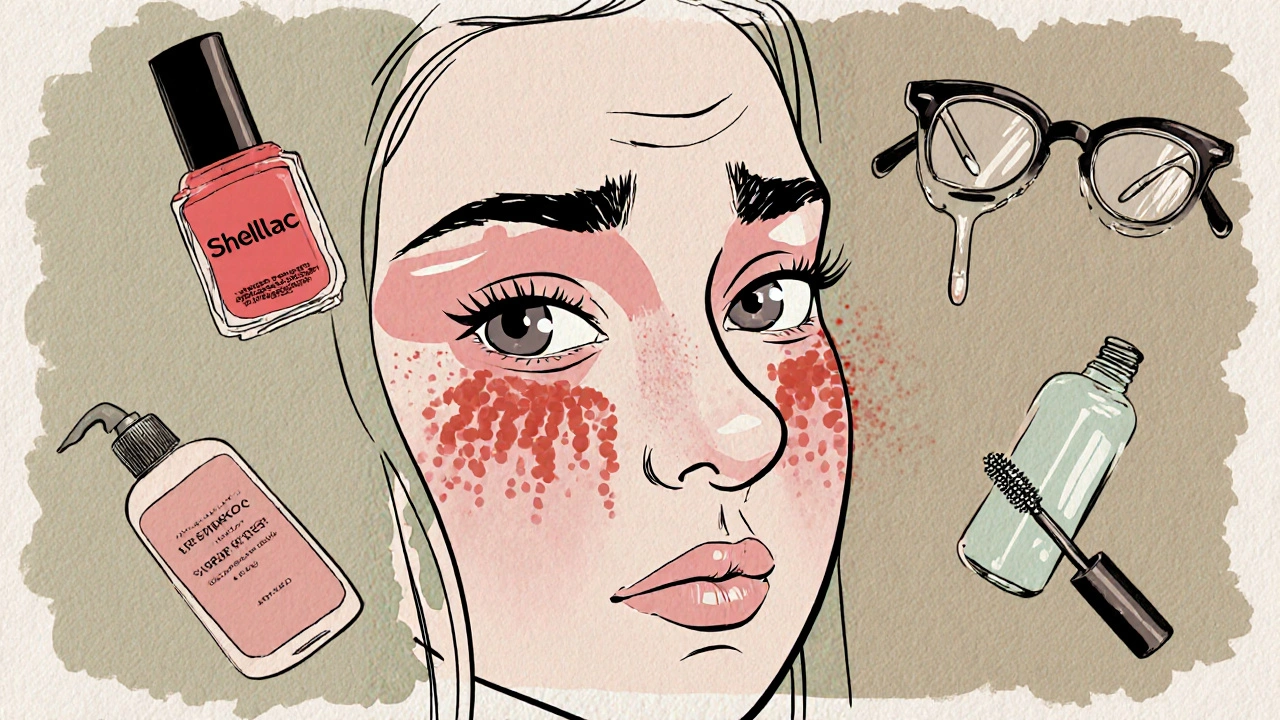
Eyelid dermatitis is often caused by hidden allergens in cosmetics, nail polish, and hair products. Learn the top triggers, why patch testing is essential, and how to safely treat and prevent recurring rashes.