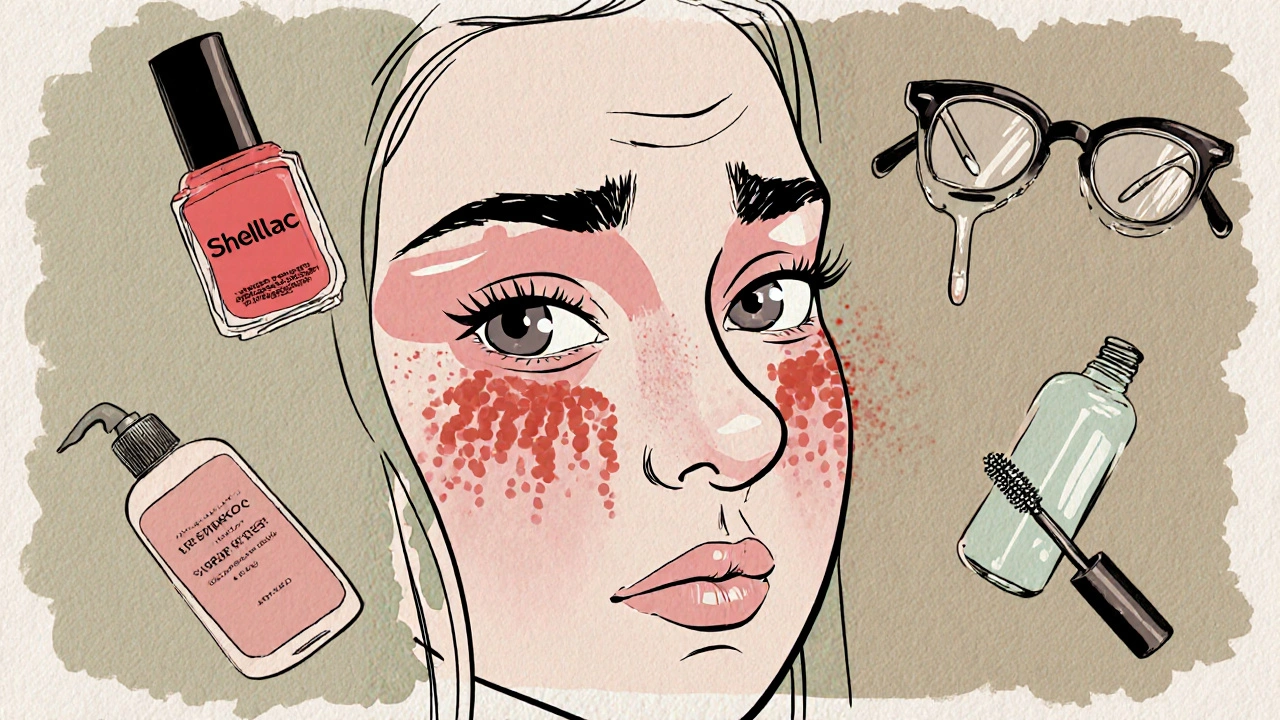
Eyelid Dermatitis: Causes, Triggers, and What Actually Helps
When your eyelids get red, itchy, or flaky, it’s not just annoying—it can make you squint, rub your eyes, and feel like something’s wrong inside. This is eyelid dermatitis, a common skin inflammation affecting the delicate skin around the eyes. Also known as periorbital dermatitis, it’s not contagious, but it can linger for weeks if you don’t know what’s causing it. The skin around your eyes is thinner than anywhere else on your face, which means it reacts faster to irritants, allergens, or even your own skincare routine.
Contact dermatitis, a reaction to something touching your skin is the most frequent culprit. That new mascara? The fragrance in your face wash? The nickel in your eyeglass frames? All of them can trigger it. Then there’s atopic dermatitis, a chronic condition often linked to eczema and allergies, which can flare up on the eyelids too, especially if you’ve had dry skin or asthma since childhood. These aren’t the same thing, but they look similar—and that’s why people mistake one for the other and use the wrong treatment.
Most over-the-counter creams make it worse. Steroid creams might give quick relief, but using them too long on your eyelids can cause glaucoma or cataracts. And if you’re using eye drops for allergies, some preservatives like benzalkonium chloride can irritate the skin even more. The real fix isn’t stronger medicine—it’s identifying and removing the trigger. A patch test from a dermatologist can show exactly what you’re reacting to, whether it’s a cosmetic ingredient, a metal, or even your own hair dye.
Simple changes often help more than pills: switch to fragrance-free, hypoallergenic products; avoid rubbing your eyes; wash your face with lukewarm water and a gentle cleanser; and keep your hands clean. If you wear contact lenses, make sure your solution isn’t the problem. Even your pillowcase—especially if it’s not washed weekly—can harbor dust mites or bacteria that settle on your eyelids.
What you’ll find below aren’t generic tips. These are real stories and science-backed fixes from people who’ve been there—how one person stopped the itching by ditching their eyelash serum, how another found relief after switching from a mineral sunscreen to a zinc oxide formula without titanium dioxide, and why some prescription ointments work better than others when used correctly. No fluff. No marketing. Just what actually works when your eyelids are on fire.
Eyelid dermatitis is often caused by hidden allergens in cosmetics, nail polish, and hair products. Learn the top triggers, why patch testing is essential, and how to safely treat and prevent recurring rashes.