Allergic Contact Dermatitis: Causes, Triggers, and How to Manage It
When your skin turns red, itchy, and flaky after touching something harmless—like your watch, shampoo, or even your own lotion—you’re likely dealing with allergic contact dermatitis, a delayed immune reaction to a substance that touches your skin. Also known as allergic eczema, it’s not just a rash—it’s your body’s way of saying, "I recognize this, and I’m fighting it." Unlike irritant contact dermatitis, which happens to anyone with enough exposure, allergic contact dermatitis only affects people who’ve become sensitized to a specific trigger over time.
This condition is behind many cases of "mysterious" rashes. One person breaks out after wearing earrings—turns out it’s nickel. Another gets a line of blisters along their wrist from a new watchband. Or maybe it’s the fragrance in their hand soap, the latex in gloves, or even the preservatives in their moisturizer. Patch testing, a simple clinical procedure where small amounts of common allergens are applied to the skin to see which cause a reaction is the gold standard for figuring out what’s triggering your flare-ups. It’s not guesswork—it’s science you can trust.
Once you know the trigger, avoiding it is the first step. But sometimes you can’t avoid everything. That’s where topical steroids, medications applied directly to the skin to reduce inflammation and itching come in. They’re not a cure, but they’re often the fastest way to calm down a bad flare. For long-term management, moisturizers with ceramides help repair your skin barrier, making it harder for allergens to sneak in. And if you’re using over-the-counter creams, watch out for hidden allergens—tea tree oil, lanolin, and even some natural extracts can be culprits.
What you’ll find in these posts isn’t just theory. Real people have dealt with rashes from cosmetics, work gloves, hair dyes, and even dental fillings. You’ll see how allergic contact dermatitis connects to everyday products, what doctors look for during diagnosis, and how simple changes—like switching brands or reading labels—can stop the cycle. No fluff. No hype. Just what works.
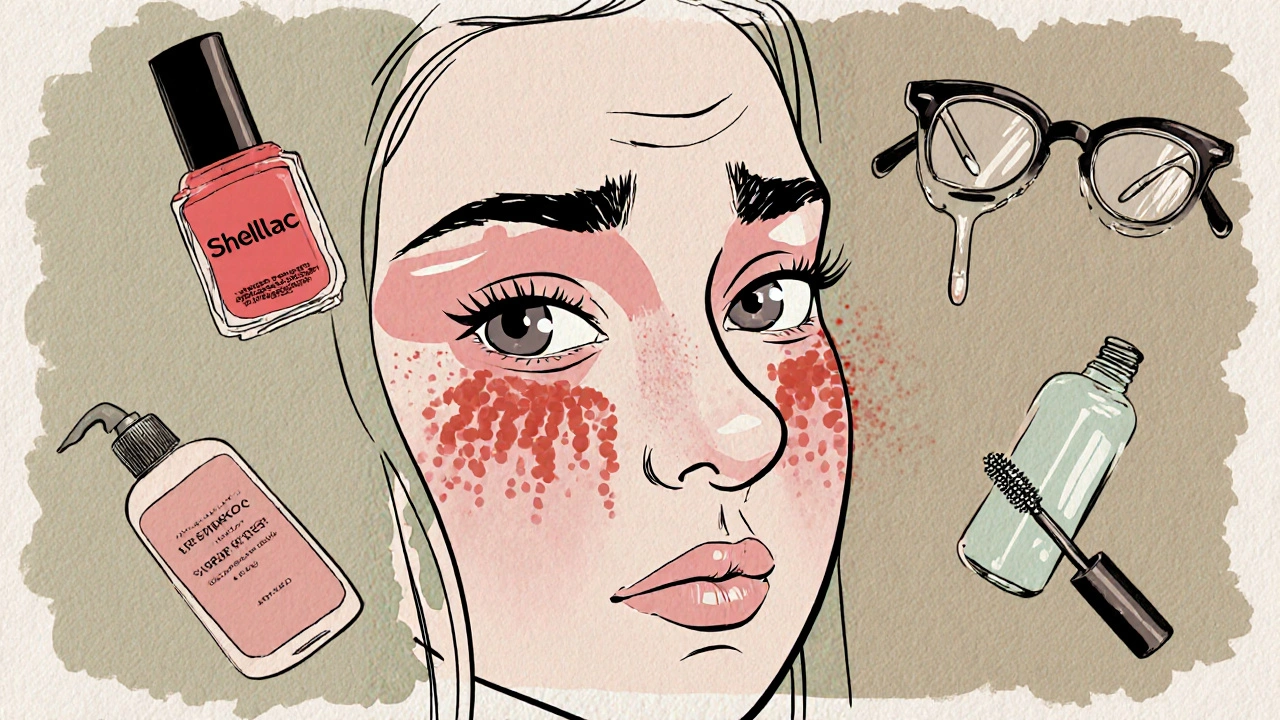
Eyelid dermatitis is often caused by hidden allergens in cosmetics, nail polish, and hair products. Learn the top triggers, why patch testing is essential, and how to safely treat and prevent recurring rashes.