

Diarrhea isn’t just a bad day at the toilet. It’s a symptom that can signal anything from a stomach bug to a life-threatening condition. The difference between acute and chronic diarrhea isn’t just about how long it lasts-it changes everything about how you treat it, what tests you need, and whether you’re at risk for something serious.
What Exactly Is Diarrhea?
Doctors define diarrhea as three or more loose or watery stools in a single day. It’s not about frequency alone-it’s about consistency. If your stool is mushy, watery, or doesn’t hold its shape, you’re dealing with diarrhea. The volume matters too: anything over 200-300 grams per day counts. But in real life, no one weighs their poop. You just know when it’s wrong.
Most people think diarrhea means a quick, painful episode that clears up in a few days. That’s true for most cases. But for about 1 in 20 adults, it’s something persistent, confusing, and often dismissed. The key is understanding the timeline: acute means 14 days or less. Chronic means more than 30 days. There’s also a middle zone-persistent diarrhea-lasting 14 to 30 days. That’s the gray area where people often get stuck, unsure if they should push through or see a doctor.
Acute Diarrhea: The Common, Usually Harmless Type
Think of acute diarrhea as your body’s emergency response. It’s usually caused by a virus-rotavirus, norovirus, adenovirus. In developed countries, viruses cause 70-80% of cases. Bacteria like Salmonella, Campylobacter, or E. coli make up 10-20%. Parasites like Giardia are rarer but still common after travel or contaminated water.
It hits fast. One day you’re fine, the next you’re running to the bathroom every hour. You might have cramps, nausea, or a low fever. Most people feel better in 3-5 days. About 90% of cases resolve on their own without treatment.
So what should you do? Forget the old BRAT diet (bananas, rice, applesauce, toast). Experts stopped recommending it years ago. It doesn’t help recovery-it just gives you bland, low-nutrient food. Instead, eat normally as soon as you can. Your gut needs fuel to heal. Drink fluids. Not just water. Use an oral rehydration solution (ORS). The WHO formula has the right mix: 2.6g sodium, 2.9g citrate, 1.5g potassium, and 13.5g glucose per liter of water. It’s not fancy, but it reduces death risk from dehydration by 93% in high-risk areas.
Antibiotics? Almost never. They don’t help most viral cases and can make things worse by killing good gut bacteria. Only use them if you have bloody diarrhea, high fever, or you’re very young, very old, or immunocompromised. Even then, it’s a doctor’s call.
Chronic Diarrhea: When It Won’t Go Away
When diarrhea lasts more than 30 days, it’s rarely an infection. The body isn’t fighting off a bug-it’s reacting to something deeper. About 80% of chronic cases have non-infectious causes. The big ones:
- Inflammatory Bowel Disease (IBD) - Crohn’s disease or ulcerative colitis. Often comes with weight loss, blood in stool, and nighttime symptoms.
- Irritable Bowel Syndrome (IBS-D) - Functional, not structural. No inflammation, no damage. But symptoms are real: urgency, bloating, diarrhea triggered by food or stress.
- Bile Acid Malabsorption - Common after gallbladder removal. Up to 30% of those patients develop chronic diarrhea.
- Medication Side Effects - Antibiotics, metformin, laxatives, even some heart meds. About 7% of people on long-term meds get diarrhea from them.
- Celiac Disease - Still massively underdiagnosed. 40% of cases are initially mistaken for IBS.
Here’s the problem: people wait too long. A 2022 survey found 68% of chronic diarrhea patients waited six months or longer before getting a diagnosis. They saw three or more doctors. They were told it was stress. They were told to eat more fiber. They were told to take loperamide and live with it.
But chronic diarrhea isn’t something you just manage. It needs investigation. Blood tests (CBC, CRP, thyroid function), stool tests (calprotectin to check for inflammation), and often a colonoscopy. Missing celiac disease, IBD, or even colon cancer because you assumed it was IBS? That’s dangerous.
Antimotility Drugs: Loperamide and Beyond
When you need quick relief, antimotility drugs are the go-to. Loperamide (Imodium) is the most common. It slows down your gut so stool doesn’t rush through. It works. For acute diarrhea, start with 4mg after the first loose stool, then 2mg after each subsequent one. Don’t exceed 16mg in 24 hours.
For chronic diarrhea, it’s different. Many patients with IBS-D or bile acid malabsorption take it daily. Some need 8mg or more. That’s where the danger starts.
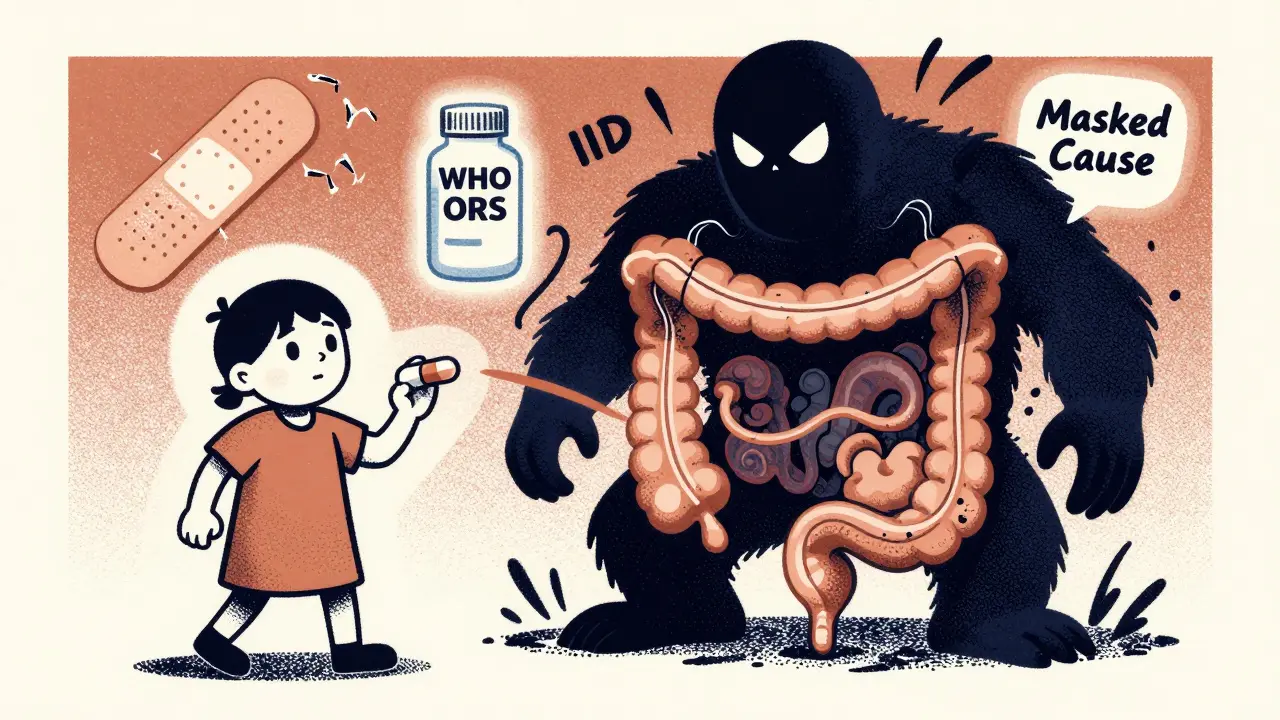
The FDA has warned about loperamide abuse. Between 2011 and 2021, there were over 1,200 reports of misuse. Fifty-seven people died. Why? Because some people take huge doses to get high-loperamide can cross the blood-brain barrier at high levels and act like an opioid. Others take it just to avoid symptoms, not realizing they’re masking something serious.
And it’s not just abuse. Even at normal doses, loperamide can cause constipation (15-20% of users) or abdominal pain (10%). It’s also risky in kids under 2. In children with Shiga-toxin E. coli (like from undercooked meat), loperamide can increase the chance of hemolytic uremic syndrome-a rare but deadly kidney failure.
There’s a rule doctors follow: Never use loperamide if you have a fever above 38.5°C or bloody stools. That’s a red flag for infection like C. difficile or IBD. Slowing the gut in those cases traps toxins and makes inflammation worse.
Bismuth subsalicylate (Pepto-Bismol) is another option. It’s weaker than loperamide but has antimicrobial effects. Good for traveler’s diarrhea. But avoid it if you’re allergic to aspirin or on blood thinners.
When to See a Doctor
You don’t need to see a doctor for every bout of diarrhea. But here are the clear warning signs:
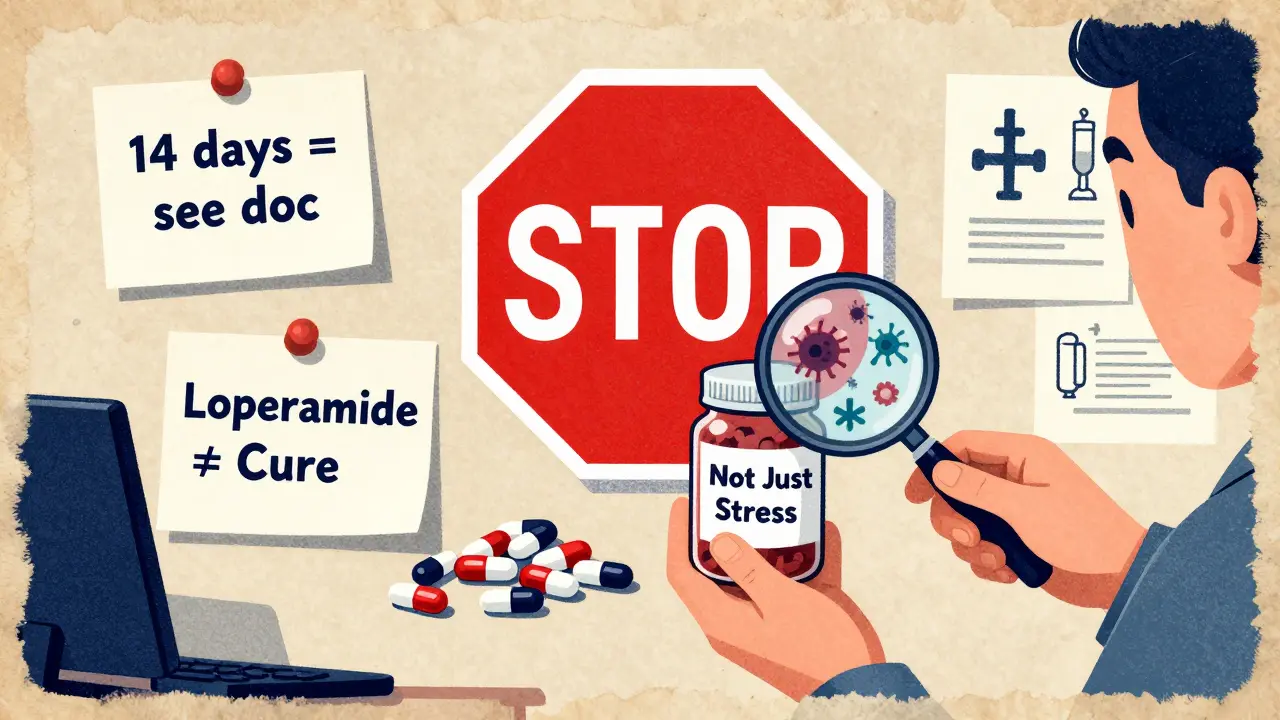
- Diarrhea lasting more than 14 days
- Weight loss without trying
- Bloody or black, tarry stools
- High fever (over 38.5°C)
- Severe abdominal pain
- Nocturnal diarrhea (waking up at night to go)
- Family history of IBD or colon cancer
If you’re taking loperamide daily for more than a few weeks, you should get evaluated. You might be treating symptoms while ignoring the cause.
What’s New in Diarrhea Care
Things are changing. In May 2023, the FDA approved a new extended-release form of loperamide designed to reduce abuse. It’s harder to crush or overdose on.
The WHO updated its ORS formula in 2022 with lower sodium and glucose. It cuts stool volume by 25% compared to the old version.
For IBS-D, the low-FODMAP diet is now a gold standard. But it’s not a quick fix. It takes 6-8 weeks under a dietitian’s guidance. About half to three-quarters of people with IBS-D see major improvement.
And in the future? Doctors are moving toward personalized treatment. Blood and stool biomarkers will soon help match patients to the right therapy-whether it’s loperamide, bile acid binders, or something entirely new.
Final Thoughts
Diarrhea isn’t a nuisance to be ignored. Acute diarrhea? Treat it simply: hydrate, eat normally, avoid unnecessary drugs. Chronic diarrhea? Don’t accept it. It’s not normal. It’s a signal. And loperamide? It’s a tool-not a cure. Using it without understanding why you have diarrhea is like putting a bandage on a broken bone.
The real goal isn’t to stop the diarrhea-it’s to find out why it’s happening.

