
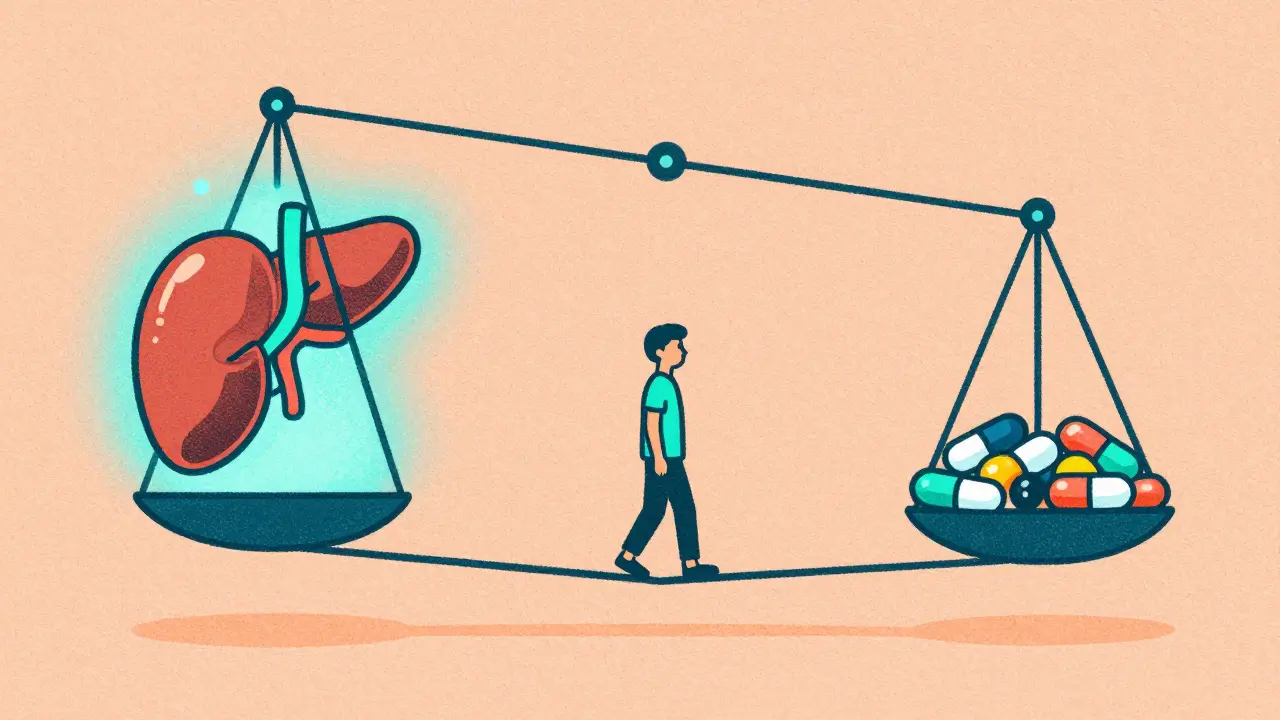
Getting a transplant is a life-changing event, but the surgery is only half the battle. The real challenge begins with the lifelong commitment to immunosuppressants. These drugs are the only thing standing between your new organ and your own immune system, which sees the transplant as a foreign invader and wants to destroy it. While these medications are essential, they aren't without risks. The goal is a delicate balancing act: keeping the dose high enough to prevent graft rejection, but low enough to avoid severe toxicity and opportunistic infections.
If you've recently had a transplant or are supporting someone who has, you know that the pharmacy list can feel overwhelming. From the initial "induction" phase to long-term maintenance, the strategy changes over time. Understanding how these drugs work-and where the danger zones are-is the best way to ensure the transplant lasts as long as possible.
The Essential Guide to Immunosuppressant Classes
Not all anti-rejection drugs do the same thing. Doctors usually prescribe a "cocktail" of different classes because attacking the immune system from multiple angles allows them to use lower doses of each individual drug, which reduces side effects.
Calcineurin Inhibitors (CNIs) is a class of potent medications, including cyclosporine and tacrolimus, that block T-cell activation to stop the body from attacking the graft. These are the heavy hitters of maintenance therapy. However, they are notorious for being hard on the kidneys. In fact, about 30-50% of long-term users develop chronic kidney disease due to the nephrotoxic nature of these drugs.
Corticosteroids, such as prednisone, are broad-spectrum anti-inflammatory agents used to suppress a wide range of immune responses. While effective, long-term use is a double-edged sword. It's common to see 10-40% of transplant recipients develop steroid-induced diabetes, and nearly half of long-term users deal with osteoporosis.
Antiproliferative Agents, including mycophenolate mofetil (MMF) and azathioprine, work by inhibiting the synthesis of nucleotides, effectively stopping the rapid multiplication of immune cells. These are often better tolerated than steroids but can cause significant gastrointestinal distress-think abdominal pain and diarrhea-in up to 50% of patients.
mTOR Inhibitors, such as sirolimus and everolimus, target the mammalian target of rapamycin to inhibit T-cell proliferation. These are often used as alternatives for people who can't handle CNIs because they are less toxic to the kidneys. However, they come with serious warnings; everolimus, for instance, carries a black box warning for kidney thrombosis risk in the first 30 days post-transplant.
| Drug Class | Primary Use | Key Side Effect | Risk Level for Kidneys |
|---|---|---|---|
| CNIs (Tacrolimus) | Maintenance | Nephrotoxicity | High |
| Corticosteroids | Inflammation/Rejection | Diabetes & Bone Loss | Low |
| Antiproliferatives | Cell multiplication | GI Distress/Neutropenia | Low |
| mTOR Inhibitors | Alternative Maintenance | Delayed Wound Healing | Low to Moderate |
The Danger of Non-Adherence
Missing a dose of a blood pressure pill is a problem; missing a dose of a transplant medication can be a catastrophe. Non-adherence is one of the biggest threats to graft survival. In a study of 161 renal transplant patients, a staggering 55% were classified as non-adherent. This isn't usually because patients don't care; it's because the regimens are exhausting.
When you miss doses, you create "windows of vulnerability." For heart transplant patients, non-adherence is linked to a 3.5-fold increase in transplant coronary artery disease. The risks vary by organ: heart and lung grafts can reject within days or weeks, while liver grafts might take months or years. This means the urgency of strict adherence is highest in the immediate post-op period.
If you find yourself struggling to keep up, you aren't alone. Complex dosing schedules are cited by 40% of struggling patients. Moving to simplified regimens, such as once-daily dosing of tacrolimus or using mobile app reminders, has been shown to improve adherence by 15-25%.
Managing the "Infection Gap"
Because these drugs turn down your immune system to protect the organ, they also turn down your defense against everything else. You are essentially living in a state of induced immunodeficiency. This makes you a prime target for opportunistic infections that a healthy person would easily fight off.
One of the most common threats is cytomegalovirus (CMV), which can affect up to 70% of recipients who are seronegative but receive an organ from a seropositive donor. To fight this, doctors typically prescribe antimicrobial prophylaxis for the first 3-6 months. This isn't optional-it's a critical safety net.
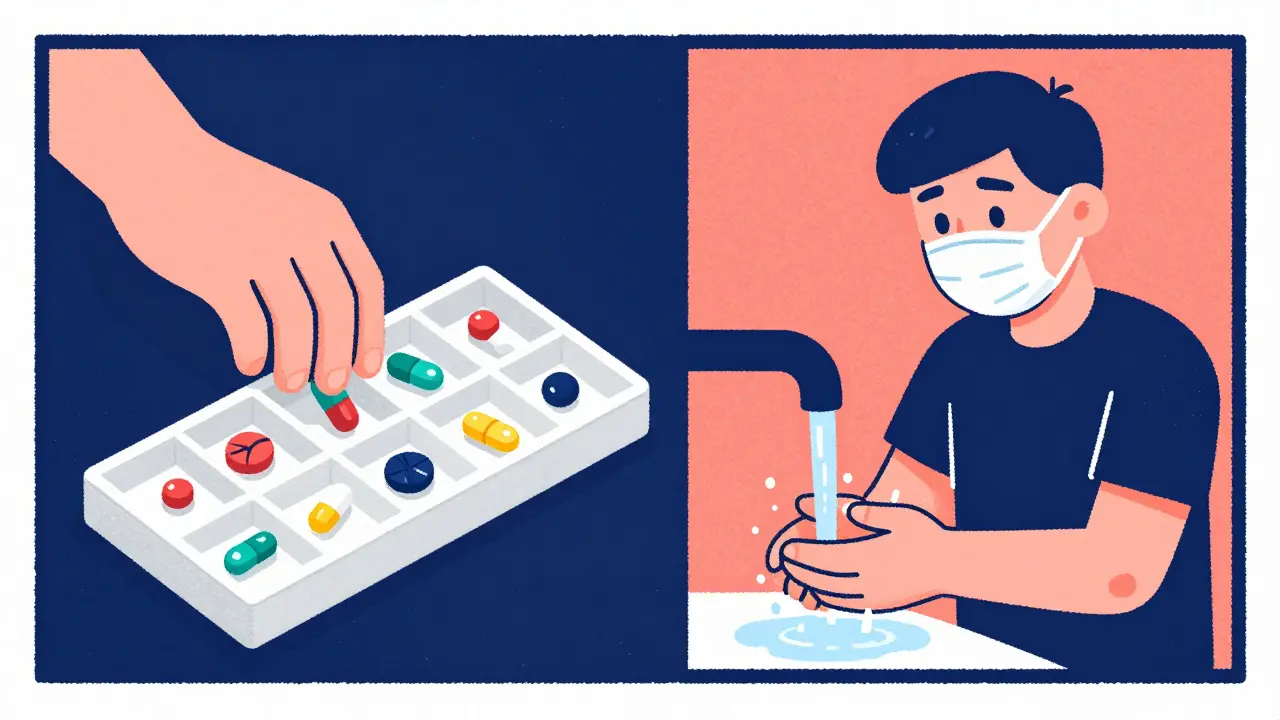
Beyond the meds, your daily habits become your first line of defense. Regular hand washing and wearing masks in crowded areas aren't just suggestions; they are survival strategies. A simple cold can escalate into pneumonia when your T-cell count is intentionally suppressed.
Monitoring and Long-Term Adjustments
You can't just "set and forget" your dose. Immunosuppressant levels must be measured in your blood regularly. If the level is too high, the drug itself can destroy the organ (especially with CNIs). If it's too low, your body will start rejecting the graft.
The strategy usually evolves through three phases: induction (strong, immediate suppression), maintenance (a steady, lower-dose mix), and eventually a tapering phase. As the years go by, physicians often decrease doses on an empirical basis. While you might start with 3-4 different medications, after the first year, most patients move to a leaner regimen of 2-3 drugs.
Some modern clinics are moving toward biomarker-guided therapy. By tracking specific markers of rejection risk, some doctors can reduce CNI exposure by 30-50% in low-risk patients without increasing the chance of rejection. This personalized approach is the future of transplant medicine, aiming to give patients a life expectancy closer to the general population.
What Happens if an Organ Fails?
It is a heartbreaking scenario, but it's important to know the safety protocol if a transplanted organ stops working. When a graft fails completely, the goal of preventing rejection is gone. In these cases, discontinuing immunosuppression becomes a reasonable medical decision because the risks of the drugs (like cancer and infection) now outweigh the benefits.
However, you must never stop these drugs abruptly on your own. Sudden withdrawal can trigger severe symptoms. For kidney patients, this might look like oliguria (drastic drop in urine output); for liver patients, it can cause hepatosplenomegaly and intense abdominal pain. Any change in medication must be managed by a transplant team to ensure a safe transition.
Why do I have to take multiple different medications?
Using a combination of drug classes (like a CNI, an antiproliferative, and a steroid) allows doctors to attack the immune system from different angles. This "synergy" means they can use lower doses of each drug, which helps prevent the severe side effects that would happen if you took a massive dose of just one medication.
How do I know if my medication level is too high or too low?
You can't always feel it until it's too late. This is why regular blood tests (trough levels) are mandatory. If levels are too high, you may experience toxicity, such as kidney damage or tremors. If they are too low, you might experience signs of rejection, like fever, tenderness over the graft site, or a decline in organ function (e.g., rising creatinine for kidney patients).
Are mTOR inhibitors safer than Calcineurin Inhibitors?
It depends on what you're protecting. mTOR inhibitors are generally less nephrotoxic (easier on the kidneys) and less likely to cause diabetes than CNIs. However, they carry higher risks of delayed wound healing and a rare but serious risk of pneumonitis. They are an excellent alternative for those with failing kidney function but aren't right for everyone.
What is the risk of cancer while on these drugs?
Because immunosuppressants stop the immune system from identifying and destroying abnormal cells, there is an increased risk of malignancy. Some studies show a 2- to 4-fold increase in cancer risk compared to the general population. This makes regular screenings-like skin checks for squamous cell carcinoma-essential for transplant recipients.
Can I ever stop taking these medications?
In the vast majority of cases, immunosuppression is a lifelong requirement. If you stop taking them, your immune system will recognize the organ as foreign and attack it, leading to graft loss. The only time discontinuation is usually considered is if the organ has already failed completely and is no longer providing benefit.
Next Steps for Patients
If you are managing a new transplant regimen, start by setting up a foolproof system for your meds. Use a pill organizer and a digital alarm; don't rely on memory. Schedule your blood work for the same time and day each week to ensure your "trough levels" are accurate.
Keep a daily log of your blood pressure, weight, and temperature. Since you're on immunosuppressants, a low-grade fever isn't just a "cold"-it's a signal that needs to be reported to your transplant coordinator immediately. Finally, be honest with your team about the cost or complexity of your meds; they may be able to switch you to a simplified once-daily version to help you stay adherent.


Goodwin Colangelo
Pill organizers are a total lifesaver. I always tell people to get the ones with the alarms built in because forgetting just one dose of tacrolimus can really mess with your trough levels. Also, definitely keep a folder with your latest lab results so you can track those creatinine trends yourself instead of waiting for the portal to update.