

Imagine waking up with a red, itchy rash on your wrist after wearing a new watch, or noticing your hands are peeling after using a specific soap. You might think it's just a random irritation, but for millions of people, it's a delayed-type hypersensitivity reaction. This is Allergic Contact Dermatitis (ACD), a condition where your immune system overreacts to a substance that seems harmless to everyone else. It's not just a simple rash; it's a complex immune response that can make your daily routine a minefield of triggers.
The real frustration isn't just the itching-it's the mystery. Many people spend years guessing which shampoo, jewelry, or cleaning product is causing the flare-up. However, identifying the exact culprit is possible through a systematic medical approach. Once you know what's triggering your skin, the goal shifts from treating the symptoms to a lifestyle of avoidance, which is the only way to stop the cycle of inflammation permanently.
What Exactly is Allergic Contact Dermatitis?
Unlike a hive that appears seconds after a bee sting, Allergic Contact Dermatitis is a "delayed" reaction. It happens when small molecules called haptens penetrate your skin and bind to proteins. Your immune system, specifically T-Helper 1 cells, recognizes this combination as a threat. The next time you touch that same substance, your body launches an attack, leading to the redness and swelling you see on your skin.
This is different from irritant dermatitis, where a harsh chemical (like bleach) simply damages the skin barrier. With ACD, your immune system is permanently "sensitized" to the allergen. This means that even a tiny amount of the trigger-something you might not even notice-can cause a massive flare-up. For many, the most common trigger is Nickel, which is found in everything from earrings to smartphone casings.
The Gold Standard for Identification: Patch Testing
If you're tired of guessing, the most reliable way to find your trigger is through Patch Testing. Many people confuse this with a prick test (which checks for immediate allergies like pollen or peanuts), but they are completely different. Patch testing looks for the delayed reactions typical of skin allergies.
The process usually takes about 96 hours and involves three separate clinic visits. On the first day, a doctor tapes a series of patches containing potential allergens to your back. You wear these for 48 hours. On the second visit, the patches are removed, and the doctor looks for early signs of a reaction. A final reading happens on the third visit, around the 96-hour mark, to confirm which specific substances caused the reaction.
One popular tool is the TRUE Test, which uses standardized panels to screen for the most common culprits. While it's incredibly efficient for a large group of people, it's not a catch-all. Some patients find that the standard panels miss their specific trigger, requiring "expanded testing" where the doctor adds more niche allergens based on your job or hobbies.
| Allergen | Common Sources | Approx. Prevalence in ACD Patients |
|---|---|---|
| Nickel Sulfate | Jewelry, zippers, coins, electronics | 14.7% |
| Thimerosal | Some vaccines, eye drops, preservatives | 5.0% |
| Cobalt Chloride | Metal alloys, blue dyes, some cosmetics | 4.8% |
| Fragrance Mix | Perfumes, scented lotions, detergents | 3.4% |
| Balsam of Peru | Cinnamon, vanilla, nail polish, resins | 3.0% |
Hidden Triggers and Occupational Risks
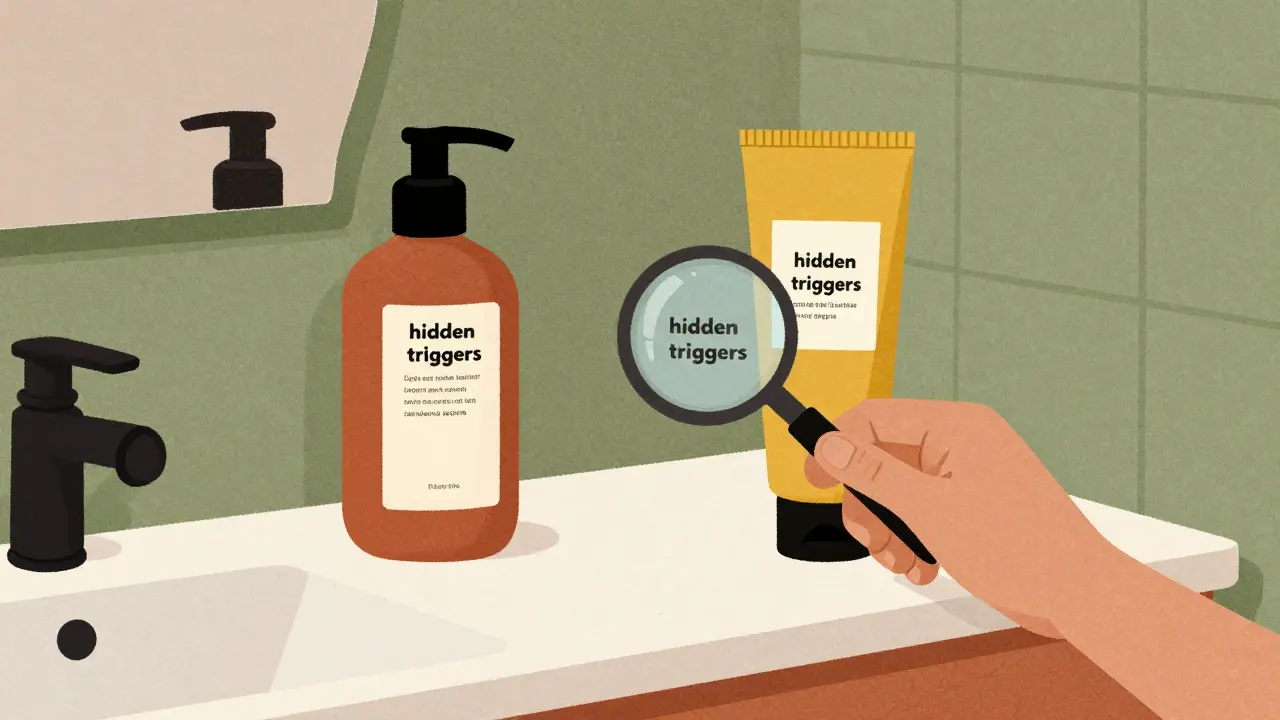
Some allergens are obvious, like a piece of costume jewelry. Others are hidden in plain sight. For instance, many people are allergic to Cocamidopropyl Betaine, a foaming agent found in "gentle" shampoos and bubble baths. Because it's in so many products, patients often struggle to pinpoint it until they get a definitive test result.
Your job can also play a massive role in your risk level. Certain professions have much higher rates of ACD due to constant exposure to chemicals. Hairdressers, for example, frequently develop allergies to hair dyes and acrylics. Healthcare workers often react to the latex or the strong disinfectants used in hospitals. Construction workers might develop sensitivities to specific resins or cements. If your rash only appears on workdays, your environment is the first place to look.

Moving from Diagnosis to Avoidance
Getting a positive test result is only half the battle. The real work begins with Allergen Avoidance. This isn't as simple as avoiding one brand of soap; it's about reading every single ingredient label on everything that touches your skin.
A great resource for this is the Contact Allergen Replacement Database (CARD). Instead of just telling you what to avoid, these systems help you find safe alternatives. For example, if you're allergic to nickel, you might switch to titanium or surgical-grade stainless steel jewelry. If you're reacting to a specific fragrance, you'll need to look for "fragrance-free" labels, as "unscented" products often contain masking fragrances that can still trigger a reaction.
The most effective way to validate your results is the elimination and reintroduction protocol. This involves removing the suspected allergen for 2 to 4 weeks. If your skin clears up and then reacts again when the product is reintroduced, you've confirmed the trigger. This process helps eliminate the risk of "false positives" from the patch test.
Common Pitfalls in Managing Skin Allergies
One of the biggest mistakes people make is relying solely on "natural" or "organic" labels. Many natural ingredients, like essential oils or botanical extracts, are potent allergens. Balsam of Peru, for example, is a natural resin but is a common trigger for many. Never assume a product is safe just because it's marketed as organic.
Another trap is the "hidden" allergen. Some preservatives, like formaldehyde, can be released slowly from other chemicals in a product over time. You might use a cream for a week with no problem, only for a rash to appear on day ten. This is why a professional diagnosis is so much more effective than self-experimentation.
The Future of Allergen Detection
While patch testing is still the gold standard, science is moving toward more precise, molecular methods. Researchers are now looking at protein-bound haptens-the actual markers left behind in an active skin lesion-to identify allergens without needing a week-long test. There are even studies looking at blood levels of specific proteins, like IL-18, to monitor how severe a patient's reaction is.
We are also seeing a shift in how products are regulated. In the European Union, strict rules have already reduced the prevalence of nickel allergies by restricting its use in jewelry. In other regions, the push for "green cosmetics" is creating new challenges, as some plant-based alternatives can actually be more sensitizing than the synthetic versions they replace. Staying informed about the ingredients in your personal care products is your best defense.
How long does it take to see results from a patch test?
The entire process takes about 96 hours. You usually have three appointments: the application of patches on day one, a preliminary reading 48 hours later, and a final interpretation at the 96-hour mark. This timeframe is necessary because allergic contact dermatitis is a delayed reaction and doesn't show up immediately.
Can I just use a skin prick test instead?
No. Skin prick tests are designed to find immediate-type hypersensitivities (like hives or anaphylaxis from nuts or pollen). Contact dermatitis is a delayed-type hypersensitivity, meaning the immune response happens over days, not minutes. A prick test will not detect the allergens that cause contact dermatitis.
What is the difference between a "fragrance-free" and "unscented" product?
"Fragrance-free" means no fragrance chemicals were added to the product. "Unscented" means the product has no perceptible smell, but it may contain masking fragrances used to neutralize the scent of other ingredients. For someone with a fragrance allergy, "unscented" products can still cause a reaction.
What should I do if my patch test was negative but I still have a rash?
It's possible the trigger wasn't on the standard panel. You should talk to your dermatologist about expanded testing, which adds more specific antigens based on your lifestyle, work environment, or specific products you use. Some allergens are quite rare and require targeted searching.
Are there any safe metals I can use for jewelry?
If you have a nickel allergy, look for jewelry made from 18k or 24k gold, sterling silver, titanium, or surgical-grade stainless steel. Be cautious with "nickel-free" labels, as some products still contain trace amounts that can trigger sensitive individuals.
Next Steps for Recovery
If you suspect you have a skin allergy, your first step is to document everything. Start a diary of the products you use-soaps, detergents, lotions, and makeup-and note when your flares happen. This history is incredibly valuable for your doctor during the patch testing process.
Once you have your results, don't try to change everything at once. Use a database like CARD to find replacements for your most common triggers first. Give your skin a few weeks of strict avoidance to calm the inflammation before slowly introducing new, safe products. If you work in a high-risk environment, talk to your employer about OSHA guidelines or similar local regulations to ensure your workplace is safe for your skin.

