
The Silence You Don't Want to Miss
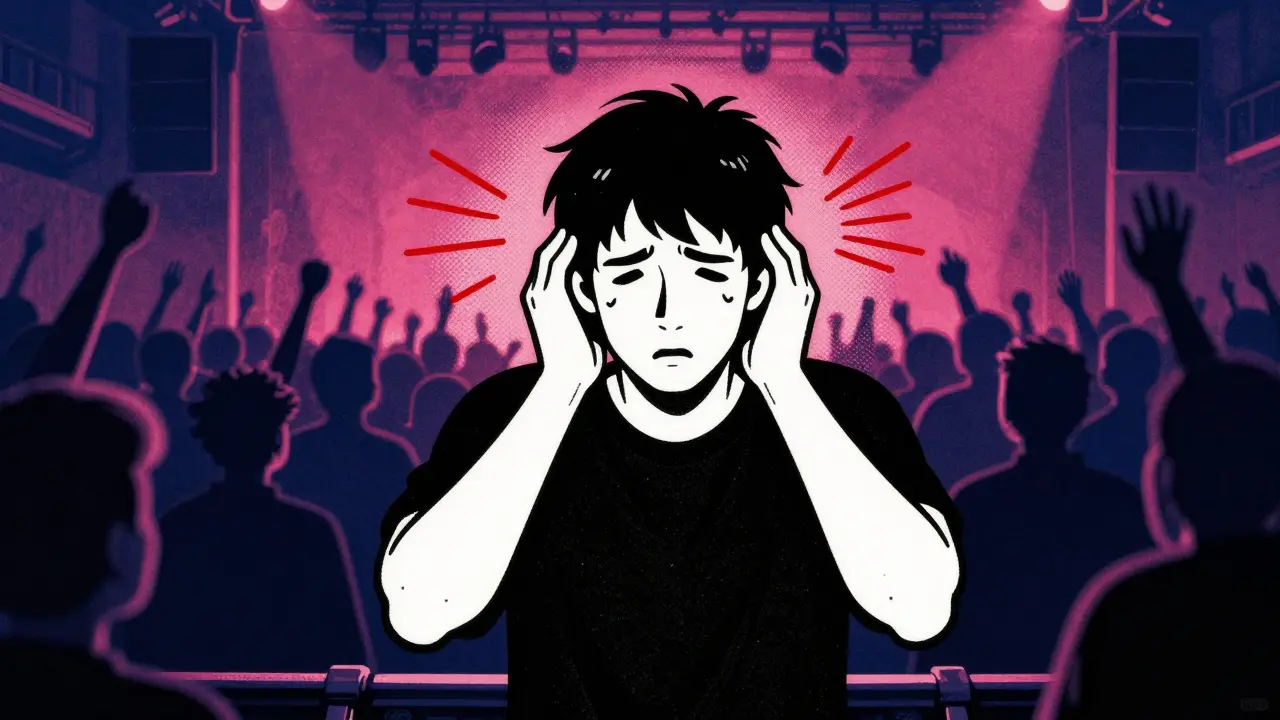
You leave a massive concert, your ears are still ringing, and you think it's just "ear fatigue." Here's the hard truth: that ringing is often the first sign of permanent damage. Noise isn't just an annoyance; it is a physical hazard that can permanently alter how you hear the world. Whether you're standing near a jackhammer on a construction site or in the front row at a rock gig, understanding noise exposure limits scientifically established thresholds designed to prevent permanent hearing damage is the difference between keeping your hearing and losing it.
About 24% of hearing loss cases in the United States stem directly from noise exposure. The scary part? Unlike skin cuts, hearing damage accumulates silently until it's too late. Today, we're cutting through the jargon to explain exactly how much noise is too much, who sets those rules, and how you can actually protect yourself before the damage becomes irreversible.
Understanding the Numbers Behind Noise
To talk about safety, you have to talk about measurements. The industry standard unit is the decibel (dB) a logarithmic unit used to measure the intensity of sound pressure levels. However, not all decibels are created equal. We specifically care about the A-weighted scale, written as dBA. This measurement filters out frequencies human ears don't hear well, focusing on the sounds that actually cause harm. When regulators mention limits, they almost always mean dBA, not raw dB.
Another critical concept is Time-Weighted Average (TWA). Your ears don't get damaged by a loud sound alone; it depends on duration. An eight-hour workday exposed to a continuous hum requires different protection than a one-minute explosion of sound. This leads us to the core metrics used by safety agencies worldwide.
Who Sets the Rules: OSHA vs. NIOSH
In the United States, two major organizations define what's safe, and their numbers clash. It creates confusion, so let's clear it up. Occupational Safety and Health Administration (OSHA) the federal agency enforcing workplace safety and health laws writes the law. Their Permissible Exposure Limit (PEL) is 90 dBA for an eight-hour shift. If you stay under 90, you are legally compliant. But compliance doesn't always equal safety.
Then there is National Institute for Occupational Safety and Health (NIOSH) the national institute responsible for conducting research and making recommendations for the prevention of illness. They act as the scientists behind the policy. NIOSH recommends a lower limit of 85 dBA. Why the gap? Because research suggests risk climbs sharply once you hit 85. Following the legal 90 limit leaves you vulnerable to a higher probability of hearing loss compared to following the NIOSH recommendation.
| Organization | Daily Limit (dBA) | Exchange Rate | Risk Threshold |
|---|---|---|---|
| OSHA | 90 dBA | 5 dB | Legal Requirement |
| NIOSH | 85 dBA | 3 dB | Scientific Recommendation |
| UK Regulations | 87 dBA (with protection) | 3 dB | Action Values: 80/85 dB |
| EU Directive | 87 dBA (Upper Action) | 3 dB | Action Levels: 80/85 dB |
Note the "Exchange Rate" column. This is the math that matters when noise gets louder. Under NIOSH's stricter 3-dB rule, for every 3-decibel increase, you must cut your time in half. So if 85 dB allows 8 hours, 88 dB allows only 4 hours. Under OSHA's older 5-dB rule, you'd get double that time at 88 dB before needing protection. That difference is why millions of workers walk away with hearing damage decades later.
Hearing Conservation Beyond the Law
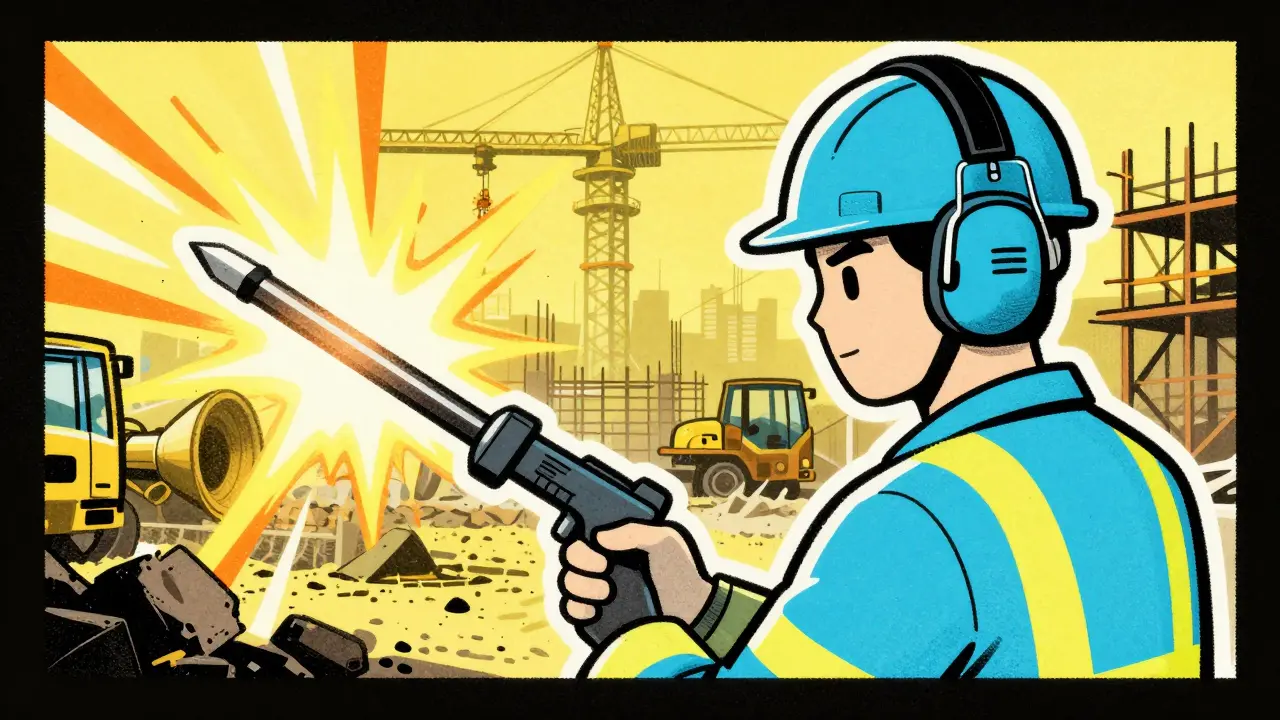
When the meter hits 85 dBA, employers aren't just expected to warn you; they need to run a hearing conservation program a structured system of training, testing, and equipment provision to protect workers. This involves baseline audiometric testing when you start the job, plus annual checkups. These tests look for threshold shifts-usually a 10 dB drop in sensitivity at specific frequencies like 2000, 3000, or 4000 Hz. If the doctor spots a shift, the company must change your environment or upgrade your gear immediately.
Training is non-negotiable here. Studies show that handing out earplugs works poorly unless people know how to fit them. Hands-on training bumps proper usage rates from roughly 40% to 85%. If you work in a high-noise zone, don't just grab the first pair in the bin. Ask for a fitting session. A bad fit leaks sound, and that leakage ruins the protection rating of the device.
Protecting Yourself at Concerts and Home
Your boss might handle factory floors, but nobody regulates your Friday night out. This is the wild west of hearing safety. Music festivals and clubs regularly reach 100-110 dBA. At those levels, damage happens fast-sometimes in minutes. The World Health Organization suggests capping personal audio device listening to 80 dBA for 40 hours a week. That means checking your smartphone volume settings. Most modern phones track this now.
If you love loud music, you need specialized gear. Standard foam plugs dull everything, including speech. Musicians and frequent concert-goers prefer filtered earplugs, which reduce volume evenly across frequencies without muffling the sound. Brands like Loop or Eargasm offer options specifically for this. Some venues even give them out for free because they know the cost of liability claims. If you feel that temporary "fullness" in your ears after a show, stop. Take a 16-hour quiet break to reset your cochlea before hitting another loud venue.
The Economics of Losing Your Hearing
Weirdly enough, companies have financial reasons to keep your ears intact, yet many ignore it until inspected. Workers' compensation claims for hearing loss exceed $1 billion a year in the US alone. It costs manufacturers significantly more to pay for disabled hearing than to buy better machinery. Construction, mining, and manufacturing face the highest risks, but the ripple effects hit families hardest. There is no cure for Noise-Induced Hair Cell Death-the sensory cells in your inner ear don't regenerate.
The market for protection is catching up, however. The global hearing protection equipment market grew to $2.1 billion recently, driven by awareness and regulation. Better tech exists today than ten years ago, offering digital monitoring and active noise cancellation features. Ignoring these tools is expensive.
Frequently Asked Questions
Is hearing damage reversible?
No, permanent noise-induced hearing loss is irreversible. While temporary muffled hearing (Temporary Threshold Shift) can recover after 16-48 hours of silence, repeated exposure turns this temporary state into permanent sensorineural damage where hair cells die off.
Are earplugs effective enough for concerts?
Yes, high-quality musician earplugs with a flat filter response curve are highly effective. They reduce decibels safely without distorting the music quality, whereas cheap foam plugs may block sound unevenly and encourage removal.
Does OSHA require testing if I am already hard of hearing?
If your baseline test indicates significant pre-existing hearing loss, you generally cannot attribute new loss solely to workplace noise, making the employer less liable. However, NIOSH guidelines recommend that everyone working above 85 dBA receives regular monitoring regardless of prior status.
What is the peak limit for impact noise?
OSHA sets a strict peak limit of 140 dB for impulsive noise (like gunshots or explosions). The European Union is even stricter at 137 dB(A). Exceeding these limits requires immediate shutdown of the activity or mandatory protection.
Can smartphones accurately measure noise?
Recent studies in 2023 showed consumer smartphone apps achieve about 92% accuracy compared to professional meters. For general awareness, they are useful, but official OSHA compliance requires calibrated Type 1 or Type 2 sound level meters approved by ANSI S1.4 standards.


Cullen Zelenka
I really hope folks get this message because my friend missed out on the quiet life he could have had. It is scary how fast permanent damage sneaks up on you when you are young and healthy. I always thought ringing ears was just temporary fatigue until it stuck around for years. We need to normalize wearing protection even at social events instead of just at work sites. The difference between following legal minimums and actual safety guidelines is where real lives hang in the balance.