
Serotonin Syndrome Risk Checker
Check Your Medication Combination
Risk Assessment
Important Information
This tool is for educational purposes only. It should not replace professional medical advice.
Symptoms to Watch For
- Agitation, confusion, or rapid heartbeat
- Muscle twitching or stiffness
- High fever (over 40°C/104°F)
- Excessive sweating
- Diarrhea or nausea
What to Do
If you experience these symptoms, seek emergency medical help immediately. Do not stop taking medications without consulting your doctor.
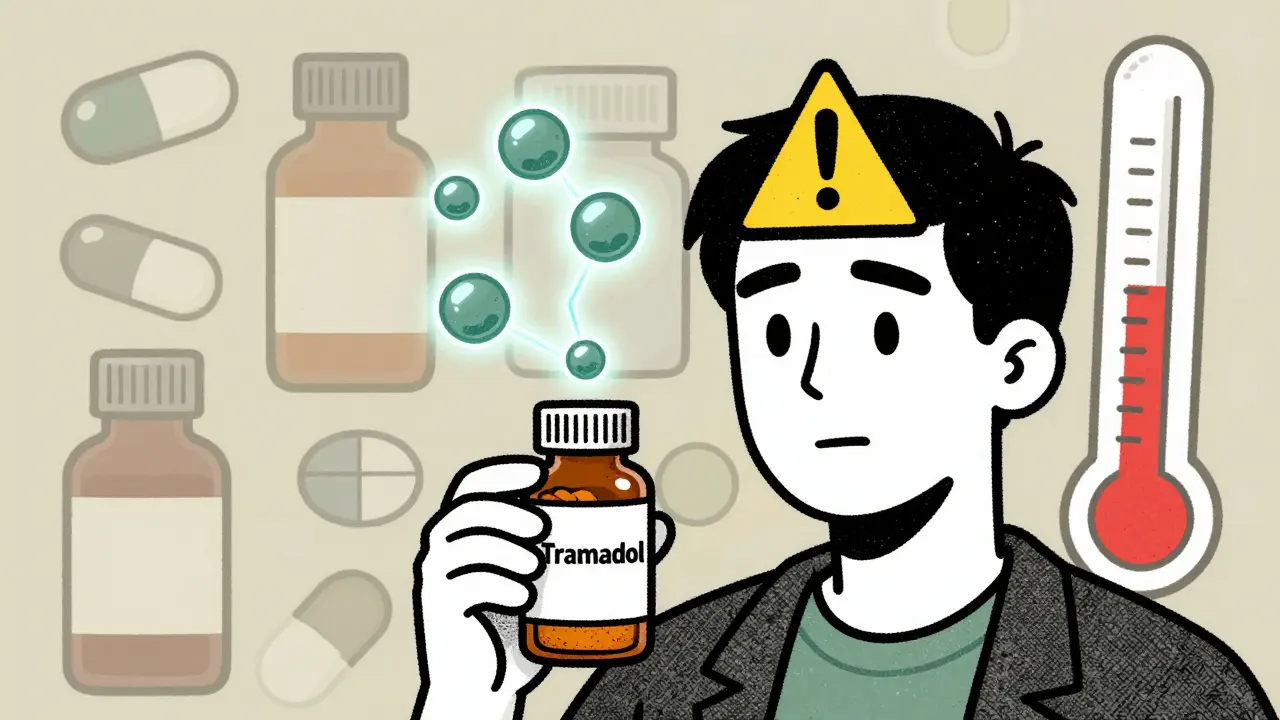
It’s not just about pain relief. When you’re taking an opioid for chronic pain or after surgery, you might not realize that mixing it with common antidepressants or even over-the-counter cough medicine could trigger a life-threatening reaction called serotonin syndrome.
What Is Serotonin Syndrome?
Serotonin syndrome happens when too much serotonin builds up in your brain and nervous system. It’s not a rare side effect-it’s a real, urgent medical emergency. Symptoms can show up within hours of taking a new drug or increasing a dose. You might feel agitated, confused, or have a rapid heartbeat. Your muscles may twitch or stiffen. You could develop a high fever, sweat heavily, or even lose consciousness. In severe cases, it leads to seizures, organ failure, or death.This isn’t just about antidepressants. Many people don’t know that some opioids-medicines meant to treat pain-can also push serotonin levels too high. And when those opioids are taken with SSRIs, SNRIs, or even dextromethorphan (a common cough suppressant), the risk spikes dramatically.
Not All Opioids Are the Same
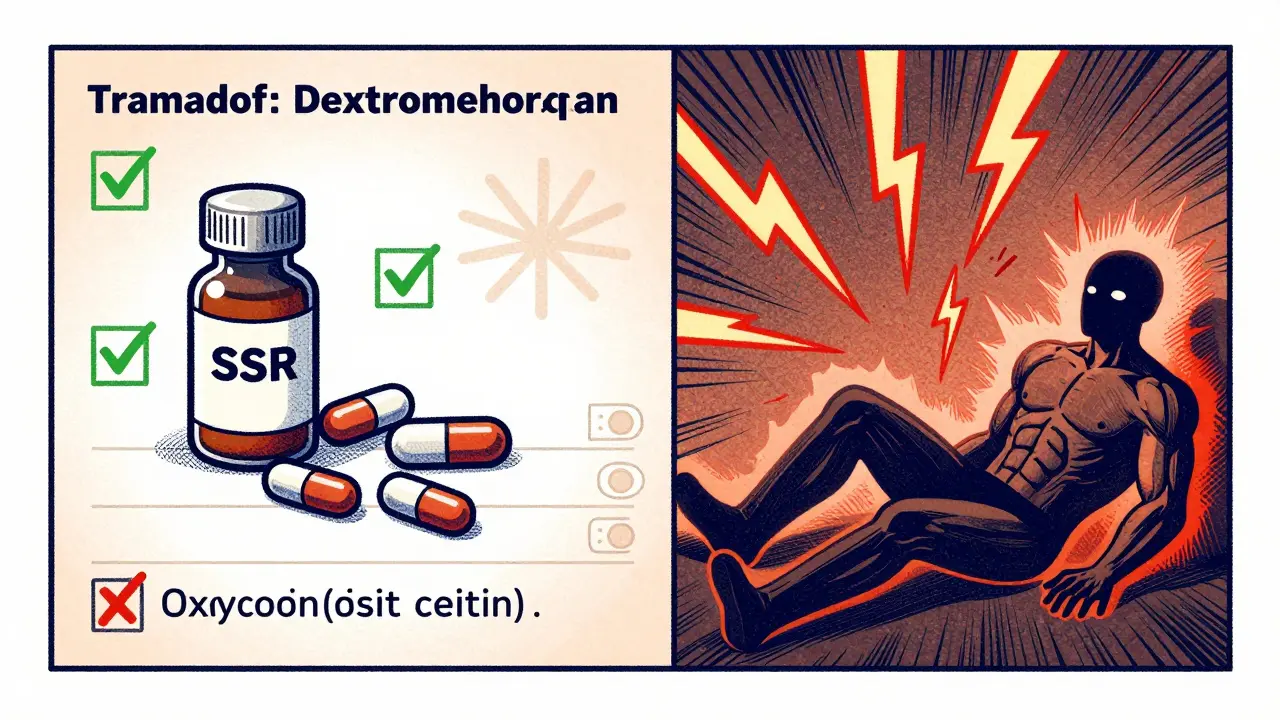
You might assume all opioids carry the same risk. They don’t. The difference between a safe option and a dangerous one comes down to chemistry.Tramadol, meperidine (also called pethidine), and dextromethorphan are high-risk opioids. They directly block the serotonin transporter (SERT), which normally clears serotonin from the spaces between nerve cells. When that system gets jammed, serotonin piles up. Tramadol alone has been linked to nearly 80% of all reported cases of serotonin syndrome involving opioids and antidepressants.
Methadone and fentanyl are medium-risk. They don’t block SERT as strongly, but they still interact with serotonin receptors in the brain. Fentanyl, especially in high doses during surgery, can trigger symptoms even without an antidepressant. Methadone’s risk is complicated-it’s used for addiction treatment, and its long half-life means it builds up slowly, making interactions harder to predict.
On the other hand, morphine, oxycodone, and hydromorphone are considered low-risk. They don’t interfere with serotonin transporters in lab studies. That doesn’t mean they’re completely risk-free-especially if you’re on multiple serotonergic drugs-but they’re the safest choices if you need an opioid while taking an antidepressant.
The Real Culprits You Might Not Know About
Most people know to watch for interactions between opioids and antidepressants. But what about the cough syrup on your shelf?Dextromethorphan is in more than 100 over-the-counter cold and flu products. People take it without thinking. But when it’s mixed with an SSRI like sertraline or fluoxetine, it can trigger serotonin syndrome-even at normal doses. Between 2015 and 2021, New Zealand health authorities recorded 23 cases of serotonin syndrome from tramadol, and 11 from meperidine. But 14 cases came from dextromethorphan and antidepressants combined. Three of those cases ended in death.
Even codeine, often thought of as mild, has been linked to serotonin syndrome in rare cases-especially when taken with other serotonergic drugs like triptans (used for migraines) or MAO inhibitors. Genetic differences in how people metabolize drugs can make some individuals far more vulnerable than others.
How Doctors Decide What’s Safe
In 2022, New Zealand’s Medsafe agency updated its guidelines to clearly label opioids by risk level. Tramadol, meperidine, and dextromethorphan are now classified as contraindicated with antidepressants. That means doctors shouldn’t prescribe them together. Methadone and fentanyl require caution. Morphine, oxycodone, and hydromorphone are preferred.Here’s what that looks like in practice:
| Opioid | Risk Level | Key Reason |
|---|---|---|
| Tramadol | High | Strong SERT inhibition; 6.7x higher risk with SSRIs |
| Meperidine (Pethidine) | High | Blocks SERT; linked to 22% of opioid-related cases |
| Dextromethorphan | High | OTC cough medicine; 3 fatal cases reported at 30mg/day |
| Methadone | Medium | Weak SERT inhibition; risk increased by CYP3A4 inhibitors |
| Fentanyl | Medium | Activates 5-HT2A receptors; dangerous at high doses (>100mcg/kg) |
| Morphine | Low | No SERT inhibition; first-line choice for patients on antidepressants |
| Oxycodone | Low | No SERT inhibition; minimal serotonergic activity |
| Hydromorphone | Low | Similar to morphine; safe alternative |
Doctors now use this data to make smarter choices. If you’re on an SSRI and need pain relief, they’ll avoid tramadol and reach for morphine or oxycodone instead. That’s not guesswork-it’s based on hard data from thousands of cases.
What Happens When You Take the Wrong Mix?
A 42-year-old woman in 2021 started tramadol for back pain while already taking venlafaxine for depression. Within two days, she developed a fever of 40.1°C, rigid muscles, and confusion. She was rushed to the ICU. Her case wasn’t unusual. In one 2019 study of 127 opioid-related serotonin syndrome cases, tramadol was involved in 63 of them. Meperidine in 28. Methadone in 19.These aren’t overdoses. These are people taking prescribed doses. The problem isn’t taking too much-it’s taking the wrong combination.
The FDA added a Black Box Warning to tramadol in January 2023. That’s the strongest warning they can give. It means the risk is serious enough to require a special alert on the drug label. The European Medicines Agency did the same in 2022.
What Should You Do?
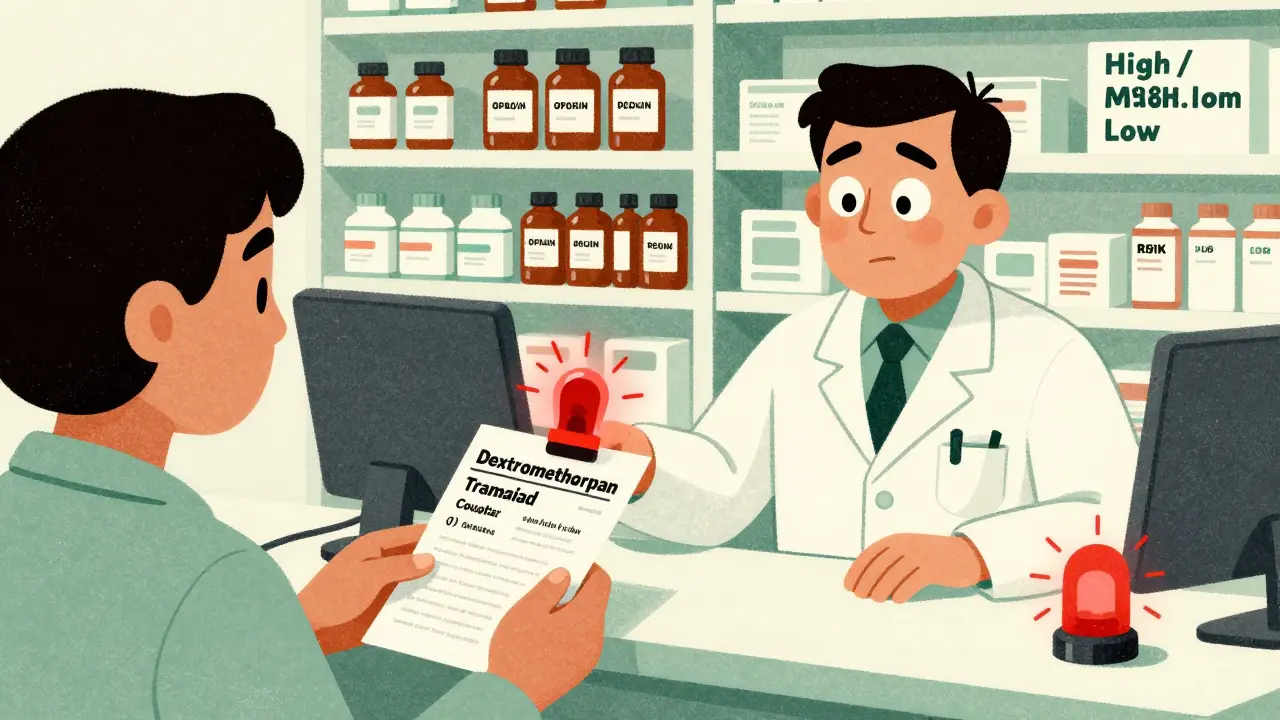
If you’re taking an opioid and an antidepressant-or even a cough medicine-here’s what to do:- Check every medication. Look at the active ingredients. Is there tramadol, dextromethorphan, or meperidine? If yes, talk to your doctor or pharmacist immediately.
- Don’t stop cold turkey. Abruptly stopping antidepressants or opioids can cause withdrawal or worsen symptoms. Work with your provider to switch safely.
- Know the signs. Muscle stiffness, high fever, confusion, rapid heartbeat, shivering, or diarrhea can appear within hours. If you feel this way after starting a new drug, seek help right away.
- Ask for alternatives. If you’re on an SSRI and need pain relief, ask if morphine, oxycodone, or hydromorphone are options. They’re just as effective for pain-and much safer.
Most importantly: don’t assume your doctor knows you’re taking OTC meds. Many patients don’t mention cough syrup or sleep aids. But those can be the missing piece in a dangerous interaction.
Why This Is Getting Worse-and How It Might Get Better
Serotonin syndrome from opioid-antidepressant combinations now makes up 34% of all adverse drug reactions treated in medical toxicology units. That’s up from 12% in 2018. Why? Because more people are on antidepressants, and opioids are still widely prescribed. Tramadol was once seen as a "safe" opioid for people with addiction risk-but we now know it’s one of the most dangerous in this context.Good news: tramadol use in the U.S. has dropped 18% since 2020. As doctors switch to safer alternatives, experts predict a 15% drop in serotonin syndrome cases over the next five years. But dextromethorphan remains a hidden threat. With 28 million OTC sales in the U.S. every year, many people have no idea it can be deadly when mixed with antidepressants.
Research is also moving forward. A major study (NCT04987231) is now tracking 1,200 patients to find genetic markers that make some people more susceptible. That could lead to blood tests that tell you if you’re at higher risk before you even start a new medication.
Final Takeaway
Serotonin syndrome isn’t a myth. It’s a real, preventable danger hiding in plain sight. The combination of opioids and antidepressants isn’t just a footnote in a drug guide-it’s a leading cause of serious drug reactions. You don’t need to avoid pain treatment. You just need to know which opioids are safe with your other meds.Don’t rely on guesswork. Don’t assume "it’s just a cough medicine." Talk to your doctor. Show them your full list of medications-prescription, OTC, and supplements. And if you feel sudden changes in your body after starting a new drug, don’t wait. Get help now.
Can you get serotonin syndrome from just one opioid?
Yes, but it’s rare. Most cases happen when an opioid is combined with another serotonergic drug like an SSRI, SNRI, or even dextromethorphan. However, high-dose meperidine or tramadol alone can trigger symptoms in susceptible individuals, especially those with genetic differences in serotonin metabolism.
Is serotonin syndrome the same as an opioid overdose?
No. An opioid overdose causes slow breathing, drowsiness, and loss of consciousness due to respiratory depression. Serotonin syndrome causes high fever, muscle rigidity, rapid heartbeat, and agitation. The treatments are completely different. Naloxone reverses opioid overdoses but does nothing for serotonin syndrome.
What should I do if I think I have serotonin syndrome?
Seek emergency medical help immediately. Stop taking all serotonergic drugs if you can safely do so. Treatment includes stopping the offending drugs, cooling the body, giving fluids, and sometimes using cyproheptadine-a serotonin blocker. Severe cases require ICU care.
Can I take tramadol if I’m on an SSRI?
No. Tramadol is contraindicated with SSRIs and SNRIs. The risk of serotonin syndrome is high enough that major health agencies warn against combining them. If you need pain relief while on an antidepressant, ask your doctor for morphine, oxycodone, or hydromorphone instead.
Are there any safe OTC cough medicines if I’m on an antidepressant?
Yes. Avoid anything with dextromethorphan. Look for products with guaifenesin (for mucus) or phenylephrine (for congestion). Always check the label. If you’re unsure, ask your pharmacist to review your medications before buying anything.
How long does serotonin syndrome last?
Symptoms usually begin within hours and peak within 24-48 hours. With prompt treatment, most people recover fully in 1-3 days. But if the drug is still in the system (like with long-acting opioids or SSRIs), symptoms can return. That’s why doctors often monitor patients for several days after stopping the drugs.


Robyn Hays
Okay but have you ever tried explaining to your grandma why her favorite cough syrup is basically a ticking time bomb with her Zoloft? I had to sit down with my mom after she got hospitalized for mixing dextromethorphan and fluoxetine. She thought it was just a cold remedy. No one warned her. No one even asked. This post? Lifesaver. 🙏