
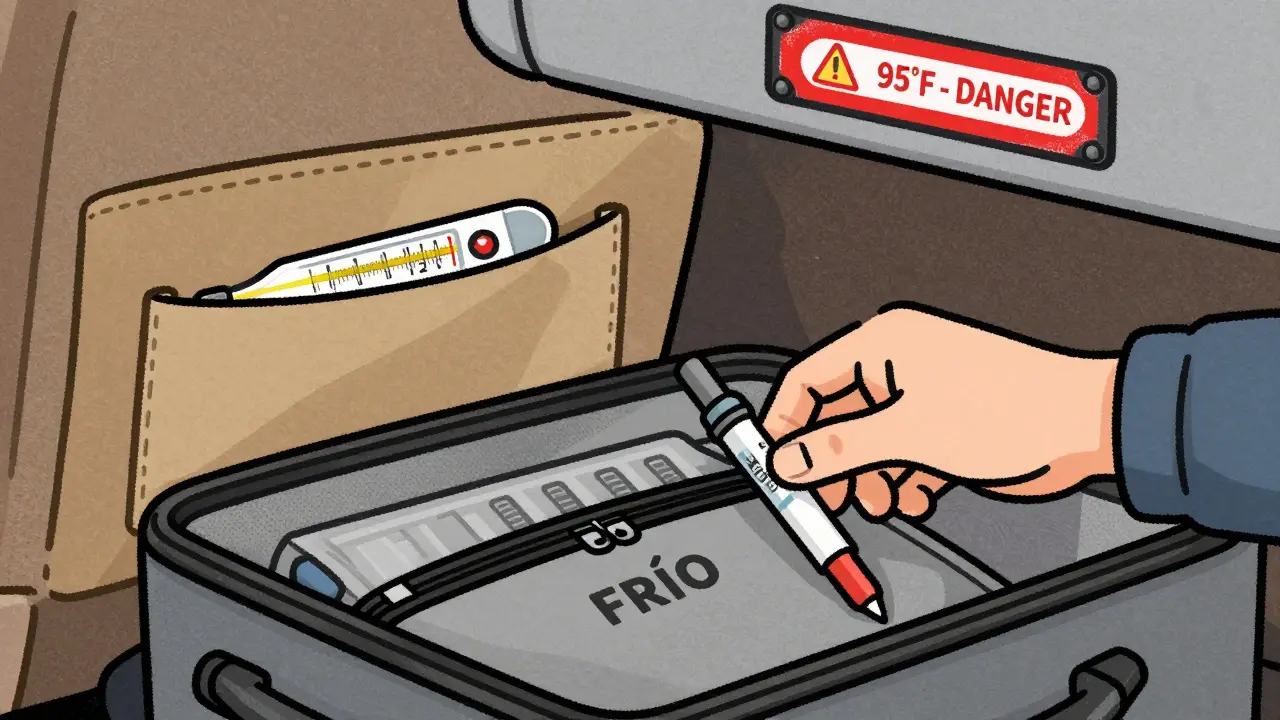
When you're flying across time zones with insulin or biologics like Ozempic, your medication isn't just luggage-it's life support. A single temperature spike during a 14-hour flight can render your insulin useless, and that’s not hypothetical. In 2021, a case study in the Journal of Diabetes Science and Technology documented a traveler who developed severe hyperglycemia after their insulin was left in an overhead bin where temperatures hit 95°F (35°C). That’s hotter than a car dashboard in July. This isn’t about convenience. It’s about survival.
Why Temperature Matters More Than You Think
Insulin is a protein. Heat breaks it down. Cold freezes it. Both destroy its ability to work. The U.S. Food and Drug Administration (FDA) says unopened insulin must stay between 36°F and 46°F (2°C-8°C). Once you start using it, it’s stable at room temperature-59°F to 86°F (15°C-30°C)-for up to 28 days. But here’s the catch: not all insulins are the same. Insulin Degludec (Tresiba) can last 56 days at room temperature, while some GLP-1 agonists like Ozempic degrade after just 56 days even if kept cool. If your insulin looks cloudy, clumpy, or has particles floating in it, throw it out. No exceptions.The cabin of a modern plane like the Boeing 787 is kept between 65°F and 75°F (18°C-24°C), which sounds safe. But not all areas are equal. The overhead bin’s outer pocket? That’s pressed right against the aircraft’s metal skin. In direct sunlight, it can hit 90°F (32°C). A 2023 study by the American Association of Clinical Endocrinologists found that 41% of travelers who stored insulin in overhead bins experienced dangerous temperature spikes. Meanwhile, the seat-back pocket? It stays between 68°F and 75°F (20°C-24°C)-perfect.
What You Can and Can’t Carry Through Security
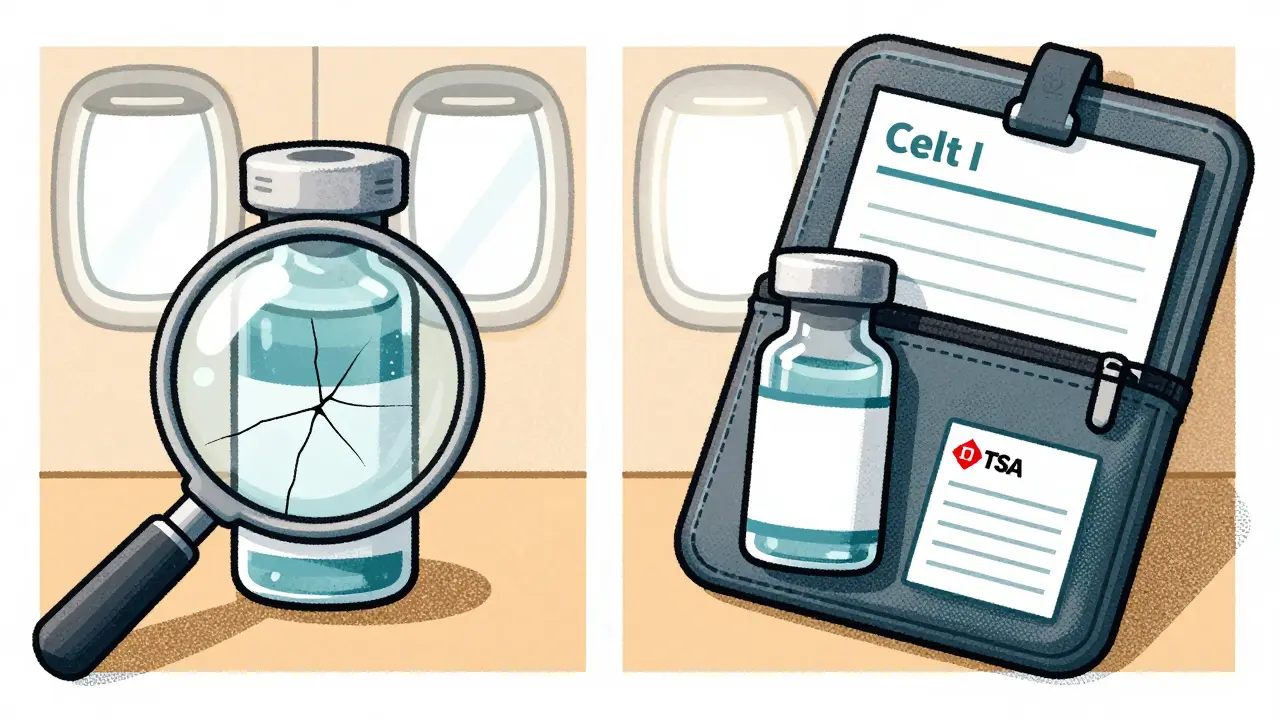
The TSA allows insulin and biologics in carry-on bags without restriction. You don’t need to check them. But ice packs? That’s where trouble starts. TSA limits liquids and gels to 3.4 ounces (100ml) per container. Most ice packs exceed that. The fix? Use a cooling wallet that doesn’t rely on ice. The FRÍO Wallet, for example, uses a water-activated gel that stays between 59°F and 72°F (15°C-22°C) for up to 45 hours-even in 104°F (40°C) heat. No ice. No melting. No TSA hassle.Here’s what you need to bring through security:
- Insulin pens or vials (original pharmacy labels)
- A doctor’s letter dated within the last 6 months
- A cooling wallet (FRÍO, BreezyPack, etc.)
- Digital copies of prescriptions on your phone
According to TSA data from 2022, 12,437 insulin-related incidents occurred-mostly because travelers didn’t have documentation. With a letter and labels, 92% of travelers cleared security without delays. Without them? You’re at risk of having your medication confiscated.
Best Cooling Solutions Compared
Not all coolers are created equal. Here’s what works-and what doesn’t.| Product | Temperature Range | Duration | Activation Time | Weight | Cost |
|---|---|---|---|---|---|
| FRÍO Wallet | 59°F-72°F (15°C-22°C) | 45 hours | 15 minutes | 0.5 lbs | $34.99 |
| BreezyPack Pro | 50°F-72°F (10°C-22°C) | 72 hours | None (pre-cooled) | 0.8 lbs | $49.99 |
| Traditional Cooler + Ice Packs | 35°F-75°F (2°C-24°C) | 8-12 hours | None | 1.5 lbs | $25-$40 |
| TempMed Smart Case | Customizable (alerts at 82°F) | 16+ hours | None | 1.1 lbs | $149.99 |
| Evakool Thermostatic Case | 39°F-46°F (4°C-8°C) | 120 hours | Pre-cool 4 hours | 2.2 lbs | $129.99 |
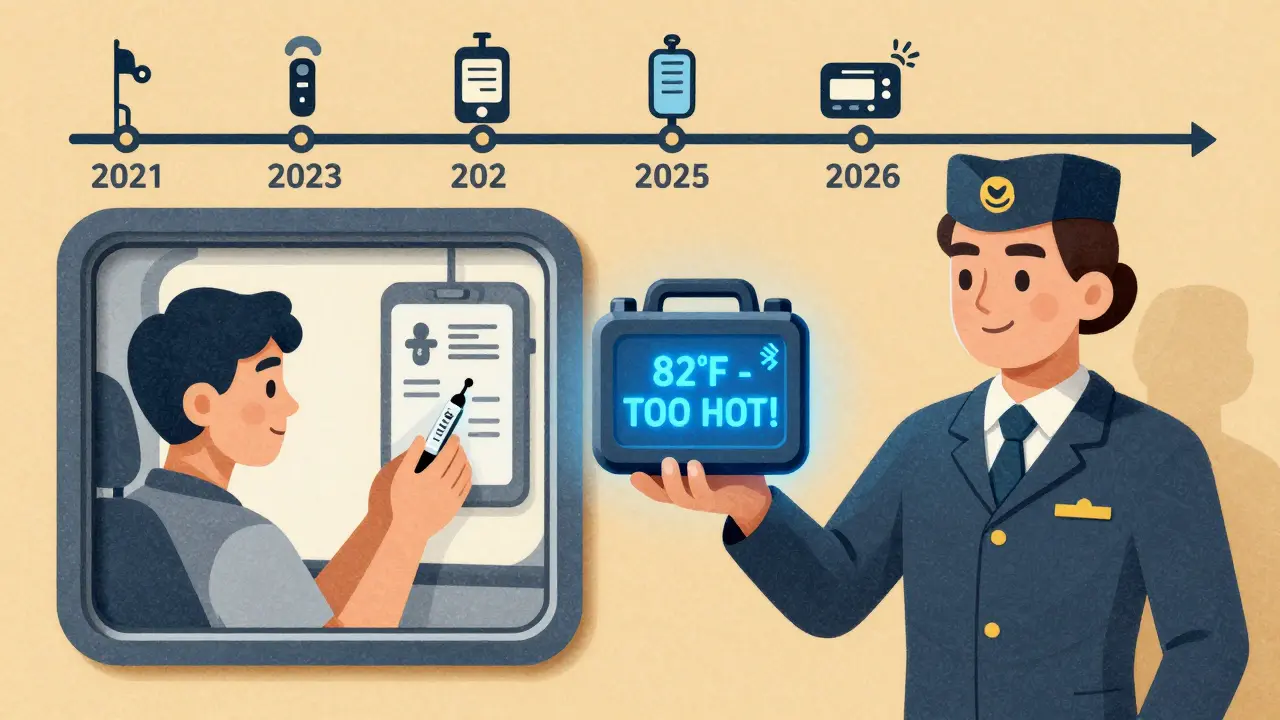
Most travelers don’t need the Evakool. It’s overkill. You’re not camping in Antarctica. You need something lightweight, TSA-friendly, and reliable. The FRÍO Wallet is the most popular for good reason: it’s cheap, light, and works even if you forget to pre-cool it. The BreezyPack lasts longer and doesn’t need water activation-but it costs more. The TempMed Smart Case is the future: it alerts you via Bluetooth if your insulin gets too hot. If you’re flying often, it’s worth the investment.
How to Pack It Right
Here’s the exact routine that works:- Two hours before your flight, take your insulin from the fridge and let it warm to 50°F (10°C). Don’t put it in a warmer room-just leave it out. This reduces thermal shock.
- Place your insulin pens or vials inside the cooling wallet. Leave at least 0.8 inches (2 cm) between the insulin and the cooling material. Direct contact with gel or cold packs can freeze your medication.
- Put the wallet in your carry-on. Never check it. Ever.
- Store the wallet in your seat-back pocket during the flight. Not the overhead bin. Not the armrest. Not the floor. The pocket.
- Check your insulin every 4 hours. Look for cloudiness, clumping, or discoloration. If you see any, stop using it.
One traveler on Reddit (r/diabetes, August 2023) reported that after a 16-hour flight, their insulin was visibly clumped. They switched to backup pens and avoided a hospital visit. That’s the difference between checking and not checking.
Time Zone Changes and Dose Adjustments
Flying east? You’re losing hours. Your body’s insulin needs shift. The American Association of Clinical Endocrinologists recommends reducing your long-acting insulin dose by 20% for eastward trips over 6 hours. Flying west? You’re gaining hours. You may need to increase your dose by 15%. Don’t guess. Talk to your doctor before you go. Keep a log of your blood sugar for the first 24 hours after landing. Adjust slowly.Insulin pumps? They don’t auto-adjust for time zones. You’ll need to manually change your basal rate. The European Association for the Study of Diabetes says to do this in 1-hour increments over 24 hours. Don’t try to do it all at once.
What Airlines Actually Allow
Not all airlines make it easy. Delta Air Lines updated its policy in April 2023 to explicitly allow cooling containers in carry-ons. United and American follow similar rules. But Spirit Airlines? They still require 72-hour pre-approval. If you’re flying budget, call them before booking. Don’t wait until check-in.And here’s the truth: some flight attendants don’t know the rules. If they say you can’t bring your cooling wallet, show them your doctor’s letter and the TSA regulation 1544.219. It explicitly permits medical cooling devices. You’re not asking for permission. You’re reminding them of the law.
What to Do If Your Insulin Gets Too Hot
If your insulin was exposed to temperatures above 86°F (30°C) for more than 4 hours, the American Diabetes Association says to assume it’s ruined. Don’t risk it. Use your backup. If you don’t have one, ask a flight attendant to help you find a pharmacy at your destination. Many major airports have 24-hour pharmacies. If you’re stranded, call your doctor or use telehealth. Don’t fly with degraded insulin. It’s not worth the risk.Preparing for the Future
By 2026, the American Diabetes Association expects new insulin formulations to stay stable at room temperature for 45 days. That’s coming. But for now, you need to be prepared. The International Civil Aviation Organization is rolling out temperature-controlled storage compartments on planes by Q3 2024. But until then, you’re your own best protector.Carry extra. Check often. Store smart. And never, ever leave your insulin in the overhead bin.
Can I put insulin in checked luggage?
No. Checked baggage can reach -40°F (-40°C) at cruising altitude. Insulin will freeze and become unusable. Always keep insulin in your carry-on.
Do I need a doctor’s note to fly with insulin?
Yes. While not always required, a doctor’s letter dated within the last 6 months dramatically reduces security delays. TSA data shows 92% of travelers with a letter passed through without issues.
How long can I keep insulin at room temperature during travel?
Most insulins last 28 days at room temperature (59°F-86°F). Insulin Degludec (Tresiba) lasts up to 56 days. Always check your specific product’s package insert. If it’s been more than 28 days since you opened it, replace it before flying.
Can I use ice packs with my insulin on a plane?
You can, but only if they’re under 3.4 ounces (100ml) and placed in a clear bag. Most ice packs are too large. Water-activated wallets like FRÍO are safer, lighter, and TSA-friendly.
What should I do if my insulin looks cloudy?
Discard it immediately. Cloudiness or clumping means the insulin has degraded and won’t work. Use your backup. If you don’t have one, seek medical help at your destination or contact your doctor via telehealth.
Are there new technologies to help store insulin on flights?
Yes. The TempMed Smart Case, approved by the FDA in November 2023, uses Bluetooth to alert you if your insulin exceeds 82°F. It’s designed for long flights and has shown 99.2% efficacy in preserving insulin during 16-hour trips. New phase-change materials like CryoGel 3.0 (coming in 2024) will extend safe storage even further.
Final Checklist Before You Fly
- ✅ Insulin pens/vials with original pharmacy labels
- ✅ Doctor’s letter (dated within 6 months)
- ✅ Cooling wallet (FRÍO or BreezyPack recommended)
- ✅ Backup insulin (at least 200% of expected usage)
- ✅ Digital copies of prescriptions on phone
- ✅ Contact info for local pharmacies at destination
- ✅ Time zone adjustment plan from your doctor
Traveling with insulin isn’t about fear. It’s about preparation. You know your body. You know your meds. Now you know how to keep them safe. Fly smart. Stay healthy.

