
Taking the leap from brand-name drugs to generics after an organ transplant can feel like a gamble. When your entire quality of life depends on a graft not being rejected, the idea of "saving money" can feel secondary to the fear of a medication failing. But here is the reality: generic options are now the backbone of transplant care for the vast majority of patients, offering massive financial relief without compromising the health of the organ.
For many, the cost of brand-name immunosuppressants is staggering, often ranging from $1,500 to $2,500 per month. With roughly 40,000 solid organ transplants happening every year in the US alone, the financial burden is a genuine barrier to medication adherence. The shift toward immunosuppressive combinations using generic versions allows patients to maintain lifelong therapy without going bankrupt, provided the transition is managed with precision.
The Standard Triple-Therapy Setup
Most transplant recipients follow a "triple-therapy" regimen. This isn't just a random mix; it's a strategic combination designed to attack the immune system from three different angles to prevent rejection. Calcineurin inhibitors (CNIs) are the primary heavy hitters, usually in the form of medications like tacrolimus or cyclosporine that block T-cell activation. These are paired with an antimetabolite and a corticosteroid to round out the protection.
The good news is that almost every pillar of this regimen now has a generic equivalent. Tacrolimus, which saw its first generic FDA approval in 2015, is now the most common choice. Other options include Mycophenolate Mofetil (MMF), which has been generic since 2019, and Sirolimus, available as a generic since 2020. When these are combined, the cost drops precipitously, but the clinical goal remains the same: keeping the immune system quiet enough to accept the organ but active enough to fight infection.
| Medication | Brand Monthly Cost (Est.) | Generic Monthly Cost (Est.) | Estimated Savings % |
|---|---|---|---|
| Tacrolimus | $1,800 - $2,200 | $300 - $400 | 78% - 82% |
| Mycophenolate Mofetil | $1,200 - $1,500 | $150 - $250 | 80% - 88% |
| Sirolimus | High | Moderate | Significant |
The Risk of the "Narrow Therapeutic Index"
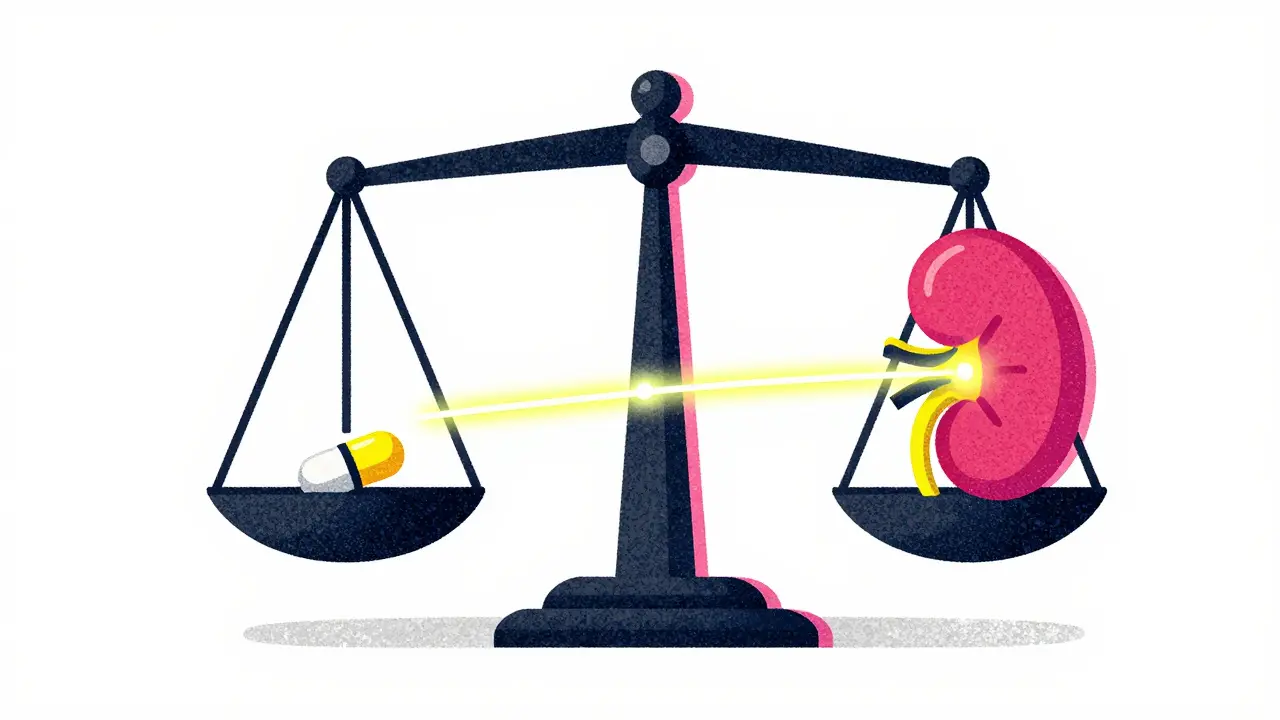
If generics are so much cheaper and generally effective, why is there still hesitation? The answer lies in the Narrow Therapeutic Index (NTI). In plain English, this means there is a very thin line between a dose that works and a dose that is either toxic or completely ineffective. For a drug like tacrolimus, a tiny shift in the amount of active ingredient reaching your bloodstream can be the difference between a healthy kidney and a rejection episode.
FDA standards generally allow generics to have a bioequivalence range of 80-125% compared to the brand. While that sounds acceptable for a headache pill, it can be problematic for NTI drugs. Some surgeons, including Dr. Jean Emond of NewYork-Presbyterian, have warned that this range might be too broad for transplant care. This is why some patients report "fluctuating levels" after switching, and why about 12% of patients need dose adjustments within the first three months of a switch.
Managing the Transition: Therapeutic Drug Monitoring
You cannot simply swap a brand-name bottle for a generic one and hope for the best. The only safe way to move to a generic combination is through Therapeutic Drug Monitoring (TDM). This involves frequent blood tests to measure the "trough level"-the lowest concentration of the drug in your blood just before your next dose.
- The Initial Switch: Biweekly blood tests for the first few months to ensure the generic is absorbing correctly.
- Stabilization: Once a steady state is reached, testing may move to monthly intervals.
- Consistency: It is vital to stay with the same generic manufacturer. Switching from one generic brand to another can cause another spike or drop in blood levels because different companies use different fillers and manufacturing processes.
Typical trough targets that doctors look for include 5-10 ng/mL for tacrolimus and 100-150 ng/mL for sirolimus. If these numbers drift, the dose is tweaked. This process is why transplant coordinators often report needing more staff time during the conversion period; it requires a level of vigilance that "maintenance" therapy doesn't.
Alternative Combinations and Special Cases
While tacrolimus and MMF are the most frequent duo (used in 64% of kidney regimens), other generic combinations offer specific advantages. For example, using a combination of generic tacrolimus and Sirolimus (an mTOR inhibitor) has shown promise in reducing the risk of post-transplant diabetes. A 2024 review suggested that corticosteroid-sparing regimens using this pair can lower diabetes risk by about 31% compared to those using steroids.
Sirolimus-based regimens are also often preferred for patients with a high risk of rejection. However, they aren't for everyone. If you have impaired wound healing, mTOR inhibitors can actually hinder the recovery process, making them a poor choice during the immediate post-op phase. This highlights why these combinations must be tailored to the individual patient rather than a one-size-fits-all approach.
Real-World Outcomes: Does it Actually Work?
The data suggests a resounding yes, provided the monitoring is strict. A 2022 analysis in the American Journal of Transplantation found that one-year kidney graft survival was 94.7% for those on generic tacrolimus, compared to 95.1% for those on the brand name. Statistically, that difference is negligible. The biological outcome is nearly identical.
Patient experiences, however, are more varied. On forums like the National Kidney Foundation's, many celebrate saving thousands of dollars a month. But others share cautionary tales. One user on Reddit reported three rejection episodes in a year after switching to generic tacrolimus, eventually requiring hospitalization. These outliers usually happen when TDM is neglected or when the patient's body is hyper-sensitive to the bioequivalence variations of a specific generic manufacturer.

Future Directions in Cost-Effective Care
The landscape is shifting toward even more affordable options. The FDA's recent approval of interchangeable biosimilars for belatacept could cut costs by another 40%. There is also growing interest in "withdrawal protocols," where patients use a heavy initial induction (like alemtuzumab) and then transition to a very low-dose maintenance of generic tacrolimus and sirolimus. The ultimate goal is to reduce the total amount of medication a patient needs over their lifetime, lowering both the cost and the side-effect profile.
Is it safe to switch from brand-name to generic immunosuppressants?
Yes, for the vast majority of patients, generic versions are safe and effective. Data shows that graft survival rates are nearly identical between brand-name and generic tacrolimus. However, because these are narrow therapeutic index drugs, the switch must be accompanied by close therapeutic drug monitoring (TDM) to ensure blood levels remain in the target range.
Why do I need blood tests more often when switching to generics?
Generic medications can have slight variations in absorption (bioequivalence) compared to the brand name. Since immunosuppressants have a narrow window between being effective and being toxic, doctors use blood tests to verify that your specific body is absorbing the generic version correctly and to adjust the dose if necessary.
Can I switch between different generic manufacturers?
It is generally discouraged. Different manufacturers may use different inactive ingredients or processes, which can change how the drug is absorbed. To avoid blood level fluctuations and potential rejection risks, most transplant centers insist that patients stay with one specific generic manufacturer.
Which generic combination is best for avoiding diabetes?
Combinations that use generic tacrolimus and sirolimus (an mTOR inhibitor) while reducing or eliminating corticosteroids are often linked to a lower risk of post-transplant diabetes. Some studies indicate up to a 31% lower risk compared to traditional steroid-heavy regimens.
How much money can I actually save by going generic?
Savings are significant. For example, generic tacrolimus can cost between $300 and $400 monthly, whereas the brand-name version can exceed $2,000. Similarly, generic MMF can reduce costs by 80% or more compared to brand-name CellCept.
Next Steps for Patients
If you are considering a switch to save on costs, don't do it unilaterally. Start by talking to your transplant coordinator about a structured transition plan. Ask specifically about which generic manufacturer they recommend and how often you will need blood draws during the first 90 days. If you notice any new symptoms-like a fever or a change in urine output-contact your team immediately, as these can be early signs that your levels have dropped too low.

