

Many people reach for combination cold and allergy meds without thinking twice. You grab a box of Zyrtec-D or Claritin-D because it promises to tackle your runny nose, congestion, and sneezing all in one pill. It sounds convenient. But here’s the truth: these combinations aren’t harmless. They carry real, documented risks - especially if you don’t know what’s in them or how they interact with your body.
What’s Actually in These Combination Pills?
Most over-the-counter decongestant-antihistamine combos contain two active ingredients. The antihistamine part - like cetirizine in Zyrtec, loratadine in Claritin, or fexofenadine in Allegra - blocks histamine, the chemical that triggers sneezing and itchy eyes. The decongestant - almost always pseudoephedrine (not phenylephrine, which studies show barely works) - shrinks swollen nasal passages by tightening blood vessels.
But here’s where things get risky. These aren’t two separate drugs you can treat like snacks. They’re a team. And like any team, if one member is overworked or out of sync, the whole thing can crash.
Why Drowsiness Isn’t Just a Minor Side Effect
First-generation antihistamines like diphenhydramine (Benadryl) knock out 50% of users with drowsiness. Even second-gen ones like cetirizine (Zyrtec) make about 14% of people feel foggy, dizzy, or slow. That’s not just annoying - it’s dangerous if you’re driving, operating machinery, or even walking down stairs.
And here’s the trap: people think, “I took Zyrtec in the morning, so I’m fine.” But Zyrtec lasts 24 hours. If you take Benadryl later for a sudden sneezing fit, you’re stacking two antihistamines. That’s not doubling your relief - it’s doubling your risk of extreme drowsiness, confusion, or even falls.
Decongestants Aren’t Just Nose Clearers - They’re Heart Stimulants
Pseudoephedrine doesn’t just shrink your nasal passages. It tightens blood vessels everywhere. That means your blood pressure can rise - by 1 to 2 points in healthy people. But if you already have high blood pressure, heart disease, or even diabetes? That jump can hit 5 to 10 points. That’s enough to trigger chest pain, irregular heartbeat, or even a stroke in vulnerable people.
Harvard Health and the Cleveland Clinic both warn: if you have heart problems, diabetes, or thyroid issues, you should avoid these combos entirely. Yet, millions take them anyway because they’re on the shelf next to the gum and mints.
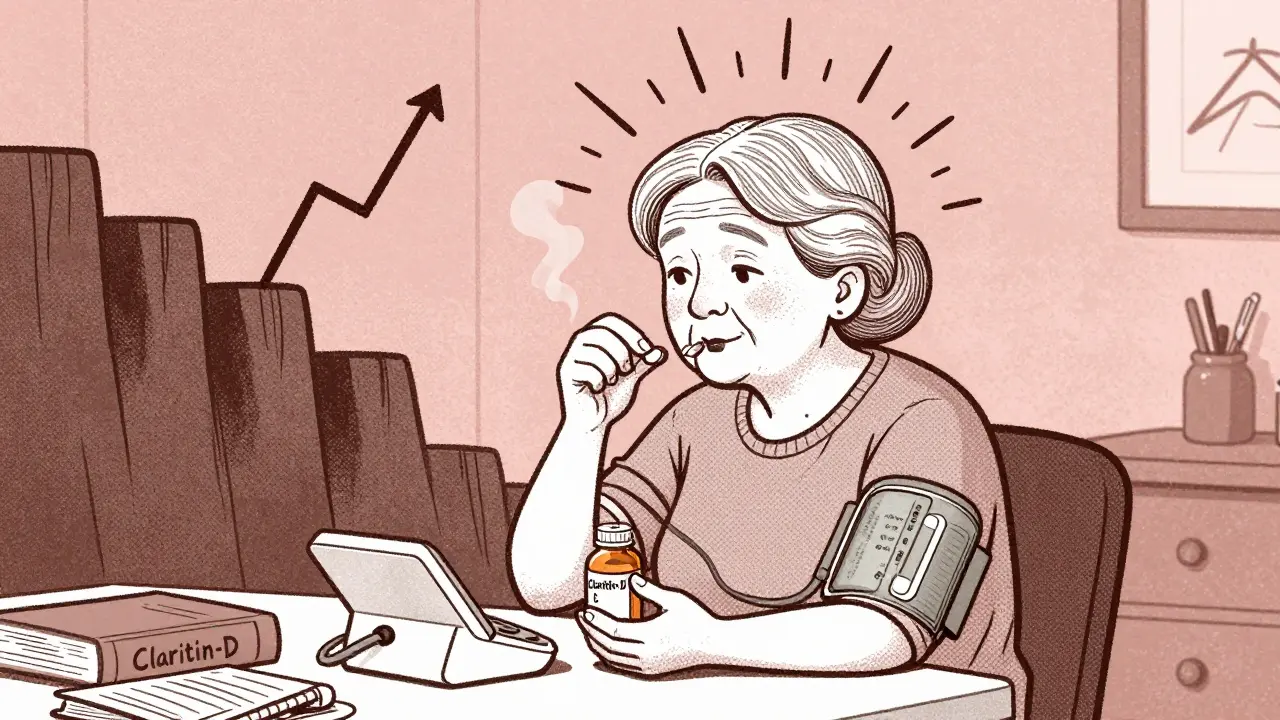
Overdose Isn’t a Myth - It’s a Real Emergency
Poison Control gets calls every week about people who took too many of these meds. Symptoms? Fast heartbeat, dry mouth, agitation, blurred vision, trouble balancing, or even seizures. In severe cases, it can lead to cardiac arrest or death.
One common mistake? Taking Zyrtec-D and then adding Benadryl for nighttime relief. Zyrtec sticks around all day. Benadryl hits fast and fades in 4-6 hours. So you take it again at 10 p.m. - not realizing your body is still swimming in cetirizine. Now you’ve got two antihistamines plus a decongestant all at once. That’s a triple threat.
Who’s Most at Risk? (Spoiler: It’s More People Than You Think)
Older adults are especially vulnerable. Their bodies process drugs slower. Even normal doses can feel like overdoses. A 70-year-old with mild hypertension might not realize their daily Claritin-D is pushing their blood pressure into danger zones.
Children under 12? The American College of Allergy, Asthma, and Immunology says these combos offer no real benefit for them - only risk. Yet, some parents still give them “because it worked for the last cold.” It didn’t. And it could have hurt them.
People on other meds? Big red flag. These combinations can clash with antidepressants, blood pressure pills, thyroid drugs, or even herbal supplements like St. John’s Wort. The interactions aren’t always obvious. A pharmacist at Massachusetts General Hospital says, “People think OTC means safe. But these are still drugs. They can interfere with your health in ways you won’t notice until it’s too late.”
What the Data Really Shows
A 2012 review in the American Family Physician looked at over 1,200 people using these combos. About 19% had side effects - compared to 13% in control groups. That might sound small, but when you’re talking millions of users, that’s hundreds of thousands of avoidable reactions.
And the Cochrane review in 2022 found something even more telling: the benefit for cold symptoms was “probably too small to be clinically relevant.” Translation? You’re taking a risk for almost no payoff.

What Should You Do Instead?
Don’t reach for the combo pill unless you’ve been told it’s safe by a doctor - and even then, question it.
- If you have congestion only? Try a decongestant alone - but only for 3 days max. Longer than that, and it can rebound and make congestion worse.
- If you have sneezing, itching, runny nose? Use an antihistamine alone. Pick one that doesn’t make you sleepy - like loratadine or fexofenadine.
- If you have both? Ask your pharmacist. They can help you space out doses safely. Never take two antihistamines together. Not Zyrtec and Benadryl. Not Claritin and Allegra. Ever.
Also, read the labels. Many products list “antihistamine” and “decongestant” in small print. If you’re already taking one of these for another reason - say, a nighttime sleep aid with diphenhydramine - you’re unknowingly doubling up.
When to Stop and Call for Help
If you take one of these combos and experience any of these, stop immediately and get medical help:
- Fast, pounding, or irregular heartbeat
- Severe dizziness or trouble standing
- Blurred vision or confusion
- Difficulty urinating
- Swelling of face, lips, tongue, or throat
These aren’t normal side effects. They’re warning signs.
Bottom Line: Convenience Isn’t Worth the Cost
These combination pills are everywhere. They’re marketed as “all-in-one” solutions. But they’re not magic. They’re a cocktail of powerful drugs with narrow safety margins.
For most people, treating symptoms one at a time - with the right single-ingredient medicine - is safer, cheaper, and more effective. You might need two pills instead of one. But you’ll also avoid the hospital.
Next time you’re tempted to grab that combo box, pause. Ask yourself: Do I really need both? Or am I just following the label because it looks easier?
Can I take Zyrtec and Benadryl together?
No. Taking Zyrtec (cetirizine) and Benadryl (diphenhydramine) together increases your risk of severe drowsiness, confusion, dizziness, and even trouble breathing. Zyrtec lasts 24 hours. Benadryl adds more antihistamine on top - which your body isn’t designed to handle. This combination can lead to overdose symptoms like fast heartbeat, agitation, or seizures. Always choose one antihistamine and stick with it.
Is Claritin-D safe for high blood pressure?
No. Claritin-D contains pseudoephedrine, a decongestant that raises blood pressure. Even a small increase can be dangerous if you already have hypertension, heart disease, or are on blood pressure medication. The American Heart Association advises against using decongestants if you have these conditions. Talk to your doctor about safer alternatives like nasal saline rinses or intranasal corticosteroids.
Why is pseudoephedrine used instead of phenylephrine?
Pseudoephedrine is more effective at reducing nasal congestion than phenylephrine. Studies show phenylephrine, found in Sudafed PE, has little to no benefit over a placebo. Because of this, most effective decongestant combos - like Zyrtec-D and Claritin-D - use pseudoephedrine. However, it’s kept behind the pharmacy counter in the U.S. because it can be used to make illegal drugs. This doesn’t mean it’s safer - just that it works better.
Are these combos safe for kids?
No. The American College of Allergy, Asthma, and Immunology strongly advises against using decongestant-antihistamine combinations in children under 12. There’s no strong evidence they help, and the risks - including drowsiness, agitation, and heart rhythm changes - are real. For kids, use saline sprays, humidifiers, and age-appropriate pain relievers if needed. Always check with a pediatrician before giving any OTC medicine.
Can I use these if I’m taking other medications?
Maybe not. Decongestant-antihistamine combos can interact dangerously with antidepressants, beta-blockers, thyroid meds, and even some herbal supplements. For example, combining pseudoephedrine with an SSRI can cause dangerously high blood pressure. Always tell your pharmacist or doctor about every medication and supplement you take - even ones you think are harmless.

