
Medication Safety Score Calculator
How safe is your medication storage? Answer 6 key questions to get your personalized safety score based on CDC guidelines and expert recommendations.
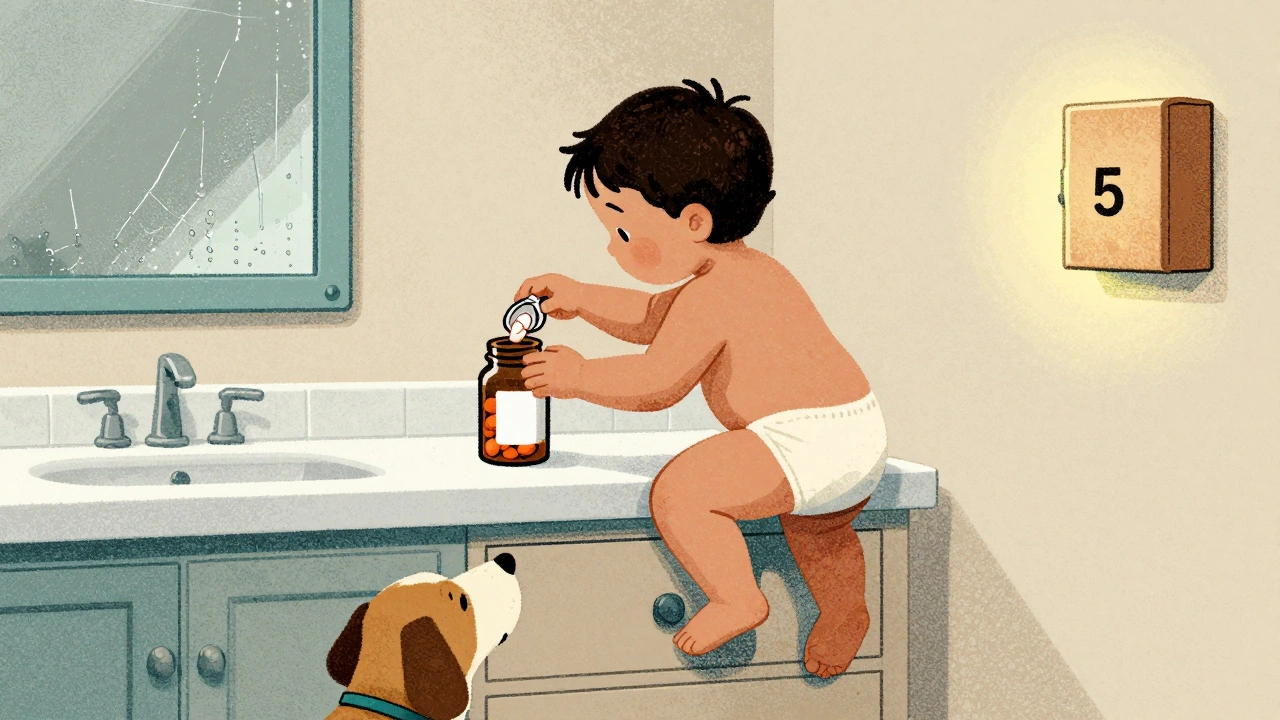
Every year, 60,000 children under age 5 end up in emergency rooms because they swallowed medicine they found lying around. That’s not a rare accident-it’s a preventable crisis. And it’s not just kids. Pets, especially dogs, are just as curious-and just as dangerous when they get into human or veterinary meds. The truth? Child-resistant caps alone won’t save you. Neither will hiding pills in a drawer or leaving them on the nightstand. If you’re not locking your medications away, you’re gambling with your child’s or pet’s life.
Why Locked Storage Isn’t Optional
You might think, “My kid can’t climb,” or “My dog doesn’t open jars.” But research from Nationwide Children’s Hospital shows toddlers as young as 18 months can pull themselves up on furniture to reach countertops. And dogs? A 2022 study by VCA Animal Hospitals found that 65% of dogs can open standard pill bottles in under two minutes. They don’t need thumbs. They use their noses, paws, or sheer persistence. The CDC says 80% of accidental ingestions happen because meds were left unattended-on a dresser, in a purse, on the bathroom counter. Even if you’re just popping a pill and setting the bottle down for a second, that’s enough time for a child or pet to get to it. Locked storage isn’t about being paranoid. It’s about removing opportunity.Where to Store Medications (And Where Not To)
The bathroom medicine cabinet? A terrible idea. Humidity from showers degrades 40% of medications within 30 days, making them less effective or even dangerous. Plus, it’s at child and pet eye level. Kitchens? Better-but only if you’re not storing meds near food or baking supplies. One family in 2021 had their child ingest ivermectin paste from a drawer next to flour. The child spent 14 days in intensive care. The safest spots? High, locked, and dry. A wall-mounted lockbox at least 4 feet off the ground is the minimum. For maximum safety, go higher-5 feet, if possible. Put it in a kitchen pantry, a bedroom closet, or even a drawer in a dresser you can lock. Avoid places near windows, heat sources, or sinks. Temperature matters: most human meds need to stay between 68-77°F. Refrigerated meds like insulin or certain antibiotics must stay between 36-46°F. Keep those in a locked section of the fridge, not on the door where temperatures swing.Human vs. Pet Medications: Keep Them Separate
Here’s something most people don’t realize: pet meds are often designed to taste like candy. Banana, strawberry, chicken-flavors that attract dogs, yes, but also kids. A 2022 PetMD study found human-pet medication mix-ups happen in 1,200 households every year. Heartworm preventatives with ivermectin are the most common culprit. A 5mL dose meant for a dog can kill a child. Even a tiny amount of 5-fluorouracil cream (used for skin cancer in humans) is 100% fatal to cats. The CDC says keeping human and pet meds in separate locations cuts mix-up errors by 87%. That means don’t store them in the same box, drawer, or cabinet. Use two locked containers. One for people, one for pets. Label them clearly. If you’re out of space, use a small lockbox for pet meds and keep it in a different room-like the garage or a basement cabinet. Distance matters. Research from Nationwide Children’s Hospital shows that keeping them at least 15 feet apart reduces errors by 94%.Original Packaging Is Non-Negotiable
Never transfer pills to pill organizers, snack bags, or empty spice jars. The CDC reports that 35% of medication errors happen because someone grabbed the wrong bottle because it wasn’t labeled. A child might think a blue capsule is candy. A dog might eat a bottle labeled “Fish Oil” because it smells like bacon. Original packaging has the name, dosage, expiration date, and warnings. It’s your first line of defense. If you use a pill organizer for yourself, keep the original bottles locked up and use the organizer only for daily doses you’ve already pulled. Always double-check the label before you put anything in the organizer. A quick 10-second check saves lives.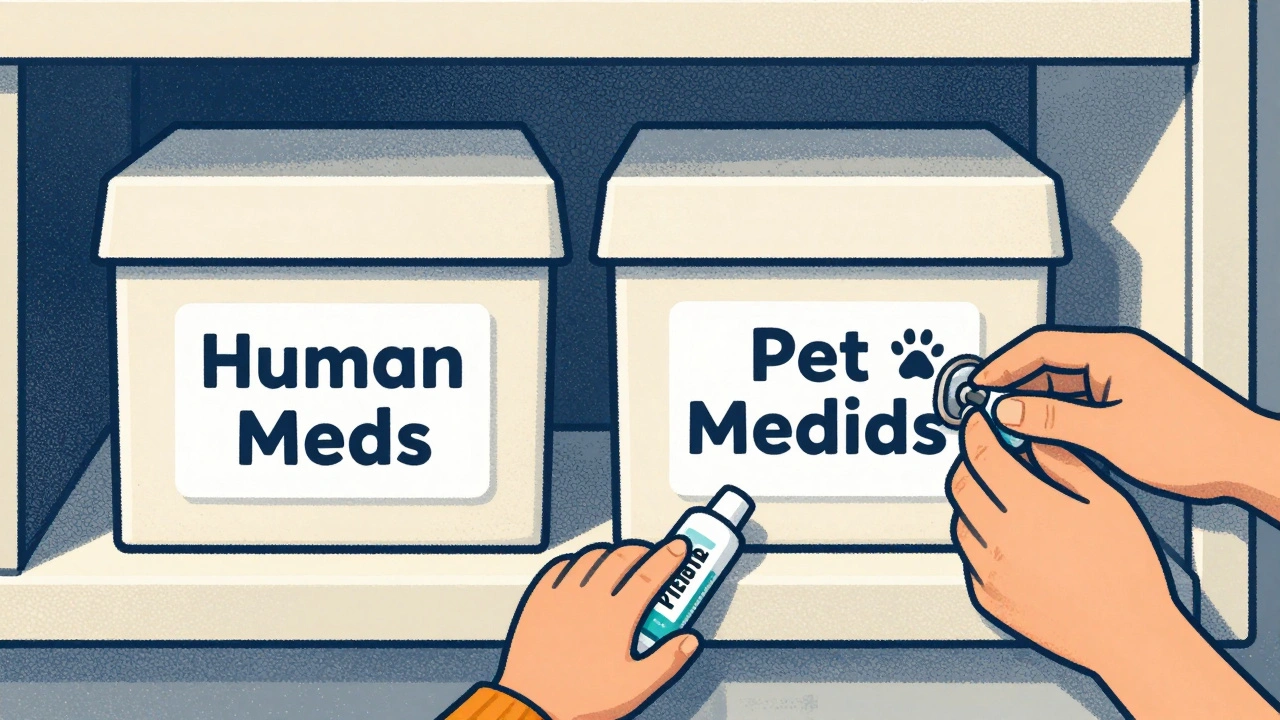
Special Cases: Opioids, Vet Pastes, and Topical Creams
Some meds are deadlier than others. Opioids like oxycodone or fentanyl? They need the highest level of security. The DEA requires UL TRTL-30x6 certified containers for these-containers that can resist tools for 30 minutes. If you’re storing opioids, don’t settle for a cheap lockbox. Get a gun safe or a certified medication safe. They cost $100-$300, but they’re worth it. Veterinary pastes, especially dewormers, are another hidden danger. They’re sweet, sticky, and shaped like toothpaste. Since 2018, the FDA has documented over 200 dog deaths from dogs eating these pastes. Keep them locked away, not on the kitchen counter next to your toothpaste. Topical creams like 5-fluorouracil? Store them in a separate locked container, out of reach of pets and children. Even a smear on a child’s skin can cause serious harm. Never leave them out after applying.What Works: Real Solutions That Families Use
You don’t need to spend a fortune. A simple wall-mounted lockbox costs as little as $25. Consumer Reports tested dozens and found the best ones are easy to install, have a key or combination lock, and hold 10-20 bottles. Some parents use old gun safes-yes, even if they don’t own guns. They’re sturdy, lockable, and often already in the home. Another popular fix? A “medication station.” This is a locked box with a timer or digital lock that only opens at set times. Seattle Children’s Hospital tracked families using these and found compliance jumped from 45% to 89%. That means fewer mistakes, fewer trips to the ER. For elderly family members who struggle with child-resistant caps, install a lower lockbox with an emergency release. That way, they can access meds safely without risking a child getting in.What Not to Do: Common Mistakes
- Leaving meds on nightstands or dressers: 68% of parents admit to this. Don’t be one of them. - Storing pet meds near food bowls: 45% do this. That’s asking for trouble. - Flushing old meds down the toilet: The FDA warns against this. It pollutes water. Use a take-back program instead. - Assuming “child-resistant” means “child-proof”: It doesn’t. Only 50-80% of kids are stopped by these caps. - Not checking expiration dates: Expired meds can break down into harmful substances. Do a quick audit every month.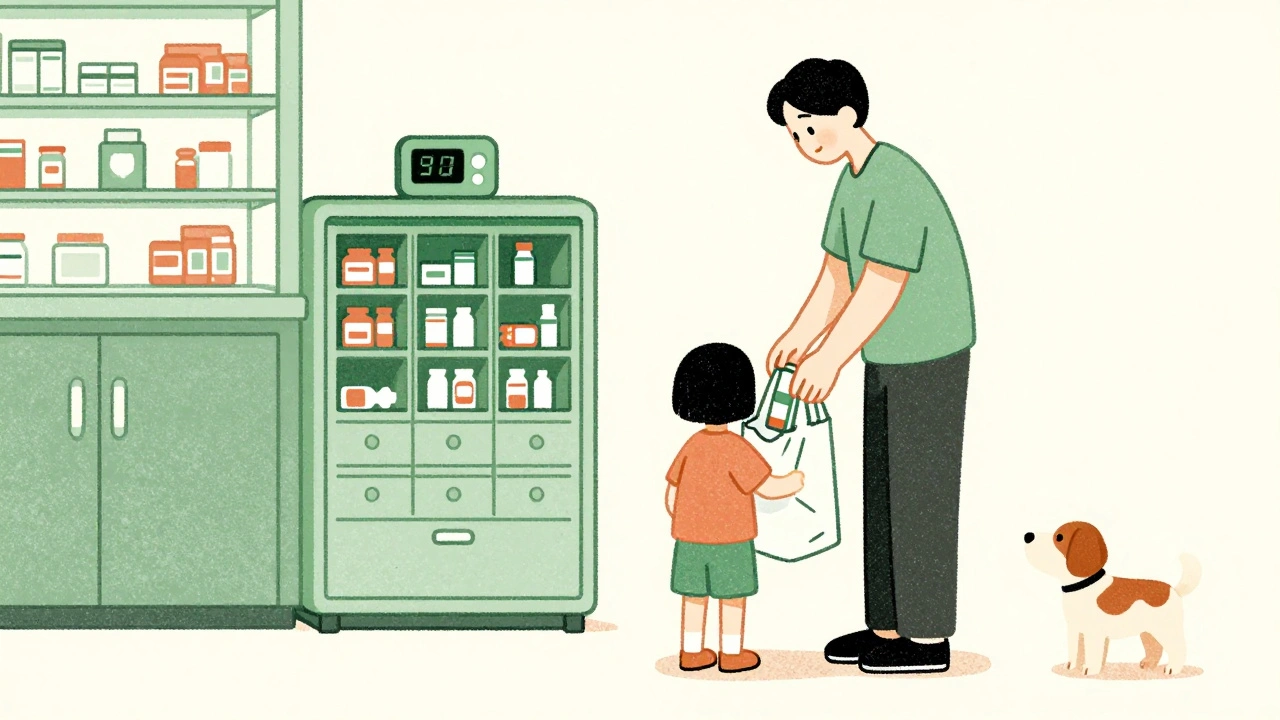
How to Build a Safe Routine
Making this stick takes 21-30 days. Start by picking one locked box. Put all human meds in it. Put all pet meds in another. Label them. Put them in a spot no one can reach. Then, make it a habit: every time you take a pill, put the bottle back immediately. Every time you give your dog medicine, lock the bottle before you walk away. Set a weekly reminder on your phone: “Check meds.” Open the box. Look at labels. Toss expired pills in a sealed bag and drop them at a pharmacy take-back bin. The DEA’s National Take Back Day happens twice a year, but most pharmacies accept expired meds year-round. Talk to your kids. Even toddlers can learn: “Medicine is not candy.” Use simple words. Show them the locked box. Make it part of your daily routine, like brushing teeth.What the Data Says: Are We Getting Better?
Only 22% of U.S. households with kids and pets use locked storage consistently. That’s shocking. But awareness is rising. The FDA now requires veterinary meds to have clear storage pictograms on labels. The American Academy of Pediatrics updated their guidelines in 2024 to push for separate storage locations. And the market for child- and pet-safe storage is growing fast-$420 million in 2023 and climbing. The good news? When families lock their meds, accidental ingestions drop by 76-92%. That’s not a small number. That’s thousands of ER visits avoided. That’s children and pets staying safe.Final Checklist: Are You Protected?
- [ ] All human and pet medications are in locked containers - [ ] Human and pet meds are stored in separate locations (at least 15 feet apart) - [ ] Medications are kept above 4 feet (preferably 5 feet) - [ ] Original bottles with labels are used-no transfers to unmarked containers - [ ] Refrigerated meds are stored in a locked section of the fridge - [ ] Opioids and toxic vet meds are in certified safes - [ ] Expired meds are disposed of at a take-back location - [ ] Family members know: “Medicine is not candy” - [ ] A weekly check is scheduled to review storage and expiration datesIf you checked every box, you’re doing better than 78% of households. Keep going. One locked box can save a life.
Can child-resistant caps alone protect my child from swallowing medicine?
No. Child-resistant caps are designed to slow down kids, not stop them. Studies show they prevent only 50-80% of ingestions. Many toddlers can open them within minutes, especially if they’re curious or persistent. Locked storage is the only reliable protection.
Is it safe to store pet and human medications in the same cabinet?
No. Pet medications are often flavored to make them appealing to animals-but that same flavor makes them attractive to children. Storing them together increases the risk of mix-ups by 4.7 times. Keep them in separate locked containers, ideally in different rooms.
What should I do with expired or unused medications?
Never flush them or throw them in the trash. The FDA recommends using a drug take-back program. Many pharmacies and police stations offer free drop-off bins. The DEA’s National Take Back Day happens twice a year, but you can drop off meds year-round at most pharmacies. If no program is nearby, mix pills with coffee grounds or cat litter, seal them in a container, and throw them in the trash.
Are there affordable options for locked medication storage?
Yes. A basic wall-mounted lockbox costs as little as $25. Many families repurpose old gun safes, toolboxes, or even locked filing cabinets. The key isn’t price-it’s reliability. Make sure it locks with a key or combination, isn’t easily broken into, and is mounted securely out of reach.
Why do some medications need to be refrigerated, and how do I store them safely?
About 25% of medications, like insulin, certain antibiotics, and eye drops, require refrigeration to stay effective. Store them in a locked section of the fridge-preferably on a top shelf away from food. Use a labeled container to prevent mix-ups. Never leave them on the fridge door, where temperatures fluctuate. Always check the label for exact storage instructions.
What if I have an elderly family member who can’t open child-resistant bottles?
Many pharmacies offer easy-open caps upon request. You can also install a lower lockbox with an emergency release key or code so they can access meds safely without risking a child’s access. Always supervise and double-check doses to prevent errors.
Are there specific pet medications that are especially dangerous to children?
Yes. Heartworm preventatives containing ivermectin, topical creams with 5-fluorouracil, and dewormer pastes are extremely toxic to children. A single dose of ivermectin paste meant for a dog can be fatal to a toddler. Keep all pet meds locked and separate from human meds. Never assume a pet medication is safe just because it’s labeled for animals.



parth pandya
Man, i never thought about pets openin pill bottles. My dog just knocked over my dad's blood pressure meds last week. Scared the hell outta me. Locked box is now on my to-do list. Thanks for the wake-up call.