
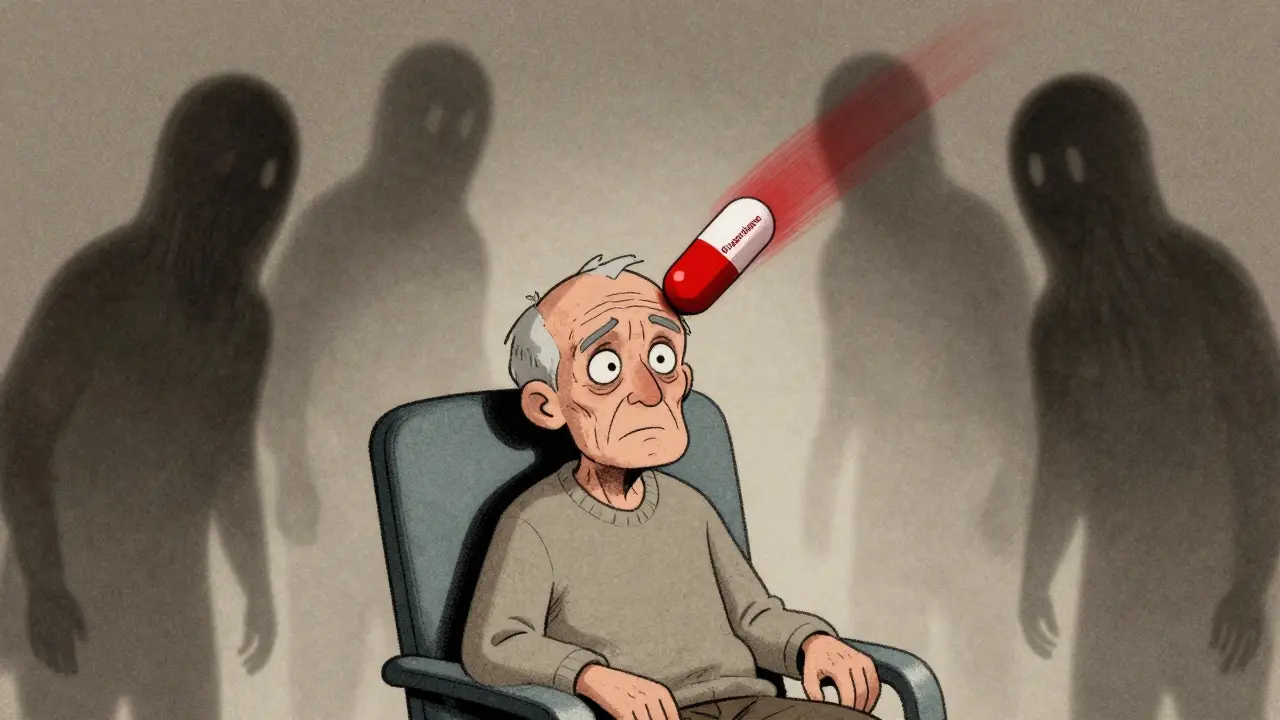
Every year, thousands of seniors with dementia are prescribed antipsychotic drugs to calm agitation, aggression, or hallucinations. It seems like a quick fix - until the risks show up. In 2005, the U.S. Food and Drug Administration put a black box warning on all antipsychotic medications: these drugs can double the risk of stroke in older adults with dementia. That’s not a small number. It’s not a theoretical concern. It’s a hard truth backed by data from over 30,000 patients. And yet, these medications are still being given - often without a full understanding of what’s at stake.
Why Are Antipsychotics Even Used?
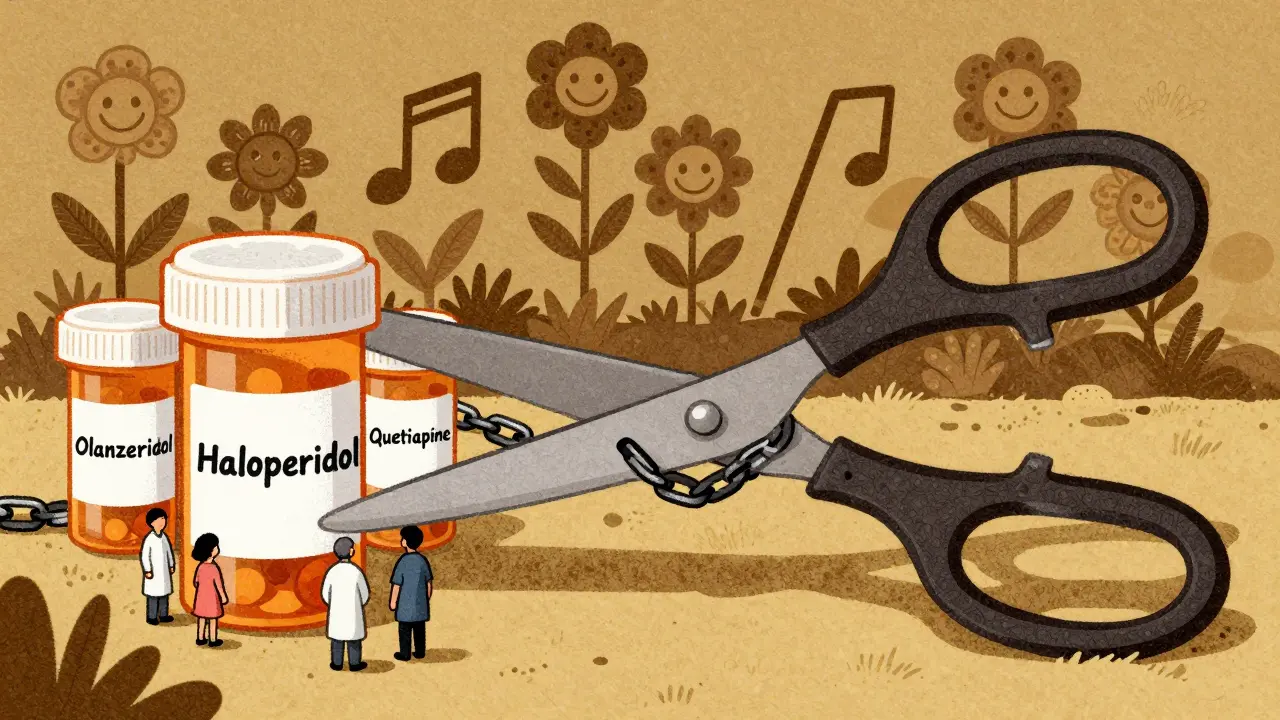
Dementia doesn’t just affect memory. It changes behavior. People may become paranoid, yell for hours, resist care, or wander off. Families and caregivers are overwhelmed. In nursing homes, where staff are stretched thin, antipsychotics have long been seen as a way to reduce chaos. Drugs like risperidone, olanzapine, and haloperidol were never approved for dementia. But doctors started prescribing them anyway - off-label - because there weren’t better options. The problem? These drugs don’t fix the root cause. They silence symptoms by dulling brain activity. And in doing so, they trigger dangerous side effects that hit the brain’s blood supply directly.The Stroke Risk Is Real - and Immediate
For years, many assumed that stroke risk only came from long-term use. That’s not true. A major study from the American Heart Association in 2012 looked at Veterans Affairs records and found something startling: even a few days on antipsychotics can raise stroke risk by 80%. That’s not a slow build-up. It’s an immediate spike. The numbers don’t lie. In a pooled analysis of 17 clinical trials, elderly dementia patients on antipsychotics had a 1.6 to 1.7 times higher chance of dying than those on placebo. Stroke was a major contributor. The drugs interfere with blood pressure control, cause sudden drops in blood flow (orthostatic hypotension), and trigger metabolic changes that thicken the blood and narrow arteries. For someone already at risk because of age, diabetes, or high blood pressure, this is like pouring gasoline on a fire.Typical vs. Atypical: Is One Safer?
There are two main types of antipsychotics. First-generation (typical) drugs - like haloperidol - were developed in the 1950s. Second-generation (atypical) drugs - like quetiapine and aripiprazole - came later and were thought to be safer. But the data says otherwise. Studies show that both types increase stroke risk. A 2023 review in Neurology found that while long-term use of typical antipsychotics carries a slightly higher risk, the difference isn’t big enough to call one “safe.” Atypical drugs may cause less movement side effects, but they’re linked to weight gain, diabetes, and high cholesterol - all of which also raise stroke risk over time. One study of nearly 5,000 nursing home residents found no difference in stroke rates between users of typical and atypical drugs. Another looked at Medicare data from 2006 to 2010 and confirmed that stroke partially explains why typical antipsychotics lead to more deaths - but not entirely. That means something else is going on. Maybe the drugs affect brain chemistry in ways we still don’t fully understand.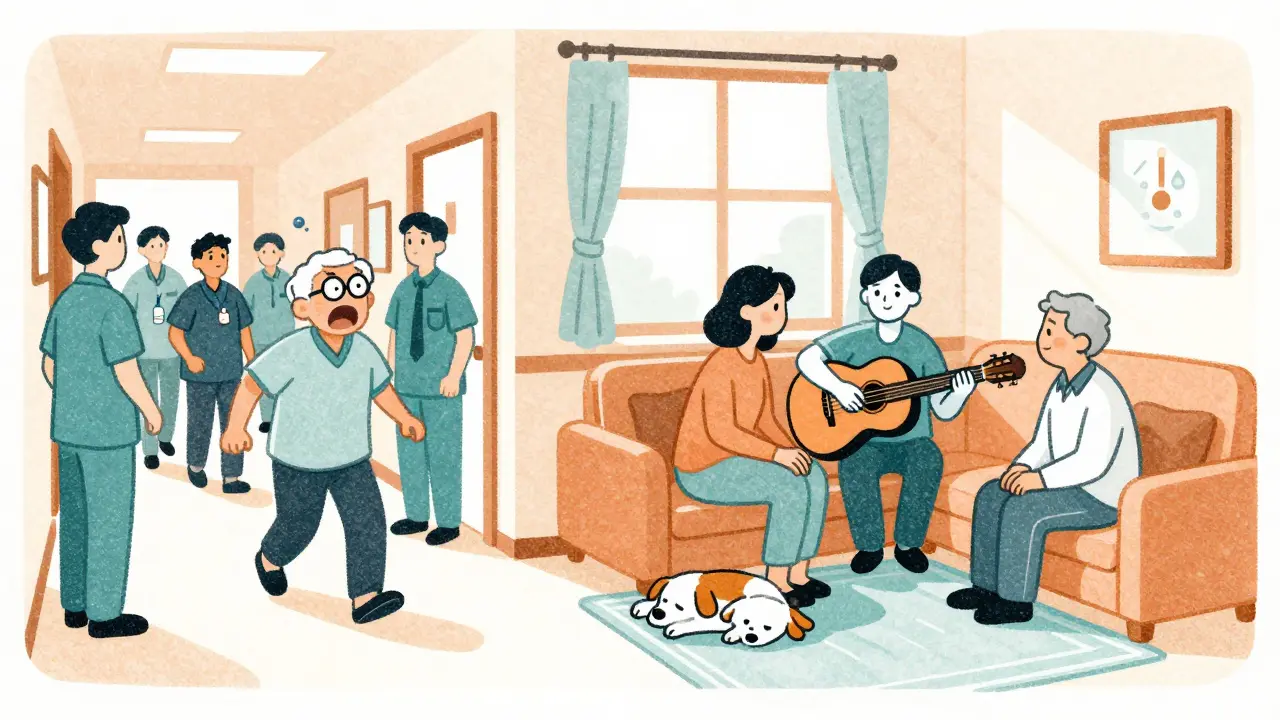
Why Do Doctors Keep Prescribing Them?
The American Geriatrics Society has said since 2015: Do not use antipsychotics for dementia-related behavior problems. The same goes for the FDA, the National Institute on Aging, and leading neurology groups. So why are they still prescribed? One reason: desperation. When a person with dementia is lashing out, screaming, or refusing to eat, families and staff often feel like they have no control. Non-drug options - like music therapy, structured routines, or trained dementia care staff - take time, training, and resources. In many nursing homes, those aren’t available. Another reason: habit. Many doctors learned to treat behavioral symptoms with antipsychotics decades ago. They haven’t updated their training. And when a family says, “Just give him something to calm down,” it’s easier to write a prescription than to explain why it’s dangerous.What Are the Alternatives?
The good news? There are effective, safer ways to manage behavioral symptoms - if you have the right support.- Environmental changes: Reduce noise, improve lighting, remove mirrors that cause confusion.
- Personalized routines: People with dementia do better with predictability - same meals, same walks, same caregivers.
- Non-pharmacological therapies: Music therapy reduces agitation. Pet therapy lowers stress. Even simple touch and conversation can help.
- Training for caregivers: Staff who understand dementia behavior don’t need drugs to manage it. Programs like the Person-Centered Care model have cut antipsychotic use by over 50% in some facilities.
The Hidden Cost: More Than Just Stroke
Stroke isn’t the only danger. Antipsychotics increase the risk of:- Severe falls (due to dizziness or muscle stiffness)
- Pneumonia (from reduced swallowing reflexes)
- Heart rhythm problems
- Accelerated cognitive decline
What Should Families Do?
If your loved one is on an antipsychotic for dementia-related behavior:- Ask the doctor: Why are we using this? What’s the goal?
- Request a full review: Have we tried non-drug options first?
- Ask about tapering: Can we slowly reduce the dose while adding behavioral support?
- Push for a care plan: Can we get a dementia specialist or behavioral therapist involved?
The Bottom Line
Antipsychotics aren’t treatment for dementia. They’re chemical restraints. And like all restraints, they come with serious, sometimes deadly, consequences. The science is clear: these drugs raise stroke risk - fast. They increase death rates. They don’t improve quality of life. The real solution isn’t a new drug. It’s better care. Better training. Better support for families and staff. It’s time to stop treating behavioral symptoms with pills and start treating them with understanding.Are antipsychotics ever appropriate for someone with dementia?
Antipsychotics should only be considered in rare, extreme cases - like when someone is violently aggressive and poses a danger to themselves or others, and all non-drug options have failed. Even then, they should be used at the lowest possible dose for the shortest time possible, with close monitoring. The goal is always to stop them as soon as safety allows.
How quickly can antipsychotics cause a stroke in seniors?
Studies show stroke risk rises within days of starting the medication. One major study found that the risk increased as early as the first week of use. This contradicts the old belief that only long-term use was dangerous. The danger is real from the very first dose.
Do atypical antipsychotics have fewer side effects than typical ones?
Atypical antipsychotics cause fewer movement problems like tremors or stiffness, which is why they became popular. But they don’t lower stroke risk. In fact, they’re linked to weight gain, diabetes, and high cholesterol - all of which increase stroke risk over time. So while they may feel safer, they’re not safer when it comes to brain health.
What are the signs that an antipsychotic is causing harm?
Watch for sudden dizziness, falls, slurred speech, weakness on one side of the body, confusion that gets worse, or difficulty swallowing. These could signal a stroke or severe side effect. If any of these appear, stop the drug immediately and seek emergency care. Don’t wait.
Can antipsychotics make dementia worse?
Yes. Multiple studies show that seniors on these drugs decline faster cognitively than those not on them. The drugs suppress brain activity, which may accelerate the loss of thinking skills. They also cause sedation, reducing mental stimulation - which is critical for slowing dementia progression.
Is there a legal or ethical issue with prescribing antipsychotics for dementia?
Prescribing antipsychotics for dementia behavior is legal but ethically questionable. Regulatory agencies warn against it. Clinical guidelines call it inappropriate. Yet it’s still common - especially in nursing homes where staff are under-resourced. This creates a gap between what’s known to be safe and what’s routinely done. Families have the right to ask why a drug is being used and to demand alternatives.


Sanjana Rajan
I’ve seen this in my mom’s nursing home. They gave her risperidone because she ‘kept yelling at night.’ She didn’t yell because she was angry-she was scared. They didn’t try music, didn’t change the lighting, didn’t even ask if she missed her old radio. Just sedate her. I called it chemical abuse. They fired me when I complained. Now she can’t walk without help. Guess who’s to blame? Not the dementia. The pills.