
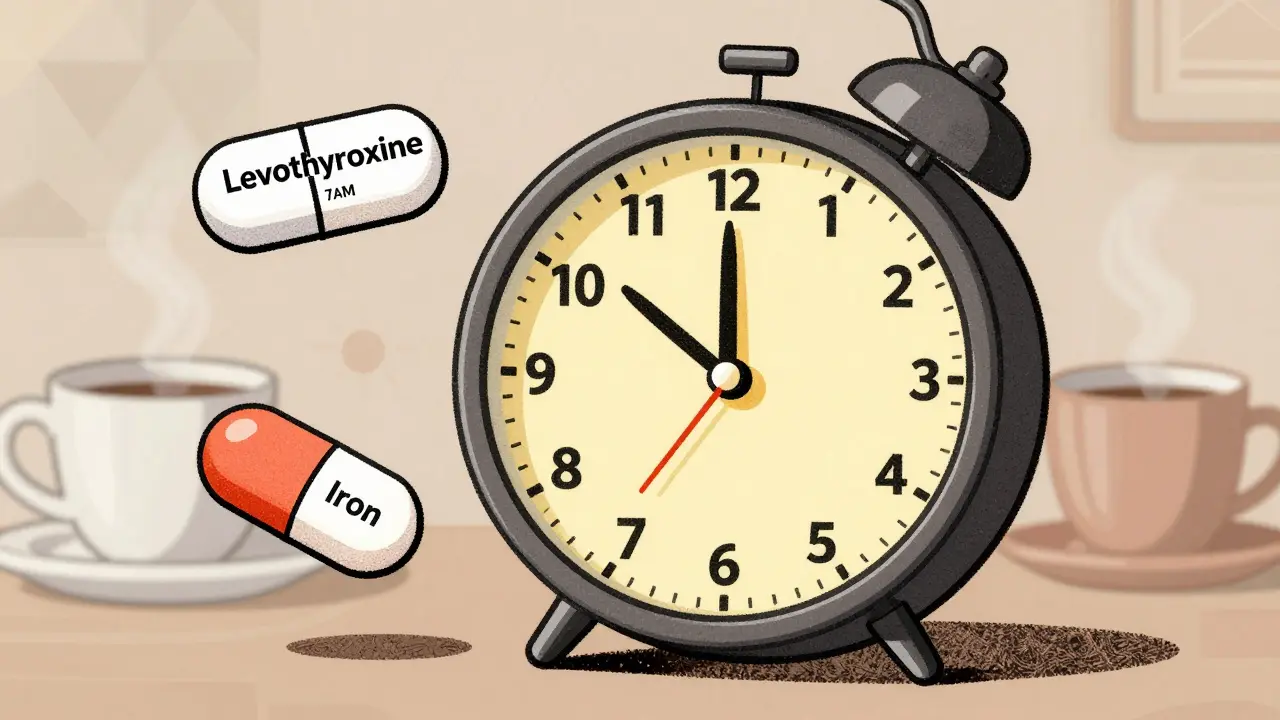
Iron & Levothyroxine Timing Calculator
How to Use This Calculator
To avoid reduced absorption of levothyroxine, you should separate these medications by at least 4 hours. Enter when you take your levothyroxine, and we'll show you the safe times for iron supplements based on medical guidelines.
Safe Timing
You have sufficient separation time between levothyroxine and iron supplements. Your timing follows medical guidelines.
Why This Matters
Iron supplements bind to levothyroxine in the gut, reducing absorption by 20-39%. The British National Formulary and NICE guidelines recommend a 4-hour separation to prevent this interaction. Without proper timing, your thyroid medication may become ineffective, leading to symptoms like fatigue, weight gain, and rising TSH levels.
Take iron supplements and levothyroxine at the same time? You might be unknowingly making your thyroid medication ineffective. This isn’t just a minor warning-it’s a well-documented, clinically significant interaction that can throw your entire treatment off track. Millions of people take both, and most don’t realize how easily iron can block thyroid hormone absorption. The result? Fatigue, weight gain, cold intolerance, and rising TSH levels-even if you’re taking your pills exactly as prescribed.
Why Iron and Levothyroxine Don’t Mix
Levothyroxine is a synthetic version of the thyroid hormone T4. It’s absorbed in the upper part of your small intestine. Iron supplements, especially ferrous sulfate (the most common type), bind to levothyroxine in the gut like magnets. They form a complex your body can’t absorb. Studies show this can cut levothyroxine absorption by 20% to 39%. That’s not a small drop-it’s enough to push your TSH from normal to hypothyroid range. This interaction was first confirmed back in 1976, and since then, dozens of studies have proven it. The British National Formulary, NICE guidelines, and even the Synthroid manufacturer all agree: don’t take them together. The binding happens fast-in the first hour after ingestion. Even if you take iron with food to reduce nausea, it still interferes. The stomach acid that helps iron absorb also helps levothyroxine absorb, so they’re fighting over the same conditions. That’s why timing matters more than you think.The 4-Hour Rule: What the Experts Say
The gold standard for separating these two is four hours. That’s what the British National Formulary (BNF) 2024 and NICE guidelines (NG145, 2023) recommend. It’s also what AbbVie’s Synthroid prescribing info says. Why four? Because that’s how long it typically takes for levothyroxine to be absorbed before iron enters the system in significant amounts. Some sources, like Thyroid UK, suggest two hours might be enough. But that’s a risky assumption. People’s digestion varies. If you have celiac disease, IBS, or just slower gut motility, even four hours might not be enough. A 2022 study found patients who stuck to a four-hour gap maintained normal TSH levels 89% of the time. Those who didn’t? Only 62%. That’s a huge difference in real-world outcomes. There’s no wiggle room if you want your medication to work. Skipping the gap-even once a week-can cause your thyroid levels to drift. And since hypothyroidism symptoms creep up slowly, you might not notice until your fatigue is unbearable or your cholesterol is through the roof.When to Take Each: Practical Timing Strategies
Most people take levothyroxine first thing in the morning, 30 to 60 minutes before breakfast. That’s fine. But if you also take iron, you can’t just grab your supplement after your coffee. Here’s how to make it work:- Option 1: Morning levothyroxine, afternoon iron - Take levothyroxine at 7 AM. Wait until 11 AM or noon to take iron with lunch. This gives you a solid 4-hour buffer and lets you take iron with food to reduce nausea.
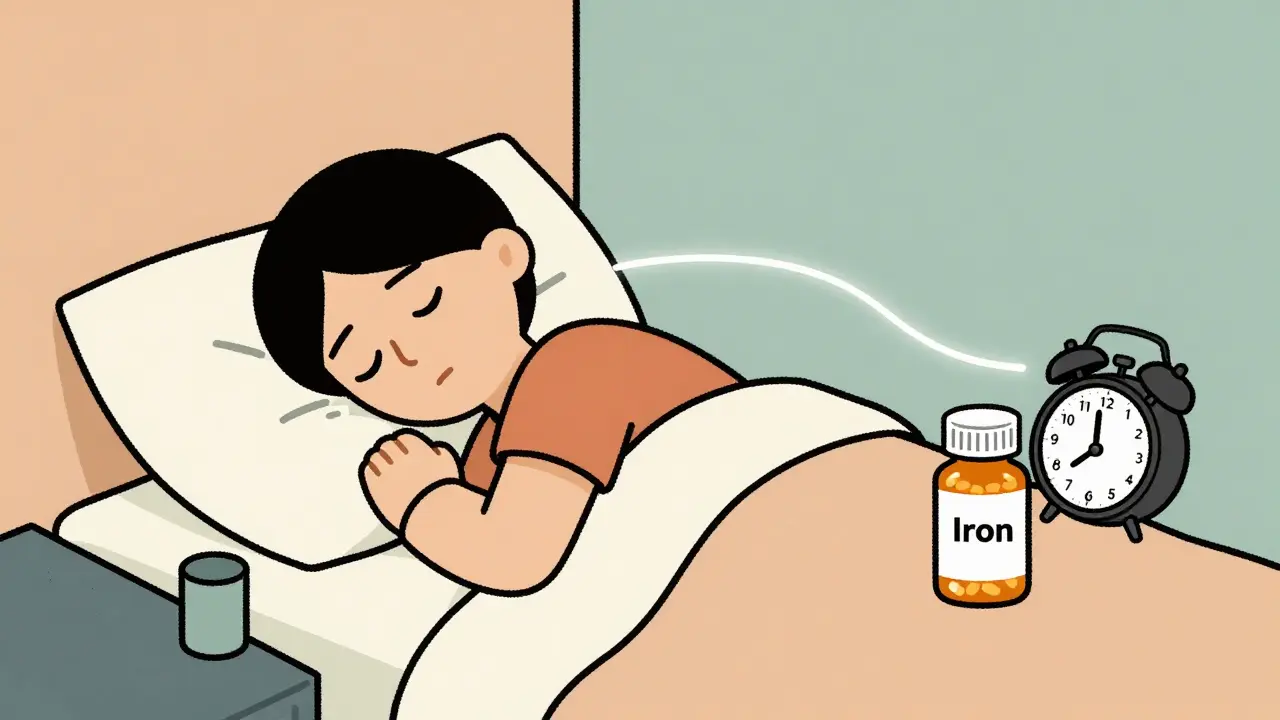
- Option 2: Bedtime levothyroxine, morning iron - This is the most effective strategy for many. Take levothyroxine at 10 PM, at least 4 hours after your last meal. Then take iron at 7 AM the next day. No breakfast conflict. No lunch timing stress. Just two simple, separated doses.
- Option 3: Iron at bedtime too - Only if you take levothyroxine in the morning. Iron at 10 PM, levothyroxine at 7 AM. That’s a 9-hour gap-plenty safe. But avoid taking iron right before bed if it causes stomach upset or keeps you awake.
Iron Formulations Matter-But Not as Much as Timing
Not all iron is the same. Ferrous sulfate is the cheapest and most common, but it causes the strongest binding with levothyroxine. Ferrous gluconate and ferrous fumarate are slightly less disruptive-but they still interfere. There’s no “safe” iron if taken too close. Some people switch to slow-release iron to reduce stomach upset. But that doesn’t reduce the interaction risk. The iron is still in your gut, still binding. The same goes for liquid iron or chewables. The chemical reaction happens regardless of form. One exception? Newer chelated iron formulations like PharmacoLever’s “ThyroSafe Iron,” currently in Phase II trials. Early results show 87% less binding. But it’s not available yet. For now, stick to the timing rule-no matter which iron you use.What to Do If You’ve Been Taking Them Together
If you’ve been taking iron and levothyroxine at the same time for weeks or months, don’t panic. But do act. Your TSH is likely elevated. Your body isn’t getting the full dose. Start by separating them by at least four hours. Then, schedule a blood test in 6 to 8 weeks. That’s how long it takes for your thyroid hormone levels to stabilize after a change in absorption. If your TSH is still high after switching your timing, your doctor might need to increase your levothyroxine dose. Don’t wait for symptoms to get worse. Fatigue isn’t just “getting older.” Weight gain isn’t “stress.” Cold hands? That’s your thyroid not working. These aren’t normal parts of aging-they’re signs your medication isn’t working.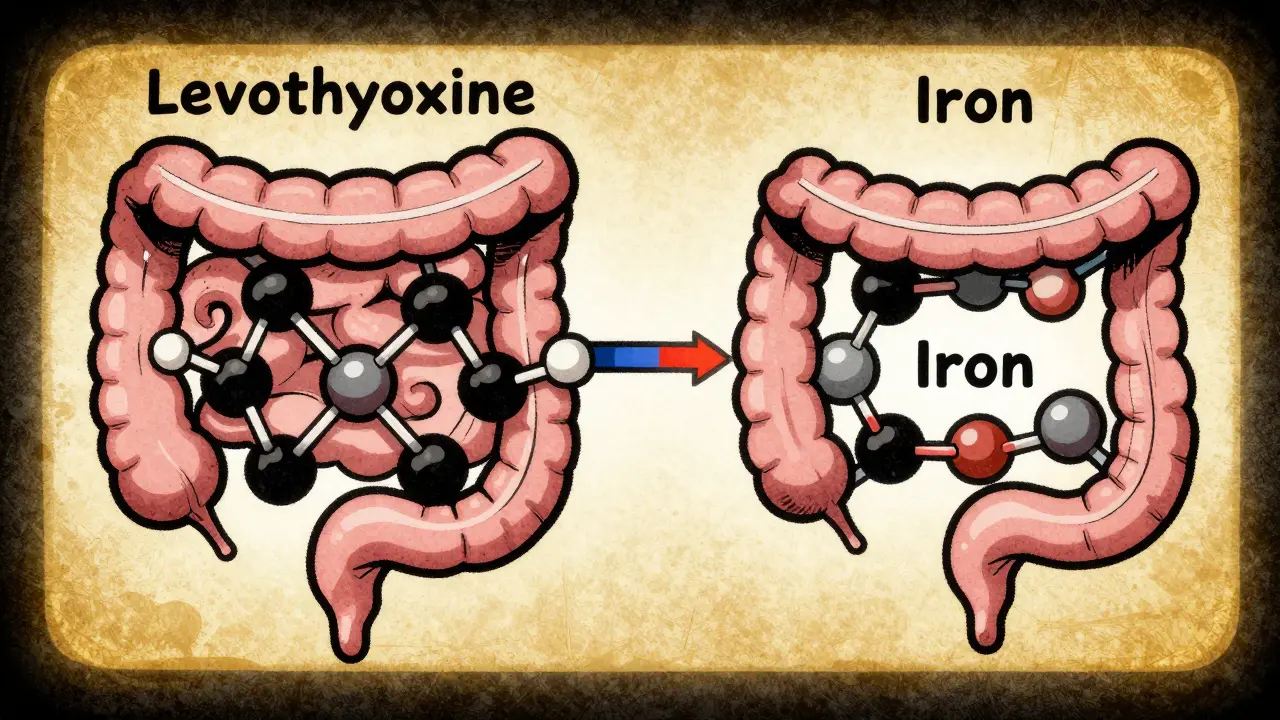
Common Problems and How to Solve Them
Problem 1: Iron makes me nauseous. - You need to take it with food. That’s fine. Just don’t eat within 30 minutes of your levothyroxine. Take iron with lunch or dinner, not breakfast. Add vitamin C (like orange juice or a 250mg tablet) to boost iron absorption-this lets you take a lower dose and reduces side effects. Problem 2: I forget to wait four hours. - Set phone alarms. One for levothyroxine, one for iron. Use a pill organizer with labeled compartments. Apps like the American Thyroid Association’s mobile tool can send reminders. A 2023 survey found 61% of patients who used reminders improved adherence. Problem 3: I take iron at night but can’t sleep. - Try taking it earlier in the evening, 2-3 hours before bed. Or switch to morning iron with breakfast, and move levothyroxine to bedtime. Many find bedtime thyroid meds easier to stick to because they’re taken once a day, right before sleep. Problem 4: My doctor didn’t tell me. - You’re not alone. A 2024 JAMA study found only 37% of primary care doctors routinely counsel patients on this interaction. Bring up the research. Show them the BNF or NICE guidelines. You’re not being difficult-you’re protecting your health.What to Monitor and When
Once you’ve changed your timing:- Get a TSH blood test in 6-8 weeks.
- Watch for symptoms: fatigue, brain fog, dry skin, constipation, weight gain, hair loss.
- Track your energy levels and body temperature-if you’re warmer and more alert, you’re likely absorbing better.
- If you’re on other supplements (calcium, magnesium, antacids), separate those too. They interfere too.
Bottom Line: Timing Is Everything
You don’t need to stop iron. You don’t need to stop levothyroxine. You just need to space them out. Four hours. That’s it. It’s not complicated. It’s not expensive. But it’s critical. This isn’t about being perfect. It’s about being consistent. Miss a day? No big deal. But if you’re regularly taking them together, your thyroid treatment is failing silently. And that’s far more dangerous than any side effect from iron. Start tonight. Set your alarm. Take your thyroid pill at 10 PM. Take your iron at 7 AM. See how you feel in six weeks. Your body will thank you.Can I take iron and levothyroxine 2 hours apart?
Some sources suggest 2 hours might work for people with normal digestion, but major guidelines like the British National Formulary and NICE recommend 4 hours. The 4-hour gap is the safest standard because digestion speed varies. If you’re older, have gut issues, or take other medications, 2 hours may not be enough. Stick to 4 hours unless your doctor confirms a shorter gap is safe for you.
Does it matter what type of iron I take?
Yes, but not enough to skip timing. Ferrous sulfate causes the strongest interaction, followed by ferrous fumarate and ferrous gluconate. Even “gentler” forms still bind to levothyroxine. Slow-release or chelated iron reduces stomach upset but doesn’t prevent absorption interference. Timing remains the only reliable solution.
Can I take iron at night and levothyroxine in the morning?
Yes, this is one of the most effective strategies. Take iron at 10 PM, and levothyroxine at 7 AM. That’s a 9-hour gap-plenty of time to avoid binding. Many patients find this easier than trying to wait 4 hours after breakfast. Just make sure you take levothyroxine on an empty stomach, 30-60 minutes before food or coffee.
What if I accidentally take them together?
One mistake won’t ruin your treatment. But if it happens often, your thyroid levels will drop over time. Don’t double up on your next dose-just go back to your regular schedule. Get your TSH checked in 6-8 weeks to make sure your levels haven’t drifted. Consistency matters more than perfection.
Should I stop taking iron if I’m on levothyroxine?
No. Iron deficiency is common, especially in women, and untreated it can cause anemia, fatigue, and heart problems. You don’t need to stop iron-you need to space it out. Talk to your doctor about the best timing for your schedule. The goal is to treat both conditions safely, not to sacrifice one for the other.

