

Every year, over 50,000 children under six in the U.S. end up in emergency rooms because they swallowed something they shouldn’t have. Most of these aren’t accidents in the traditional sense-they’re exploratory ingestions. These happen when a toddler, crawling or pulling up on furniture, grabs a bottle, pops open a pill bottle, or snatches a brightly colored liquid from a purse left on the floor. It’s not rebellion. It’s development. And it’s preventable.
Why Toddlers Are at Highest Risk
Children between one and four years old are the most vulnerable. At this stage, they’re learning to move, grab, and put everything in their mouths. It’s normal. But it’s dangerous when that something is cough syrup, cleaning spray, or a lithium battery from a remote control. The American Association of Poison Control Centers found that 90% of all childhood poisonings happen in kids under six. Boys are slightly more likely to be involved, and kids with hyperactive tendencies tend to explore more aggressively. But the biggest factor? Accessibility. If it’s within reach, they’ll find it.Where the Danger Hides-Beyond the Medicine Cabinet
Most parents think the medicine cabinet is the main threat. But it’s not. Here’s where real risks live:- Handbags and backpacks left on the floor-22% of poisoning cases happen when visitors bring medications and leave them in purses or bags within a child’s reach.
- Laundry detergent pods-colorful, soft, and tempting like candy. Even after industry changes, they still cause 11% of pediatric poisonings.
- E-cigarette liquid nicotine-a 1,500% spike in poisoning calls between 2012 and 2020. These bottles often look like juice boxes or perfume and can be fatal in tiny amounts.
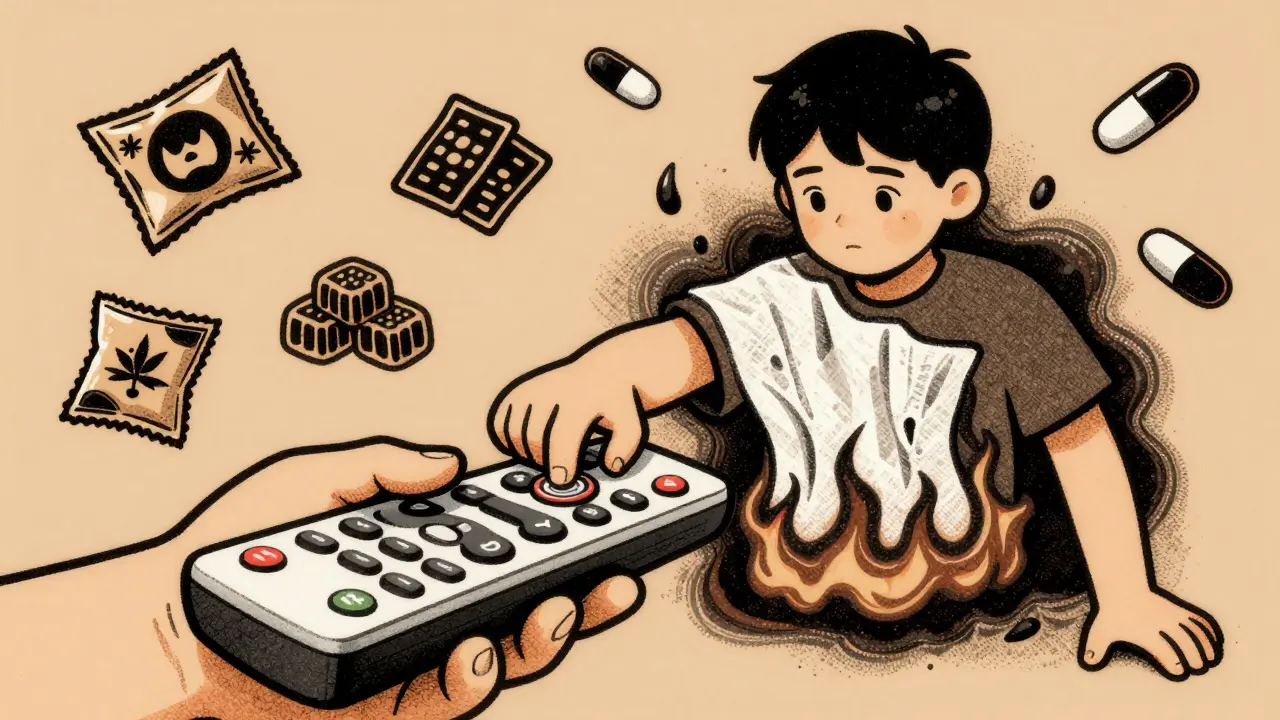
- Button-cell batteries-found in remotes, toys, and scales. Once swallowed, they can burn through tissue in as little as 15 minutes. Eighty-five percent of severe injuries happen in kids under four.
- Cannabis edibles-in states where marijuana is legal, these now make up 7% of pediatric poisonings. They look like gummies or cookies, and the effects are far more intense in small bodies.
- Buprenorphine-a medication for opioid addiction. Exposure has jumped 156% since 2010 and requires different treatment than typical opioid overdoses.
Storage That Actually Works
Child-resistant caps are not child-proof. That’s the first thing to understand. A 2022 National Safety Council survey found that while 92% of parents own child-resistant bottles, only 54% consistently reseal them after use. For parents of 18- to 24-month-olds, that number drops to 39%. Here’s what works:- Lock everything away-Use cabinet locks on all storage areas. Keep hazardous items at least 1.5 meters (5 feet) off the ground. This blocks 82% of access attempts by children under four.
- Separate food and chemicals-Store cleaners, medications, and supplements in different cabinets. Mixing them increases confusion-related ingestions by 37%.
- Keep original packaging-Never transfer pills or liquids into unmarked containers. Repackaged substances are mistaken for food or drink in 29% of cases.
- Hide purses and bags-When guests come over, keep bags on high shelves or in closed closets. Medications in bags are responsible for nearly one in five poisonings.
Medication Mistakes That Cost Lives
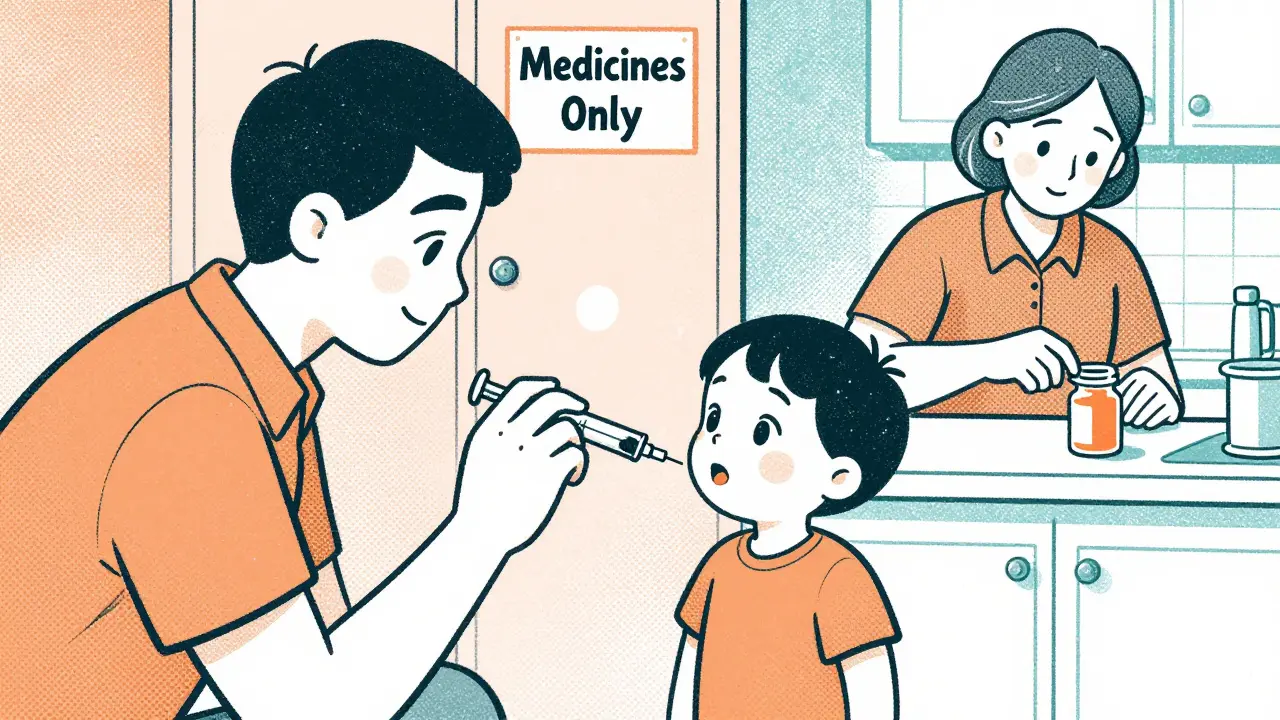
Giving medicine is one of the most common parenting tasks-and one of the most dangerous when done wrong. The American Academy of Pediatrics found that 76% of parents make dosage errors when using kitchen spoons. That’s because a teaspoon isn’t a teaspoon. A standard kitchen spoon holds anywhere from 3 to 7 milliliters. A proper dosing syringe or cup is calibrated to 0.1 mL.- Always use the dosing tool that came with the medicine.
- Never use a kitchen spoon, even if you think you’re being careful.
- Store medications in their original bottles with clear labels.
- Use a locked medicine cabinet-not the bathroom cabinet, which is often damp and easily accessible.
Engineering Solutions That Save Lives
Sometimes, the best prevention isn’t about behavior-it’s about design.- Bittering agents like denatonium benzoate are added to many household products (cleaners, antifreeze, e-liquids) to make them taste horrible. Research shows this reduces multiple swallows by 68%. But it doesn’t stop a single fatal dose.
- Unit-dose packaging for liquid medications is coming. The WHO recommends it by 2027. Single-use packets reduce accidental overdoses by preventing large quantities from being left open.
- Opaque packaging for detergent pods and e-liquids has cut incidents by 39% since 2020.
- Smart cabinet locks are growing in popularity. They connect to your phone and alert you if a cabinet is opened. But they cost $149 each-still too expensive for most families.
What to Do When Something Is Swallowed
If you suspect your child swallowed something dangerous, don’t wait. Don’t try to make them vomit. Don’t give them milk or charcoal unless instructed.- Call Poison Control immediately at 1-800-222-1222. The Society for Academic Emergency Medicine says 78% of positive outcomes happen when help is called within 30 minutes.
- Have the product on hand-Bring the bottle or container with you when you call. The poison control specialist needs to know the exact ingredient and concentration.
- Don’t rely on apps alone-While the Poison Control app has a 4.7-star rating and users report accessing help in under 90 seconds, it’s not a substitute for speaking to a professional.
- Go to the ER if instructed-Some substances, like batteries or button-cell items, require immediate removal. Delaying can be fatal.
Prevention Starts Early-Before They Can Crawl
You don’t wait until your baby starts pulling up to baby-proof. You start before. The American Academy of Pediatrics recommends beginning poison prevention at the 9-month well-child visit-three to four months before most babies start crawling. That’s when you install locks, move hazardous items out of reach, and talk to grandparents about safety. Dr. Robert Palmer from the California Poison Control System says anticipating developmental milestones 3-6 months in advance prevents 63% of exposures. If your child is about to walk, start securing low cabinets now. If they’re about to climb, lock the high ones.The Biggest Challenge: Consistency Across Caregivers
The hardest part isn’t buying locks or reading labels. It’s getting everyone on the same page. A 2021 multi-center study found that 63% of households had safety lapses when care switched between parents, grandparents, and babysitters. Grandparents’ homes are especially risky-71% of parents report inconsistent safety practices there. Here’s what helps:- Give grandparents a quick checklist: “Lock the meds. Hide the bags. Don’t leave pills on the counter.”
- Keep a small emergency kit in your car or bag: a dosing syringe, poison control number, and a list of your child’s medications.
- Have a 5-minute conversation with every new caregiver. Don’t assume they know.
Final Thought: It’s Not About Being Perfect
You don’t need a perfectly childproofed home. You need to be consistent. You need to be aware. You need to act fast. The good news? Experts say a full prevention program combining locked storage, better packaging, and caregiver education can reduce pediatric ingestions by 65 to 75% over the next decade. The bad news? Most of the time, the danger isn’t a missing lock or a forgotten cap. It’s a moment of distraction-while you’re answering a text, loading the dishwasher, or answering the door. So check your cabinets. Lock your bags. Keep the number for Poison Control saved in your phone. And never, ever assume someone else is watching.What should I do if my child swallows a button battery?
Call 911 and Poison Control (1-800-222-1222) immediately. Do not wait for symptoms. Button batteries can cause severe internal burns in as little as 15 minutes. Do not induce vomiting or give food or drink. Get to the nearest emergency room right away.
Are child-resistant caps enough to keep kids safe?
No. Child-resistant caps are designed to slow down kids, not stop them. Many children can open them in under a minute. The key is storing the bottle in a locked cabinet, out of reach and sight. Caps alone won’t prevent access.
Can I use a kitchen spoon to give my child medicine?
No. Kitchen spoons vary in size and are inaccurate. Studies show 76% of parents make dosage errors using them. Always use the dosing syringe, dropper, or cup that came with the medicine. They’re marked in milliliters for precision.
Why are laundry detergent pods so dangerous for kids?
They look and feel like candy-bright, soft, and colorful. When bitten, they burst and release concentrated chemicals that can cause choking, vomiting, breathing trouble, and even coma. Even one pod can be life-threatening. Opaque packaging and double-latch lids have reduced incidents, but they’re still a top risk.
How can I make sure my child’s grandparents are keeping things safe?
Don’t assume they know. Bring a printed checklist: lock all medicines and cleaners, hide purses and bags, keep batteries out of reach, and store e-cigarettes in locked boxes. Offer to install a simple cabinet lock at their home. Many grandparents want to help-they just don’t realize the risks.
What’s the best way to store liquid nicotine for e-cigarettes?
Store it in a locked cabinet, out of sight and reach, just like medicine. Never leave it on a counter, in a drawer, or in a bag. Many bottles look like juice boxes or perfume. The 2022 Child Nicotine Poisoning Prevention Act requires unit-dose packaging and warning labels, but it’s still a top cause of poisoning in toddlers.
When should I start childproofing for poison risks?
Start at the 9-month well-child visit, about 3-4 months before most babies begin crawling. That’s when you install cabinet locks, move hazardous items to high shelves, and talk to caregivers about safety. Prevention works best when it’s done before the child gains mobility.
Is activated charcoal safe to give my child after an overdose?
No-do not give activated charcoal unless instructed by Poison Control or a doctor. While it was once commonly used, clinical trials have shown it’s not effective for most ingestions and can cause complications like vomiting or lung damage if aspirated. Always call first.


Glenda Marínez Granados
So let me get this straight-we’re now treating toddlers like tiny, crawling drug mules who need a 12-point safety protocol just to survive the living room? 😏
Next they’ll put locks on the fridge so babies can’t ‘explore’ the yogurt. At this point, I’m just waiting for the PSA: ‘Don’t let your child breathe air unsupervised.’