
SAMe & Antidepressant Interaction Risk Checker
Assess Your Risk
This tool helps you understand potential risks when combining SAMe with your antidepressant medication. Remember, this is not medical advice - always consult your healthcare provider before making changes to your medication.
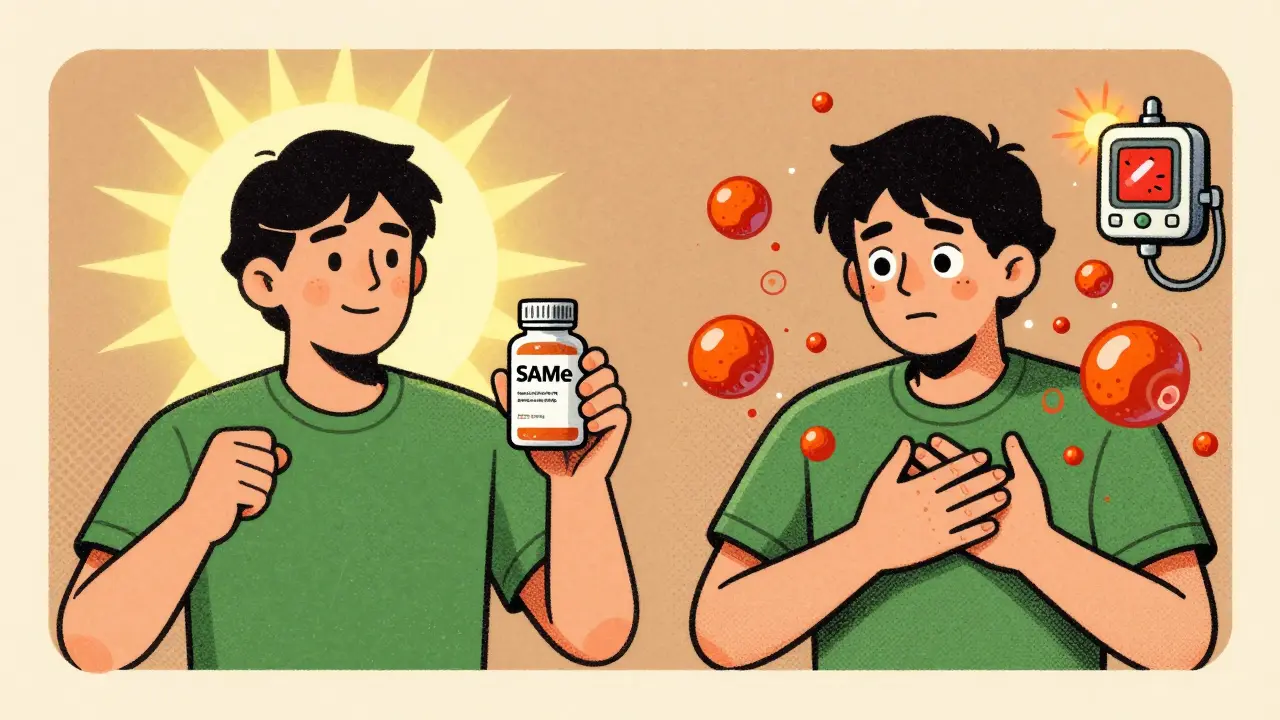
People turn to SAMe when antidepressants aren’t doing enough. It’s marketed as a natural mood booster, and for some, it works. But combining SAMe with prescription antidepressants? That’s where things get dangerous - and many don’t realize it until it’s too late.
What Is SAMe, Really?
S-adenosylmethionine, or SAMe, is a compound your body makes naturally. It’s not a vitamin or herb - it’s a chemical involved in over 200 processes inside you, including making neurotransmitters like serotonin, dopamine, and norepinephrine. These are the same chemicals that antidepressants target. That’s why SAMe got attention as a mood aid.
It was first studied in the 1970s for liver issues, but by the 1990s, researchers noticed people taking it for pain or fatigue also reported feeling less depressed. Since then, it’s been sold in the U.S. as a dietary supplement, meaning the FDA doesn’t test it for safety or effectiveness before it hits store shelves. That’s a big deal. You’re buying something with no guaranteed strength, purity, or consistent results.
Most SAMe supplements come in 400 mg capsules, with doses ranging from 200 mg to 1,600 mg daily. The enteric-coated versions are designed to survive stomach acid so more of it gets absorbed - but even then, absorption varies wildly between people. Some get 50% of the dose; others get barely 15%. That’s why two people taking the same pill can have totally different results.
How SAMe Affects Mood - and How Fast
Unlike SSRIs, which can take 4 to 6 weeks to kick in, SAMe often starts working in 7 to 10 days. That’s why some patients and doctors try it as a quick add-on when antidepressants aren’t helping fast enough.
Studies show SAMe can improve mild to moderate depression. In one meta-analysis, about 35-50% of people saw noticeable mood improvement - compared to 60-70% with standard antidepressants. It’s not as strong overall, but for some, it’s enough. It’s also been shown to help with depression linked to joint pain, where it reduces both mood symptoms and physical discomfort better than antidepressants alone.
But here’s the catch: SAMe doesn’t work for everyone. In severe depression, especially melancholic types, remission rates are as low as 18%. That’s far below what you’d see with medications like venlafaxine. And for people who’ve tried multiple antidepressants without success, SAMe might offer a small boost - but only if used carefully.
The Big Risk: Serotonin Syndrome
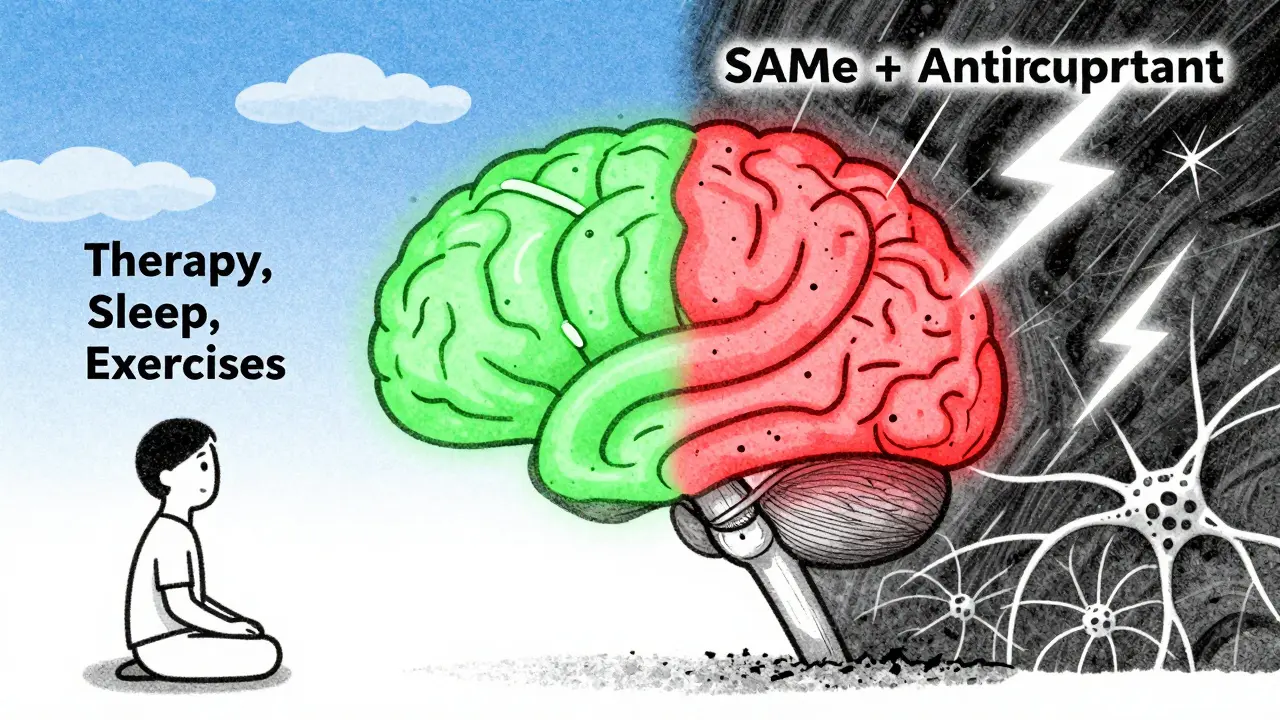
When you mix SAMe with antidepressants - especially SSRIs like Prozac, Zoloft, or Lexapro - you’re stacking two things that increase serotonin. SAMe doesn’t just boost serotonin production; it also blocks its breakdown. Antidepressants prevent serotonin from being reabsorbed. Together, they flood your system.
The result? Serotonin syndrome. It’s rare, but it’s real. And it can be life-threatening.
Symptoms include:
- Racing heart or high blood pressure
- Muscle rigidity or twitching
- Shivering or sweating
- Confusion, agitation, or hallucinations
- High body temperature (over 38°C or 100.4°F)
One Reddit user, u/DepressionWarrior2020, started 400 mg of SAMe with 20 mg of Prozac. Within three days, he ended up in the ER with muscle rigidity, confusion, and a racing heart. Doctors confirmed serotonin syndrome. He survived, but it took weeks to recover.
Another user, SarahJ, added 800 mg of SAMe to her Zoloft and reported no issues after 8 months - her depression score dropped from 16 to 7. So why the difference? Because serotonin syndrome isn’t guaranteed. It’s unpredictable. Some people have perfect tolerance. Others react badly with even small doses.
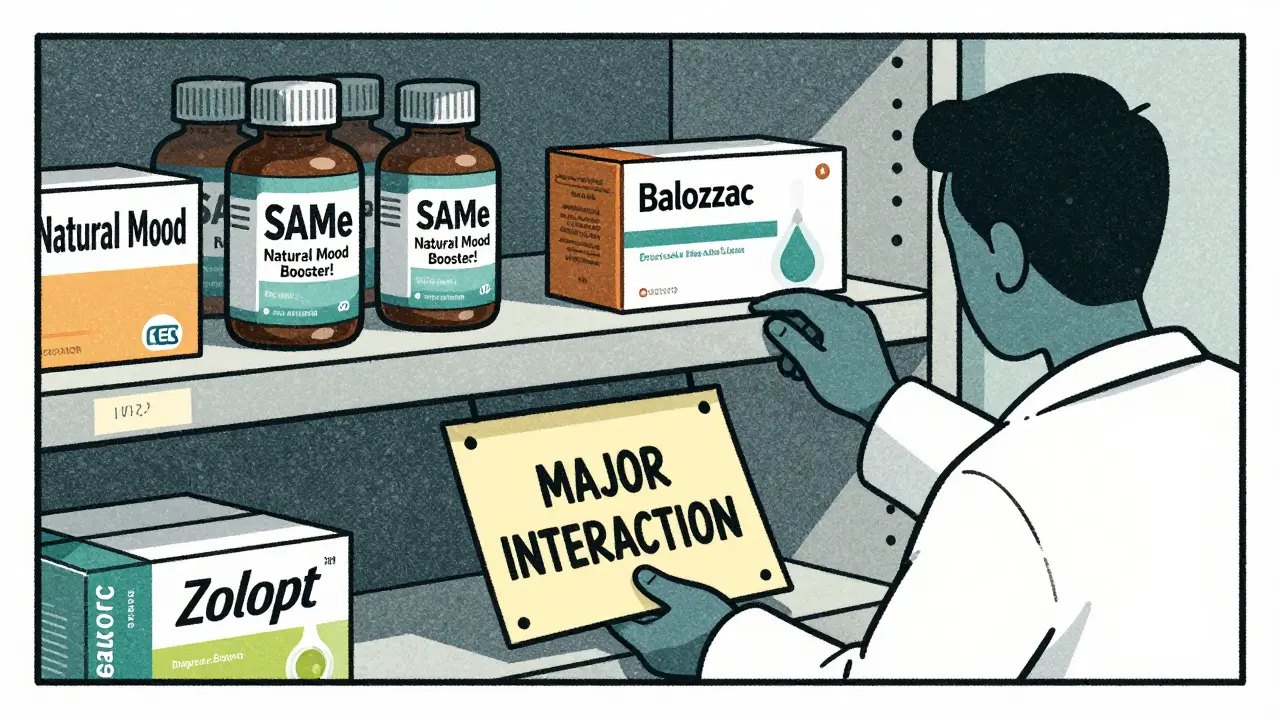
The Mayo Clinic, Natural Medicines Database, and FDA all warn against combining SAMe with antidepressants. The interaction is rated as “Major - Use Caution.” That’s the second-highest risk level. Yet, 68% of people using SAMe for depression are already on antidepressants, according to national survey data.
Why So Many People Are Doing It Anyway
There are a few reasons.
First, SAMe is easy to buy. You don’t need a prescription. You can order it on Amazon, at GNC, or even at your local pharmacy. The packaging often says “supports mood” - not “treats depression.” That makes it feel safer than it is.
Second, doctors don’t always ask about supplements. Patients assume their psychiatrist knows everything they’re taking. But most don’t. A 2021 JAMA study found only 37% of SAMe products even include interaction warnings on the label. So people assume silence means safety.
Third, anecdotal success stories spread fast. When someone says, “It helped me when nothing else did,” others believe them. But those stories don’t tell you about the people who had seizures, panic attacks, or ended up in the hospital.
What If You’re Already Taking Both?
If you’re already taking SAMe and an antidepressant - stop. Don’t quit cold turkey. But don’t keep going without talking to your doctor.
Here’s what to do:
- Stop taking SAMe immediately if you have any symptoms of serotonin syndrome - even mild ones like shivering, restlessness, or a faster heartbeat.
- Call your doctor or go to urgent care. Don’t wait. Serotonin syndrome can escalate fast.
- Do not restart SAMe without medical supervision. If your doctor agrees to try it again, start at 200 mg once daily - never more. Wait at least 5-7 days before increasing.
- Monitor yourself closely for the first 2-4 weeks. That’s when 85% of bad reactions happen.
Also, check your supplement. ConsumerLab tested 20 SAMe products in 2022. One in three had less active ingredient than labeled - some by as much as 25%. That means you might think you’re taking 400 mg, but you’re really getting 300 mg. Or worse, you’re getting 150 mg. That inconsistency makes dosing unpredictable and risky.
Who Should Avoid SAMe Altogether?
SAMe isn’t safe for everyone:
- People on MAO inhibitors (older antidepressants like phenelzine)
- Anyone with bipolar disorder - SAMe can trigger mania
- Pregnant or breastfeeding women - no safety data exists
- People with Parkinson’s disease - it may worsen symptoms
- Anyone under 18 - not studied in children
And even if you’re not on antidepressants, SAMe isn’t risk-free. Side effects like nausea, gas, headaches, and insomnia happen in up to 28% of users. Taking it with food helps reduce stomach upset. Splitting the dose (e.g., 400 mg morning and afternoon) can help avoid sleep problems.
The Bottom Line
SAMe isn’t magic. It’s not a cure. And it’s not a safe backup plan for when your antidepressant isn’t working well enough.
It can help - but only for some people, in specific cases, and only under careful medical oversight. The risk of serotonin syndrome is real, documented, and preventable. Yet, because it’s sold as a supplement, it’s treated like a harmless herb - when it’s actually a powerful biochemical agent.
If you’re considering SAMe, talk to your doctor first. Bring the bottle. Ask: “Is this safe with my current meds?” Don’t assume it’s okay because it’s “natural.”
The truth? There’s no substitute for professional guidance when it comes to mental health. Supplements like SAMe can be tools - but only if you know how to use them safely. Otherwise, you’re gambling with your brain chemistry.
What’s Next for SAMe?
Researchers are working on new versions of SAMe that might be safer - like SAMe-PEG and SAMe-phospholipid complexes. Early animal studies show a 40% reduction in serotonin interaction risk. But those are still in trials. Not available yet.
Meanwhile, the NIH is funding a major study (NCT04821234) looking at SAMe combined with escitalopram. Results are expected in mid-2024. Until then, the safest choice is clear: don’t mix them unless you’re under close medical supervision.
The American Psychiatric Association still doesn’t recommend SAMe for routine use. And for good reason. The evidence is too inconsistent, the risks too high, and the quality too unreliable.
If you want to improve your mood, there are proven, safer paths - therapy, exercise, sleep hygiene, and medication adjustments under a doctor’s care. SAMe might seem like a shortcut. But shortcuts like this often lead to emergency rooms, not relief.
Can I take SAMe with SSRIs like Prozac or Zoloft?
It’s not recommended. Combining SAMe with SSRIs increases your risk of serotonin syndrome - a potentially life-threatening condition. While some people report no issues, others have had serious reactions including racing heart, muscle rigidity, and confusion. The FDA and Mayo Clinic warn against this combination. If you’re considering it, talk to your doctor first. Never start or stop without medical supervision.
How quickly does SAMe work for depression?
SAMe can start working in as little as 7-10 days, which is faster than most antidepressants that take 4-6 weeks. But it’s not more effective overall. Studies show about 35-50% of people with mild-to-moderate depression see improvement, compared to 60-70% with standard medications. It’s not a replacement for antidepressants - at best, it’s a possible add-on for treatment-resistant cases.
Is SAMe better than antidepressants?
No. SAMe is less effective than prescription antidepressants, especially for severe depression. In clinical trials, remission rates for SAMe were only 18% in severe cases, compared to 42% with venlafaxine. It may help with mild depression or depression linked to pain, but it doesn’t replace standard treatment. It’s also not FDA-approved for depression, meaning its safety and effectiveness aren’t guaranteed.
What are the side effects of SAMe?
Common side effects include nausea, gas, headaches, and insomnia. About 22% of users report increased anxiety at first, which usually improves after a few days. Taking SAMe with food reduces stomach upset in 65% of cases. Splitting the dose helps avoid sleep problems. Quality is also a concern - 32% of tested supplements contained less active ingredient than labeled, making side effects harder to predict.
Should I stop SAMe if I start an antidepressant?
Yes, if you’re already taking SAMe and your doctor prescribes an antidepressant, stop SAMe before starting the new medication. Wait at least 1-2 weeks before restarting - and only under medical supervision. The risk of serotonin syndrome is highest during the first 2-4 weeks of combining them. Never combine them without a doctor’s approval and close monitoring.


Harry Henderson
SAMe is literally just serotonin candy for people too lazy to see a real doctor. You think nature made it safe? Lol. I took 800mg with Lexapro and woke up feeling like my muscles were made of steel. ER visit. $5k bill. Now I just do therapy and walk my dog. Stop gambling with your brain.