
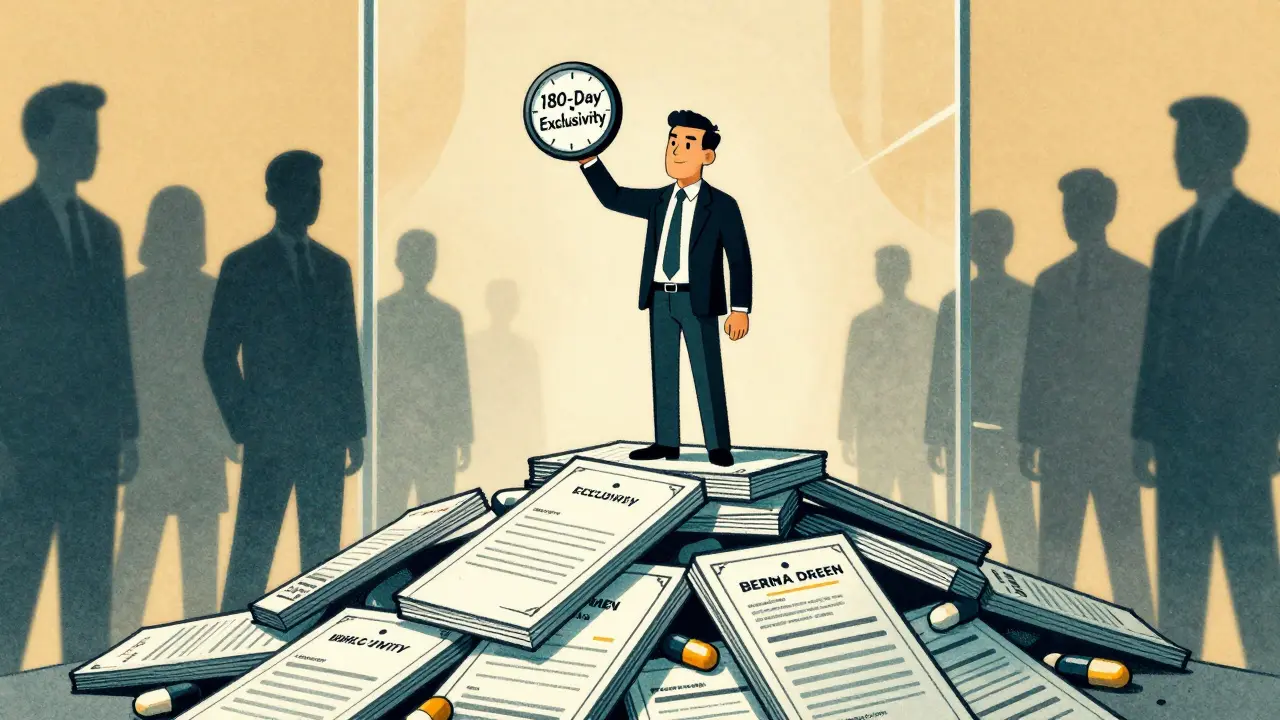
When a brand-name drug’s patent expires, you’d expect generics to flood the market right away-lowering prices and giving patients more choices. But that’s not always what happens. In fact, the first company to challenge a patent and file for generic approval often gets a 180-day exclusivity period from the FDA. This isn’t just a reward-it’s a powerful tool that can delay competition for years, even when the patent is clearly invalid.
What Is the 180-Day Exclusivity?
The 180-day exclusivity rule was created by the Hatch-Waxman Act of 1984. It’s part of a larger system designed to balance two goals: protecting innovation by giving drugmakers time to recoup R&D costs, and speeding up access to affordable generics. The rule says that if a generic company is the first to file an Abbreviated New Drug Application (ANDA) with a Paragraph IV certification-meaning they claim the brand’s patent is invalid, unenforceable, or won’t be infringed-they get 180 days where no other generic can be approved for the same drug.
That sounds simple. But here’s the twist: the 180 days don’t start when the FDA approves the drug. They start when the first generic company begins selling it. And if that company waits? The clock doesn’t tick. That means a company can get approval in 2024 but hold off on selling until 2026-and during that time, no other generic can enter the market.
Why Do Companies Wait to Launch?
It’s not about being slow. It’s about strategy.
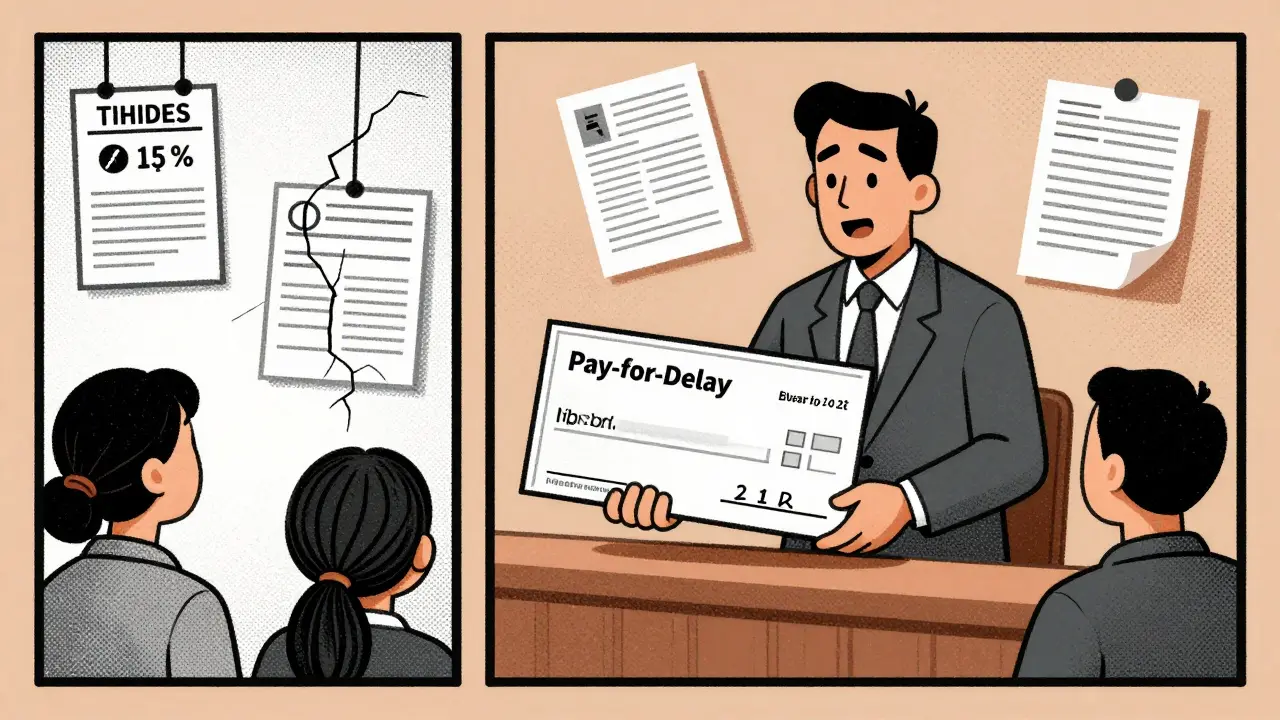
Some generic manufacturers deliberately delay their launch to extend their monopoly. If they wait until after a patent lawsuit settles or an appeal ends, they can lock out competitors for far longer than 180 days. In some cases, the exclusivity period has stretched to three or four years. The Federal Trade Commission found 147 cases between 2015 and 2020 where this delay tactic was used to block competition. The result? Patients pay higher prices longer than they should.
Even worse, some brand-name companies pay generic challengers to delay launch. These “pay-for-delay” deals are illegal, but they still happen. The FTC estimates these agreements cost U.S. consumers $13 billion a year in extra drug costs.
Who Gets the Exclusivity?
It’s not always one company. If two or more generic applicants file their ANDAs on the same day with Paragraph IV certifications, they’re all considered “first applicants.” They share the 180-day clock. But here’s the catch: if one of them doesn’t launch, the others can still start selling-but only after the first one has begun. That creates a domino effect. In 2020, six companies filed for apixaban generics. Only three launched within the legal window. The other three lost their chance to monopolize the market, even though they were technically first.
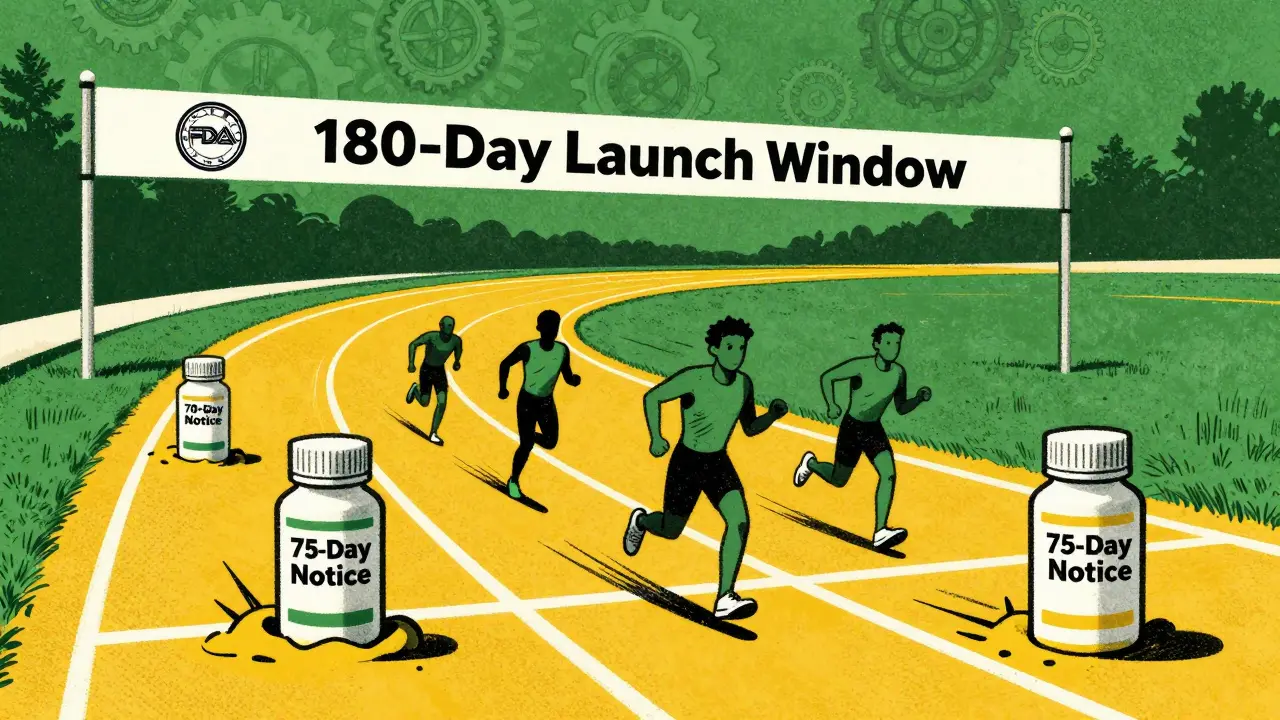
And if a company doesn’t launch within 75 days of getting a “Notice of Commercial Marketing” from the FDA? They forfeit the exclusivity. About 35% of first applicants lose their rights this way. The average time between approval and launch? 147 days. That’s more than four months of missed opportunity.
The Real Impact on Drug Prices
Generic drugs are cheaper-but how much cheaper depends on timing.
During the 180-day exclusivity window, the first generic typically sells at 15-20% of the brand-name price. Once other generics enter, prices drop to 9-12%. That’s a massive difference. A drug that costs $300 a month as a brand might cost $50 during exclusivity and $25 after. But if the exclusivity is delayed for two years, patients pay the higher price for way too long.
According to the Rand Corporation, drugs with 180-day exclusivity see generic entry 11.3 months faster than those without patent challenges. That’s a win. But when exclusivity is manipulated, the benefit vanishes. The FDA says over 14,000 generic drugs have been approved since 1984, and 97% of expired-patent brand drugs now have generic versions. But that doesn’t mean all patients get them on time.
Who Benefits the Most?
The big players win. Between 2018 and 2023, the top five generic manufacturers-Teva, Viatris, Sandoz, Amneal, and Hikma-got 58% of all 180-day exclusivity awards. Small companies? They’re at a disadvantage. It takes millions in legal fees to fight a patent. Only big firms can afford it.
Still, 63% of small generic manufacturers say the exclusivity is their main reason for taking on a patent challenge. Without it, many wouldn’t risk the lawsuit. So while the system favors big companies, it’s still a lifeline for smaller ones.
What’s Changing?
The FDA isn’t ignoring the problem. In 2022, it proposed a major overhaul: ditch the current system and adopt the Competitive Generic Therapy (CGT) model.
Under CGT, the 180-day clock starts the moment the first generic hits the market. No more waiting. No more gaming. The exclusivity lasts exactly 180 days. The Congressional Budget Office estimates this change would speed up generic entry by 8.2 months per drug and save $5.3 billion a year.
Legislation like the Preserve Access to Affordable Generics and Biosimilars Act (S. 202) is already pushing for stricter rules. The FTC is cracking down on companies that receive exclusivity but delay launch for over 18 months. In 2023 alone, 37 such cases were flagged.
Industry groups warn that tightening the rules could reduce innovation. Why risk a patent lawsuit if the reward is only 180 days? But the data says otherwise: the system was never meant to be a long-term monopoly. It was meant to be a jumpstart.
What This Means for Patients
If you’re taking a brand-name drug that’s about to go generic, don’t assume the price will drop immediately. Ask your pharmacist: Is there a generic available? If not, is there one with exclusivity that hasn’t launched yet?
Many patients don’t realize that delays in generic entry are often intentional-not accidental. The 180-day exclusivity was designed to help, not hurt. But when companies game the system, patients pay the price.
For now, the rule still stands. But change is coming. And when it does, the market will shift. More generics. Faster. Cheaper. That’s the goal. The question is: will the system finally work the way it was meant to?


THANGAVEL PARASAKTHI
so like... the system is supposed to help generics but instead it's just a loophole for big pharma to drag their feet? i mean, i get it, legal battles cost $$ but when patients are paying 10x more for no reason... smh. why does this even still exist?