
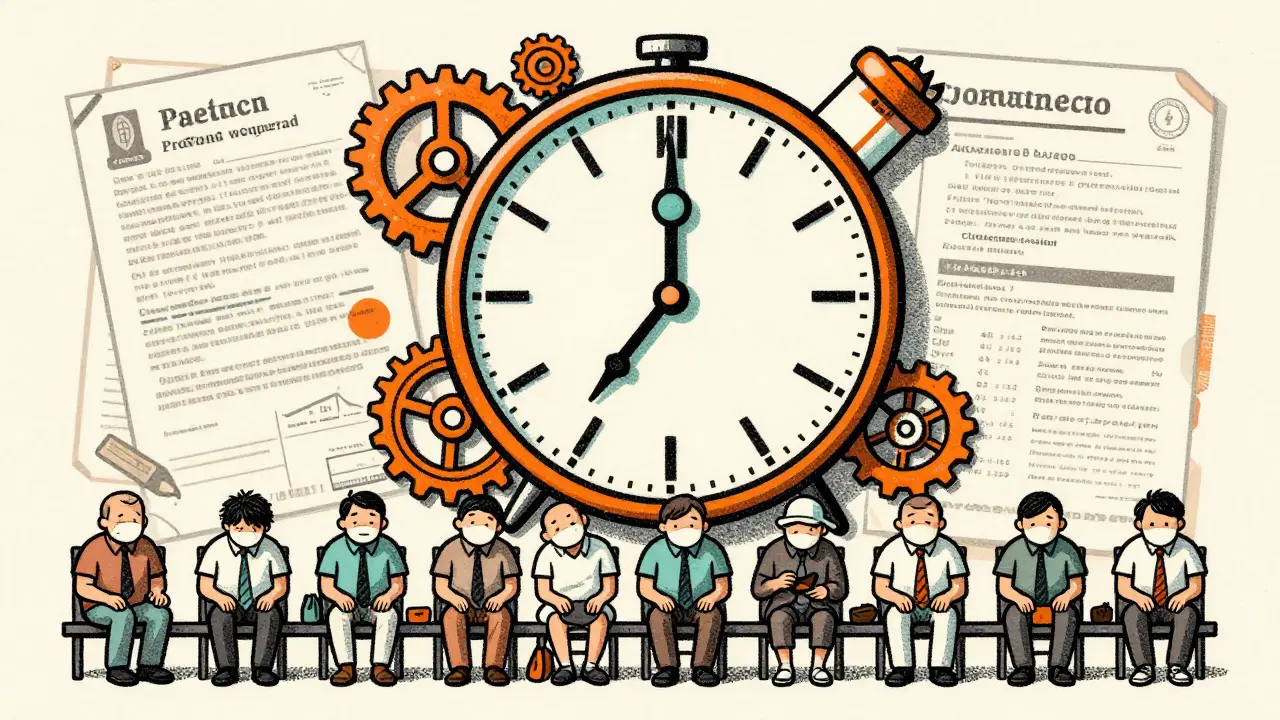
When a brand-name drug’s patent expires, you’d expect generic versions to hit the market quickly-cheaper, just as effective, and available to millions. But in reality, it’s not that simple. In 2024, the average time between a brand drug’s patent expiration and the first generic entry was 28 months. That’s more than two years of patients paying higher prices while legal battles tie up the system. This isn’t random delay. It’s a calculated, multi-billion-dollar game played out in courtrooms, regulatory offices, and patent offices across the U.S.
How the System Was Supposed to Work
The Hatch-Waxman Act of 1984 was designed to balance two goals: protect innovation and speed up access to affordable drugs. It created a shortcut for generic manufacturers to get approval without repeating expensive clinical trials. All they had to do was prove their drug was the same as the brand version. But there was a catch: if a generic company believed a brand-name patent was invalid or wouldn’t be infringed, they could file what’s called a Paragraph IV certification. That’s a legal challenge. And when that happens, the brand company has 45 days to sue. Once sued, the FDA can’t approve the generic for 30 months-no matter how strong the case. This is called the “30-month stay.” It was meant to give courts time to resolve disputes fairly. But over time, it became a tool for delay. Instead of a single patent fight, brand companies now file multiple lawsuits using different patents, sometimes ones that have nothing to do with the actual drug.The Orange Book: A List That’s Too Long
The FDA’s Orange Book is supposed to list only patents that cover the drug’s active ingredient, formulation, or approved use. But in practice, it’s become a dumping ground for patents on packaging, delivery devices, manufacturing methods, and even software used in inhalers. In 2025, a federal judge in New Jersey ruled that six patents on the dose counter of ProAir® HFA-an inhaler for asthma-were improperly listed. The judge said: “The drug is albuterol sulfate inhalation aerosol. The dose counter isn’t the drug.” That ruling is now a blueprint for challenging hundreds of similar listings. The Association for Accessible Medicines found that nearly 30% of patents listed in the Orange Book relate to delivery devices or manufacturing processes, not the medicine itself. These aren’t protecting innovation-they’re protecting profits. And they’re blocking generics from entering the market, even after the core patent expires.Serial Litigation: The Delay Strategy
Some brand companies don’t wait for the first lawsuit to end. They file another one. And another. This is called “serial patent litigation.” One drug, Eliquis (apixaban), has 67 patents protecting it. Semaglutide (Ozempic, Wegovy) has 152. That’s not just a thick patent thicket-it’s a maze designed to confuse, exhaust, and outlast generic companies. In one case documented by AAM, a generic manufacturer was ready to launch a generic version of a heart medication. The brand company filed a patent lawsuit. The case settled. The generic entered the market. Then, three months later, the brand company filed a second lawsuit over a different patent-this one covering a tablet coating. The FDA paused approval again. Another 18 months gone. That’s not litigation. That’s a tactic. The FTC has responded by challenging over 300 improper Orange Book listings in 2024 alone. In May 2025, they sent warning letters to 200 more patents across 17 drugs. The message is clear: if a patent doesn’t cover the actual drug, it shouldn’t be on the list.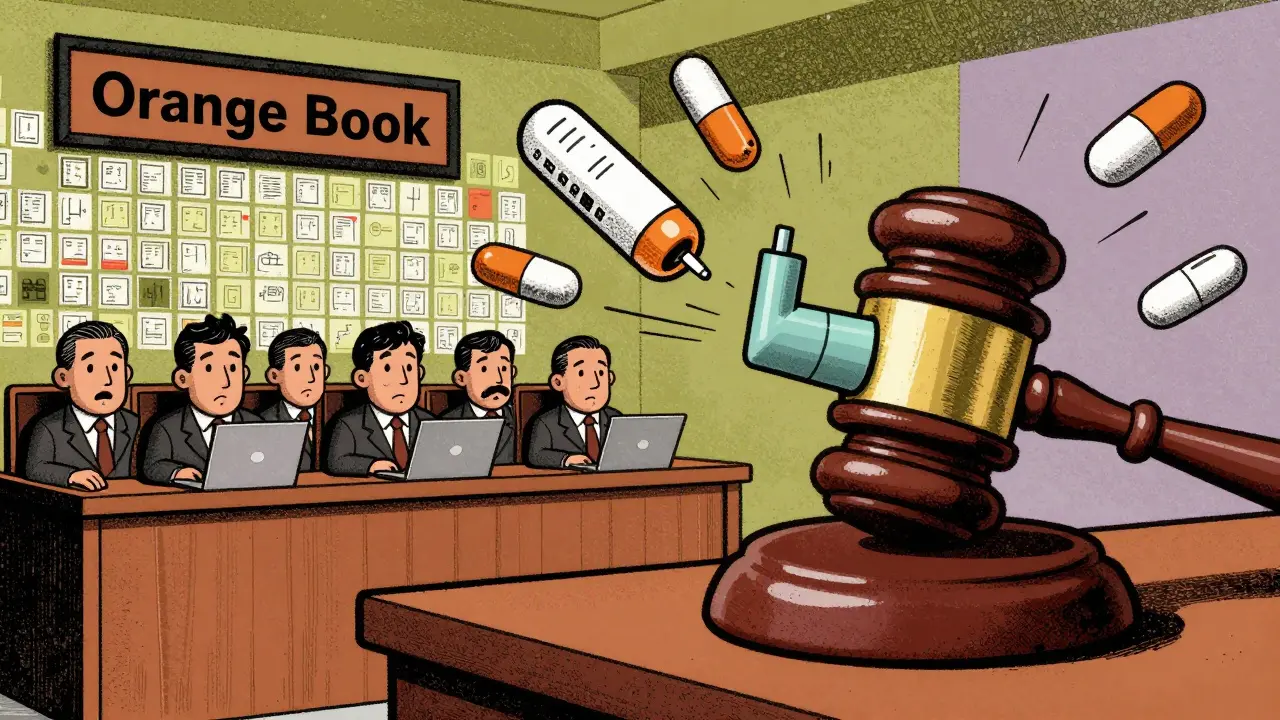
Where the Lawsuits Happen
Not all courts are the same. The Eastern District of Texas has become the go-to venue for pharmaceutical patent cases. In 2024, 38% of all patent lawsuits were filed there-more than double the next busiest district. Why? Because it’s known for fast rulings, juries sympathetic to patent holders, and judges who’ve handled hundreds of these cases. Generic companies hate it. Brand companies love it. It’s called “forum shopping”-choosing the court most likely to rule in your favor. The TC Heartland decision in 2017 tried to stop this by limiting where companies could sue. But in pharmaceutical litigation, the rules have been bent back. The Eastern District of Texas now handles more drug patent cases than Delaware, California, and New Jersey combined.Settlements: Do They Help or Hurt?
When a brand company sues a generic, the two sides often settle. These settlements can look suspicious: the generic agrees to delay entering the market, and the brand pays them millions to stay out. That’s called a “pay-for-delay” deal. The FTC has fought these for years, calling them anti-competitive. But here’s the twist: a 2025 report from the IQVIA Institute found that, on average, patent settlements actually get generics to market five years earlier than they would if no settlement happened. Why? Because without the possibility of a settlement, generic companies often don’t even file a Paragraph IV challenge. The risk is too high. The cost is too great. So they wait. John T. O’Donnell, an industry analyst, put it bluntly: “If you limit a generic drug manufacturer’s ability to settle cases, that manufacturer does not settle fewer cases-it submits fewer Paragraph IV ANDAs.” In other words, threatening settlements doesn’t stop delay-it stops competition before it even starts.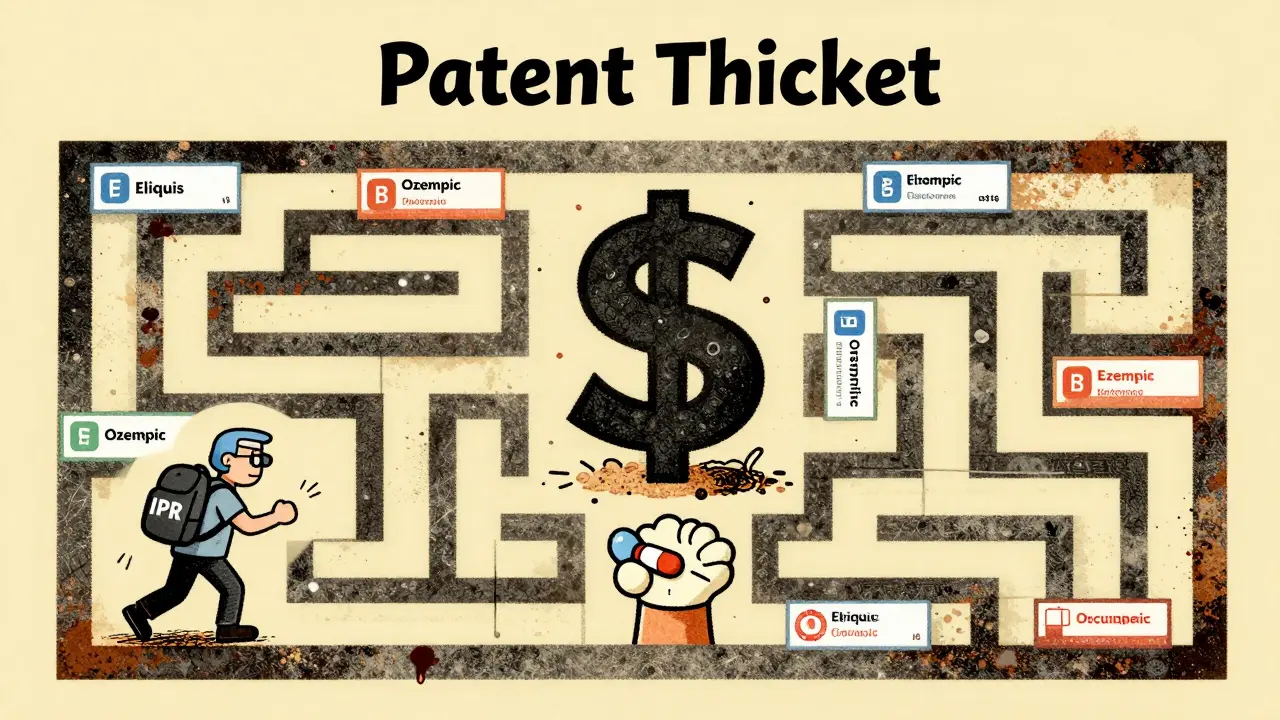


Nancy Kou
The system is rigged, plain and simple. Patients are paying premiums so lawyers and pharma execs can bank billions while diabetics ration insulin. This isn’t capitalism-it’s extortion with a law degree.