
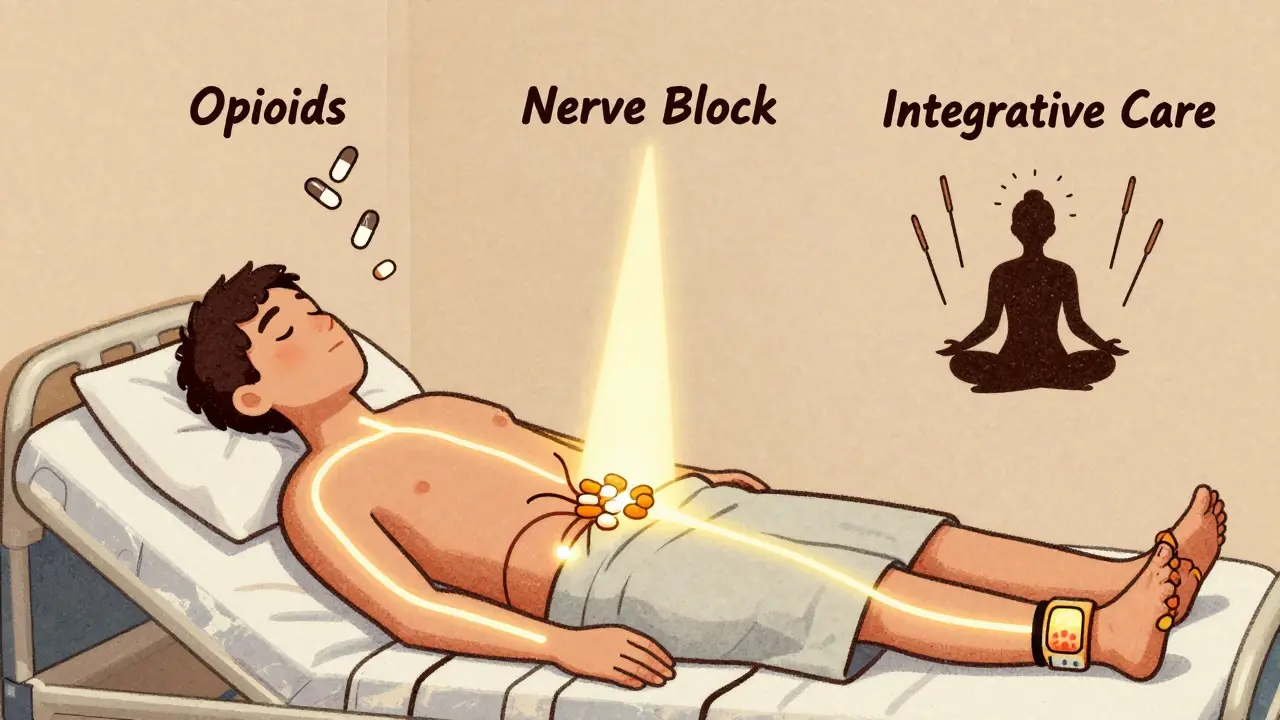
When someone is fighting cancer, pain isn’t just a symptom-it’s a constant shadow. It can come from the tumor pressing on nerves, from surgery, chemotherapy, or radiation. And for nearly half of all cancer patients, that pain is moderate to severe. The good news? We have more tools than ever to fight it-not just one, but many working together. This isn’t about choosing between opioids or acupuncture. It’s about using all the right pieces at the right time.
How Cancer Pain Works-and Why One Pill Isn’t Enough
Cancer pain isn’t simple. It can be nociceptive-like a bruise or broken bone-caused by tumors pressing on tissues. Or it can be neuropathic, where nerves get damaged and send wrong signals, feeling like burning, tingling, or electric shocks. Many patients get both at once. That’s why treating it with just one drug often fails. The World Health Organization’s three-step ladder, first introduced in 1986, was the foundation. It started with mild pain relievers like acetaminophen or NSAIDs, then moved to weak opioids like codeine, and finally strong opioids like morphine for severe pain. But today, we know that’s too rigid. A 2023 study in PLOS One analyzing 81 trials found the ladder works well for about 72% of patients-but that still leaves nearly a third without enough relief. And for those with nerve pain? The ladder doesn’t even touch the problem.Opioids: Powerful, But Not Perfect
When pain is severe, opioids are still the gold standard. Morphine, oxycodone, and fentanyl patches can drop pain scores by over 4 points on a 10-point scale. That’s life-changing. But they come with a heavy cost. Constipation hits 81% of users. Nausea? 56%. Drowsiness? 43%. And for many, it’s worse than the pain itself. One patient on Reddit shared: “I was so constipated I couldn’t sit up. My laxatives didn’t help. I’d rather have the pain.” Dosing has changed, too. Gone are the days of “take as needed.” Now, doctors prescribe around-the-clock doses to keep pain steady. Doses are adjusted every 24 to 48 hours based on pain scores. If your pain stays above a 4 after breakthrough doses, your doctor should increase your baseline by 25-50%. And here’s something few know: genetics matter. About 7% of people are “poor metabolizers” of codeine because of a gene variation (CYP2D6). Their bodies can’t turn codeine into morphine. For them, codeine does almost nothing. A 2024 ASCO presentation showed these patients had 63% less pain relief than others. Testing for this is now routine in 63% of European cancer centers-and should be everywhere.Nerve Blocks: Precision Pain Relief
If opioids aren’t enough-or too messy-nerve blocks can be a game-changer. These aren’t shots. They’re targeted injections that numb specific nerves or nerve clusters. For pancreatic cancer pain, a celiac plexus block injects numbing medicine and steroids near the nerves behind the stomach. A 2022 study in the Journal of Clinical Oncology found it gave patients pain relief for a median of 132 days. One patient wrote: “My pain went from 8/10 to 3/10. I stopped needing opioids for months.” Epidural blocks-where medicine flows through a tiny catheter near the spine-are common for pelvic or lower body cancers. Peripheral nerve catheters, placed near arm or leg nerves, help when tumors press on limbs. Success rates? Between 65% and 85%. But here’s the problem: only 22% of eligible patients get them. Why? Access. Not every hospital has trained interventional pain specialists. And insurance doesn’t always cover them. A 2024 European Pain Federation report called this a “systemic failure.”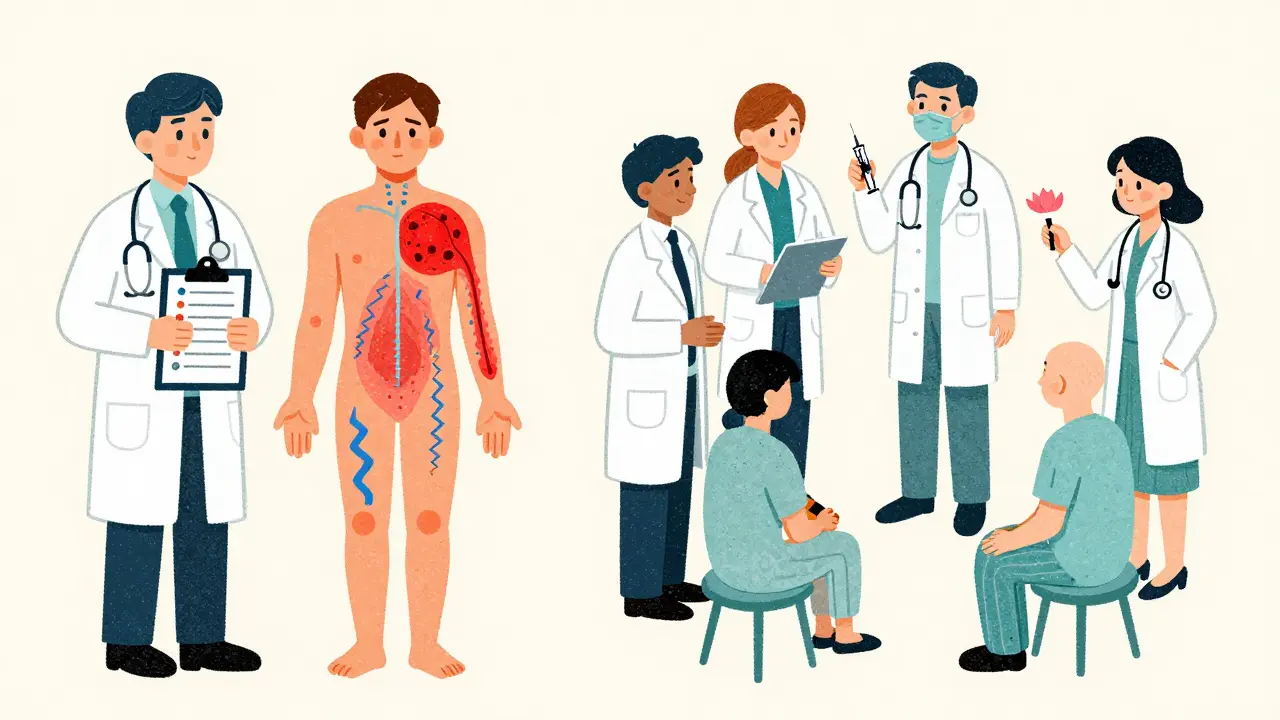
Integrative Care: The Missing Piece
You’ve probably heard of acupuncture, massage, or meditation for pain. But for cancer patients, these aren’t just “nice to have”-they’re evidence-backed tools. A 2024 review of 17 trials with over 1,000 patients found acupuncture, acupressure, and massage reduced pain intensity by 38% to 47%. One study showed acupuncture cut opioid use by half in patients with chemotherapy nausea. Another found acupressure wristbands reduced nausea by 70%. Mindfulness-based stress reduction (MBMR) helped 87% of patients in 54 studies. That’s not just feeling calm-it’s rewiring how the brain processes pain signals. A 2023 review in PLOS One confirmed it reduces opioid side effects like nausea and constipation. Cannabinoids? They showed 32% more pain reduction than placebo-but no better than opioids. And 41% of users quit because of dizziness or brain fog. So they’re not a first-line option. Monoclonal antibodies? That’s the future. Drugs like denosumab (Xgeva) target bone pain from metastases. Approved in March 2024, it reduced pain by 45.7% in trials-better than placebo, with far fewer stomach issues than opioids. Sales hit $3.2 billion in 2024. It’s not for everyone, but for bone pain? It’s a breakthrough.Putting It All Together: The Modern Approach
The best pain plan doesn’t pick one tool. It layers them. - Step 1: Start with a pain assessment. Use a 0-10 scale every 4 hours during treatment changes. - Step 2: For mild pain: acetaminophen or NSAIDs. For moderate: add a weak opioid-but only if genetics support it. For severe: strong opioids with laxatives and anti-nausea meds built in. - Step 3: If pain persists, add a nerve block. Celiac for upper abdomen, epidural for spine, peripheral for limbs. - Step 4: Layer in integrative care: acupuncture twice a week, daily mindfulness, massage as tolerated. - Step 5: For bone pain, consider denosumab or similar monoclonal antibodies. A 2023 ASCO report found this full approach cut hospital readmissions by 23.4% and improved treatment adherence by 37.8%. Patients stick with chemo longer. They sleep better. They eat. They live.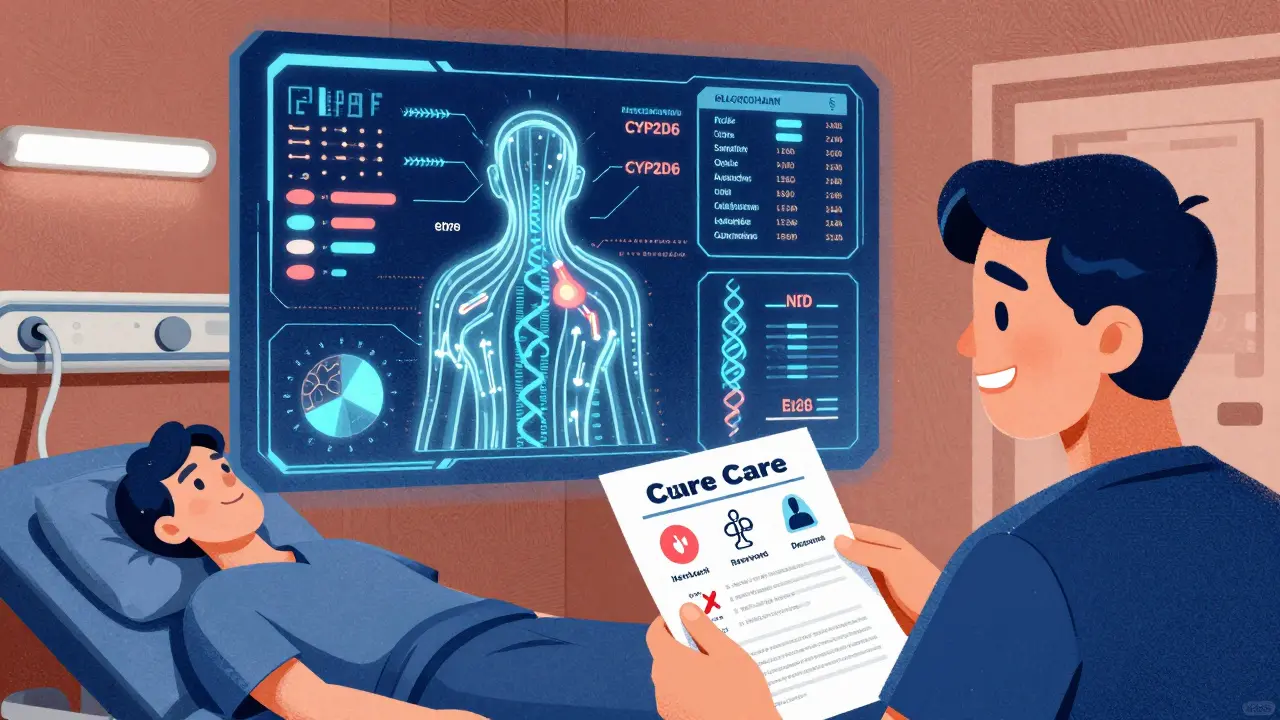
Barriers Still Exist
Even with all this, access isn’t equal. In low-income countries, 87% of cancer patients can’t get opioids because of strict laws or lack of supply. In the U.S., insurance often won’t cover acupuncture unless it’s part of a palliative care program. And many oncologists still don’t know how to order a nerve block. The Cancer Pain Relief app, downloaded over 147,000 times, helps bridge the gap. It walks patients and caregivers through the WHO ladder, explains side effects, and links to local pain clinics.What’s Next?
The future is personal. AI algorithms are now analyzing electronic health records to predict pain spikes before they happen-cutting pain control time by over 30%. Blockchain systems in South Korea are tracking opioid prescriptions to prevent misuse while ensuring cancer patients aren’t denied access. And by 2030, doctors may test your genes to choose your pain meds before you even take the first pill. For now, the message is clear: cancer pain isn’t something you just have to live with. It’s a medical problem with real solutions. And those solutions work best when they’re combined.Are opioids the only option for severe cancer pain?
No. While strong opioids like morphine and fentanyl are very effective for severe pain, they’re not the only option. Nerve blocks-such as celiac plexus or epidural injections-can provide long-lasting relief for localized pain, often reducing or eliminating the need for high-dose opioids. Integrative therapies like acupuncture and mindfulness also help reduce pain intensity and opioid side effects. For bone metastases, monoclonal antibodies like denosumab are now first-line in many cases. A multimodal approach is always better than relying on one drug.
Do nerve blocks work for all types of cancer pain?
No. Nerve blocks are most effective for localized pain caused by tumors pressing on specific nerves or nerve clusters. For example, celiac plexus blocks help with pancreatic or stomach cancer pain, epidurals help with spine or pelvic tumors, and peripheral nerve catheters help with limb pain. They don’t work well for widespread or neuropathic pain that moves around. A good pain specialist will assess your pain pattern first to determine if a block is right for you.
Can acupuncture really reduce cancer pain?
Yes. A 2024 review of 17 randomized trials with over 1,000 cancer patients found acupuncture, acupressure, and reflexology reduced pain intensity by 38% to 47%. It also cuts opioid-related nausea and constipation. One study showed patients using acupuncture reduced their opioid use by half. It’s not a cure, but it’s a powerful tool that works alongside other treatments. The WHO updated its guidelines in 2024 to give acupuncture a strong recommendation for cancer pain.
Why do some cancer patients still have uncontrolled pain?
Several reasons. First, pain is often underassessed-doctors may not ask about it often enough. Second, treatments are sometimes used in isolation instead of together. Third, access is limited: many hospitals don’t offer nerve blocks or integrative therapies. Fourth, opioids are underprescribed due to fear of addiction or regulatory barriers, especially in low-income countries. Finally, mixed pain (nociceptive + neuropathic) needs a different approach than what the old WHO ladder provides. A personalized, multimodal plan is key.
Is it safe to use opioids for cancer pain long-term?
Yes, when managed properly. Unlike chronic non-cancer pain, cancer patients are not at high risk for addiction. The goal is to control pain so treatment can continue and quality of life improves. Doctors adjust doses based on pain scores and side effects. Constipation and nausea are common but manageable with medications like laxatives and antiemetics. The 2023 CDC guidelines increased the maximum morphine equivalent daily dose for cancer patients from 50 to 90 mg, recognizing that cancer pain often requires higher doses safely. Regular monitoring and a team-based approach make long-term opioid use safe and effective.
What should I ask my oncologist about pain management?
Ask: 1) What type of pain am I experiencing-nociceptive, neuropathic, or both? 2) What are my current pain levels on a 0-10 scale? 3) Are opioids the best next step, or should we consider a nerve block? 4) Can I try acupuncture or mindfulness to reduce opioid side effects? 5) Is genetic testing for CYP2D6 available if we’re considering codeine or tramadol? 6) Are integrative therapies covered by my insurance? Writing down your pain patterns (time, location, triggers) before your appointment helps them give you a better plan.
Managing cancer pain isn’t about finding the perfect drug. It’s about building the right team, using the right tools, and never giving up on relief. The science is here. The options exist. You deserve to feel better.


jerome Reverdy
Man, this post broke down cancer pain like a damn masterclass. I’ve seen too many patients get stuck on opioids because docs don’t even consider nerve blocks. Celiac plexus? Game-changer for pancreatic. And genetics? Most docs still don’t test CYP2D6. We’re treating pain like it’s one-size-fits-all when it’s a whole damn symphony of signals.
Also, acupuncture isn’t woo-woo-it’s neurobiology. The gate control theory? Real. The studies? Solid. If your oncologist says ‘try meditation’ like it’s a spa day, they’re not doing their job.