
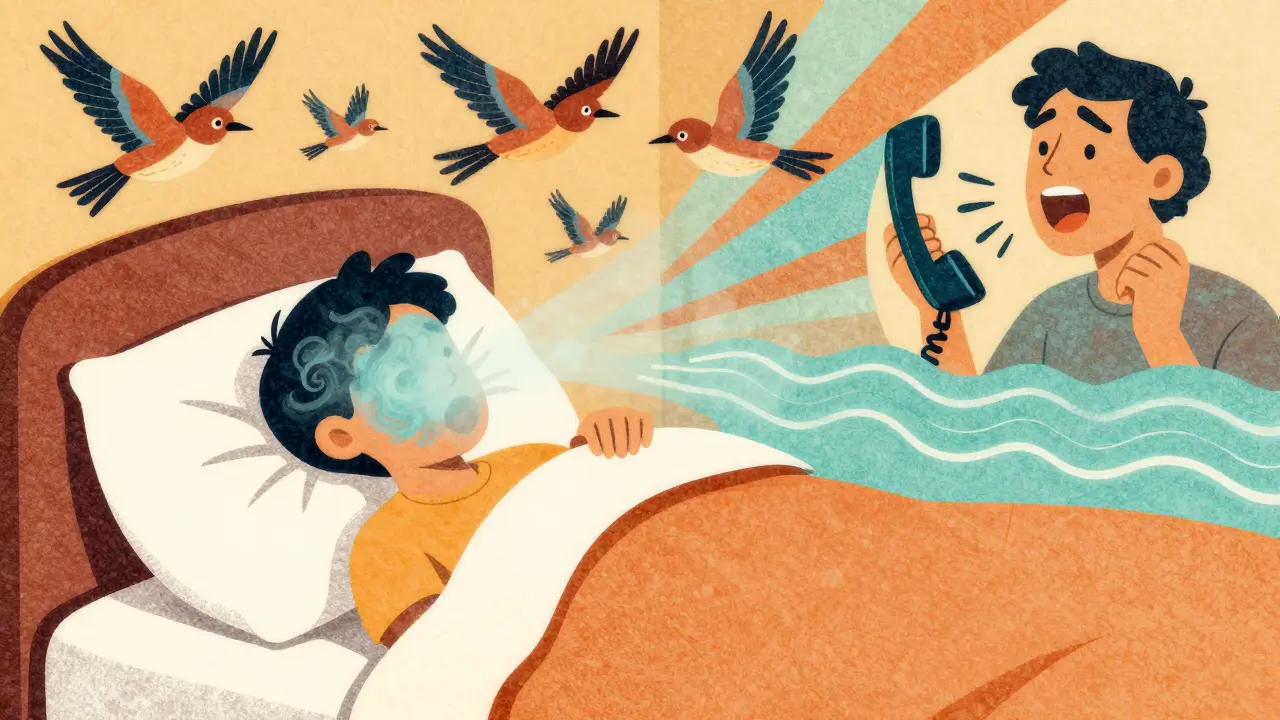
Imagine waking up one morning and one ear feels muffled, like you’re underwater. You turn up the TV. Your phone rings, but you barely hear it. By afternoon, the world on that side is quiet-no birds, no footsteps, no voice of your partner calling from the next room. This isn’t tinnitus. It’s not earwax. It’s sudden sensorineural hearing loss-and every hour counts.
What Exactly Is Sudden Sensorineural Hearing Loss?
Sudden sensorineural hearing loss (SSNHL) isn’t just a drop in hearing. It’s a rapid, unexplained loss of at least 30 decibels across three connected frequencies, happening in 72 hours or less. That’s the medical definition from the 2019 American Academy of Otolaryngology guidelines. In real terms? You might go from hearing normal conversation to struggling with whispers. It usually hits one ear. It can come with ringing (tinnitus), dizziness, or that strange feeling of pressure in your head.
It’s rare-about 5 to 27 people per 100,000 each year-but it doesn’t care about age. While most cases happen between 50 and 60, I’ve seen it in 28-year-olds and 80-year-olds alike. The scary part? Without treatment, only 32% to 65% of people recover on their own. That means nearly half of those affected could lose hearing permanently if they wait.
Why Steroids Are the Only Proven First Step
There’s no magic pill for SSNHL. No herbal remedy. No ear drops. The only treatment backed by solid evidence? Steroids.
Oral corticosteroids-like Prednisone or Dexamethasone-are the standard. They work by calming inflammation in the inner ear, improving blood flow, and reducing immune system overactivity that might be damaging the cochlea. The 2024 Military Health System guidelines recommend Prednisone at 1 mg per kilogram of body weight per day, capped at 60 mg daily, taken as a single morning dose for 7 to 14 days, followed by a slow taper.
Why morning? Because it mimics your body’s natural cortisol rhythm and reduces side effects like insomnia. Dexamethasone is stronger and lasts longer in the body, but studies show both drugs lead to similar hearing recovery rates. The key isn’t which steroid-it’s getting it into your system fast.
And time? It’s everything. If you start steroids within two weeks, you have a 61% chance of meaningful recovery. After four weeks? That drops to 19%. Beyond six weeks? There’s almost no benefit. The window isn’t days-it’s hours.
What If Oral Steroids Don’t Work?
Not everyone responds to pills. That’s where intratympanic (IT) steroid injections come in. A doctor injects a small amount of Dexamethasone directly through the eardrum into the middle ear. From there, it seeps into the inner ear. It’s not glamorous-it’s a quick office procedure, but it can sting. One patient described it as an 8 out of 10 on the pain scale.
But here’s the thing: when oral steroids fail, IT injections help. Studies show 42% to 65% of patients regain hearing after IT therapy, even weeks after the initial loss. It’s especially useful for people who can’t take oral steroids-diabetics, those with high blood pressure, or people with a history of mood disorders. Steroids can spike blood sugar, cause anxiety, or trigger insomnia. IT injections avoid those systemic side effects.
And unlike oral steroids, insurance doesn’t always cover IT injections. Forty-two percent of initial claims get denied. You might need to fight for prior authorization. Don’t give up. Your audiologist can help.

What Doesn’t Work (And Why You Should Avoid It)
There’s a lot of noise out there. Online forums push hyperbaric oxygen therapy, antivirals, blood thinners, even acupuncture. Don’t waste time or money.
Hyperbaric oxygen (HBOT) has a tiny edge-some studies show 6% to 12% extra improvement when combined with steroids-but it’s expensive ($200 to $1,200 per session), hard to find (only 37% of U.S. hospitals offer it), and only works if started within 28 days. It’s a backup, not a first-line option.
Antivirals? No benefit. Thrombolytics? No benefit. Vasodilators? No benefit. Multiple meta-analyses have proven they’re no better than a placebo. The 2020 AAO-HNSF guideline says it plainly: these treatments should not be used.
And yes, steroids are used off-label for SSNHL. The FDA hasn’t formally approved them for this use. But that’s true for 20% of all prescriptions. What matters is the clinical evidence-and it’s overwhelming.
Real People, Real Outcomes
Reddit threads and patient forums are full of stories. One user, u/HearingHope2022, wrote: “Started Prednisone 48 hours after onset-recovered 90% of hearing in my left ear.” That’s typical. Of 312 self-reported cases treated within 72 hours, 68% had significant recovery.
But the flip side is brutal. In a 2023 survey of 476 patients, 43% of those with poor outcomes had waited more than 72 hours to get help. They went to their GP, who said, “It’s probably just an ear infection.” Or they waited to see if it got better. It didn’t.
Steroid side effects are real. One in three patients reported severe insomnia. Nearly a quarter gained an average of 4.7 kg over two weeks. One in five had stomach pain so bad they needed acid-reducing meds. But compared to losing your hearing forever? Most say it’s worth it.
What You Need to Do Right Now
If you or someone you know has sudden hearing loss:
- Don’t wait. Don’t call your GP tomorrow. Go to an emergency department or ENT clinic today.
- Ask for a pure-tone audiogram. That’s the only test that confirms SSNHL. Tuning fork tests (Rinne and Weber) are helpful in the ER, but they’re not enough.
- If diagnosed, start steroids within 24 hours. The sooner, the better.
- Keep track of your hearing. Get a follow-up audiogram after treatment ends and again at six months.
Primary care doctors need training to recognize this. A 2023 study found just 3 to 5 hours of education turns them from missing SSNHL to diagnosing it correctly. If your doctor doesn’t know what to do, ask for a referral to an otolaryngologist. Don’t take no for an answer.
The Bigger Picture
SSNHL affects 4,000 to 8,000 people a year in the U.S. alone. The cost per case? $3,200 to $7,800. But the real cost is invisible-the lost conversations, the isolation, the anxiety of living with permanent silence.
There’s hope on the horizon. Researchers are testing blood markers to predict who will respond to steroids. Soon, we might be able to say: “Your inflammation levels suggest you’ll benefit from high-dose treatment,” or “You’re more likely to need injections.” Personalized medicine is coming.
For now, the rule is simple: sudden hearing loss is a medical emergency. Steroids are your best shot. Time is your enemy. Act fast-or risk silence.
Can sudden hearing loss fix itself without treatment?
About one-third to two-thirds of people recover some hearing on their own, but there’s no way to predict who will. Waiting risks permanent damage. Steroids double your chances of recovery. Don’t gamble with your hearing.
Are steroid side effects dangerous?
For most healthy people, the two-week steroid course is safe. Common side effects include trouble sleeping, increased appetite, weight gain, and stomach upset. People with diabetes, high blood pressure, or mental health conditions need closer monitoring. But the risk of permanent hearing loss is far greater than the risk of temporary side effects.
How do I know if it’s SSNHL and not an ear infection?
Ear infections usually cause pain, fullness, and drainage. SSNHL is painless. You lose hearing suddenly-often overnight-with no other symptoms. If you can’t hear a whisper in one ear but hear fine in the other, it’s likely SSNHL. An audiogram confirms it.
Is it safe to take steroids if I have diabetes?
Yes, but you need close supervision. Steroids can spike blood sugar-up to 28% of diabetic patients see dangerous highs. Your doctor should adjust your insulin or oral meds during treatment. Intratympanic injections are often preferred for diabetics because they avoid systemic effects.
Can I get steroid injections even if it’s been more than two weeks?
Yes. Oral steroids lose effectiveness after four weeks, but intratympanic injections can still help up to six weeks after onset. Some patients recover hearing even after two months. It’s not guaranteed, but it’s worth trying if you haven’t improved.
Why don’t all doctors know about this?
Many primary care doctors haven’t had specialized training in ear emergencies. SSNHL is rare, and symptoms can mimic other issues. That’s why it’s critical to ask for an ENT referral if you suspect sudden hearing loss. Don’t rely on general advice-get a specialist.


Akshaya Gandra _ Student - EastCaryMS
i just lost hearing in one ear last week and went to the er they gave me amoxicillin 😭