
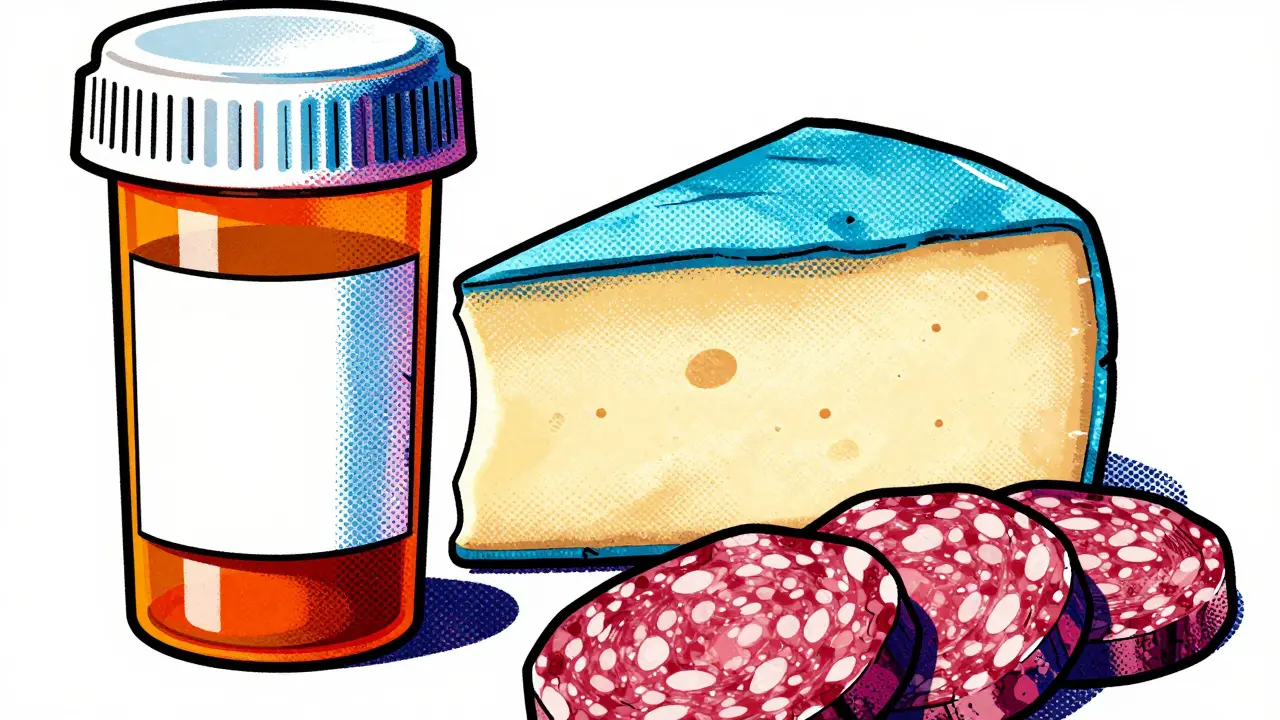
Tyramine Food Safety Checker
Status: Generally Safe
A half-banana is typically under the 6 mg threshold. Overripe bananas contain higher tyramine.
Status: STRICT AVOIDANCE
Contains 20-100 mg/100g. Fermentation during aging spikes tyramine levels significantly.
Status: Low Risk
Freshly prepared mozzarella has low tyramine (<1.5 mg/100g).
Status: STRICT AVOIDANCE
Unpasteurized and tap beers often contain high levels of tyramine (5.2-35.6 mg/100ml).
If you experience these symptoms, seek immediate help:
- Severe headache
- Rapid heartbeat
- Nausea & sweating
- Systolic BP > 180 mmHg
If you take certain antidepressants, eating the wrong meal could stop your heart. That sounds dramatic, but it is the reality for anyone prescribed Monoamine Oxidase Inhibitorsa class of older antidepressant medications that block the breakdown of specific brain chemicals. Known commonly as MAOI, these drugs treat severe depression that resists other treatments. However, they demand a strict lifestyle change regarding what you eat. Specifically, you must avoid high levels of Tyraminea naturally occurring compound found in fermented, aged, or stored foods that affects blood pressure regulation.
The Tyramine Problem Explained
Here is the core issue. Normally, your body breaks down tyramine using an enzyme called monoamine oxidase. When you take an MAOI, you shut down that enzyme. If you then eat food rich in tyramine, the substance accumulates in your blood. This triggers a sudden spike in blood pressure known as a hypertensive crisis. Symptoms include a throbbing headache, rapid heartbeat, nausea, and sweating. Without immediate treatment, this can lead to stroke or death.
You might wonder why doctors still prescribe these. The answer lies in effectiveness. For patients with treatment-resistant depression, MAOIs offer response rates of 50-60%. Compare that to standard SSRIs, which often plateau around 30-40% in difficult cases. Because of this power, we cannot ignore the risks. But modern science suggests the danger zone has shrunk compared to decades ago.
Key Takeaways for Immediate Safety
- Avoid all aged cheeses, cured meats, and tap beers while on active treatment.
- Limit tyramine intake to less than 6 mg per single meal for maximum safety.
- Freshly prepared food is generally safe, but leftovers become risky after 48 hours.
- Carry an ID card stating your medication status at all times.
- Blood pressure checks are essential, especially during the first month of therapy.
Specific Foods to Avoid and Why
The traditional list of banned foods looks scary, but not everything you read online is accurate anymore. Food science has improved. Proper refrigeration and shorter aging processes mean many products today have lower tyramine levels than in the past. However, you still need to identify the specific triggers. We categorize foods by risk level based on recent testing standards.
| Food Item | Tyramine Level (Approximate) | Risk Status | Serving Guideline |
|---|---|---|---|
| Aged Cheddar (>6 months) | 20-100 mg/100g | Strict Avoidance | None |
| Fresh Mozzarella | < 1.5 mg/100g | Low Risk | Up to 150g occasionally |
| Tap Beer / Unpasteurized | 5.2-35.6 mg/100ml | High Risk | Avoid completely |
| Fresh Fish | < 1 mg/100g | Safe | Eat same day |
| Soy Sauce | 10.5-118.4 mg/100g | Strict Avoidance | None |
| Mature Salami | 25-150 mg/100g | Strict Avoidance | None |
Pay attention to storage conditions. A chicken liver stored at room temperature for two days contains significantly more tyramine than one kept cold. Temperature abuse creates bacterial growth, which converts amino acids into tyramine. That is why "fresh" matters more than the label says. If you cannot guarantee the cold chain from store to home, treat the item as high-risk.
Understanding the Modern MAOI Diet
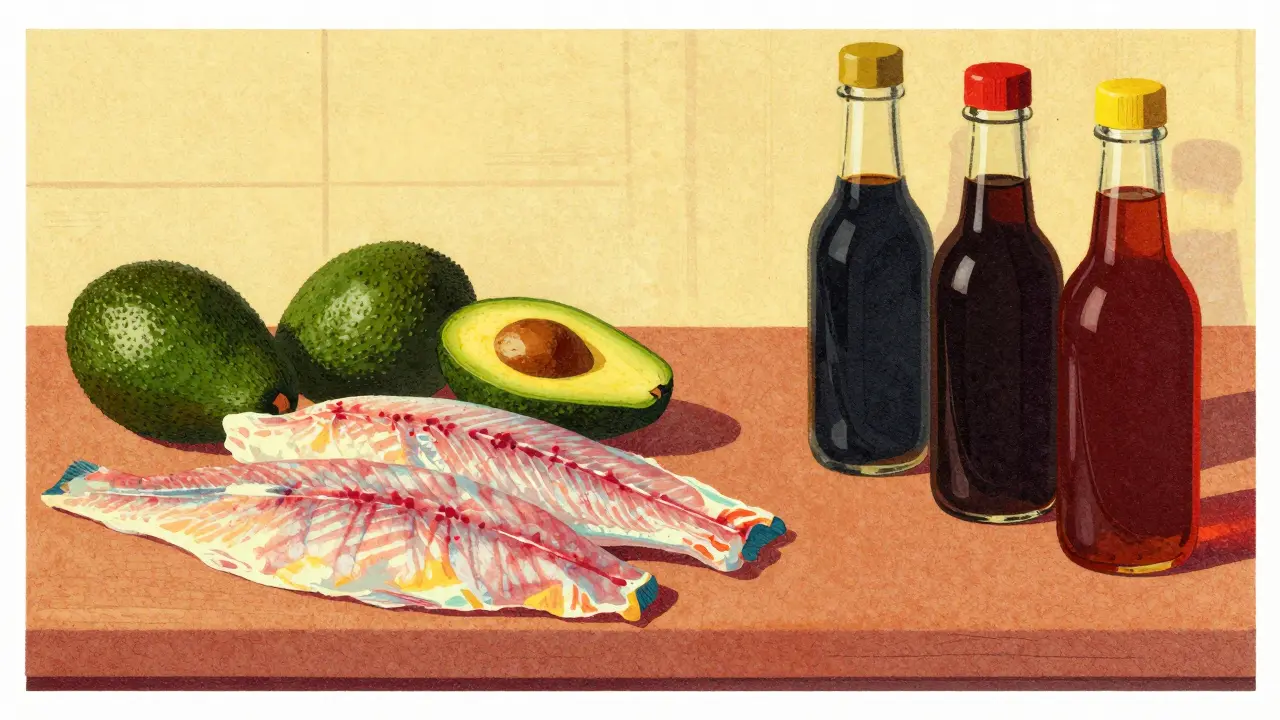
We used to tell patients to cut out bananas and chocolate entirely. Newer data shows this is unnecessary. A half-avocado has about 0.5 to 1.2 mg of tyramine. Eating a banana provides well under the 6 mg per meal threshold. You do not need to starve yourself to stay safe. You simply need to manage portions and freshness.
Soy products require special caution. Some tofu varieties contain up to 45 mg per 100g. This varies wildly by brand and preparation method. If you enjoy soy, limit portions to 100g and ensure it is fresh from the package. Do not reuse leftover soy sauce containers; once opened, fermentation continues rapidly.
What about the selegiline patch? The transdermal form, such as Emsam, works differently. At doses up to 9 mg per 24 hours, it primarily inhibits MAO-B in the brain rather than MAO-A in the gut. This means fewer dietary restrictions apply. However, if you increase the dose beyond 6 mg/24 hours, you move back into the oral MAOI safety zone where full restrictions apply.
Creating Your Personal Safety Plan
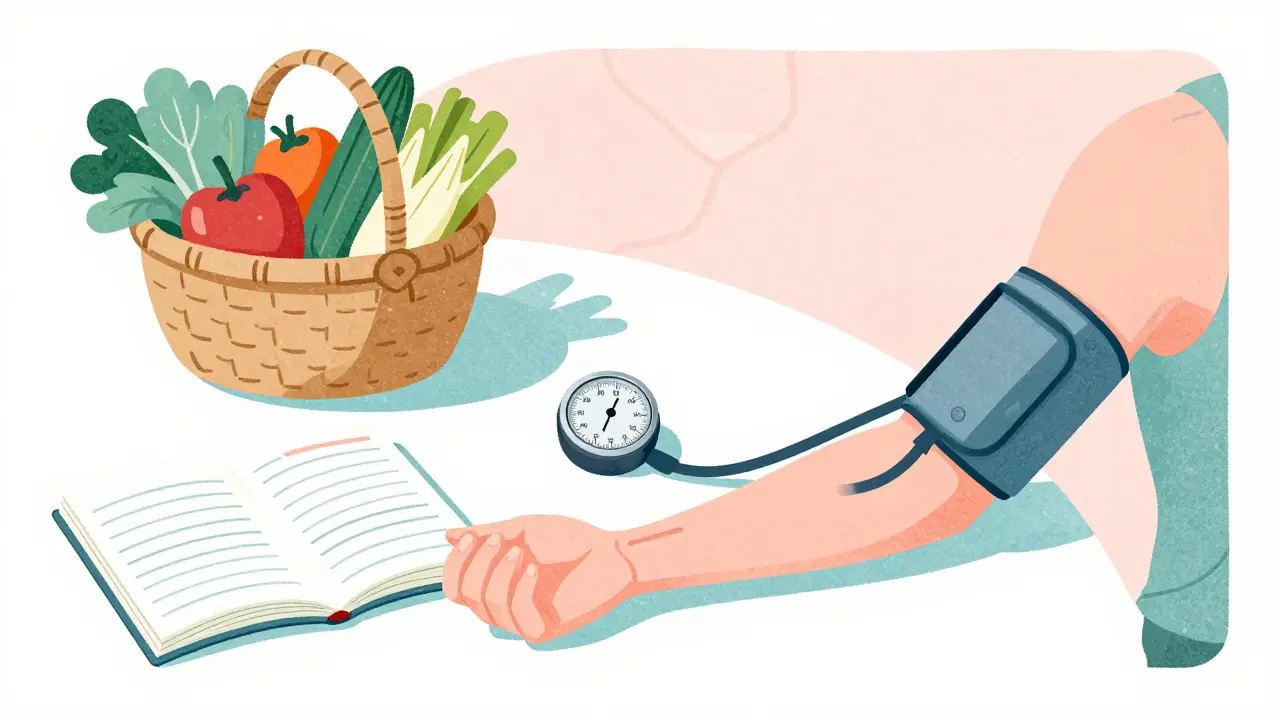
Living with MAOI therapy involves practical habits, not just theory. You need to monitor your body’s response to different foods. The safest strategy is to keep a 7-day food diary when you start the medication. Track what you eat, how much, and your blood pressure reading before and two hours after meals. If you notice spikes after a specific lunch, remove that item permanently.
Leftovers are a major hidden danger. Meat stored in the fridge for three days can see tyramine levels rise tenfold. During the first four weeks, avoid eating any reheated meat entirely. After that, you can reintroduce small portions gradually. Always prioritize food cooked fresh for immediate consumption.
Emergency protocol is non-negotiable. Keep a blood pressure monitor at home. If your systolic pressure exceeds 180 mmHg, or if you experience sudden severe headaches, call emergency services immediately. Medical guidelines suggest taking sublingual nifedipine (0.2 to 0.4 mg) in extreme emergencies, but only under medical supervision. Carrying an MAOI identification card helps paramedics understand the cause of your symptoms instantly.
Navigating Social Situations
Dining out adds complexity. Most restaurant staff do not know what tyramine is. Ask for dishes that are freshly prepared to order and explicitly state you cannot have aged ingredients. Avoid buffets where food sits uncovered. Wine pairings are tricky; dry red wines often ferment further in glass bottles. Stick to table water or very young white wine if you choose to drink, and limit it to one small glass.
How Long Do You Need to Wait?
Your diet isn't temporary. You must follow these rules for the entire duration of treatment. Furthermore, enzyme activity takes time to return after you stop the drug. Guidelines state you should continue the diet for 14 to 21 days after discontinuing irreversible MAOIs like phenelzine. New enzymes need to regenerate before you can safely consume high-risk foods again.
Conclusion
While MAOIs demand vigilance, they offer hope where other treatments fail. By understanding exactly what tyramine is and how food handling changes its levels, you reduce the fear associated with the diet. Focus on fresh, unprocessed ingredients, monitor your blood pressure, and maintain open communication with your prescriber. With these steps, you can manage your health effectively.
Can I eat chocolate while on MAOIs?
Yes, in moderation. Studies show up to 30g of dark chocolate is generally safe because tyramine levels are low. Avoid cocoa powder concentrates or aged chocolate products.
What are the symptoms of a tyramine reaction?
Watch for severe pounding headache, neck stiffness, rapid pulse, sweating, nausea, and vision changes. These indicate a hypertensive crisis requiring emergency care.
Do I need to avoid all cheese?
Not necessarily. Fresh cheeses like cottage cheese and mozzarella are usually safe. Strictly avoid blue cheese, cheddar, parmesan, and anything aged longer than 6 months.
How long after stopping medication is the diet required?
You must continue dietary restrictions for at least 2 weeks after stopping oral MAOIs. Enzyme regeneration typically completes within 14 to 21 days.
Is beer always off-limits?
Most beer contains too much tyramine, especially unpasteurized or tap versions. Pasteurized, mass-produced lagers are sometimes considered safer in very small amounts, but avoidance is the safest policy.


Jordan Marx
The enzymatic blockade presented by phenelzine necessitates strict adherence to tyramine thresholds.
Clinical evidence suggests that residual monoamine activity dictates the severity of sympathetic stimulation during exposure.
We must prioritize neurochemical stability above all culinary preferences in this therapeutic context.