Patch Testing: What It Is, Who Needs It, and What It Reveals
When your skin reacts for no obvious reason—itching, redness, or a rash that won’t go away—patch testing, a diagnostic method used to identify allergic reactions to substances that touch your skin. Also known as allergic contact dermatitis testing, it’s not the same as a pinprick allergy test. Instead, it spots triggers hiding in your shampoo, jewelry, lotion, or even your work gloves. Unlike immediate reactions like peanut allergies, patch testing catches delayed responses that can take days to show up, which is why so many people miss the connection between their rash and that new watch strap or fragrance in their soap.
People who deal with chronic eczema, work with chemicals, or keep getting rashes after using certain products are the ones who benefit most. allergic contact dermatitis, a skin inflammation caused by an immune reaction to a specific chemical is the main target. Common culprits include nickel in jewelry, formaldehyde in cosmetics, neomycin in antibiotic creams, and fragrances in laundry detergent. patch test results, the specific allergens identified during the test don’t just tell you what to avoid—they help you rebuild your routine with safer products. A positive result for cobalt? Swap your makeup brushes. A reaction to balsam of Peru? Ditch that vanilla-scented body wash. This isn’t guesswork; it’s personalized prevention.
What you find in these tests often surprises people. One woman had a rash for years until her patch test revealed she was reacting to her own hair dye. A mechanic kept breaking out on his hands—turns out it was the rubber gloves he thought were protecting him. These aren’t rare cases. contact allergens, substances that trigger skin allergies through direct contact are everywhere, and most aren’t listed clearly on labels. That’s why patch testing is one of the few tools that cuts through the noise and gives you real answers. The process is simple: small amounts of common allergens are taped to your back for two days, then checked for reactions. No needles. No blood. Just your skin and a few patches.
What you’ll find in the articles below covers everything from how to interpret your results, to which everyday items are most likely to cause trouble, to what to do when your test comes back negative but your skin still acts up. You’ll learn about the hidden allergens in skincare, the surprising links between patch testing and work-related rashes, and how to talk to your doctor so you get the right test the first time. This isn’t just about avoiding rashes—it’s about taking control of your skin health with facts, not frustration.
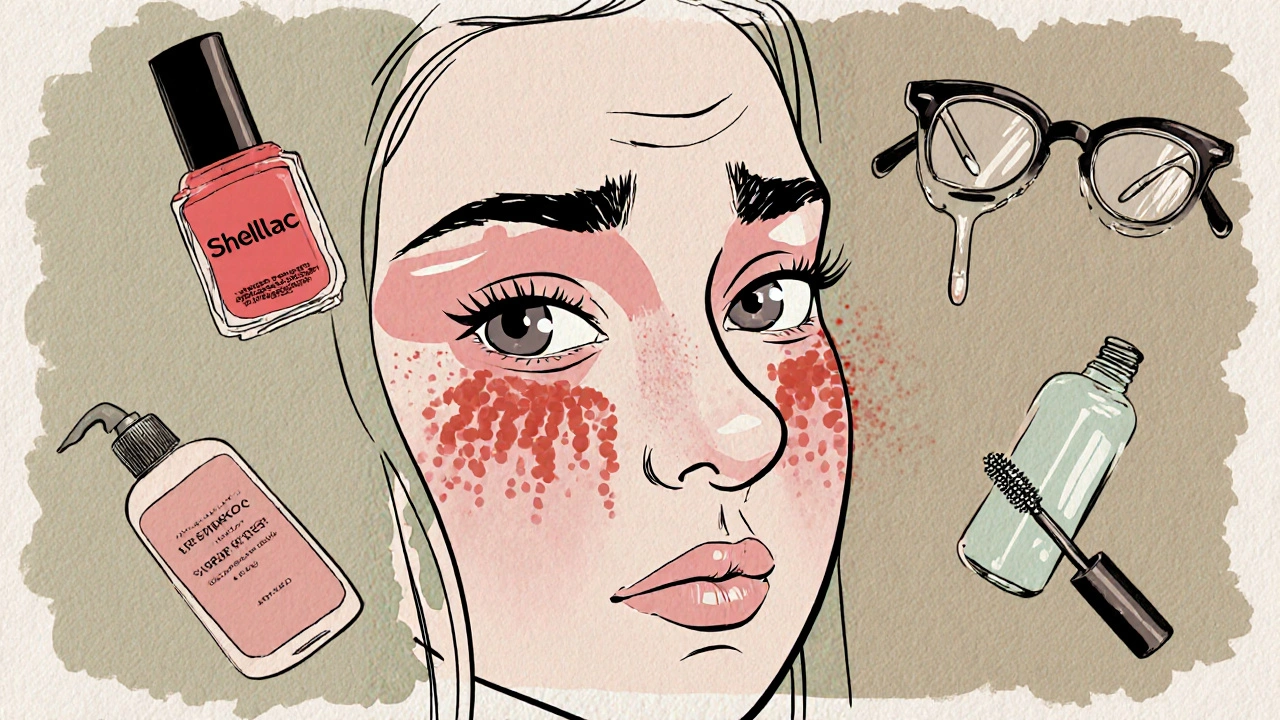
Eyelid dermatitis is often caused by hidden allergens in cosmetics, nail polish, and hair products. Learn the top triggers, why patch testing is essential, and how to safely treat and prevent recurring rashes.