
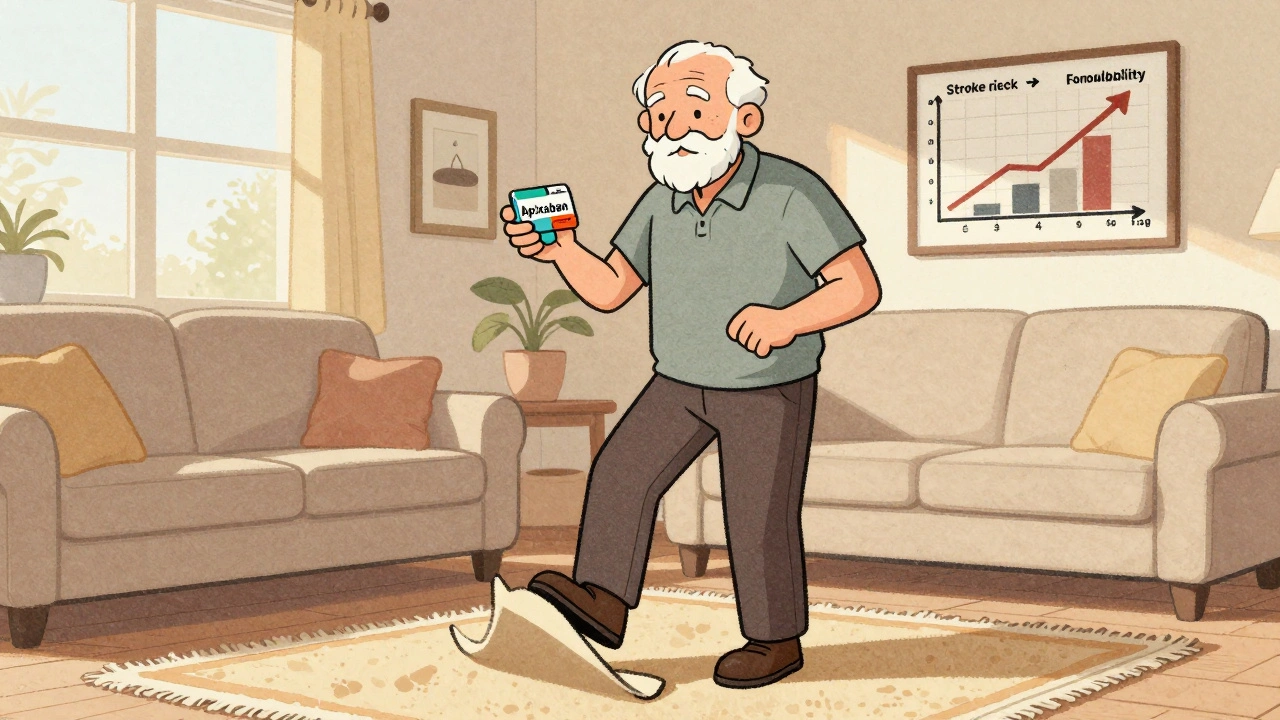
When a senior falls, the fear isn’t just about a bruise or a sore hip. For someone on anticoagulants, a simple tumble can turn life-threatening. Yet, skipping these medications because of fall risk is one of the most dangerous mistakes doctors and families make. The truth? Anticoagulants save more lives in older adults than they endanger - even with frequent falls.
Why Seniors Need Anticoagulants
About 9 out of every 100 adults over 65 have atrial fibrillation - an irregular heartbeat that lets blood pool and clot in the heart. Those clots can travel to the brain and cause a stroke. And stroke risk doesn’t creep up with age - it spikes. At 70 to 79, the annual risk is nearly 10%. By 80 to 89, it’s over 23%. That’s more than 1 in 5 people having a stroke each year if nothing is done. Warfarin, the old-school blood thinner, cuts stroke risk by about two-thirds. But newer drugs - dabigatran, rivaroxaban, apixaban, and edoxaban - do just as well, often better. Apixaban, for example, reduced stroke risk by 21% compared to warfarin in people over 75. And here’s the kicker: they’re safer. Rivaroxaban cuts intracranial bleeding by 34%. Apixaban slashes major bleeding by 31% in seniors.The Fall Fear Is Real - But Misplaced
It’s understandable to worry. If someone falls while on anticoagulants, they’re more likely to bleed inside the skull. Minnesota hospital data shows elderly patients on these drugs have a 50% higher chance of intracranial hemorrhage after a fall. And 90% of fall-related deaths involve people over 85 or those taking anticoagulants. But here’s what that data doesn’t tell you: most seniors on anticoagulants never fall. And even if they do, the odds of dying from a stroke without treatment are far worse. The BAFTA trial looked at 81.5-year-olds on average - the kind of people families worry about most. Those on anticoagulants had a 52% lower chance of stroke or systemic embolism than those on aspirin. And there was no significant increase in major bleeding. That’s not a small win. That’s life-saving.Why Doctors Still Underprescribe
Despite clear guidelines from the American College of Cardiology and Heart Rhythm Society saying age alone shouldn’t stop anticoagulation, only 48% of seniors over 85 get these drugs. In the 65-74 group, it’s 72%. Why the drop-off? Clinicians are scared. A 2021 survey found 68% of primary care doctors would withhold anticoagulants from an 85-year-old who’d fallen twice - even if their stroke risk score (CHA2DS2-VASc) was 4, meaning high risk. That’s not evidence-based. That’s fear driving decisions. And it’s not just doctors. Families hear stories. They see news about bleeding after falls. They ask, “Why risk it?” But they don’t hear the flip side: for every 20 elderly patients treated with anticoagulants, one stroke is prevented every year. That’s the number that matters.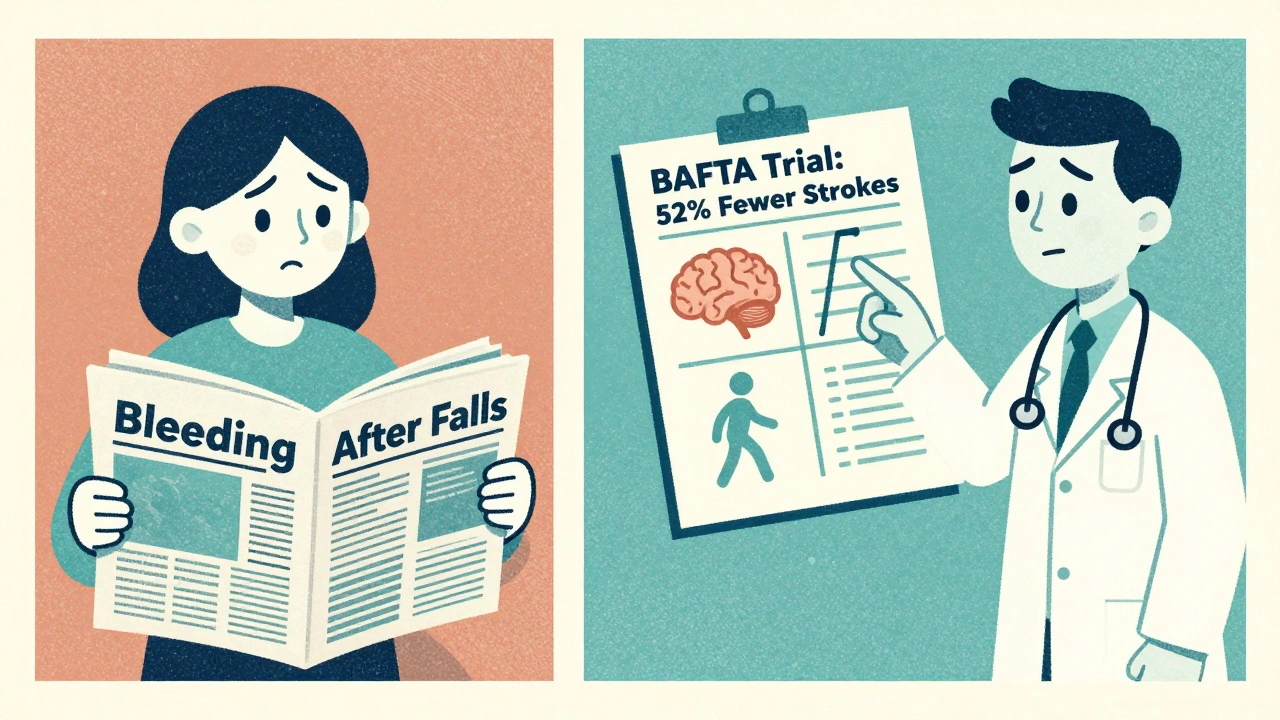
DOACs vs. Warfarin: What’s Better for Seniors?
Warfarin works. But it’s messy. You need blood tests every few weeks to keep your INR between 2 and 3. Too low, and clots form. Too high, and you bleed. Most people only stay in range 60-65% of the time. DOACs? Fixed doses. No routine blood tests. Just take it daily. That’s huge for seniors who struggle with appointments or memory. But they’re not perfect. Most are cleared by the kidneys. As we age, kidney function drops. Dabigatran is 80% cleared by kidneys. Edoxaban is 50%. If creatinine clearance falls below 50 mL/min, the dose needs adjusting - or the drug might need switching. Apixaban is the gentlest here. Only 27% is cleared by kidneys. It’s also the safest for bleeding in seniors. In the ARISTOTLE trial, apixaban reduced major bleeding by 31% compared to warfarin in people 75+. And if a bleed happens? We’ve got reversal agents now. Idarucizumab reverses dabigatran. Andexanet alfa reverses rivaroxaban, apixaban, and edoxaban. These aren’t perfect, but they’re better than nothing.How to Reduce Fall Risk - Without Stopping Medication
You don’t have to choose between stroke and a fall. You can reduce both. Start with a fall risk assessment. Use tools like the Morse Fall Scale or Otago Exercise Program. The Otago program - a simple home-based balance and strength routine - cuts falls by 35% in seniors. Remove hazards. Loose rugs? Get rid of them. Poor lighting? Add nightlights. No handrails? Install them. Bed alarms? Helpful for those with dementia or confusion. Review all meds. Benzodiazepines, opioids, even some blood pressure pills can make you dizzy. Cut what you can. Ask the pharmacist to do a med review. And don’t forget vision checks and hearing aids. Poor sight and hearing are silent fall risks.The Numbers Don’t Lie
Let’s put it plainly: - For every 100 octogenarians on anticoagulants for one year: 24 strokes are prevented. 3 major bleeds occur. Net benefit: 21 lives saved or spared from disability. That’s not a gamble. That’s a calculated, evidence-backed win. The American College of Chest Physicians says it clearly: “The net clinical benefit of anticoagulation remains positive even in patients with multiple falls.”
What to Do Next
If you or a loved one has atrial fibrillation and is over 65:- Ask for your CHA2DS2-VASc score. If it’s 2 or higher, you’re at risk.
- Ask if you’re on the right anticoagulant. Apixaban or edoxaban are often best for seniors.
- Ask about kidney function - get a creatinine clearance test if you haven’t had one in 6 months.
- Ask for a fall risk assessment and a medication review.
- Don’t stop anticoagulants because of a fall. Talk to your doctor about how to make it safer.
Frequently Asked Questions
Should seniors stop anticoagulants after a fall?
No. Stopping anticoagulants after a fall is one of the most harmful decisions in geriatric care. The risk of stroke without treatment is far greater than the risk of bleeding from a fall. Instead of stopping the medication, focus on preventing future falls - through exercise, home safety, and medication review.
Is apixaban better than warfarin for elderly patients?
Yes, for most seniors. Apixaban reduces stroke risk just as well as warfarin but causes 31% fewer major bleeds in people over 75. It doesn’t require regular blood tests, has fewer food interactions, and is easier on the kidneys. It’s now the preferred first choice for elderly patients with atrial fibrillation.
Do DOACs cause more bleeding than warfarin?
No. DOACs like apixaban and rivaroxaban cause fewer major bleeds overall - especially dangerous brain bleeds. Warfarin has a higher risk of intracranial hemorrhage. While DOACs can cause bleeding in the stomach or intestines, they’re less likely to cause fatal bleeding in the brain, which is the biggest concern after a fall.
Can kidney problems make anticoagulants unsafe for seniors?
Yes, but it’s manageable. Most DOACs are cleared by the kidneys, so if kidney function drops below 50 mL/min, doses need adjusting. Apixaban is the safest option here - it’s least dependent on kidney function. Always get a creatinine clearance test before starting or changing anticoagulants. Your doctor can adjust the dose or switch medications based on results.
What if my parent refuses anticoagulants because they’re scared of bleeding?
Talk to them about the real numbers. A senior with atrial fibrillation is 5 to 10 times more likely to have a stroke than to die from a fall-related bleed. Show them the BAFTA trial: 52% fewer strokes with anticoagulants, no extra bleeding. Many seniors change their minds once they understand the risk isn’t what they think.



Queenie Chan
So let me get this straight-we’re telling grandmas to keep taking blood thinners because the math says they’ll live longer, but we’re not talking about the 3 a.m. panic when they stumble in the bathroom and you find a puddle of blood on the tile? The numbers don’t lie, sure-but neither does the sound of a 90-year-old gasping because their skull’s bleeding out while the ER waits for a reversal agent that costs more than their monthly pension. I’m not anti-medicine. I’m pro-compassion.