Anticoagulants for Seniors: Safety, Risks, and What You Need to Know
When it comes to anticoagulants, medications that prevent dangerous blood clots by thinning the blood. Also known as blood thinners, they're essential for millions of older adults with atrial fibrillation, deep vein thrombosis, or artificial heart valves. But for seniors, these drugs aren’t just about effectiveness—they’re about survival and avoiding life-threatening mistakes. The Beers Criteria, a widely used guide for identifying risky medications in adults over 65 lists several anticoagulants and related drugs that should be avoided or used with extreme caution in older patients. Why? Because aging changes how the body absorbs, processes, and clears these drugs. Kidneys slow down. Liver function declines. Balance gets worse. A small dose that’s safe for a 40-year-old can be dangerous for a 75-year-old.
One of the most common anticoagulants for seniors is warfarin, an older blood thinner that requires regular blood tests to monitor its effect. The test? INR, a measure of how long it takes your blood to clot. Too low, and you risk a stroke. Too high, and you risk a bleed inside your brain or gut. Alcohol, certain foods like leafy greens, and even over-the-counter painkillers can throw your INR off balance. That’s why many seniors on warfarin end up in the ER—not because they forgot a pill, but because they took something they didn’t realize interacted with it. And it’s not just warfarin. Newer anticoagulants like apixaban and rivaroxaban are easier to manage, but they still carry bleeding risks, especially if kidney function is low or if the person is on multiple other meds.
Medication errors are the leading cause of preventable harm in older adults. A pill that looks different, a label that’s too small, a sticker that’s missed—any of these can lead to disaster. That’s why pharmacy auxiliary labels, proper storage, and clear communication with your doctor matter more than ever. The Beers Criteria isn’t just a list—it’s a warning system. And when you combine it with real-world tools like tracking expiration dates, understanding color-coded warning stickers, and knowing when to ask about deprescribing, you’re not just taking a pill. You’re taking control.
Below, you’ll find real stories and practical advice from people who’ve lived through anticoagulant risks and wins. From how alcohol affects your INR to why your pill changed color, from spotting counterfeit meds to knowing when to ask your doctor to cut back—this collection is built for seniors and their caregivers who need clear, no-fluff answers to stay safe.
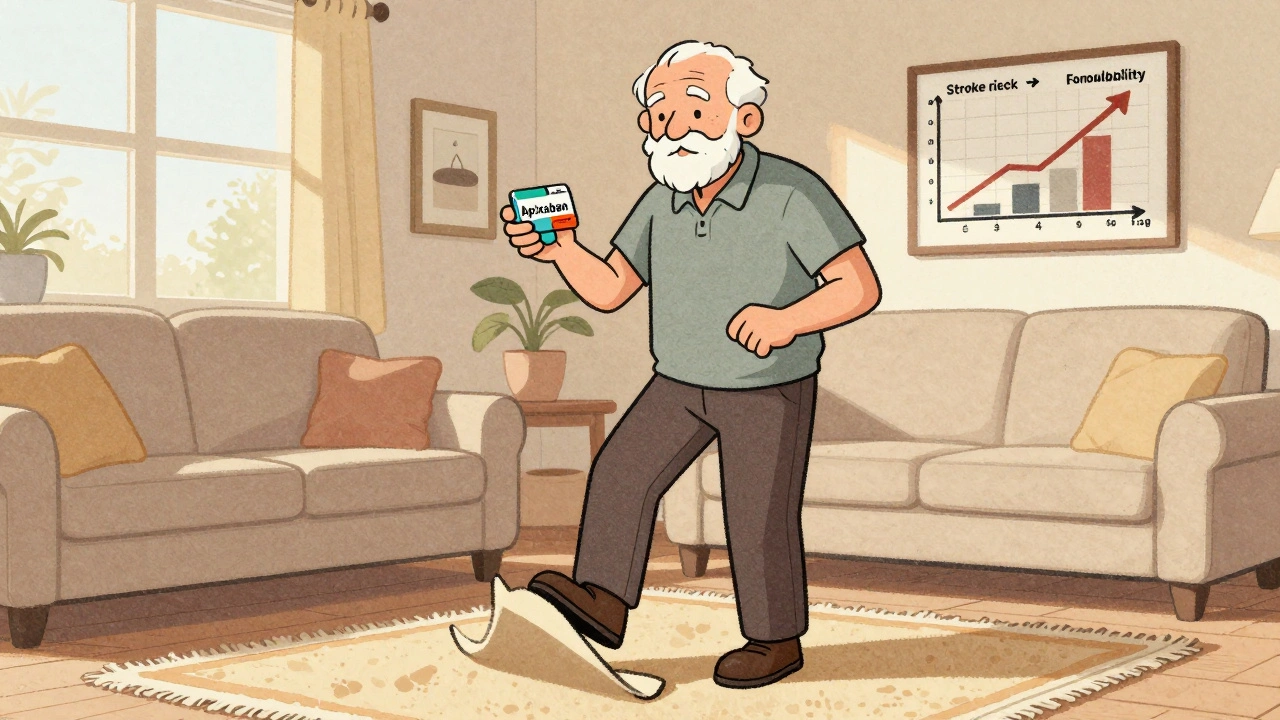
Anticoagulants save more lives than they endanger in seniors with atrial fibrillation. Despite fears about falls, evidence shows stroke prevention benefits far outweigh bleeding risks - especially with newer drugs like apixaban.