

When a patient walks into a hospital with high blood pressure, diabetes, or an infection, the doctor doesn’t just pick any pill off the shelf. Every medication they prescribe has already passed through a quiet but powerful gatekeeper: the hospital formulary. This isn’t a static list. It’s a living, breathing system that decides which generic drugs are allowed, which ones are preferred, and which ones are blocked - all based on science, cost, and real-world outcomes.
What Exactly Is a Hospital Formulary?
A hospital formulary is a curated list of medications approved for use within a healthcare system. It’s not just a catalog - it’s a decision-making tool. Most U.S. hospitals with 100 or more beds maintain a formal formulary, and nearly all academic medical centers use a closed formulary system. That means only drugs on the list are routinely stocked and prescribed. If a doctor wants to order something off-list, they have to jump through hoops - usually a prior authorization request. The formulary typically includes between 300 and 1,000 drug dosage forms. Generic drugs make up the vast majority. In fact, 90% of all prescriptions filled in hospitals are generics, yet they account for only 26% of total drug spending. That’s the whole point: getting the same clinical result at a fraction of the price.Who Decides What Goes On the List?
The Pharmacy and Therapeutics (P&T) committee is the real power behind the formulary. This group isn’t made up of administrators or marketers. It’s a mix of pharmacists with Board Certification in Pharmacotherapy (BCPP), physicians specializing in internal medicine or infectious disease, a healthcare economist, and sometimes a nurse or patient advocate. Most committees have 12 to 15 members and meet monthly or quarterly. They don’t vote based on what’s flashy or what a sales rep pushed. Every drug request comes with a formal dossier - clinical trial data, pharmacokinetic studies, safety reports from the FDA’s Adverse Event Reporting System, and cost analyses. The committee reviews at least 15 to 20 peer-reviewed studies per drug class before making a decision. The FDA’s Orange Book is the starting point. It confirms whether a generic drug is therapeutically equivalent to the brand-name version - meaning it delivers the same active ingredient at the same rate and extent. But that’s just the baseline. Hospitals go further. They look at:- How often patients miss doses because the pill is too big, too bitter, or comes in a confusing package
- Whether a generic has had supply shortages in the past year
- How it affects hospital length of stay or readmission rates
- Whether it interacts badly with other common medications in their patient population
How Are Generics Ranked? The Tier System
Formularies are split into tiers - usually three to five levels - that determine how much a patient pays. Generics almost always land in Tier 1, meaning the copay is as low as $5 or $10. Brand-name drugs without generic competition sit in Tier 3 or 4, often costing $50 or more. But here’s the nuance: not all generics are treated the same. For example, if a hospital has three generic versions of lisinopril (a common blood pressure drug), they won’t stock all three. They’ll pick the one with the lowest acquisition cost, the most reliable supply chain, and the fewest reported complaints from pharmacy staff about confusing packaging. In one case at Johns Hopkins Hospital, switching to a preferred generic anticoagulant saved $1.2 million in a single year - without a single increase in bleeding events or hospital readmissions. That’s the sweet spot: cost savings without sacrificing safety.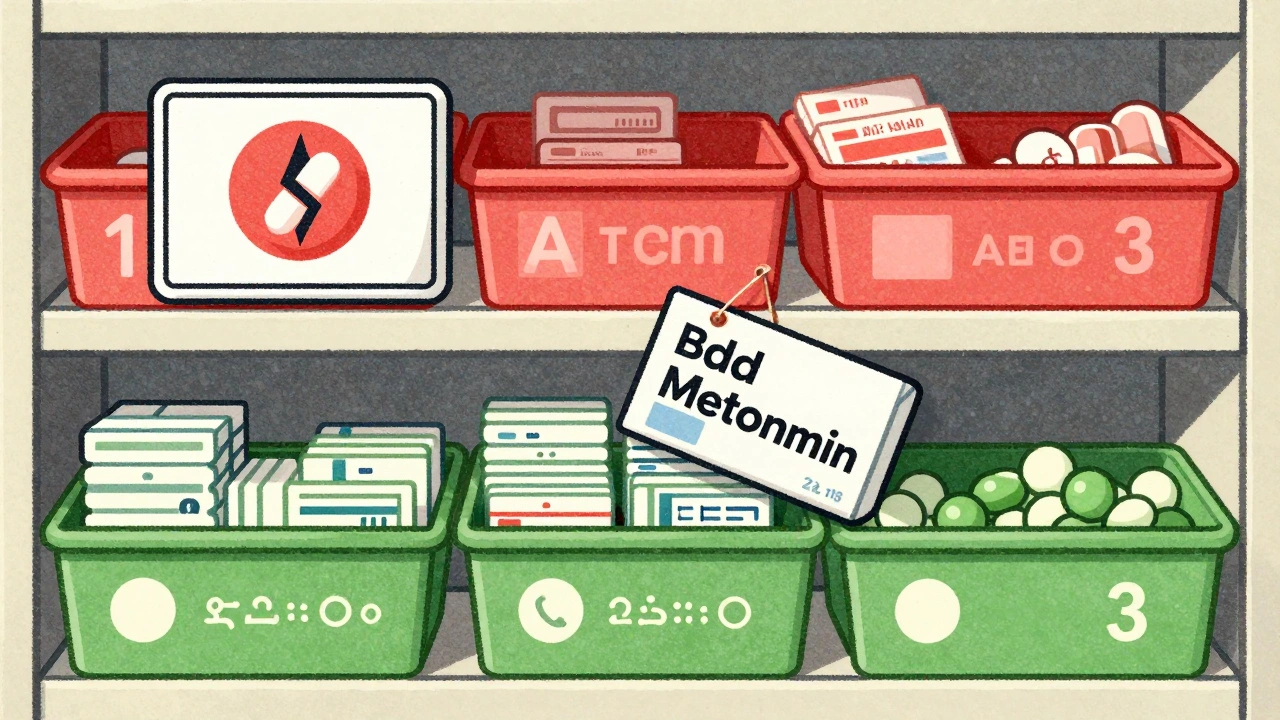
Why Not Just Pick the Cheapest?
It’s tempting to think the cheapest generic always wins. But that’s not how it works. A 2022 study from Massachusetts General Hospital found that one generic version of metformin was pulled from the formulary after seven supply disruptions in 12 months. Even though it was the cheapest, the pharmacy team spent so much time switching patients and troubleshooting stockouts that it cost more in labor and delays than the drug saved. Another example: some generics use different fillers or coatings. One might be easier to swallow for elderly patients. Another might dissolve too slowly, leading to inconsistent absorption. These aren’t trivial differences - they affect compliance, which affects outcomes. That’s why the P&T committee doesn’t just look at price per pill. They look at total cost of care. As Dr. Steven J. Simoens from KU Leuven put it, “The real question isn’t what the pill costs - it’s whether it keeps the patient out of the ER next month.”Challenges and Conflicts
Despite the logic behind formularies, they’re not popular with everyone. Physicians often complain about prior authorization delays. A 2021 AMA survey found that 32% of doctors said formulary restrictions had directly delayed patient care. Nurses report confusion when a drug’s formulation changes - one generic might be a tablet, another a capsule, and switching them mid-treatment causes errors. A 2023 survey on AllNurses.com showed 73% of nurses had made a medication error during a formulary transition. Pharmacists face pushback too. About 57% of them report conflicts with doctors over therapeutic interchange - the practice of automatically substituting a preferred generic at the pharmacy counter. Some physicians feel it undermines their authority, even when the substitution is clinically identical. And then there’s the shadow of pharmaceutical influence. Dr. Jerry Avorn from Harvard documented how drug reps still visit hospitals, offering meals, samples, and “educational grants” that can sway opinions - even when conflict-of-interest disclosures are in place.What’s Changing in 2025?
The rules are evolving. The Inflation Reduction Act of 2022 is forcing Medicare Part D to align more closely with hospital formularies by 2025. That means hospitals are now designing formularies with future federal reimbursement rules in mind. New tools are emerging too. Sixty-one percent of hospitals now use predictive analytics to model how a generic drug choice affects downstream costs - like ER visits, rehab stays, or home health needs. Some academic centers are even starting to use pharmacogenomic data. If a patient has a gene variant that makes them metabolize a drug slowly, the formulary might automatically exclude certain generics and favor others that are safer for their profile. The biggest shift? Moving from “lowest acquisition cost” to “lowest total cost of care.” That’s a game-changer. It means a slightly more expensive generic might win if it reduces hospital stays by a day or cuts readmissions by 15%.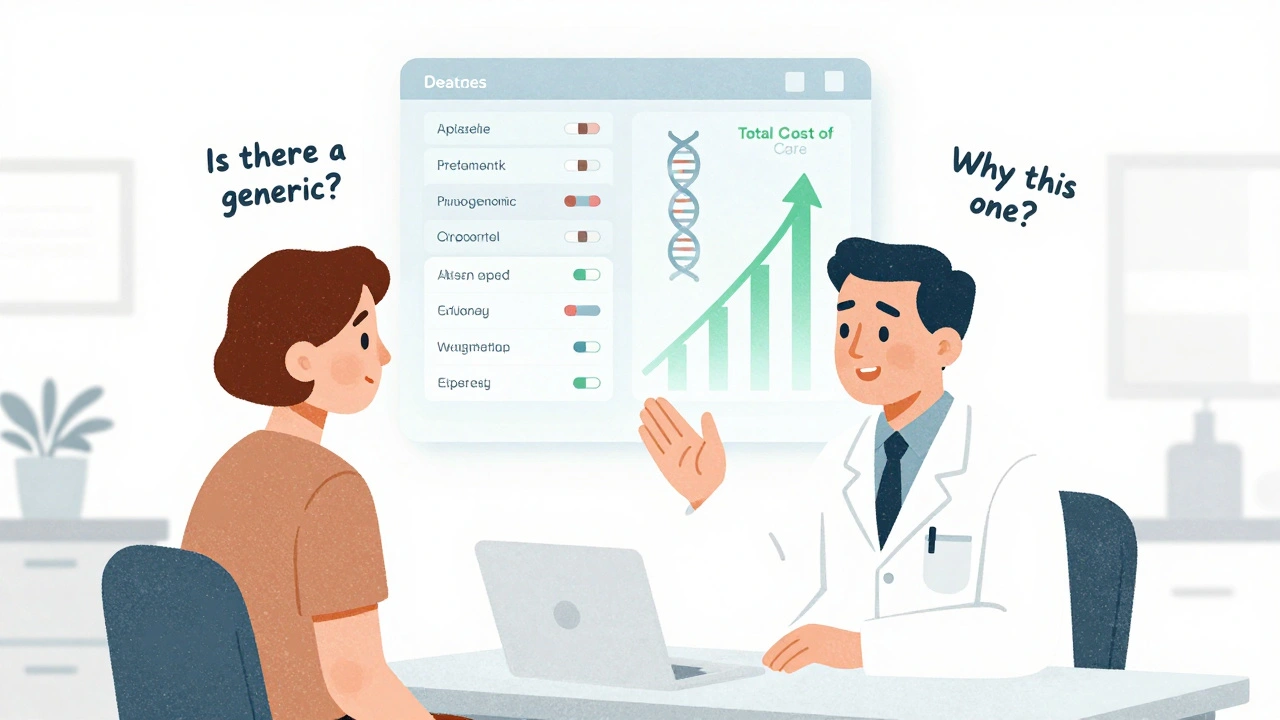
What About Biosimilars?
Biosimilars - the generic version of complex biologic drugs like Humira or Enbrel - are the next frontier. But they’re not treated like regular generics. Their approval process is more complex, and their clinical equivalence is harder to prove. Right now, only 37% of hospital formularies have clear protocols for evaluating and switching to biosimilars. That’s changing fast, but the lag is real. Many hospitals are waiting for more real-world data before fully embracing them.How Do You Know If a Generic Is Right for You?
As a patient, you won’t see the formulary. But you can ask questions:- “Is there a generic version of this drug?”
- “Why did you choose this one over another?”
- “Has this generic been used here before? Any side effects?”
Final Thought: It’s Not About Cutting Corners - It’s About Cutting Waste
Hospital formularies aren’t about denying care. They’re about removing waste. The same clinical outcome, delivered more reliably, at a lower cost, with fewer errors. That’s not bureaucracy - that’s smart medicine. The system isn’t perfect. Supply chains break. Doctors get frustrated. Nurses get confused. But when it works - when the right generic is chosen for the right patient - it’s one of the quietest, most effective ways healthcare saves lives without spending more.How are generic drugs selected for hospital formularies?
Generic drugs are selected through a formal review by a Pharmacy and Therapeutics (P&T) committee. The committee evaluates clinical evidence from at least 15-20 peer-reviewed studies, checks FDA therapeutic equivalence via the Orange Book, reviews safety data from the FDA’s Adverse Event Reporting System, assesses cost-effectiveness including total care costs, and considers supply reliability and patient compliance factors. Only drugs that meet all criteria are added to the formulary.
Why do hospitals use closed formularies instead of open ones?
Closed formularies limit prescribing to approved drugs only, which improves safety, reduces variation in care, and lowers costs. Studies show hospitals with closed formularies achieve 18-22% lower medication costs without worsening patient outcomes. They also make it easier to manage drug shortages, standardize training, and enforce evidence-based prescribing.
Can a doctor prescribe a drug not on the formulary?
Yes, but it requires prior authorization. The doctor must submit documentation explaining why the non-formulary drug is medically necessary - often because the patient had an adverse reaction to all formulary alternatives or has a rare condition. This process can delay treatment by days or weeks, which is why many clinicians try to stick to formulary drugs whenever possible.
Do formularies change often?
Yes. Academic medical centers review their formularies quarterly, while community hospitals typically do so every six months. Changes happen due to new generics entering the market, drug shortages, safety alerts, or new clinical evidence. Urgent requests, like during a shortage, can be reviewed in as little as 14 days.
How do formularies affect patient costs?
Formularies directly control patient out-of-pocket costs. Generic drugs are placed in the lowest cost-sharing tier (Tier 1), often with $5-$10 copays. Brand-name drugs without generic alternatives are in higher tiers with much higher copays. By steering prescribers toward generics, hospitals reduce financial burden on patients while maintaining clinical quality.
What role do pharmaceutical companies play in formulary decisions?
Pharmaceutical companies can submit data and request formulary inclusion, but they don’t vote. However, their sales representatives still visit hospitals, offering educational materials, samples, and sponsored events. While conflict-of-interest disclosures are required, studies show these interactions can subtly influence prescribing habits. Leading hospitals now use independent cost-effectiveness analyses from groups like ICER to counterbalance industry influence.
Are biosimilars included in hospital formularies?
Some are, but not widely. Only 37% of U.S. hospitals have formal protocols for evaluating biosimilars as of 2025. Unlike small-molecule generics, biosimilars require more complex testing to prove equivalence. Many formularies are waiting for more real-world data before fully adopting them, even though they offer significant cost savings compared to originator biologics.




Emily Haworth
So you're telling me Big Pharma still sneaks in through the back door with free lunches and 'educational grants'? 🤔 I knew it. They're not just selling pills-they're selling *beliefs*. And we're the ones paying the price. #PharmaControl