
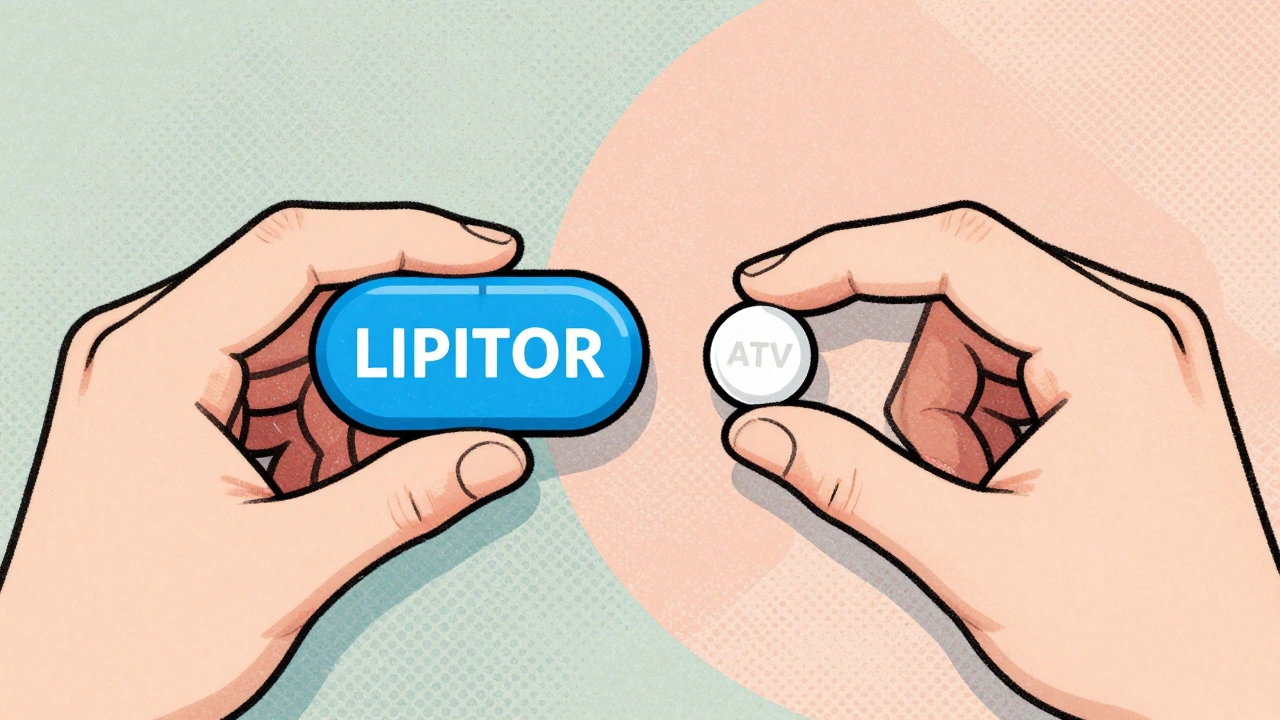
Have you ever opened a prescription refill and thought, "This isn’t the same pill I’ve been taking"? The color’s different. The shape’s weird. Even the letters stamped on it don’t match. You panic. Did the pharmacy mess up? Is this fake? Is it less effective?
Here’s the truth: it’s probably fine. And the reason your pill looks different has nothing to do with quality, safety, or pharmacy errors. It’s because of trademark laws.
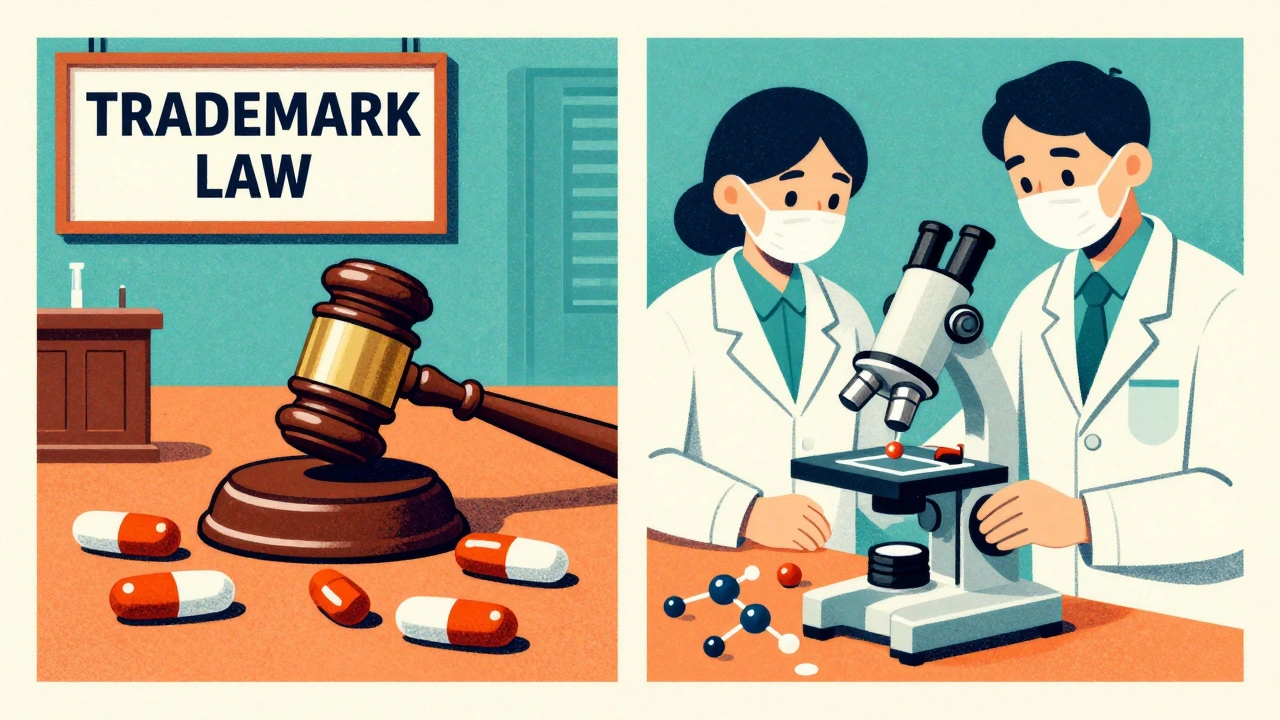
In the U.S., federal law doesn’t let generic drug makers copy the exact look of brand-name pills. Not the color. Not the shape. Not the size. Not even the imprint. Why? Because trademark law protects visual identity - not just for soda cans or sneakers, but for pills too.
Why Trademark Law Applies to Pills
Think of a pill like a product logo. When a company spends millions developing a drug, they also design its appearance to be instantly recognizable. A bright blue oval. A white capsule with "LIPITOR" stamped on it. That look becomes part of the brand. Trademark law exists to stop competitors from copying that look - because if they did, patients might accidentally take the wrong medicine.
So when a brand-name drug’s patent expires, other companies can legally make the same drug. But they can’t make it look the same. The U.S. Food and Drug Administration (FDA) requires generic versions to be visually distinct. That’s not a suggestion. It’s a rule. The FDA states clearly: "Trademark laws in the United States do not allow a generic drug to look exactly like other drugs already on the market."
This rule isn’t about confusing consumers - it’s about preventing it. If every manufacturer could copy the exact look of a brand-name pill, you’d have dozens of pills that look identical. Imagine trying to tell apart ten different versions of the same blue oval. That’s a recipe for mistakes.
What Parts of the Pill Can Change?
Generic drugs must match brand-name drugs in one critical way: the active ingredient. That’s the part that actually treats your condition. Whether it’s atorvastatin for cholesterol or metformin for diabetes, the active ingredient in the generic is identical to the brand version.
But everything else? That’s fair game. Here’s what generic manufacturers can change:
- Color - A red brand pill might become a white or yellow generic.
- Shape - A round tablet could be turned into an oval, capsule, or even a scored tablet.
- Size - The generic might be slightly larger or smaller.
- Imprint - Letters or numbers stamped on the pill will differ.
- Flavoring and fillers - These inactive ingredients help with taste, stability, or how the pill breaks down. They don’t affect how the drug works.
These changes don’t make the drug weaker or slower. They’re just cosmetic. The FDA requires generic drugs to prove they deliver the same amount of medicine into your bloodstream as the brand version - within a 3.5% average variation, which is well within the safe 80-125% bioequivalence range.
Why This Doesn’t Affect How the Drug Works
Some people worry that if the pill looks different, it must work differently. That’s a myth. The science is clear: generic drugs are just as effective as brand-name ones.
The FDA tests every generic drug before it hits the market. They check that:
- The active ingredient is identical in strength and purity
- The drug is absorbed into the body at the same rate and amount
- The manufacturing facility meets the same quality standards as brand-name plants
Studies back this up. One large review of over 1,000 generic drugs found no meaningful difference in effectiveness compared to brand-name versions. The American Medical Association, the World Health Organization, and the FDA all agree: generics work the same way.
And here’s the kicker: generics cost 80-85% less. That’s why 90% of all prescriptions filled in the U.S. are for generic drugs. They save patients and the healthcare system billions every year.
The Real Problem: Patient Confusion
Even though the system works scientifically, it creates a real-world problem: confusion.
Patients get used to how their pill looks. They associate that shape and color with taking their medicine. When the refill comes back looking totally different - even if it’s the same drug from a different manufacturer - they think something’s wrong. Some stop taking it. Others worry they’ve been given the wrong medicine.
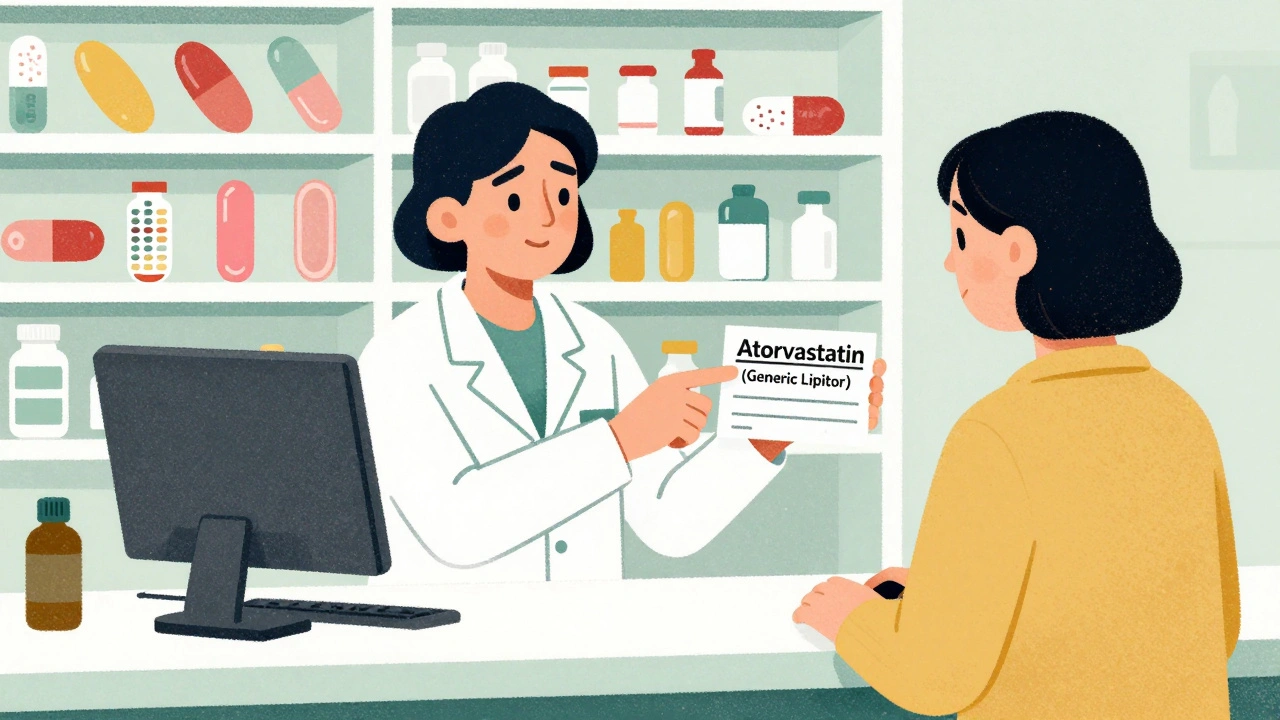
Pharmacies know this. That’s why they put special labels on generic prescriptions: "This is a generic version of [Brand Name]." They also train staff to explain the change when dispensing. Still, mistakes happen. A 2023 survey by UMass Memorial Health found that nearly 1 in 5 patients reported feeling anxious or confused after switching to a generic.
One Reddit user wrote: "I’ve been taking my blood pressure pill for years. It was a small white oval. Now it’s a big blue round one. I thought I was getting the wrong drug. I didn’t take it for three days." That’s not just inconvenient - it’s dangerous.
How to Stay Safe When Your Pill Looks Different
Here’s what you can do to avoid confusion and stay safe:
- Check the label - Always read the name on the bottle. It should say the generic name (e.g., "atorvastatin") and the brand name (e.g., "Lipitor").
- Ask your pharmacist - If it looks different, ask: "Is this the same medicine I’ve been taking?" They’ll confirm it’s the same active ingredient.
- Don’t assume - Just because the pill looks different doesn’t mean it’s a different drug. But also don’t assume it’s the same if you’ve never seen it before.
- Keep a photo - Take a picture of your pill when you first get it. That way, if the next refill looks different, you can compare.
- Report confusion - If you’re unsure, don’t take it. Call your doctor or pharmacist before using it.
Pharmacists are trained to handle this. They know appearance changes are normal. But they can’t help if you don’t speak up.
Is There a Better Way?
Some experts say yes. The FDA itself has started recommending that generic manufacturers design pills that are "similar in size and shape" to the brand version - just not identical. That way, patients get used to a consistent look without violating trademark rules.
Imagine a generic version of a blue oval pill that’s still a blue oval - just with a different imprint. That’s the future they’re moving toward. It’s a balance: protect brand identity, but reduce patient confusion.
Some countries, like Canada and the UK, already allow generic drugs to look nearly identical to brand versions - as long as the manufacturer clearly labels them. The U.S. system is changing slowly, but trademark laws are still the biggest barrier.
Bottom Line: It’s the Law, Not the Medicine
Your generic pill looks different because of trademark law - not because it’s less effective, less safe, or less real. It’s the same medicine, just dressed differently.
Thousands of people take generics every day without issue. They save money. They work just as well. And they’re approved by the same agency that approves the brand-name drugs.
But if you’re confused, you’re not alone. That’s why it’s so important to check the label, ask questions, and never assume. Your health matters more than the color of the pill.
Next time you see a different-looking pill, don’t panic. Just check the name on the bottle. If it matches what your doctor prescribed, you’re good to go. The law made it look different - but your body won’t know the difference.




pallavi khushwani
So this is why my blood pressure pill went from a tiny white oval to a big blue disc? I thought the pharmacy gave me someone else’s meds. Took me a week to stop panicking. Turns out, my body didn’t even notice. Just the packaging and my brain freaking out.
Kinda wild that a legal loophole about logos is making people skip doses. We regulate drugs like they’re nuclear warheads, but the color? Totally up for grabs.