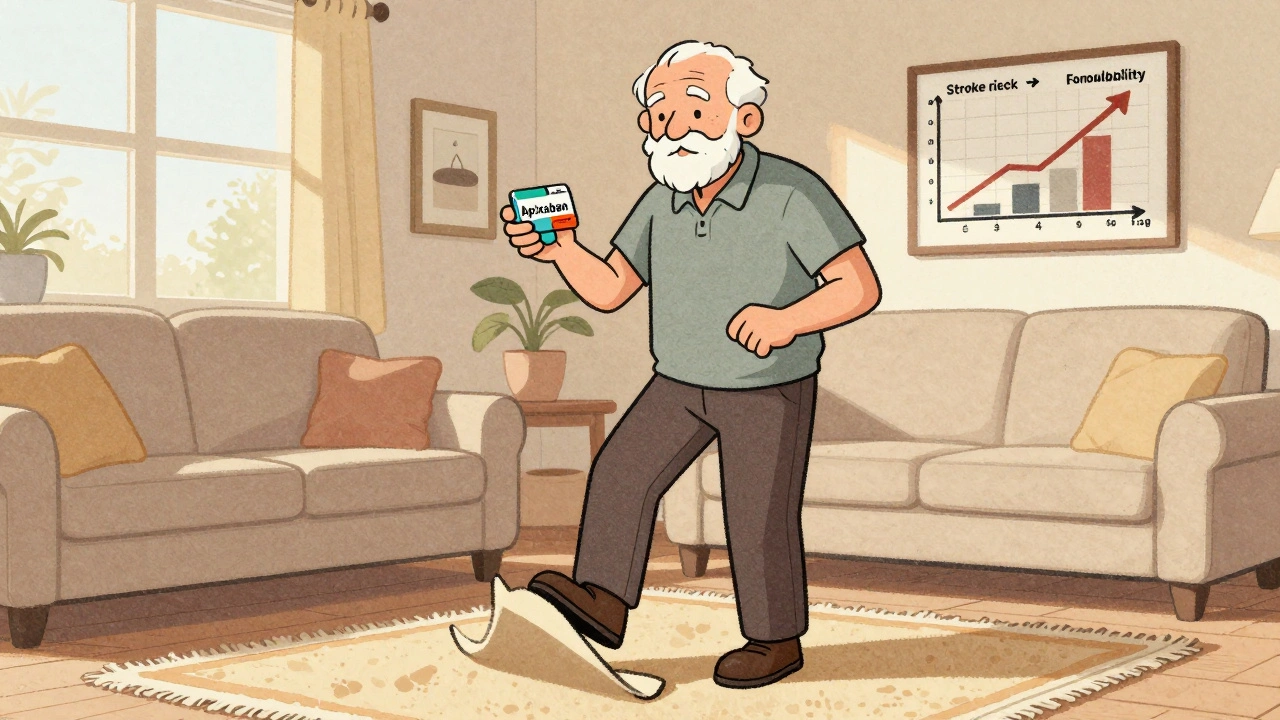
Fall Risk Anticoagulants: What You Need to Know About Bleeding and Balance
When you're taking a fall risk anticoagulants, medications like warfarin, apixaban, or rivaroxaban that thin the blood to prevent clots. Also known as blood thinners, they help prevent strokes and heart attacks—but they also make bleeding more likely if you trip, slip, or fall. This isn’t just a minor concern. For older adults, a simple fall on a hardwood floor can turn into a life-threatening brain bleed when these drugs are in the system.
The real issue isn’t just the drug itself—it’s how it interacts with aging. As we get older, balance weakens, vision dims, and muscles lose strength. A 70-year-old on warfarin, a traditional anticoagulant that requires regular INR blood tests to monitor thickness might have a perfect INR reading one week, then spike after drinking a glass of wine or eating a big salad. That’s when a stumble becomes a crisis. Newer anticoagulants like apixaban, a direct oral anticoagulant (DOAC) that doesn’t need routine blood tests are safer in many ways, but they don’t eliminate fall risk—they just change the math. A fall on apixaban still carries a high bleeding risk, and unlike warfarin, there’s no quick way to reverse it in an emergency.
What makes this even trickier is that many people don’t realize how many everyday things increase their chances of falling. Loose rugs, poor lighting, weak stairs, even new glasses that change depth perception—all of these matter. And when you’re on a blood thinner, your doctor needs to know about them. That’s why the best protection isn’t just adjusting your medication—it’s reviewing your home, your balance, your vision, and your other drugs. Some medications for sleep, anxiety, or high blood pressure make you dizzy. Combine that with a blood thinner, and you’ve got a dangerous mix.
You don’t have to live in fear, but you do need to be smart. Talk to your doctor about whether your current anticoagulant is still the right choice. Ask if you’re on the lowest effective dose. Check if you’re taking any other meds that make you unsteady. Get your eyes checked. Install grab bars. Remove tripping hazards. These aren’t just safety tips—they’re life-saving steps. And if you’ve ever had a fall, even a minor one, tell your doctor. That moment could be the warning sign that changes everything.
Below, you’ll find real, practical advice from posts that cover exactly this: how alcohol affects your INR, how to safely store pills to avoid mix-ups, why older adults need to review their meds with the Beers Criteria, and how to recognize dangerous warning labels on your prescription bottles. This isn’t theoretical. It’s about keeping you—or someone you love—safe, one step at a time.
Anticoagulants save more lives than they endanger in seniors with atrial fibrillation. Despite fears about falls, evidence shows stroke prevention benefits far outweigh bleeding risks - especially with newer drugs like apixaban.