
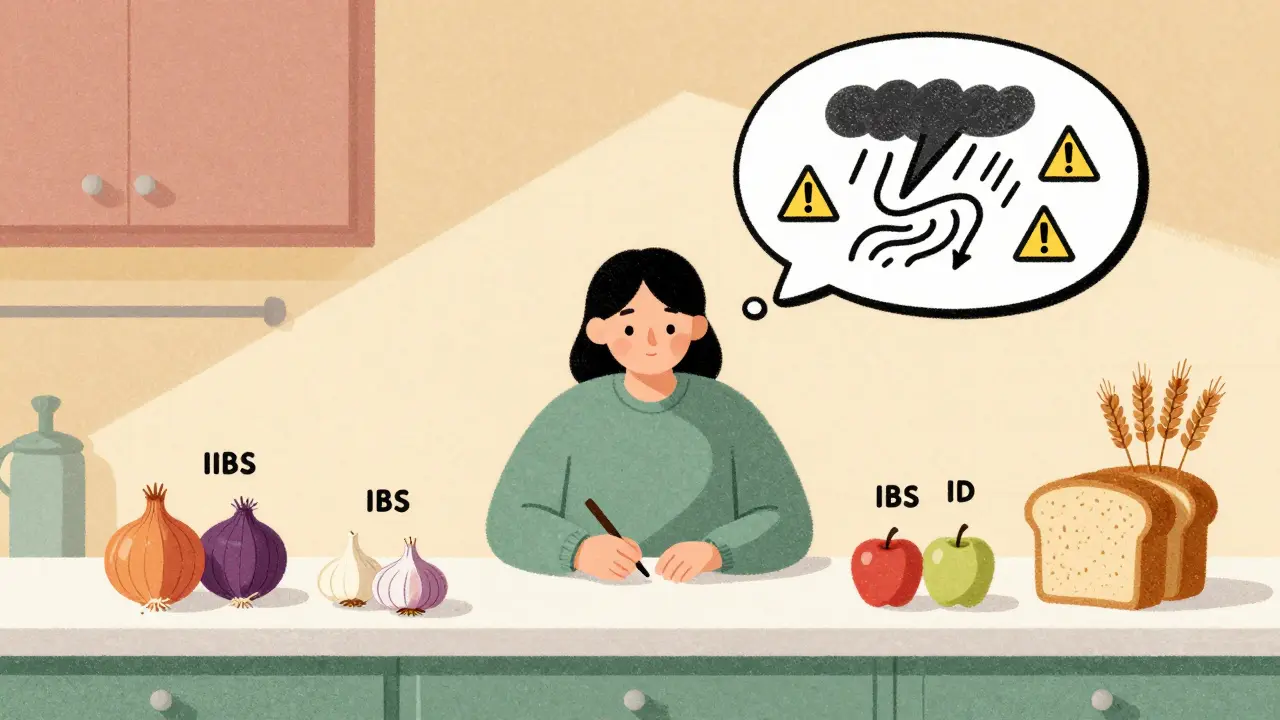
Living with Irritable Bowel Syndrome (IBS) feels like walking on eggshells every day. One wrong meal, a stressful day at work, or even your period can turn a normal afternoon into a painful, embarrassing ordeal. There’s no cure, but that doesn’t mean you’re stuck suffering. Understanding your symptoms, what sets them off, and what actually works to calm them down can change everything.
What IBS Really Feels Like
IBS isn’t just "a sensitive stomach." It’s a real, measurable condition defined by the Rome IV criteria: abdominal pain at least once a week for three months, linked to changes in bowel habits. You might have diarrhea, constipation, or both-sometimes on the same day. The pain often eases after you go to the bathroom, which is one of the key signs doctors look for.
Most people with IBS also deal with bloating that makes their belly feel tight and swollen, even if they haven’t eaten much. Gas is constant. You might feel like you haven’t fully emptied your bowels, even after sitting for minutes. Mucus in the stool is common and not dangerous, but it’s unsettling. And it’s not just your gut. About 70% of people with IBS report other issues: a lump in the throat, acid reflux, nausea, chest pain that feels like a heart attack, or even trouble swallowing.
Doctors classify IBS into three main types based on stool patterns: IBS-D (diarrhea-predominant) affects about 40% of people, IBS-C (constipation-predominant) affects 35%, and IBS-M (mixed) affects the rest. Knowing your type matters because treatments vary.
What Triggers Your IBS? It’s Not Just Food
Food is the most obvious trigger, but it’s not the whole story. About 70% of people with IBS find that certain foods make symptoms worse. High-FODMAP foods are the biggest culprits-these are short-chain carbs that ferment in your gut and cause gas and bloating. Common ones include onions, garlic, wheat, dairy (lactose), apples, pears, beans, and artificial sweeteners like sorbitol.
But caffeine, alcohol, spicy foods, and fatty meals also spike symptoms in many people. You might think cutting out gluten helps, but unless you have celiac disease, gluten itself isn’t the problem-it’s often the FODMAPs in wheat.
Stress is just as powerful. Around 60 to 80% of people notice their IBS flares up during stressful times. It’s not "all in your head." Your gut and brain are wired together. When you’re anxious, your digestive system reacts. That’s why therapy works for IBS-it’s not just about calming your mind, it’s about calming your gut.
Hormones play a big role too. Around 60 to 70% of women with IBS say their symptoms get worse right before or during their period. Estrogen and progesterone levels shift, and that directly affects gut motility.
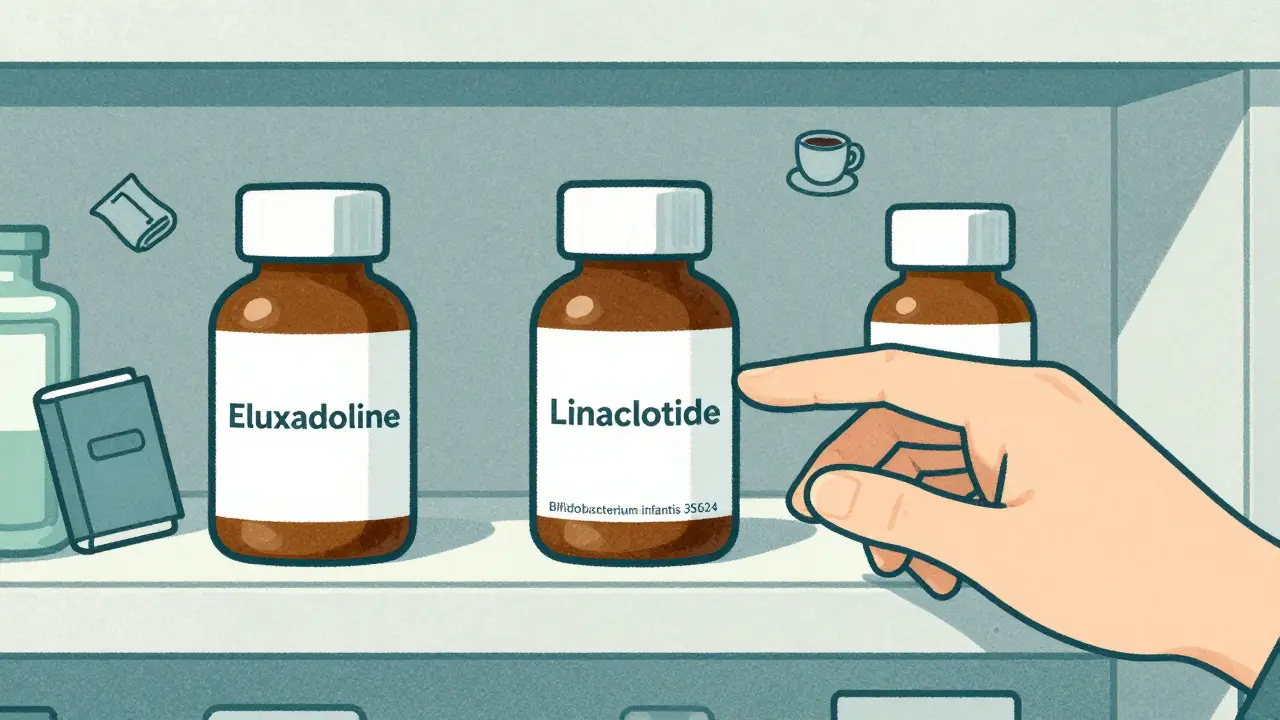
Antibiotics can also trigger IBS. About 1 in 4 people develop symptoms after taking them, likely because they disrupt the balance of good bacteria in your gut. That’s why some people find relief with specific probiotics-though not all of them work. Only strains like Bifidobacterium infantis 35624 have solid evidence backing them up.

How Doctors Diagnose IBS (And What They Rule Out)
There’s no single test for IBS. Diagnosis is about eliminating other conditions. Your doctor will ask detailed questions about your symptoms, how long they’ve lasted, and what makes them better or worse. They’ll also check your medical and family history.
Red flags that need further testing include: weight loss without trying, rectal bleeding, anemia (low iron), symptoms starting after age 50, or a family history of colon cancer or inflammatory bowel disease. If any of these are present, you’ll likely need blood tests, a stool test for inflammation (calprotectin), or even a colonoscopy.
For most people, testing is simpler: a blood test to check for celiac disease (since symptoms overlap), and maybe a hydrogen breath test to rule out lactose intolerance or SIBO (small intestinal bacterial overgrowth). If your symptoms match the Rome IV criteria and no red flags show up, you’re diagnosed with IBS.
It takes time. Most people see 2 to 3 doctors over 4 to 8 weeks before getting a clear diagnosis. On Reddit, many share stories of waiting over six years for answers. Don’t give up. Keep track of your symptoms in a journal-what you ate, how stressed you felt, when you had pain. That’s your best tool.
Medications That Actually Work
There’s no one-size-fits-all pill for IBS, but several FDA-approved options target specific symptoms.
For IBS-D (diarrhea): Eluxadoline (Viberzi) helps reduce both pain and diarrhea by slowing gut movement. About half of users report relief. Rifaximin (Xifaxan) is an antibiotic that targets gut bacteria without affecting the rest of your body. It’s taken for 14 days and can help for months after. Over-the-counter loperamide (Imodium) helps with diarrhea but doesn’t touch the pain or bloating.
For IBS-C (constipation): Linaclotide (Linzess) and Plecanatide (Trulance) increase fluid in the intestines, making stools softer and easier to pass. About a third of users get at least three full bowel movements a week. Lubiprostone (Amitiza) works similarly and has been used since 2006.
For pain and cramping: Antispasmodics like hyoscine (Levsin) and dicyclomine (Bentyl) have been around since the 1950s. They relax gut muscles and help about 55% of people with cramping. But they can cause dry mouth, dizziness, or blurred vision.
For overall symptom control: Low-dose tricyclic antidepressants (TCAs) like amitriptyline (10-30 mg at night) are surprisingly effective. They don’t treat depression here-they help reset the brain-gut connection. About half of people see improvement in pain, bloating, and bowel habits. SSRIs like sertraline are less effective for IBS but may help if anxiety is a major trigger.
What Really Works Beyond Pills
Medications help, but they’re not the whole answer. The most effective IBS management combines several approaches.
The low-FODMAP diet is the gold standard for food-related triggers. Done right-with help from a registered dietitian-it improves symptoms in 50 to 75% of people. It’s not permanent. You eliminate high-FODMAP foods for 2-6 weeks, then slowly reintroduce them one at a time to find your personal triggers. Most people end up eating more than they thought once they know what to avoid.
Gut-directed hypnotherapy and cognitive behavioral therapy (CBT) are backed by strong research. In clinical trials, they work as well as medication for global symptom relief. You’re not just learning to relax-you’re rewiring how your brain responds to gut signals. Many online programs are available and covered by insurance.
Exercise helps too. Regular walking, yoga, or swimming reduces stress and improves gut motility. A 2022 survey found that people who moved daily reported fewer flare-ups.
And while probiotics are popular, only a few strains work. Stick with ones that have been tested in IBS studies, like Bifidobacterium infantis 35624. Others? They’re a waste of money.
What to Expect Long-Term
IBS doesn’t go away, but it doesn’t have to control your life. Most people who stick with a personalized plan-diet, stress management, and the right medication-see major improvement within 6 months. A 2022 survey found that 55% of people felt "much better" or "very much better" after six months of treatment.
Some people find their symptoms fade over time. Others learn to live with them. The key is not to wait for a miracle cure. Focus on what you can control: your diet, your stress, your sleep, and your communication with your doctor.
And remember-you’re not alone. Millions live with IBS. The goal isn’t perfection. It’s enough days where you feel normal, where you can eat without fear, where you can leave the house without planning your route around bathrooms. That’s possible.
Can IBS turn into colon cancer?
No, IBS does not increase your risk of colon cancer or any other serious digestive disease. It’s a functional disorder, not a structural one. That means your intestines look normal on scans and biopsies. But if you develop new symptoms like unexplained weight loss, rectal bleeding, or anemia, you need to get checked-because those could signal something else.
How long does it take for IBS medication to work?
It varies. Linaclotide and eluxadoline often show results in 1 to 2 weeks. Antispasmodics can work within hours for cramping. Low-dose antidepressants take longer-usually 4 to 8 weeks at the right dose before you feel the full benefit. Don’t stop too soon. Give it time, and track your symptoms daily.
Is the low-FODMAP diet hard to follow?
Yes, it’s challenging at first. You’re cutting out common foods like bread, onions, garlic, apples, and dairy. But it’s not meant to be permanent. The goal is to identify your triggers, not to avoid everything forever. Most people find they can safely eat some high-FODMAP foods in small amounts after testing them. Working with a dietitian makes it much easier.
Can stress cause IBS, or just make it worse?
Stress doesn’t cause IBS, but it can trigger symptoms in people who already have it. The gut and brain are deeply connected. When you’re stressed, your digestive system reacts-slowing down, speeding up, or cramping. That’s why therapies like hypnotherapy and CBT work so well: they break that cycle.
Are probiotics worth trying for IBS?
Only specific strains have proven benefits. Bifidobacterium infantis 35624 is the most studied and has shown consistent improvement in global symptoms. Most other probiotics on the shelf haven’t been tested in IBS patients. Don’t waste money on generic brands-look for products with this specific strain.
What should I do if nothing seems to help?
If your symptoms persist despite diet changes, stress management, and medication, ask for a referral to a gastroenterologist who specializes in functional gut disorders. New treatments are in development, like neurokinin-2 receptor antagonists and fecal microbiota transplants, which show promise in clinical trials. You might also benefit from a multidisciplinary clinic that combines diet, psychology, and medicine in one place.



James Rayner
IBS is one of those conditions that makes you feel like your body is betraying you… and yet, no one believes you until you’re doubled over in a public bathroom. I’ve had it for 12 years. The worst part? People think it’s just "stress" or "eating too fast." But it’s not. It’s your nervous system screaming at your gut. I started gut-directed hypnotherapy last year. Didn’t expect it to work… but now? I can eat garlic again. Not all of it. Just a little. And I don’t cry in the grocery aisle anymore. 🥲