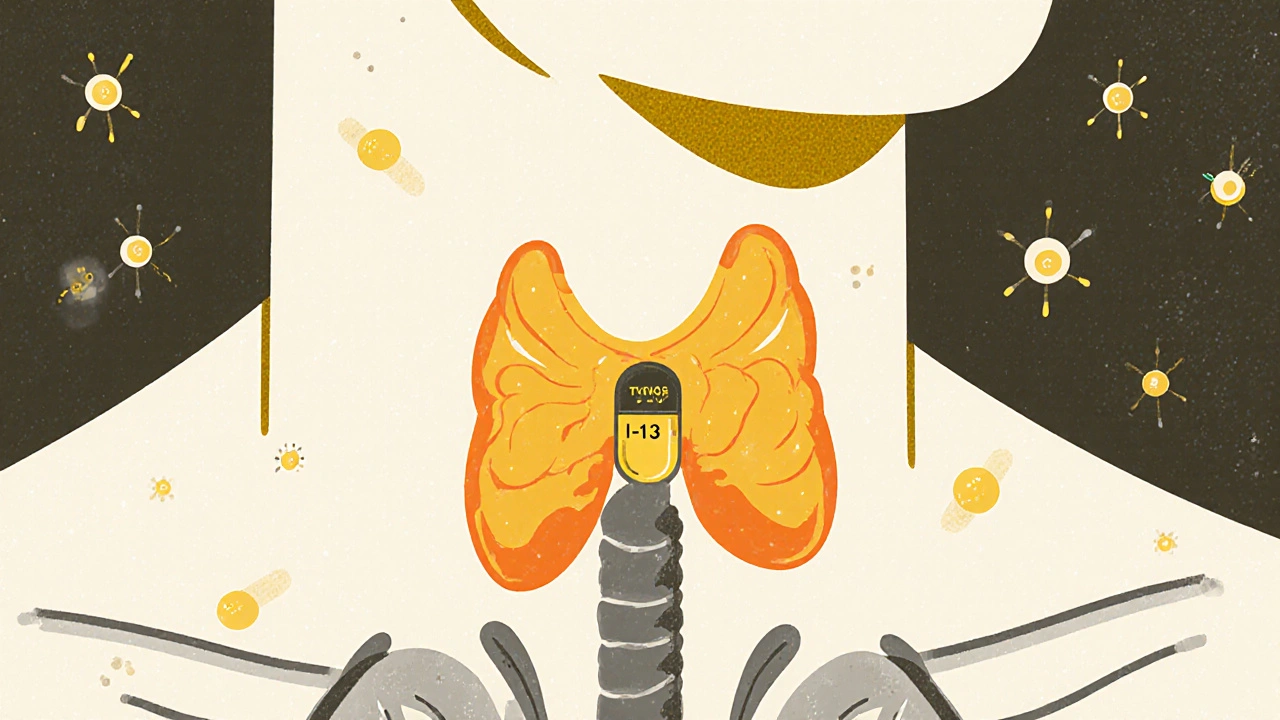
Thyroid Cancer: Causes, Treatments, and What You Need to Know
When thyroid cancer, a type of cancer that begins in the thyroid gland, a butterfly-shaped organ at the base of the neck. It is often detected as a painless lump or nodule and is one of the most treatable cancers when found early. Most cases are papillary or follicular thyroid cancer — slow-growing and highly responsive to treatment. About 55,000 new cases are diagnosed in the U.S. each year, and over 98% of patients survive at least five years after diagnosis. It’s not rare, but it’s often silent until it’s found by chance — during a routine checkup, an ultrasound, or when a lump becomes noticeable.
thyroid nodules, lumps in the thyroid that are usually benign but can sometimes be cancerous. About 50% of adults have at least one by age 60, but less than 5% turn out to be cancerous. Doctors use ultrasound and fine-needle biopsy to tell the difference. If cancer is confirmed, the next step is often surgery — a thyroidectomy, the surgical removal of part or all of the thyroid gland. After surgery, many patients need lifelong levothyroxine, a synthetic thyroid hormone that replaces what the body can no longer make. This isn’t just about replacing hormones — it also helps suppress TSH, a hormone that can fuel cancer growth.
Another key treatment is radioactive iodine, a pill or liquid that targets and destroys remaining thyroid tissue or cancer cells after surgery. It works because thyroid cells are the only cells in the body that absorb iodine. Patients must follow strict isolation rules for a few days after treatment to protect others from radiation exposure. Blood tests and scans are used afterward to check if the cancer is gone or if more treatment is needed.
Thyroid cancer doesn’t always need aggressive treatment. Small, low-risk tumors may just be watched closely — a strategy called active surveillance. But if it spreads to lymph nodes or other organs, treatment becomes more complex. That’s why knowing the signs matters: a lump in the neck, hoarseness that won’t go away, trouble swallowing, or swollen glands. These aren’t always cancer, but they’re red flags worth checking.
What you’ll find below are real, practical guides on how medications like levothyroxine affect your daily life, what to expect after surgery, how to manage side effects, and how to interpret lab results that track your recovery. These aren’t theoretical articles — they’re written by people who’ve been through it, and they answer the questions no one tells you before you walk into the doctor’s office.
Thyroid cancer is highly treatable, with most patients surviving long-term. Learn about the four main types, how radioactive iodine therapy works, what thyroidectomy involves, and what life looks like after treatment.