
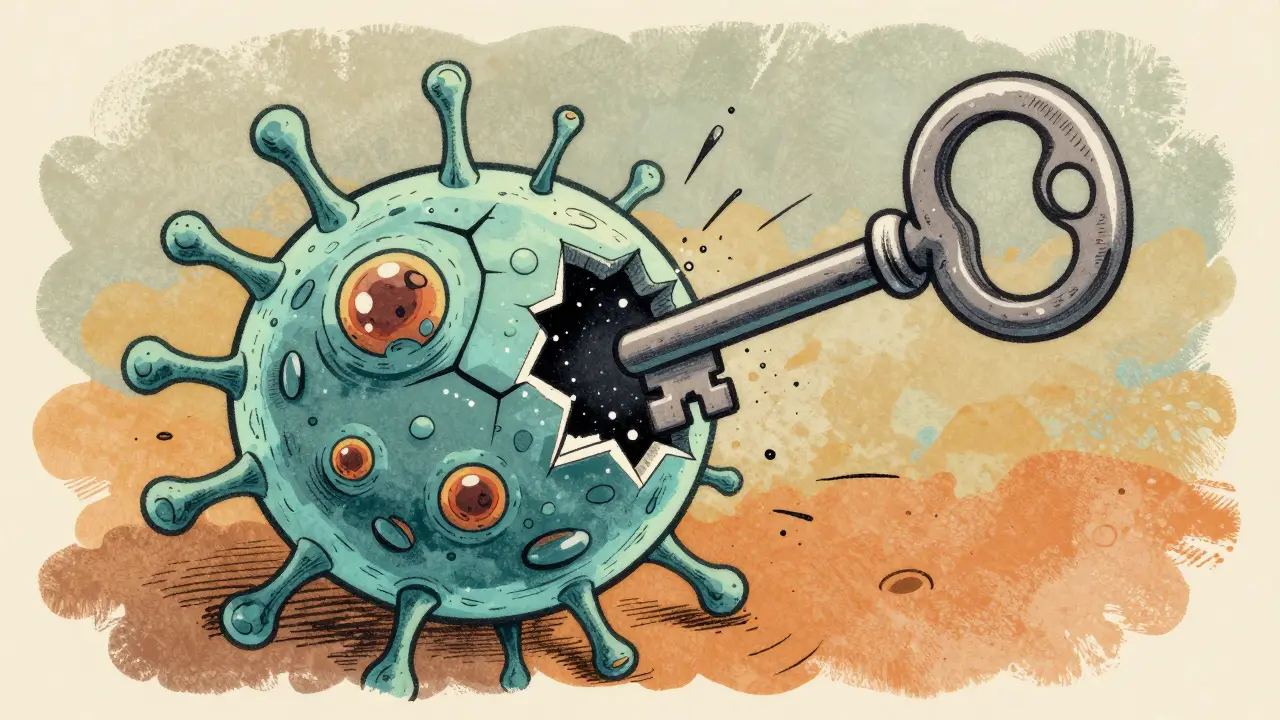
Antibiotics don’t just kill bacteria-they outsmart them. Every time you take one, you’re using a chemical weapon that targets something only bacteria have. Humans don’t have cell walls made of peptidoglycan. We don’t have 70S ribosomes. We don’t rely on DNA gyrase to unwind our genetic code. That’s the trick: antibiotics exploit differences between us and the bugs trying to make us sick. But not all antibiotics work the same way. And knowing how they work makes all the difference when it comes to using them right.
How Antibiotics Actually Work
There are four main ways antibiotics shut down bacteria. Think of it like breaking into a factory and disabling one critical machine. If you cut the power, the whole line stops. If you break the conveyor belt, nothing moves. Antibiotics do the same thing-but at a molecular level.
The first and most common method is attacking the bacterial cell wall. Bacteria are surrounded by a tough outer shell made of peptidoglycan. It’s like a chain-link fence made of proteins and sugars. Without it, the cell bursts from its own internal pressure. That’s what penicillin and its cousins do. They mimic a key piece of the fence-D-alanyl-D-alanine-and trick the bacteria into building a broken wall. The result? The bug swells up and pops. This is called bactericidal action, and it’s why beta-lactams like amoxicillin and ceftriaxone are so effective against active infections.
The second method is blocking protein production. Bacteria make proteins using ribosomes, which are different from ours. Macrolides like azithromycin lock onto the 50S part of the ribosome, stopping the assembly line. Tetracyclines like doxycycline bind to the 30S part, preventing the right building blocks from attaching. Aminoglycosides like gentamicin cause the ribosome to misread the instructions, so the bacteria make broken proteins that don’t work. Linezolid, a newer drug, stops protein synthesis before it even starts. These are mostly bacteriostatic-they don’t kill the bacteria outright, but they stop them from multiplying, giving your immune system time to clean up.
The third method is wrecking DNA. Fluoroquinolones like ciprofloxacin and levofloxacin target two enzymes bacteria need to copy their DNA: DNA gyrase and topoisomerase IV. These enzymes act like molecular scissors that untangle the DNA helix during replication. Block them, and the bacteria can’t divide. This is powerful stuff. Fluoroquinolones can reach deep into tissues-lungs, bones, even inside cells. But they come with risks: tendon ruptures, nerve damage, and long-term side effects that led the FDA to add black box warnings in 2022.
The fourth method is cutting off the fuel supply. Sulfonamides like sulfamethoxazole block folate production. Bacteria need folate to make DNA and proteins, and they can’t get it from food like we can-they have to make it themselves. Knock out that pathway, and the bacteria starve. Metronidazole works differently: it gets activated inside anaerobic bacteria and then shreds their DNA. That’s why it’s the go-to for C. diff and vaginal infections caused by anaerobes. But if you drink alcohol while taking it? You’ll get sick-badly. It’s a reaction that hits 60-70% of users.
The Big Four Antibiotic Classes
Not all antibiotics are created equal. Some are broad-spectrum, meaning they hit many types of bacteria. Others are narrow-spectrum, targeting just a few. The class you choose depends on what you’re fighting.
- Beta-lactams (penicillins, cephalosporins, carbapenems): These are the most widely used. Penicillin was the first, discovered in 1928. Today, we have generations of cephalosporins. First-gen like cefalexin works great on skin infections. Third-gen like ceftriaxone covers pneumonia and meningitis. Fourth-gen like cefepime is used in hospitals for resistant infections. But they all share one weakness: beta-lactamase enzymes. Some bacteria make these like molecular scissors that cut the beta-lactam ring, neutralizing the drug. That’s why amoxicillin is often paired with clavulanate-it blocks the scissors.
- Tetracyclines (doxycycline, minocycline): These are old but still useful. They work against atypical bugs like Mycoplasma, Chlamydia, and Lyme disease bacteria. They also help with acne and rosacea. But they stain developing teeth-so no kids under 8. They also make you sun-sensitive. If you’re hiking in the summer, wear long sleeves.
- Macrolides (azithromycin, clarithromycin): These are the go-to for people allergic to penicillin. Azithromycin’s magic trick? It stays in tissues for days after you stop taking it. That’s why a 5-day course can treat a chest infection. But resistance is rising. In some places, over 30% of strep throat cases don’t respond to azithromycin anymore.
- Fluoroquinolones (ciprofloxacin, levofloxacin): These are the heavy lifters. Used for complicated UTIs, kidney infections, and even anthrax. But because of their side effects, guidelines now say: use them only when no other option exists. The FDA says they should be avoided for simple sinus, bronchial, or urinary infections unless there’s no alternative.
- Aminoglycosides (gentamicin, tobramycin): These are strong but dangerous. They’re often used in hospitals for serious infections like sepsis. But they can damage kidneys and hearing. Doctors monitor blood levels closely. And they don’t work on anaerobes-because they need oxygen to get inside the bacteria.
- Oxazolidinones (linezolid): This is a synthetic antibiotic, made in a lab, not pulled from soil bacteria. It’s one of the few new classes in decades. It’s used for MRSA and VRE when other drugs fail. But it can cause bone marrow suppression if used longer than two weeks.
Why Resistance Is Winning
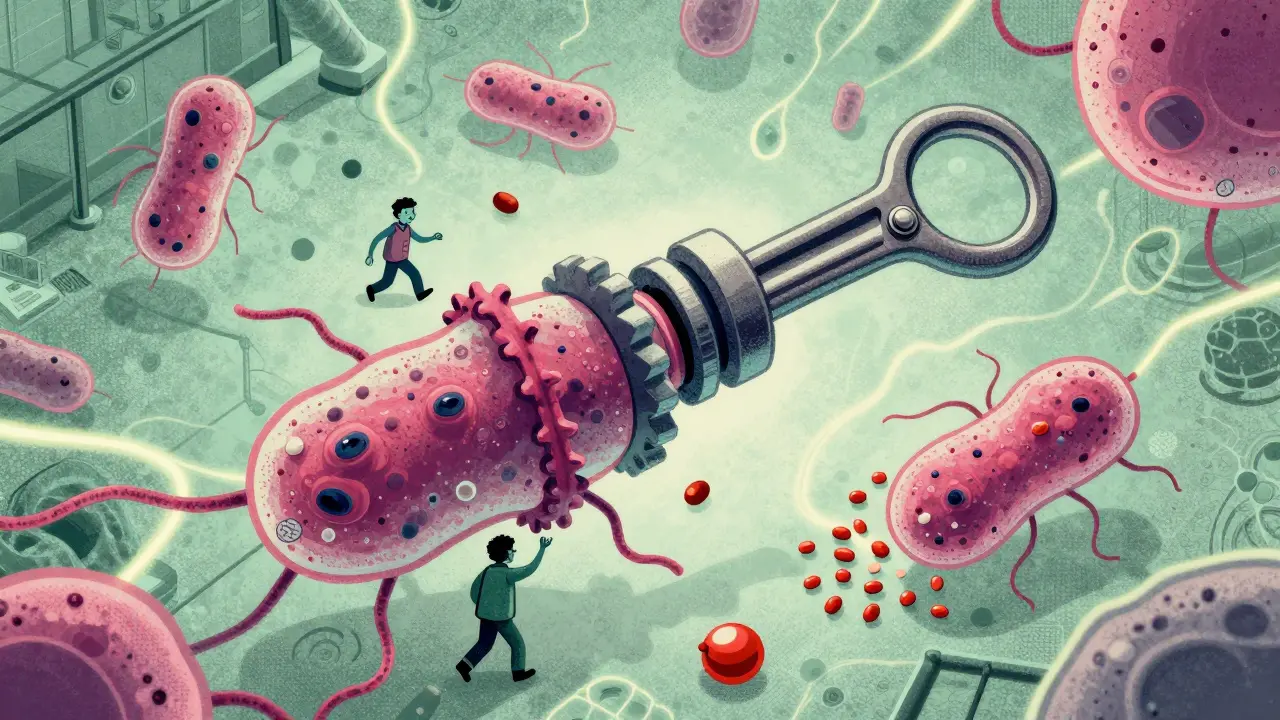
Antibiotics were once miracles. In the 1940s, penicillin turned deadly infections into minor illnesses. Today, we’re losing ground. The WHO says antibiotic resistance is one of the top 10 global health threats. Why? Because we’ve overused them.
Thirty percent of outpatient antibiotic prescriptions in the U.S. are unnecessary. People take them for colds. Doctors give them out as a precaution. Farmers feed them to livestock to make them grow faster. And bacteria? They adapt. Fast.
Some bacteria now carry genes that make beta-lactamase enzymes. Others change their ribosomes so macrolides can’t bind. Some pump antibiotics out before they can work. In 2023, the WHO reported that over 50% of E. coli infections in 72 countries were resistant to fluoroquinolones. That’s not a small number-it’s a crisis.
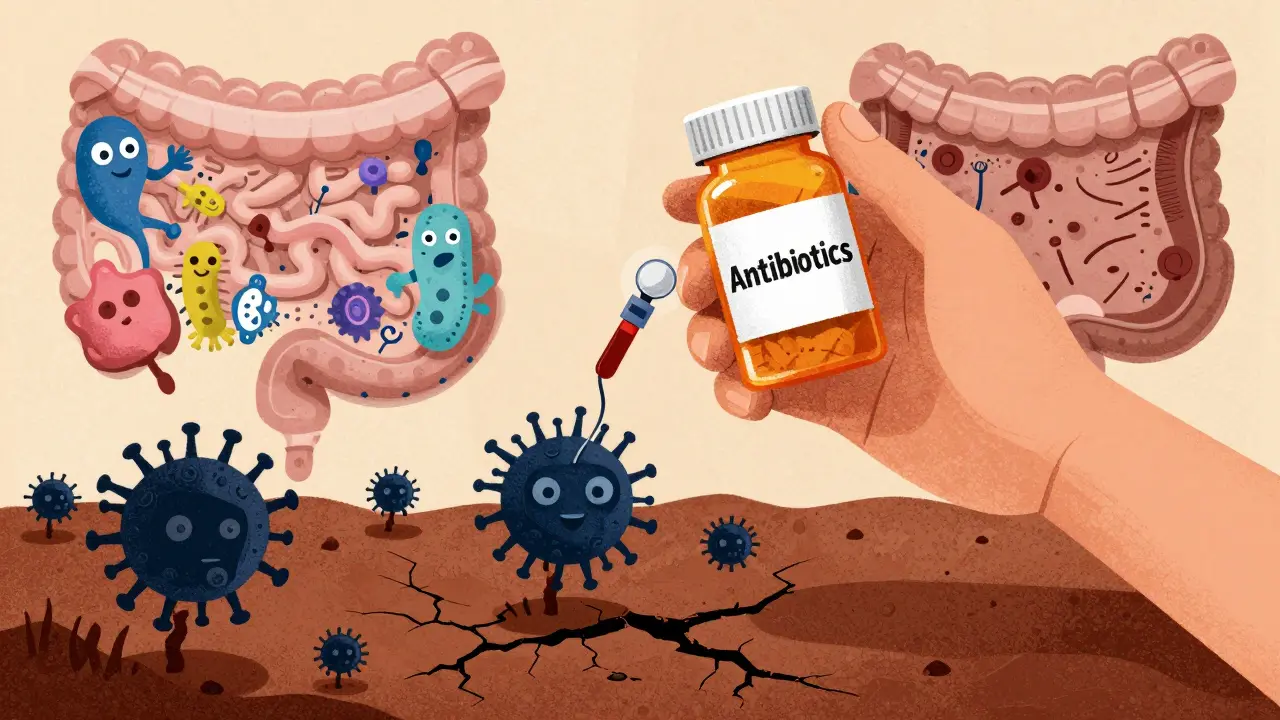
And it’s not just about resistance. Broad-spectrum antibiotics wipe out your good gut bacteria too. Studies show microbiome damage can last up to a year. That raises the risk of C. diff, a dangerous gut infection that causes severe diarrhea and can be fatal. One study found people on broad-spectrum antibiotics were 17 times more likely to get it than those on narrow-spectrum ones.
There are new drugs coming-cefiderocol, which hijacks the bacteria’s own iron-uptake system to sneak in. But they’re expensive. The average cost to develop a new antibiotic is over $1.5 billion. Companies don’t make money on them because we’re told to use them sparingly. The UK tried a fix: pay hospitals a flat fee of £76 million a year for access to new antibiotics, no matter how much they use. It’s called the Netflix model. It’s a start.
What You Can Do
You don’t need to be a doctor to use antibiotics responsibly. Here’s what matters:
- Don’t demand antibiotics for a cold, flu, or sore throat unless a test confirms strep. Viruses don’t respond to antibiotics.
- Take the full course-even if you feel better. Stopping early lets the toughest bugs survive and multiply.
- Never share antibiotics. What works for one infection might make another worse.
- Ask if a narrow-spectrum drug can be used instead of a broad one. It’s safer for your gut.
- Use procalcitonin tests if available. This blood marker rises in bacterial infections but stays low in viral ones. Studies show it cuts unnecessary prescriptions by 23%.
Antibiotics saved millions. But they’re not magic. They’re tools. And like any tool, they wear out if you misuse them. The next time you’re prescribed one, ask: What is this targeting? Why this one? Is there a safer option? That’s how we keep them working-for you, and for the next generation.
Frequently Asked Questions
Can antibiotics treat viral infections like the flu or COVID-19?
No. Antibiotics only work on bacteria. Viruses like the flu, colds, and COVID-19 have completely different structures and replication methods. Taking antibiotics for a viral infection doesn’t help-it just increases your risk of side effects and contributes to antibiotic resistance. If you have a viral infection, rest, fluids, and symptom relief are the right approach.
Why do some antibiotics cause diarrhea?
Antibiotics don’t just kill bad bacteria-they also wipe out the good ones in your gut. This imbalance lets harmful bacteria like Clostridioides difficile overgrow, leading to severe diarrhea, cramping, and fever. This is called antibiotic-associated diarrhea. It’s more common with broad-spectrum antibiotics like clindamycin or fluoroquinolones. Probiotics may help reduce the risk, but the best protection is using antibiotics only when truly needed.
Are natural remedies like honey or garlic as effective as antibiotics?
Honey and garlic have some antibacterial properties in lab studies, but they’re not replacements for prescribed antibiotics in serious infections. Honey can help soothe a sore throat or minor wounds, and garlic contains allicin, which has mild antimicrobial effects. But for pneumonia, sepsis, or a kidney infection, you need a targeted drug that reaches the right concentration in the right place. Relying on natural remedies for bacterial infections can delay treatment and lead to complications.
Why can’t we just make new antibiotics?
We can-but it’s not profitable. Developing a new antibiotic costs over $1.5 billion and takes 10-15 years. Once it’s on the market, doctors are told to use it sparingly to prevent resistance. That means low sales. Most pharmaceutical companies focus on drugs for chronic conditions like diabetes or high blood pressure, which patients take for life. Antibiotics are used for days or weeks. As a result, only 16 new antibiotics in development target the WHO’s highest-priority resistant bacteria. Without financial incentives, innovation is slowing down.
What’s the difference between bactericidal and bacteriostatic antibiotics?
Bactericidal antibiotics kill bacteria directly-like beta-lactams and fluoroquinolones. Bacteriostatic ones stop bacteria from multiplying, letting your immune system take over-like tetracyclines and macrolides. In healthy people, both work fine. But in someone with a weak immune system-like a cancer patient or elderly person-bactericidal drugs are often preferred because the body can’t clear the infection on its own.
Can I stop taking antibiotics if I feel better?
No. Feeling better doesn’t mean all the bacteria are gone. The strongest ones survive when you stop early. These survivors multiply and pass on resistance genes. That’s how superbugs form. Always finish the full course unless your doctor tells you otherwise-even if it’s 10 pills and you’re done after 5.



Solomon Ahonsi
Wow another textbook regurgitation. You think people don’t know antibiotics are overused? Newsflash: doctors still hand them out like candy at Halloween. And yeah, I get the science-but where’s the accountability? My cousin got C. diff from a Z-pack for a sinus infection that was clearly viral. Now she’s on a feeding tube. This isn’t education-it’s a PSA dressed up like a lecture.