
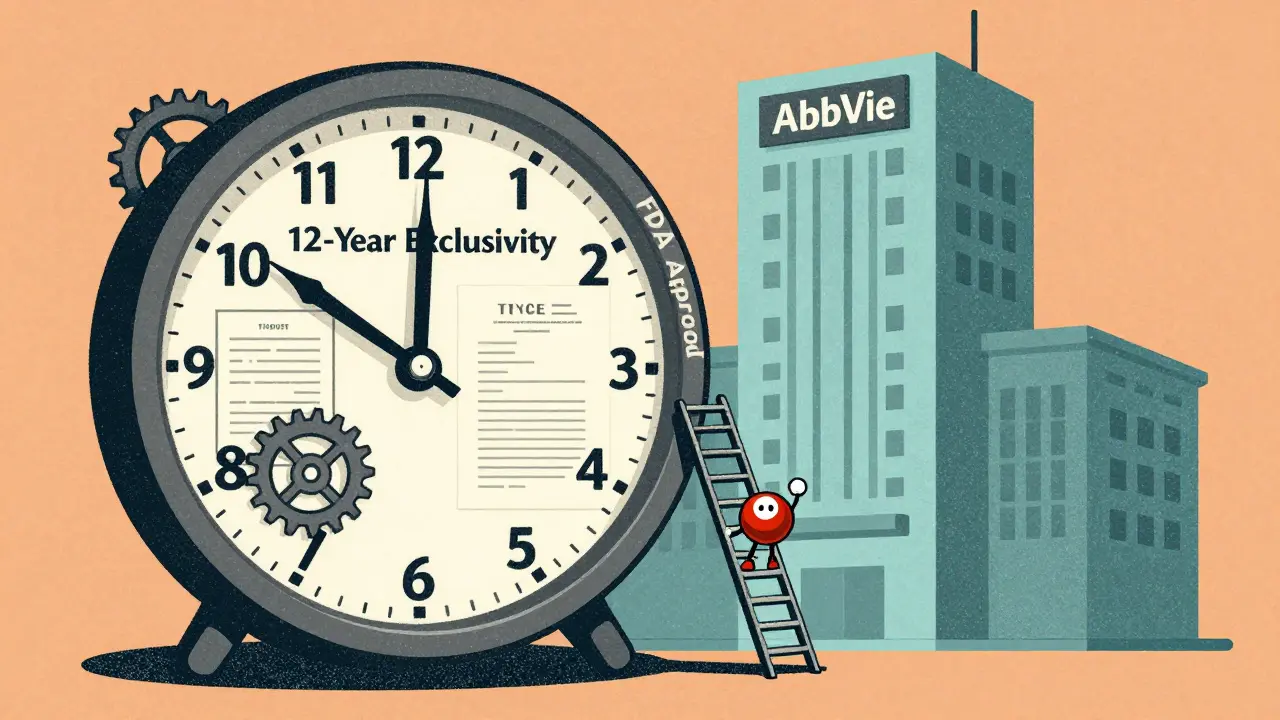
When you hear the word generic, you probably think of cheap, identical pills that replace expensive brand-name drugs. But biologics? They’re not that simple. Unlike small-molecule drugs, biologics are made from living cells - think proteins, antibodies, or gene therapies. That makes them incredibly complex. And when their patents expire, you don’t get a quick copy. You get a biosimilar. And even then, it can take over a decade before one shows up on pharmacy shelves.
Why Biosimilars Don’t Just Appear After Patents Expire
The U.S. doesn’t treat biologics like regular drugs. In 2010, Congress passed the Biologics Price Competition and Innovation Act (BPCIA), which created a special path for biosimilars. But it wasn’t designed to speed up competition. It was built to delay it. Here’s how it works: once the FDA approves a new biologic - say, Humira or Enbrel - the manufacturer gets two layers of protection. First, a 4-year window where no biosimilar company can even submit an application. Then, an 8-year stretch where applications can be filed, but the FDA can’t approve them. That adds up to 12 years of exclusive market control. No competition. No price drops. Just the original company charging full price. Compare that to Europe. They give biologics 10 years of data protection and 1 year of market exclusivity - 11 total. Japan? 8 years data + 4 years market = 12. South Korea? 10 years data, no extra market time. The U.S. stands out by giving the longest total shield. And it’s not just about time. It’s about strategy.The Patent Dance: A Legal Maze That Delays Biosimilars
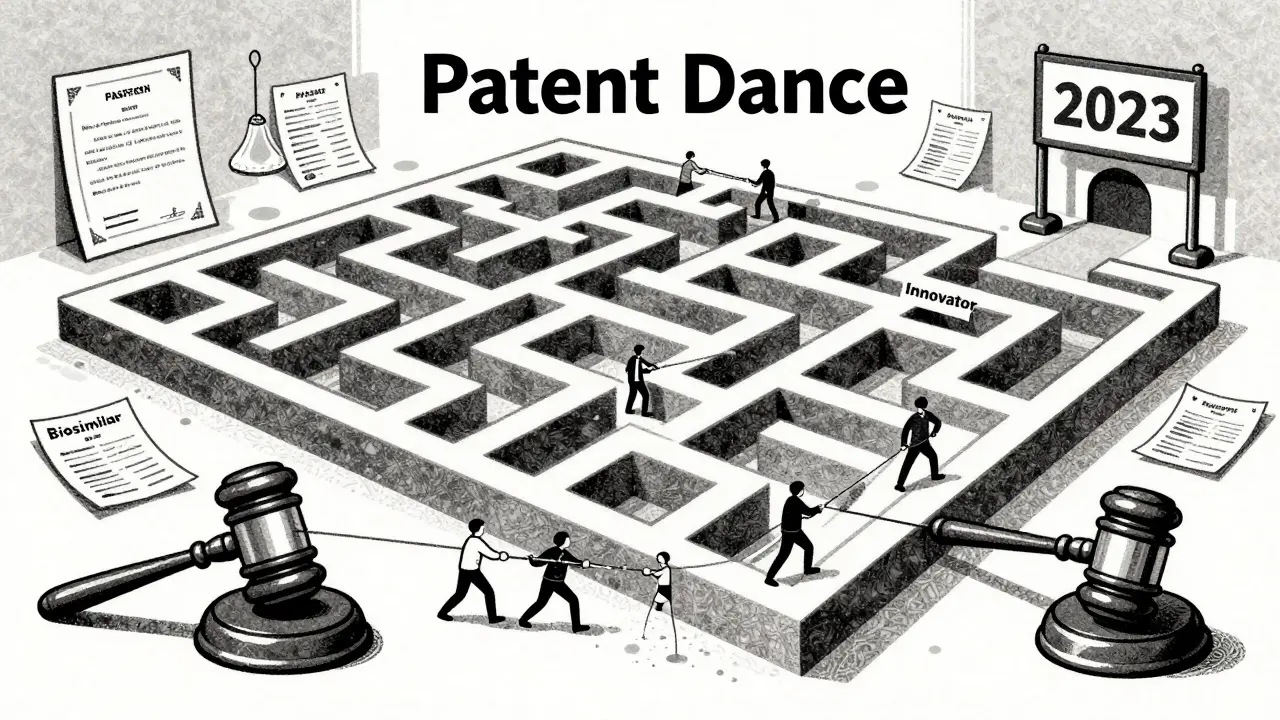
Even after the 4-year clock starts ticking, biosimilar makers don’t just file paperwork and wait. They enter what’s called the “patent dance.” It sounds polite. It’s anything but. Within 20 days of submitting their application, the biosimilar company must hand over its entire manufacturing dossier to the original drugmaker. The innovator then has 60 days to list every patent they think might be infringed. The biosimilar company responds with legal arguments for why each patent is invalid or doesn’t apply. Then there’s a 15-day negotiation to pick which patents go to court. This process can drag on for years. And it’s not just paperwork - it’s litigation. In the landmark Amgen v. Sandoz case, the Supreme Court had to decide whether skipping the patent dance was legal. The answer? It’s optional, but skipping it doesn’t speed things up. It just creates more legal risk. Innovator companies have turned this into a weapon. AbbVie, the maker of Humira, filed over 160 patents on a single drug - many covering minor formulation tweaks or delivery methods. These weren’t groundbreaking inventions. They were legal shields. By stacking patents, they kept biosimilars out of the U.S. until 2023, even though Humira’s core patent expired in 2016. In Europe, biosimilars hit the market in 2018. American patients paid billions more.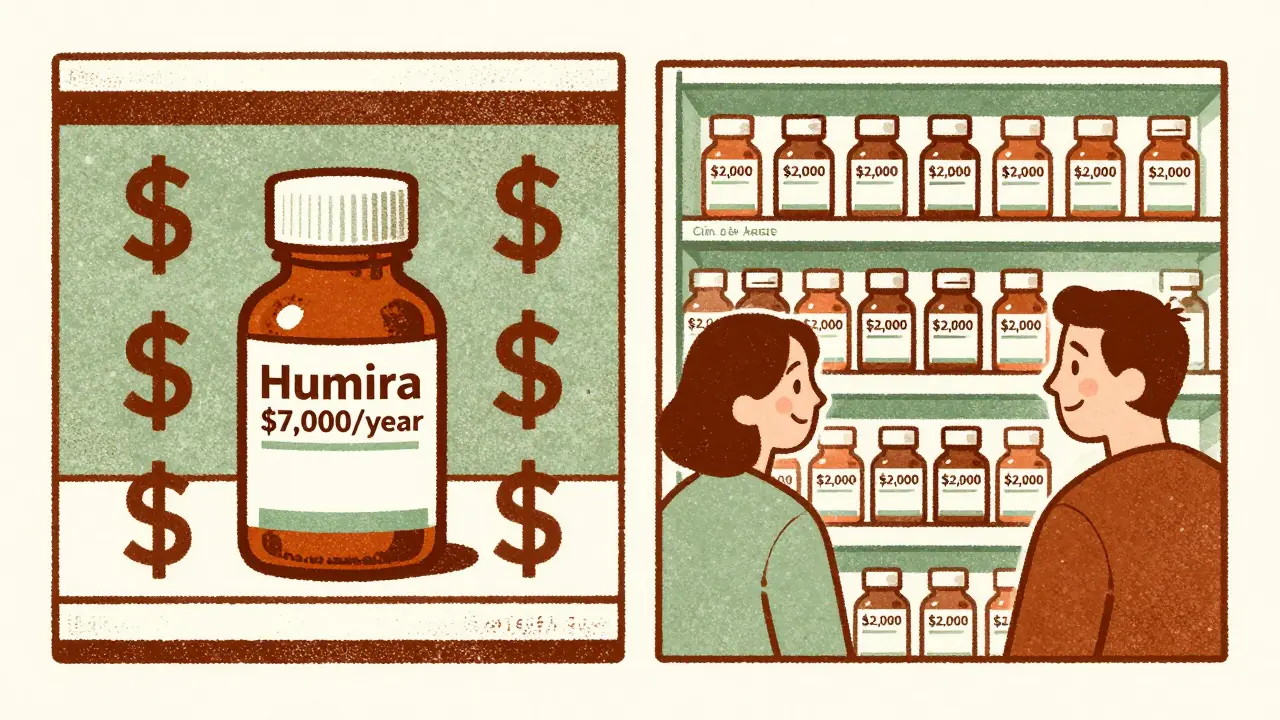
The Cost of Delay: Real People, Real Prices
This isn’t theoretical. It’s financial. And it’s personal. Between 2012 and 2022, Humira’s list price in the U.S. jumped 470%. Meanwhile, in Europe, where biosimilars entered early, prices stayed flat. A patient on Humira in the U.S. might pay $7,000 a year. In Germany? $2,000. That’s not inflation. That’s monopoly pricing. A 2021 study in JAMA Internal Medicine found U.S. patients pay three times more than Europeans for the exact same biologic drugs. Why? Because biosimilars didn’t arrive. Pharmacists surveyed by the National Community Pharmacists Association found 63% of their patients had skipped or stopped biologic therapy because they couldn’t afford it. People with rheumatoid arthritis, Crohn’s disease, or psoriasis - conditions that require lifelong treatment - are the ones who suffer most. The Congressional Budget Office estimated that if the U.S. had faster biosimilar entry, the healthcare system could save $158 billion over the next decade. Under current rules? Only $71 billion. That’s an $87 billion gap - money that stays in drugmakers’ pockets instead of going to patients or insurers.Why So Few Biosimilars Are Being Developed
You’d think with so many biologics about to lose protection, companies would rush to make biosimilars. But they’re not. Developing a biosimilar isn’t like making a generic pill. It takes 5 to 9 years. Costs over $100 million. For complex drugs like antibody-drug conjugates or gene therapies? Up to $250 million and 10 years. And even then, success isn’t guaranteed. The FDA requires proof of “no clinically meaningful differences” in safety, purity, and potency. That means thousands of lab tests, animal studies, and sometimes full clinical trials. Then there’s the market. Only 12 of the 118 biologics set to lose patent protection between 2025 and 2034 have biosimilars in development. Why? Three big reasons:- Low sales potential: If a drug treats a rare disease, companies don’t see enough profit to justify the cost.
- Patent thickets: Why invest millions if you’ll be tied up in court for a decade?
- Molecular complexity: Some biologics are so intricate, even the original manufacturer struggles to replicate them exactly.
What’s Being Done? Not Enough
The FDA has tried. Their 2022 Biosimilars Action Plan promised better communication, faster reviews, and more market support. But progress is slow. Since 2015, the U.S. has approved only 38 biosimilars. Europe? 88. And many of those U.S. approvals sit on shelves because insurers won’t cover them or doctors won’t prescribe them. Legislation like the Biosimilars User Fee Act of 2022 aimed to cut red tape. It died in committee. No one’s pushing it hard enough. Meanwhile, the next wave of expiring biologics includes cutting-edge drugs for cancer, autoimmune disorders, and rare genetic diseases. If no biosimilars enter, prices will keep climbing. Patients will keep going without treatment. And the system will keep paying more.What’s Next? The Clock Is Ticking
The 12-year exclusivity rule isn’t going away. But the pressure is building. More doctors are speaking up. More patients are demanding change. More insurers are refusing to pay full price for drugs with biosimilars available elsewhere. The real question isn’t when biosimilars can enter. It’s whether the system will let them enter when they should. The science is ready. The manufacturing is possible. The savings are massive. What’s missing is the political will to break the legal and financial barriers that keep prices high - and patients waiting.How long does it take for a biosimilar to enter the market after a biologic’s patent expires?
Even if a biologic’s core patent expires, a biosimilar can’t enter until 12 years after the FDA first approved the original drug. That’s because of the Biologics Price Competition and Innovation Act (BPCIA). The first 4 years are a complete ban on biosimilar applications. The next 8 years allow applications to be submitted, but the FDA can’t approve them. So, the clock starts at FDA approval, not patent expiration.
Why are biosimilars more expensive to develop than generic drugs?
Generic drugs are simple chemical copies. Biosimilars are made from living cells - proteins, antibodies, or complex molecules. Replicating them requires advanced biotech manufacturing, thousands of lab tests, and sometimes clinical trials to prove they’re as safe and effective as the original. Development takes 5-10 years and costs $100 million to $250 million, compared to $1-2 million and 2 years for a typical generic.
Can biosimilars be substituted for the original drug like generics?
In most states, pharmacists can substitute a biosimilar only if the FDA has designated it as "interchangeable." Only a handful of biosimilars have that status so far. Even then, many doctors won’t switch patients unless they’re sure the biosimilar won’t cause a reaction. So, substitution isn’t automatic like with generics.
Why did Humira stay price-gouged in the U.S. while biosimilars entered Europe earlier?
Humira’s core patent expired in 2016, and biosimilars entered Europe in 2018. But in the U.S., AbbVie filed over 160 patents covering minor changes to the drug, its delivery device, and dosing methods. These created legal barriers that delayed U.S. biosimilar entry until 2023. Meanwhile, European regulators didn’t honor those secondary patents. That’s why prices dropped in Europe but stayed high in the U.S.
Are there any biosimilars in development for rare disease biologics?
Very few. Of the 118 biologics set to lose patent protection between 2025 and 2034, 88% have at least one orphan drug indication - meaning they treat rare diseases. But only 1 of those 118 - eculizumab - has a biosimilar in development. Companies avoid these because the patient population is too small to justify the $100M+ cost of development.


Mihir Patel
yo so i just read this whole thing and like... wow. i had no idea biosimilars took 12 years to even show up? i thought it was like 5 or something. my cousin pays $8k a year for humira and she’s on medicaid. she’s lucky she gets it at all. why are we letting this happen??