Auxiliary Labels: What They Mean and Why They Matter for Your Medications
When you pick up a prescription, you’re handed a bottle with a small sticker—maybe it says auxiliary labels like "Take with food" or "Do not crush." These aren’t just reminders. They’re life-saving instructions written by pharmacists to prevent harm. auxiliary labels, small but critical warnings added to prescription containers to guide safe medication use. Also known as medication stickers, they’re the last line of defense between you and a dangerous mistake. They’re not optional. They’re not decorative. They’re the difference between a drug working as intended and causing serious harm.
These labels connect directly to other key concepts in medication safety. prescription label warnings, official instructions printed or affixed to drug containers to prevent misuse or adverse reactions include everything from "May cause drowsiness" to "Avoid alcohol." Then there’s drug safety, the practice of using medications in a way that minimizes risk of side effects, interactions, or overdose. Auxiliary labels are one of the most visible tools in drug safety. They tell you when to take your pill, how to store it, what to avoid mixing it with, and what to do if you miss a dose. Skip them, and you’re gambling with your health. Studies show over 40% of patients don’t read these labels—and that’s why emergency rooms see so many preventable reactions.
Think about it: if your pill says "Do not crush," crushing it could release the full dose at once. If it says "Take with food," skipping that might mean the drug won’t absorb properly—or it could wreck your stomach. Some labels warn about interactions with common things like grapefruit juice, antacids, or even certain supplements. Others tell you to shake the bottle, refrigerate it, or use a special measuring device. These aren’t guesses. They’re based on how the drug behaves in your body. And they’re updated constantly as new data comes in.
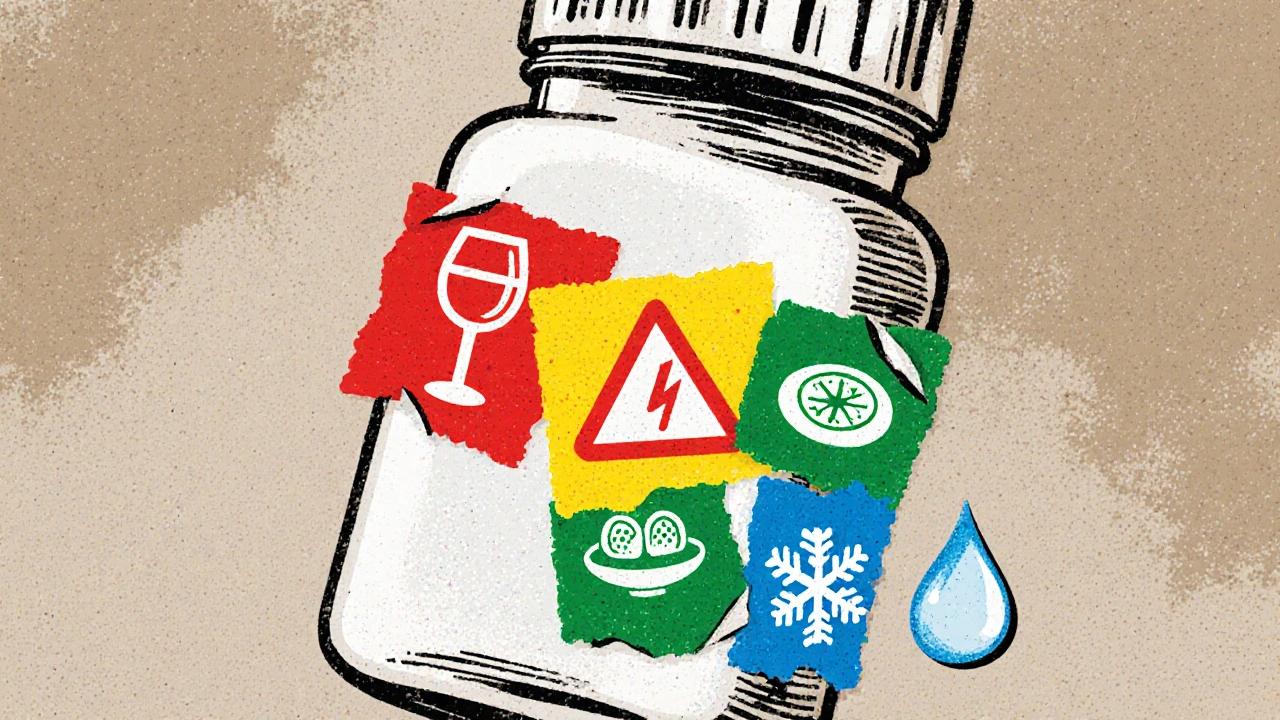
You’ll find real examples of these labels in action across the posts below. One article breaks down what "black box warnings" mean on your bottle. Another shows how "take with food" isn’t just a suggestion—it’s science. There’s even a guide on how to decode the color-coded stickers pharmacies use. These aren’t abstract ideas. They’re the tiny print that keeps you safe every day.
By the time you finish reading these posts, you won’t just glance at your pill bottle—you’ll know exactly what each sticker is telling you, why it matters, and what happens if you ignore it. No more guessing. No more "I didn’t know." Just clear, practical knowledge that helps you take your meds right—every time.
Color-coded auxiliary labels on medication bottles are critical safety tools that warn of interactions, guide usage, and improve adherence. Learn what each color means, why placement matters, and how they prevent thousands of medication errors each year.