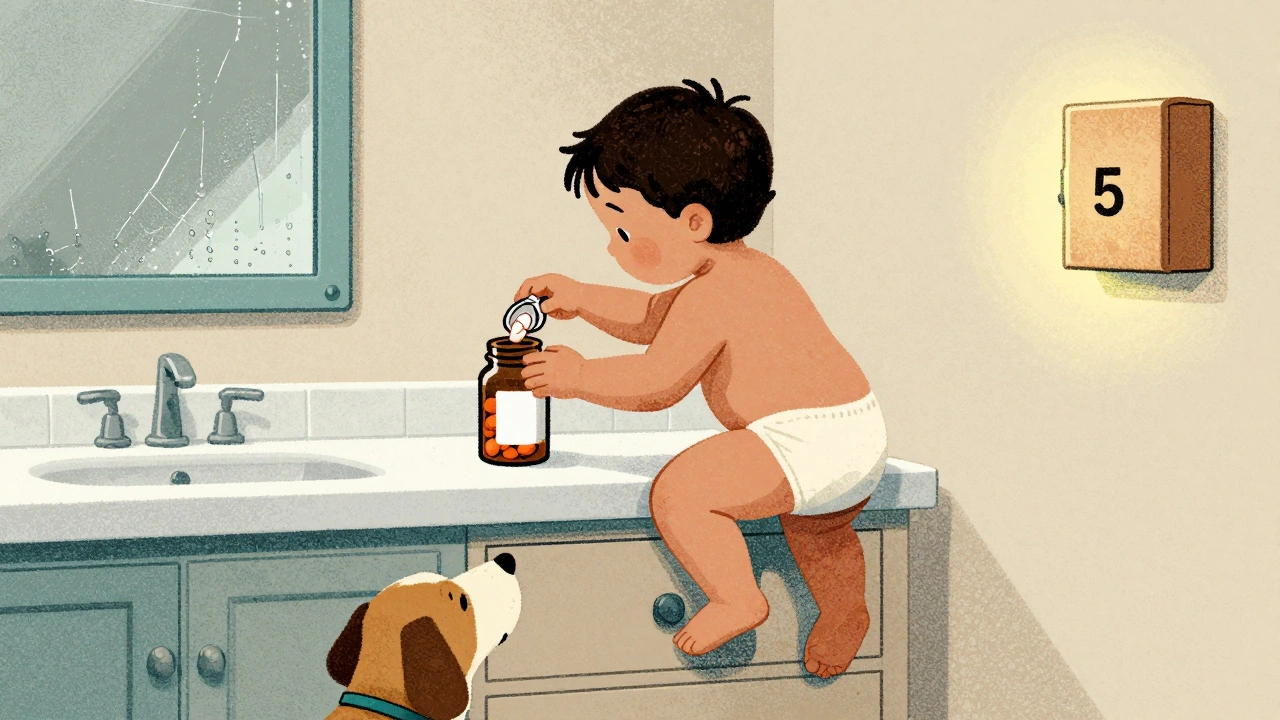
Child-Safe Medicine: How to Keep Kids Safe from Accidental Poisoning
When we talk about child-safe medicine, medications designed and stored to prevent accidental ingestion by children. Also known as pediatric medication safety, it’s not just about using childproof caps—it’s about building habits that keep kids out of harm’s way. Every year, over 500,000 children under six end up in emergency rooms because they got into medicine they weren’t supposed to. Most of these cases aren’t accidents caused by curiosity alone—they’re the result of simple mistakes: a pill left on a nightstand, a bottle sitting on the edge of a sink, or a caregiver thinking, "It’s just one pill."
Childproof caps, special closures designed to be difficult for young children to open but manageable for adults are required by law on most prescription and OTC meds—but they’re not foolproof. A determined 2-year-old can learn to twist one open in minutes. That’s why the real safety layer isn’t the cap—it’s medicine storage, the practice of keeping all medications locked, up high, and away from places kids can reach or associate with food or toys. Think of it like storing bleach or cleaning supplies: you don’t leave it where a child can grab it, even if it’s "just for a minute."
Many parents don’t realize that medication errors, mistakes in giving the right drug, dose, or timing to a child are the leading cause of preventable harm in pediatric care. A child’s body reacts differently to drugs than an adult’s. A half-pill for a 150-pound adult could be a fatal dose for a 30-pound toddler. That’s why labeling matters—not just the bottle, but your own notes. Use a pill organizer with clear times, write down when you give each dose, and never use kitchen spoons to measure liquid medicine. Always use the syringe or cup that came with the bottle.
And what about supplements? Gummy vitamins look like candy. Melatonin gummies? They’re sold next to the gum in the checkout aisle. These aren’t just harmless snacks—they’re potent substances that can cause drowsiness, nausea, or even seizures in kids. Store them like prescription drugs. Same goes for CBD oils, herbal tinctures, and even nicotine patches. If it’s not food, it should be locked up.
When you’re visiting someone else’s house—grandma’s, a babysitter’s, a friend’s—ask: "Where do you keep your meds?" Don’t assume it’s safe. Kids are smart. They notice where the candy is kept, and if the medicine is in the same drawer, they’ll try to get to it. Even a single pill left on a dresser can be deadly.
There’s no magic trick. No app, no gadget, no expensive cabinet will replace the simple, boring habit of putting medicine away after every use. It’s not about being paranoid—it’s about being smart. The same people who lock their doors, install smoke detectors, and use car seats know how to protect their kids from obvious dangers. Medicine is just another one of those risks—and it’s one we often ignore because it’s familiar.
What you’ll find in the posts below are real, practical ways to make your home safer. From how school nurses handle daily meds to what those color-coded pharmacy stickers mean, you’ll learn how to spot hidden risks, avoid common mistakes, and turn everyday routines into safety checks. Because when it comes to child-safe medicine, the best defense isn’t a fancy lock—it’s knowing exactly what to do before the accident happens.
Learn how to safely store medications to protect children and pets from accidental poisoning. Discover where to lock meds, why original packaging matters, and how to prevent deadly mix-ups between human and pet drugs.