Healthcare Shortages: What’s Running Out and How It Affects You
When you need a medication and it’s simply not there, it’s not just inconvenient—it’s dangerous. Healthcare shortages, the widespread lack of essential medicines and medical supplies needed for patient care. Also known as drug shortages, they’re not rare glitches—they’re a growing crisis affecting hospitals, pharmacies, and homes across the U.S. This isn’t about running out of hand sanitizer or face masks. It’s about missing life-saving drugs like morphine, a critical painkiller used in emergencies and end-of-life care, or antibiotics, the backbone of treating infections before they turn deadly. When these vanish, doctors scramble. Patients delay treatment. Some skip doses. Others pay more—or go without.
These shortages don’t happen by accident. They’re tied to a fragile drug supply chain, the complex network of manufacturers, distributors, and regulators that moves medicine from labs to your medicine cabinet. Most generic drugs are made overseas, and one factory shutdown—due to quality issues, natural disasters, or profit decisions—can ripple through the system. Even small changes in demand or raw material costs can trigger a domino effect. Hospitals are stuck with hospital pharmacy response, the patchwork of workarounds pharmacies use when drugs vanish: swapping brands, rationing doses, or using less effective alternatives. Patients are left guessing: Is this substitute safe? Will it work as well? Why does this keep happening?
And it’s not just about pills. Shortages hit IV fluids, chemotherapy agents, insulin, and even basic syringes. When a cancer patient can’t get their chemo drug on schedule, their treatment plan falls apart. When a diabetic can’t find their insulin, their blood sugar spikes dangerously. These aren’t theoretical risks—they’re daily realities for millions. The problem gets worse when generic drug shortages, the most common type of drug shortage, where low-cost versions of older medications disappear become the norm. Why? Because manufacturers make little profit on generics, so they quit making them unless prices rise. And when prices rise, patients pay more—or go without.
You’re not powerless here. Knowing what’s happening helps you ask better questions. If your prescription is suddenly unavailable, don’t just accept it. Ask your pharmacist: Is there a therapeutic alternative? Can we check other pharmacies? Is this shortage temporary or long-term? Talk to your doctor about backup options. Keep a list of your meds and their generic names. Track expiration dates. And know that you’re not alone—thousands are facing the same issue right now.
Below, you’ll find real stories and practical guides from people who’ve lived through these shortages. From how to manage when morphine runs out, to why your antibiotic prescription changed without warning, to what you can do when your insurance won’t cover the substitute—these posts give you the tools to navigate the chaos. No fluff. No jargon. Just what works when the system lets you down.
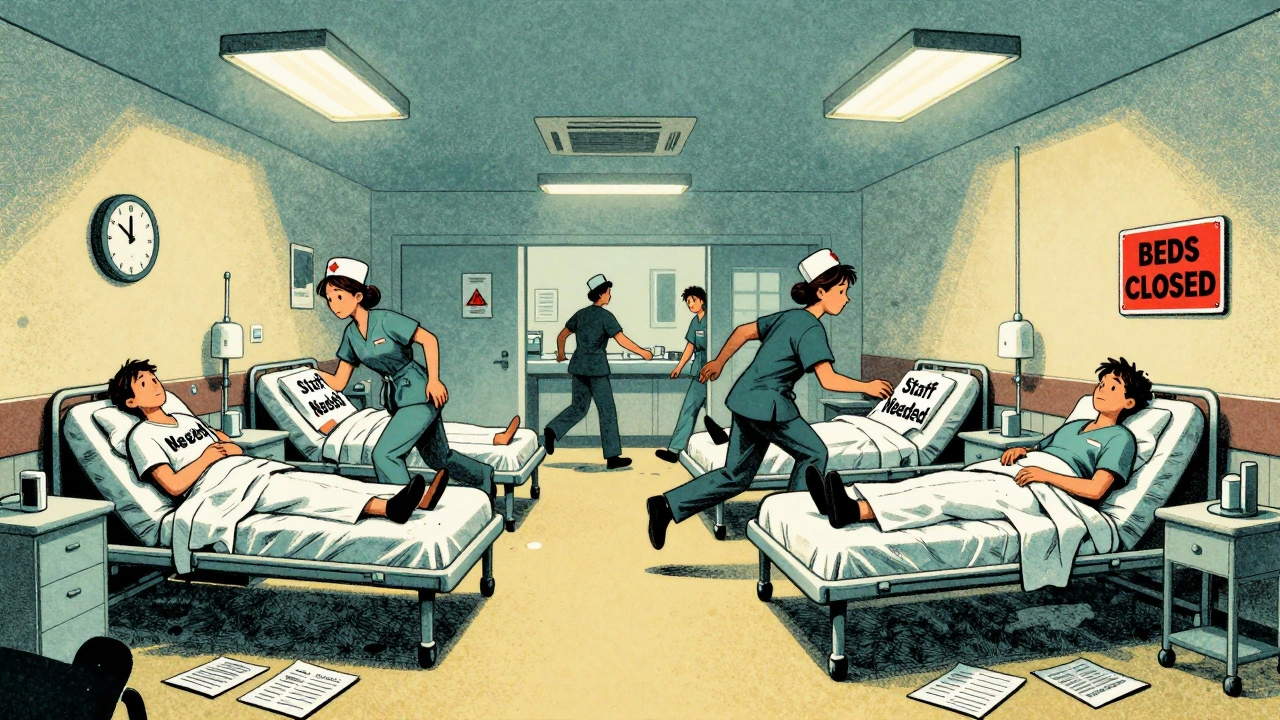
Hospitals and clinics across the U.S. are struggling to stay open due to severe staffing shortages. Nurses are burned out, patients wait days for care, and rural areas are hit hardest. This isn't a temporary issue-it's a systemic crisis with no easy fix.