
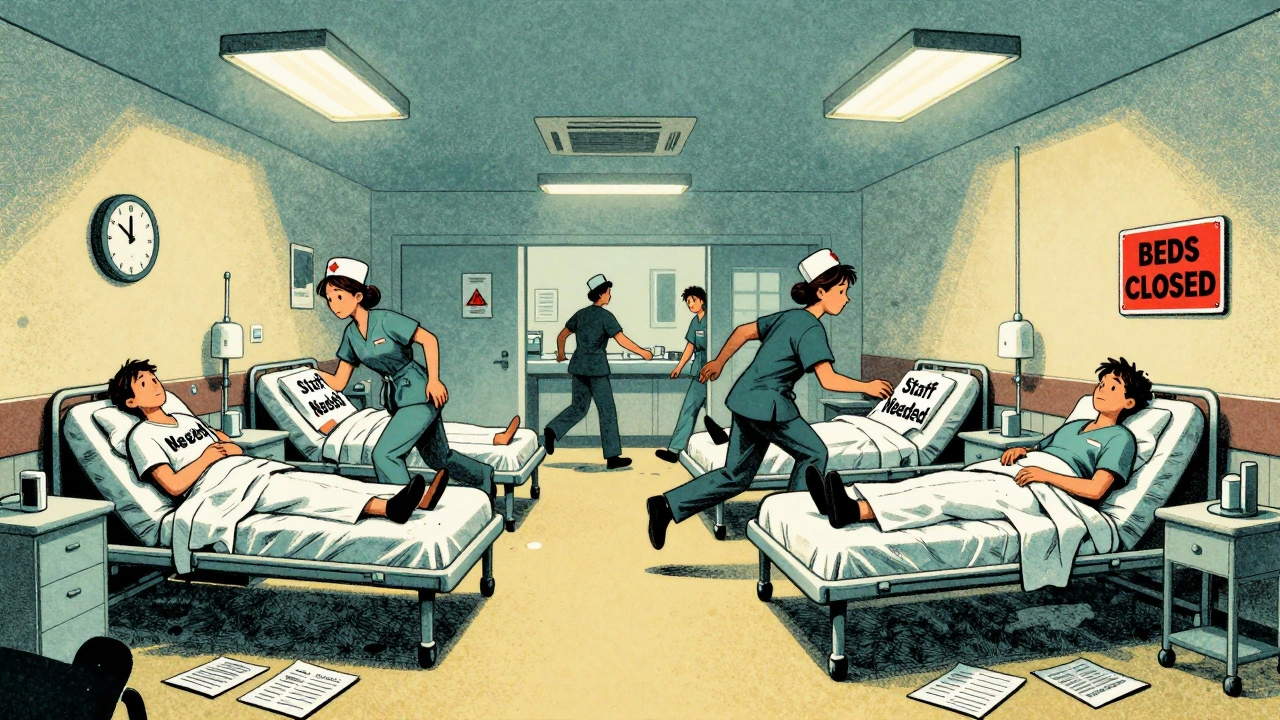
It’s not just about running out of medicine. The real crisis in U.S. hospitals and clinics right now is that there aren’t enough people to care for patients. Nurses are working double shifts. Emergency rooms are backed up for days. Primary care clinics are turning away patients because they can’t hire staff. This isn’t a temporary glitch-it’s a systemic collapse that’s been building for years and is now hitting hard everywhere.
Why Hospitals Are Struggling to Stay Open
Over 42 states will face serious nursing shortages by 2030, according to the American Hospital Association. Right now, many hospitals are running at 67% staffing levels-down from nearly 90% before the pandemic. In rural areas, the numbers are even worse. Some community hospitals have fewer than half the nurses they need. That means beds sit empty, not because no one needs them, but because there’s no one to staff them.
It’s not just nurses. Doctors, technicians, and support staff are leaving too. Nearly half of all nurses are over 50, and more than a third will retire in the next decade. Meanwhile, nursing schools can’t keep up. In 2023, over 2,300 qualified applicants were turned away because there weren’t enough faculty to teach them. The pipeline is broken.
What This Means for Patients
If you’ve been to an ER recently, you’ve probably seen it: long waits, rushed care, staff overwhelmed. Facilities with nurse-to-patient ratios above 1:4 have 7% higher death rates, according to a 2022 JAMA study. In some rural emergency rooms, patients wait 72 hours for treatment. That’s not an outlier-it’s becoming the norm.
Patients with chronic conditions are suffering too. Diabetics can’t get regular checkups. Heart failure patients miss follow-ups. Mental health care? Forget it. Behavioral health providers are in the worst shape, with over 12,400 unfilled positions nationwide. People in crisis wait weeks for an appointment-sometimes longer than they wait for surgery.
The Staffing Crisis Is Getting Worse
The pandemic didn’t create this problem-it exposed it. But it made it infinitely worse. Turnover in some specialties hit 104%. That means, on average, every nurse in a unit left and was replaced more than once in a year. Many didn’t come back. They burned out. They took jobs in retail clinics, pharmaceutical companies, or left healthcare entirely.
Travel nurses filled the gaps-but at a cost. Hospitals paid up to $185 an hour for temporary staff, while full-time nurses made $65. That created resentment, not solutions. And now, as travel nurse rates drop slightly, hospitals are left with the same staffing gaps and even higher debt.

Why Solutions Keep Failing
Everyone talks about “fixing” the system. But most fixes are temporary. Loan forgiveness programs help a little-Massachusetts cut its shortage to 8% below the national average. But the federal government spends only $247 million a year on nursing education, when $1.2 billion is needed. The $500 million recently allocated by the Biden administration covers just 18% of the gap.
Technology was supposed to help. AI tools for documentation, remote monitoring, and scheduling sound promising. But they’re hard to adopt. Hospitals need 32 hours of training per clinician just to use basic AI tools. And 68% of facilities can’t get their electronic health records to talk to each other. That makes telehealth and remote care nearly impossible to scale.
Even when hospitals try to redesign teams-like Mayo Clinic did-it takes 18 months, $4.7 million, and massive staff buy-in. Most small clinics and rural hospitals can’t afford that kind of investment.
The Human Cost
Behind every statistic is a nurse working a 16-hour shift with three critically ill patients. One ICU nurse on Reddit described two near-miss medication errors last month because she was too exhausted to double-check. Another said she cried in the supply closet after a patient died because she couldn’t get help fast enough.
Administrators aren’t immune. One hospital CEO in Ohio said they had to close 12 inpatient beds every week due to lack of staff-losing $4.2 million a month in revenue. But they couldn’t hire more people, even if they wanted to. The market is too tight.
And patients? They’re paying the price. Healthgrades shows a 27% spike in complaints about wait times since 2022. People are avoiding care because they know it’ll take hours-or days-to get seen. That leads to worse outcomes, more emergency visits, and higher long-term costs.
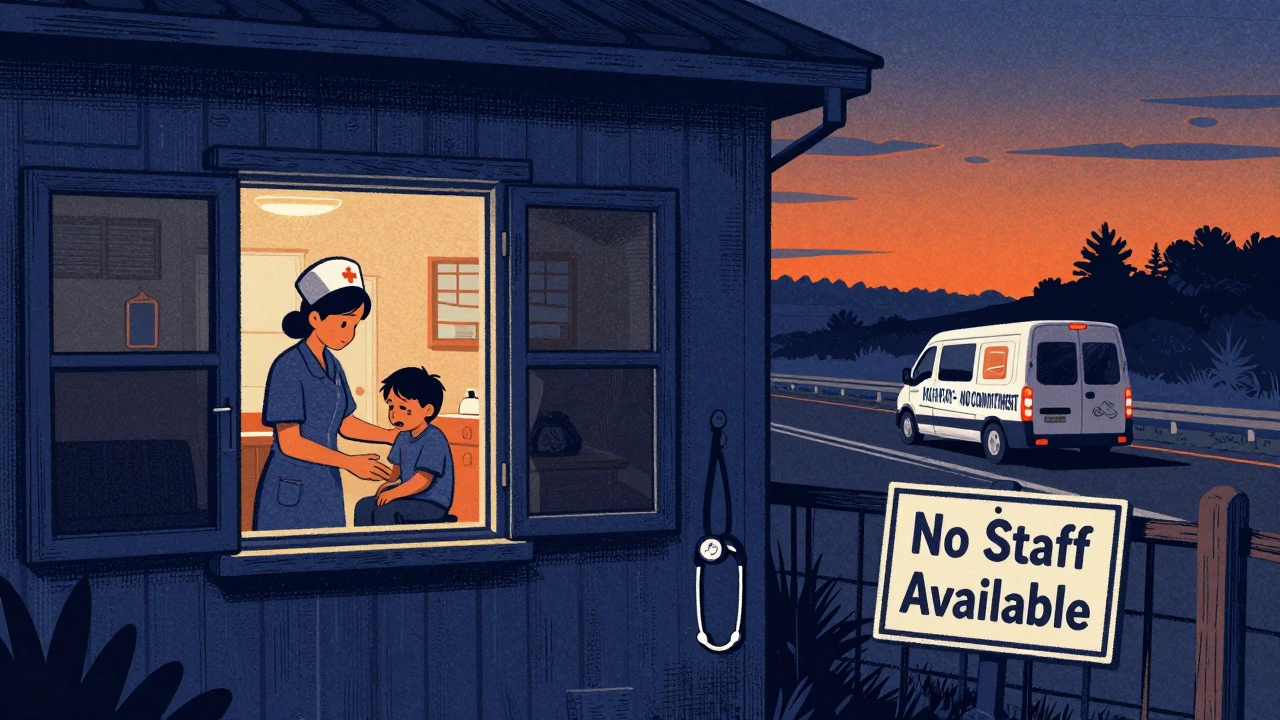
What’s Next? No Easy Answers
There’s no single fix. You can’t just hire your way out of this. The U.S. will need over 10 million more healthcare workers globally by 2030. Even if every nursing school in the country doubled its capacity tomorrow, it would take a decade to fill the gap.
Some experts believe technology can offset 30-40% of the shortage-through AI diagnostics, remote monitoring, and automated scheduling. But that requires investment, training, and time. Right now, most hospitals are too busy just keeping the lights on to plan for the future.
States like California are trying with mandatory nurse-to-patient ratios. But that’s only helpful if there are enough nurses to meet the ratio. Without more people, rules just make the problem more visible.
The truth? We’re not preparing for the future. We’re surviving the present. And the future is coming fast. By 2030, there will be 82 million Americans over 65. Each one will need more care than the last. And there won’t be enough people to give it to them.
What You Can Do
If you’re a patient: Be patient. Advocate for yourself. If you’re waiting too long, ask for a case manager. Push for alternatives like telehealth when appropriate.
If you’re in healthcare: Speak up. Share your experience. Support policy changes. Consider mentoring new nurses. The system needs voices from inside.
If you’re considering a career in healthcare: It’s a hard path. But it’s also one of the most needed. We’re not just short on staff-we’re short on compassion. The people who stay in this field are the ones who still believe in care.
Why are hospitals closing beds even when they’re full?
Hospitals close beds not because they’re empty, but because they don’t have enough staff to safely care for patients in them. A bed without a nurse is a liability-not an asset. Many hospitals now track staffing levels in real time and shut down units when ratios become unsafe.
Is the nurse shortage only in rural areas?
No. While rural hospitals are hit hardest-with 37% higher vacancy rates-urban centers are struggling too. Big cities like New York, Los Angeles, and Chicago face severe shortages, especially in ERs, ICUs, and psychiatric units. The difference? Rural areas have fewer alternatives, so the impact is more visible.
Why don’t more people become nurses?
Many are turned away by the cost, the workload, and the lack of support. Nursing school is expensive, and even after graduation, new nurses often face 12-hour shifts, unsafe patient loads, and little mentorship. In 2025, 63% of nurses said they’re considering leaving the profession because of burnout and unsafe conditions.
Can telehealth solve the staffing crisis?
It helps-but not enough. Telehealth nurse triage reduced ER visits by 19% in pilot programs. But it requires upfront investment, reliable internet, and trained staff. Plus, it can’t replace physical exams, emergency care, or complex procedures. It’s a tool, not a cure.
What’s being done to fix this?
Some states are expanding nursing scholarships and loan forgiveness. The federal government allocated $500 million for education, but it’s a drop in the bucket. Hospitals are trying AI scheduling and cross-training staff. But without major funding and policy changes, these efforts won’t close the gap. The real solution requires rebuilding the entire pipeline-from education to retention.



Siddharth Notani
As a healthcare professional from India, I’ve seen this crisis up close. The U.S. system is collapsing under its own weight-not because of lack of resources, but because of misaligned incentives. Nurses are treated as expendable labor, not the backbone of care. This isn’t sustainable. We need systemic reform, not Band-Aids.
Education funding must increase tenfold. Retention strategies must prioritize mental health, not productivity metrics. And yes, we need more nurses-but we also need to stop driving them away.