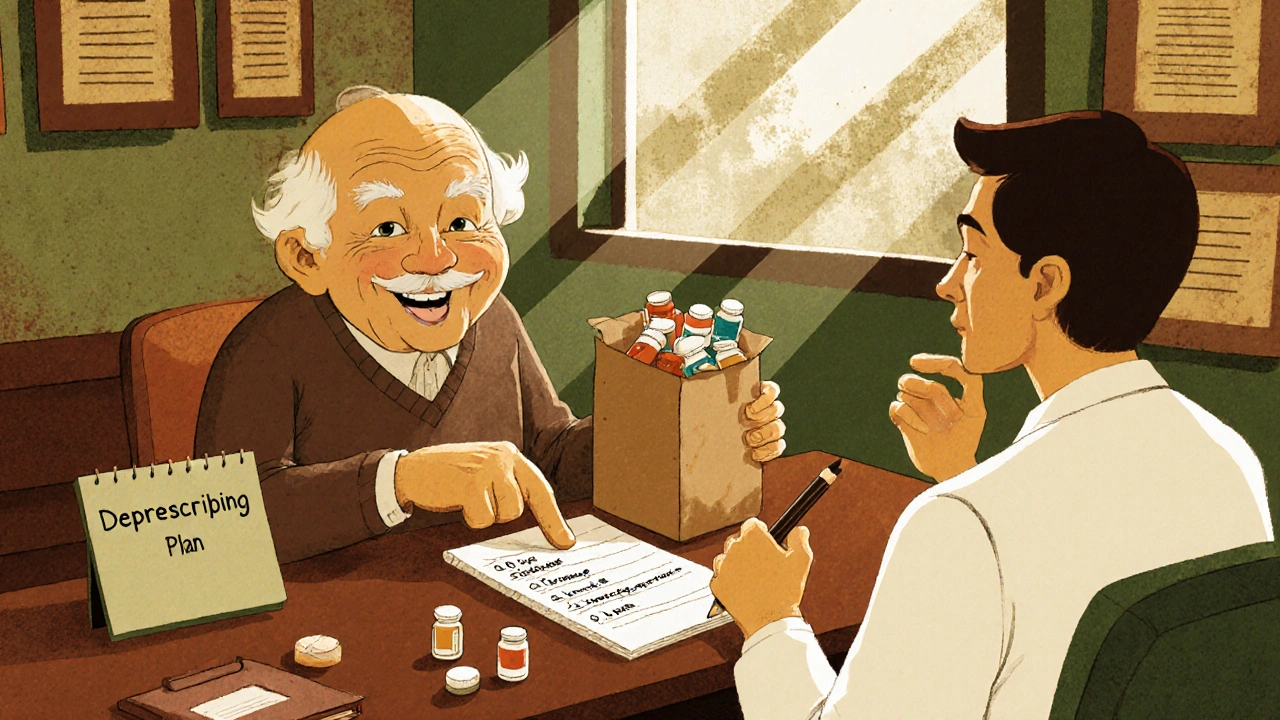
Stop Unnecessary Drugs: How to Avoid Harmful Medications and Take Control
When you’re told to stop unnecessary drugs, the practice of discontinuing medications that no longer provide benefit or pose more risk than reward. Also known as deprescribing, it’s not about quitting pills cold turkey—it’s about making smart, safe choices with your doctor. Too many people take meds just because they always have, or because a new one was added without reviewing the old ones. This pile-up of drugs, called polypharmacy, the use of multiple medications by a patient, often leading to increased risk of side effects and interactions, is especially common in older adults. It’s not laziness or ignorance—it’s a system problem. Doctors add meds for one issue, but rarely step back to see if three others are making things worse.
That’s where the Beers Criteria, a list of potentially inappropriate medications for adults over 65, developed by the American Geriatrics Society to guide safer prescribing comes in. It’s not a ban list—it’s a warning system. Drugs like diphenhydramine (Benadryl), long-term benzodiazepines, and certain anticholinergics show up here because they cause confusion, falls, or even dementia-like symptoms in older bodies. But you don’t need to be 65 to be at risk. If you’re on five or more prescriptions, or if you’ve been taking something for years without a check-up, you might be carrying unnecessary weight. Some meds were meant for short-term use but became permanent. Some were prescribed for a symptom that’s now gone. Others were added to fix side effects from earlier drugs—a classic domino effect.
Stopping a drug isn’t just flipping a switch. It takes planning. Some meds, like blood pressure pills or antidepressants, need to come off slowly. Others, like acid reflux drugs taken daily for no clear reason, can often be dropped with little fuss. The key is asking: Is this still helping? What happens if I stop? You’re not being difficult—you’re being responsible. Your pharmacist can help spot red flags on your bottle labels, and your doctor should welcome this conversation. In fact, the medication safety, the practice of ensuring drugs are used correctly to prevent harm, including avoiding inappropriate or redundant prescriptions movement is growing because patients like you are speaking up. You don’t need to suffer from brain fog just because you’ve been on an antihistamine for years. You don’t need to take a stomach pill because a painkiller gave you heartburn—there are better ways. The posts below show you how to spot these traps, understand what those little stickers on your bottles mean, and start a real conversation with your care team about what you truly need.
Learn how to work with your doctor to safely stop unnecessary medications, reduce side effects, and save hundreds or thousands of dollars a year on prescriptions through deprescribing.