
PPI-Clopidogrel Interaction Checker
Understanding the Interaction
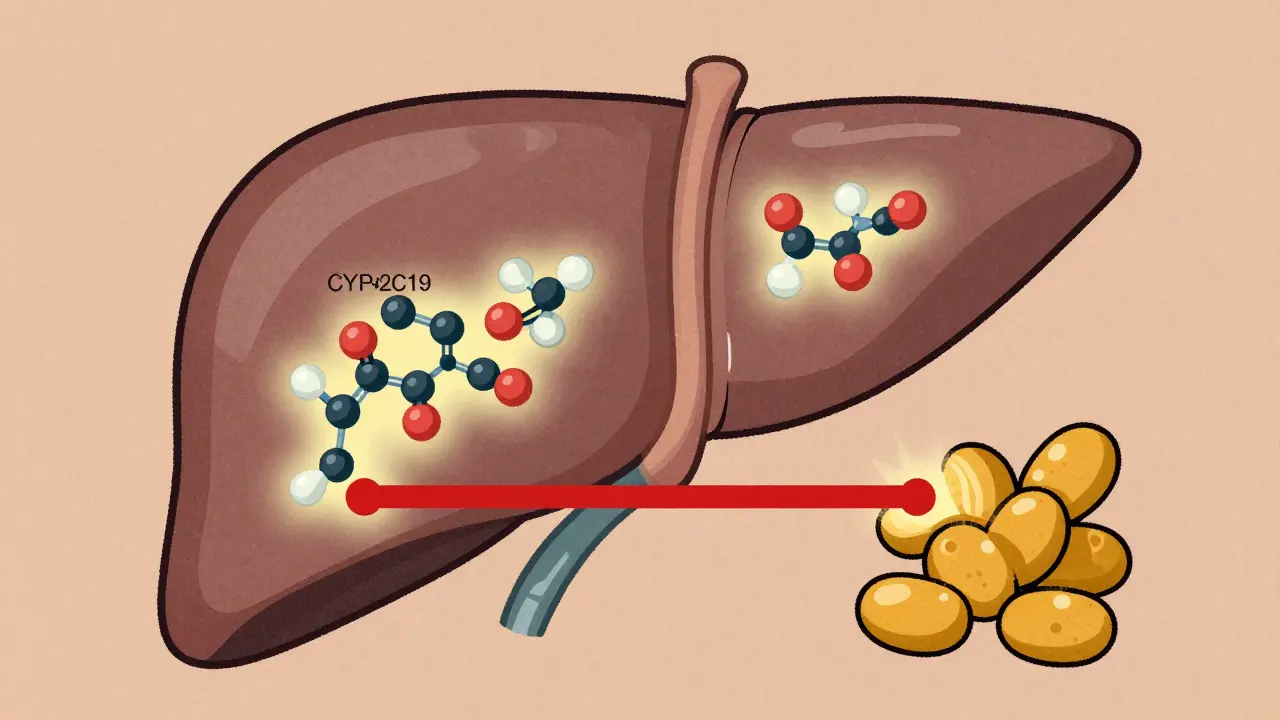
Clopidogrel needs the CYP2C19 enzyme to work properly. Some PPIs block this enzyme, reducing clopidogrel's effectiveness and increasing cardiac risk.
Interaction Analysis
Select a PPI to see interaction details
When you take clopidogrel after a heart attack or stent placement, your body depends on one specific enzyme to make the drug work: CYP2C19. This enzyme turns clopidogrel into its active form, which stops platelets from clumping together and causing clots. But if you’re also taking a proton pump inhibitor (PPI) like omeprazole, that enzyme gets blocked. And that’s where things get risky.
Why This Interaction Matters
Clopidogrel isn’t active when you swallow it. It needs to be processed by your liver, and CYP2C19 is the main enzyme that does the job. Without this conversion, clopidogrel can’t block the P2Y12 receptor on platelets. That means your blood stays more likely to clot - exactly what you’re trying to prevent after a heart procedure.Studies show this isn’t just theoretical. In one 2015 study published in Circulation: Cardiovascular Interventions, patients taking omeprazole with clopidogrel had platelet reactivity levels 25% higher than those not taking a PPI. That’s not a small difference. It’s the kind of gap that can mean the difference between preventing a second heart attack and having one.
The problem isn’t just about numbers on a lab report. Real patients have had heart attacks while on both drugs. Dr. Deepak Bhatt’s 2009 study found that people taking PPIs with clopidogrel had a 50% higher risk of major cardiac events - including death or heart attack - compared to those who didn’t take PPIs. That’s not a coincidence. It’s a pattern confirmed across multiple observational studies.
Not All PPIs Are Created Equal
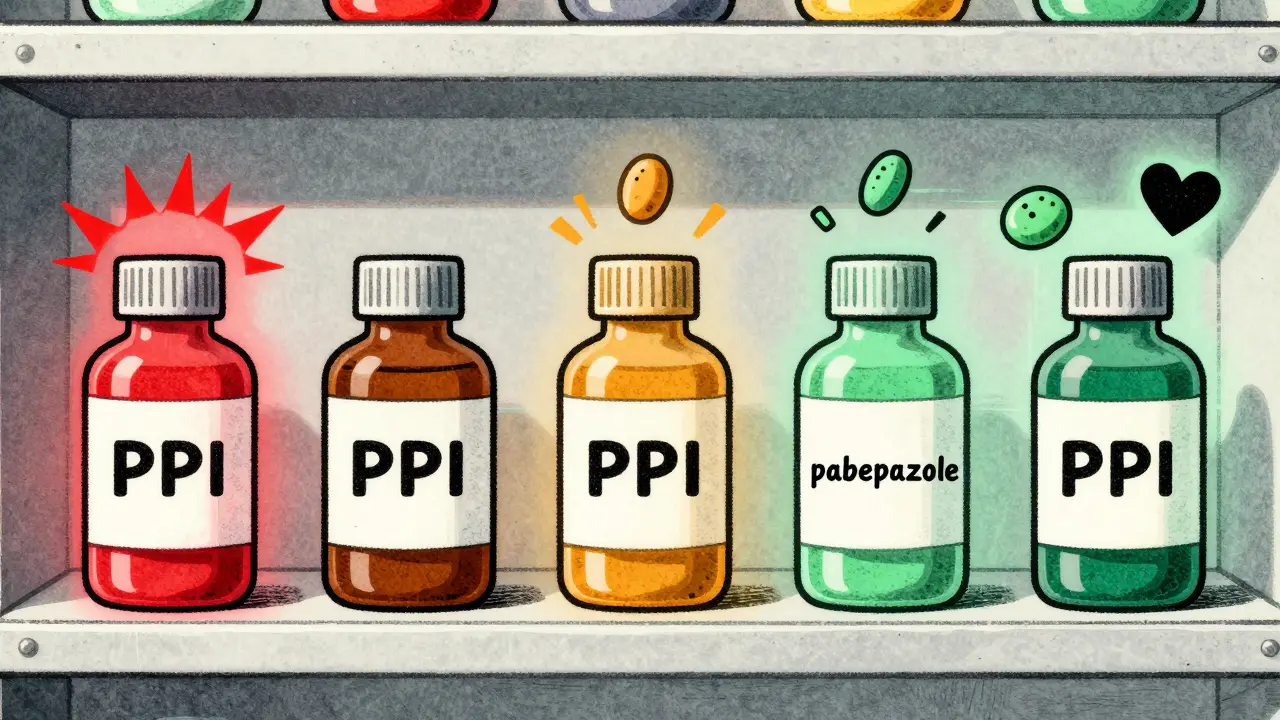
Here’s where it gets practical: not every PPI interferes the same way. The interaction depends on how strongly each drug blocks CYP2C19.- Omeprazole and esomeprazole are the worst offenders. They bind tightly to CYP2C19, reducing clopidogrel’s active metabolite by up to 47%. In one study, platelet inhibition dropped from 35-45% (therapeutic range) to under 20% with omeprazole.
- Lansoprazole has a moderate effect - less than omeprazole but still measurable.
- Pantoprazole and rabeprazole barely touch CYP2C19. Their inhibition constant (Ki) is over 20 μM, meaning they don’t compete effectively with clopidogrel for the enzyme. Studies show no significant drop in antiplatelet activity when these are used with clopidogrel.
The NHS Specialist Pharmacy Service and the American Heart Association both say: if you need a PPI with clopidogrel, choose pantoprazole or rabeprazole. Avoid omeprazole and esomeprazole. The FDA issued a safety warning in 2009 specifically about omeprazole, and the European Medicines Agency followed with a label restriction.
Why the Confusion?
You might wonder: if the evidence is this clear, why are doctors still debating it?Because clinical outcomes don’t always match pharmacodynamic data. Some large trials, like the COGENT trial, found no increase in heart attacks or death when omeprazole was given with clopidogrel. But here’s the catch: those trials were small, and many patients were already on other antiplatelet drugs or had low-risk profiles.
Dr. Dominick Angiolillo argues that CYP2C19 gene variants - which also affect how well clopidogrel works - are a bigger factor than PPIs. But that’s not helpful if you’re a 78-year-old with a history of ulcers and you’re on clopidogrel. You need protection from bleeding, and you can’t afford to lose the antiplatelet effect.
So we’re stuck in the middle: lab data screams danger, but some big trials say it’s fine. The truth? It’s not black and white. It’s about risk stratification.
Who Really Needs a PPI?
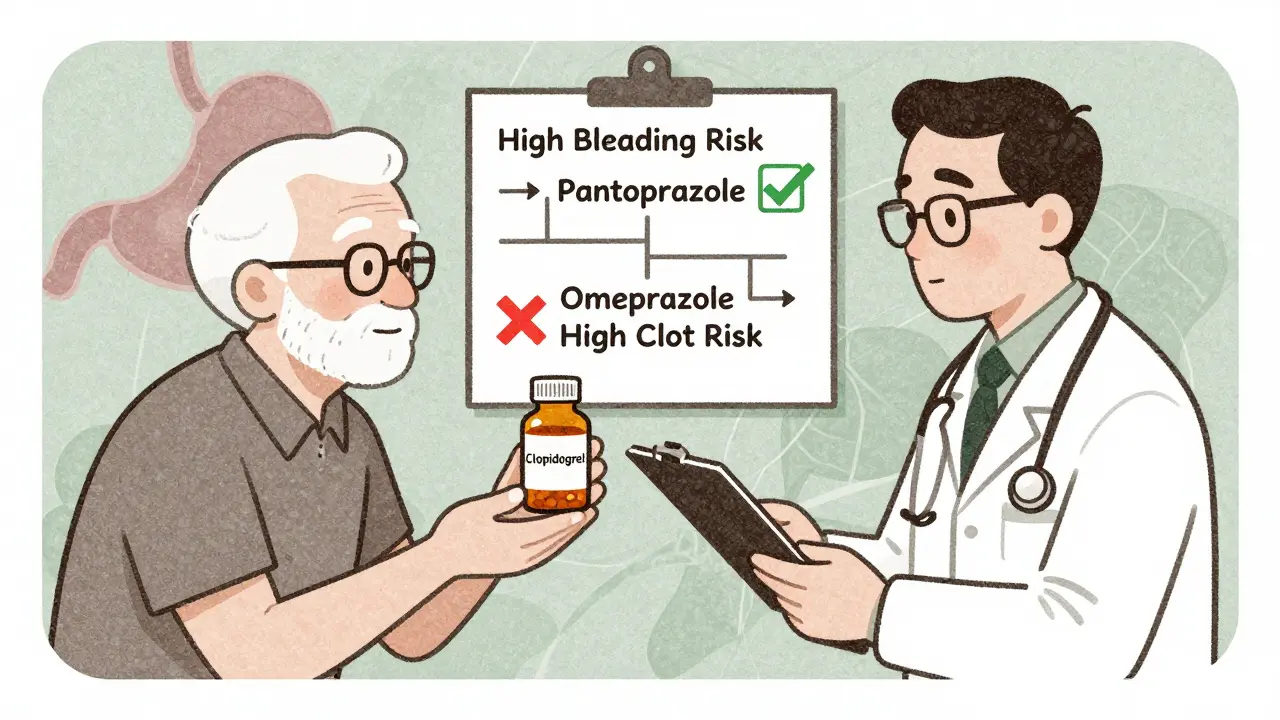
Not everyone on clopidogrel needs a PPI. But certain people are at high risk for stomach bleeding - and that’s where PPIs save lives.- Age 75 or older - 3 times more likely to bleed
- History of stomach or duodenal ulcers - 13 times more likely
- Taking NSAIDs like ibuprofen or naproxen - 4 times more likely
- Infected with H. pylori - increases bleeding risk by 2-3 times
The American College of Gastroenterology says PPIs cut GI bleeding risk in DAPT patients by 69%. That’s huge. So if you’re in one of these high-risk groups, skipping the PPI could be more dangerous than the drug interaction.
That’s why guidelines say: if you need a PPI, pick the right one. Pantoprazole or rabeprazole. Not omeprazole. Not esomeprazole.
Does Timing Help?
You might think: if I take my clopidogrel in the morning and my omeprazole at night, will that help?It won’t. A study from the NIH showed that even when doses were spaced 12 hours apart, omeprazole still blocked CYP2C19 enough to reduce clopidogrel’s effect. That’s because the enzyme inhibition lasts longer than the drug’s half-life. Omeprazole’s metabolites stick around, keeping CYP2C19 blocked for hours.
With pantoprazole or rabeprazole, timing doesn’t matter. They don’t interfere enough to begin with.
What’s Changing in Practice?
The tide is turning. In 2010, over 20% of clopidogrel users in the U.S. were on omeprazole. By 2018, that dropped to under 9%. Why? Because doctors learned.Now, 72% of cardiologists surveyed in a 2019 study said they’d choose pantoprazole over omeprazole when a PPI was needed. That’s a massive shift in prescribing habits - and it’s saving lives.
Also, newer antiplatelet drugs like ticagrelor and prasugrel don’t rely on CYP2C19. That’s why the 2023 European Society of Cardiology guidelines now recommend ticagrelor as first-line for most patients with acute coronary syndrome. If you’re starting on an antiplatelet today, your doctor might skip clopidogrel altogether.
What Should You Do?
If you’re on clopidogrel and a PPI:- If you’re on omeprazole or esomeprazole - talk to your doctor about switching to pantoprazole or rabeprazole.
- If you’re on pantoprazole or rabeprazole - keep taking it. You’re fine.
- If you’re not sure why you’re on a PPI - ask. You might not need it.
- If you have a history of ulcers, are over 75, or take NSAIDs - don’t stop the PPI without talking to your doctor. The bleeding risk is real.
There’s no perfect answer. But there is a smart one: know which PPI you’re on. Know why you’re taking it. And know that not all PPIs are equal when it comes to clopidogrel.
Can I take omeprazole with clopidogrel if I split the doses?
No. Even if you take clopidogrel in the morning and omeprazole at night, the interaction still occurs. Omeprazole and its metabolites block CYP2C19 for extended periods, so timing doesn’t prevent the reduction in clopidogrel’s effectiveness. Studies show platelet inhibition remains suppressed regardless of dosing schedule.
Which PPI is safest to take with clopidogrel?
Pantoprazole and rabeprazole are the safest options. They have minimal effect on CYP2C19 and do not significantly reduce clopidogrel’s antiplatelet activity. Multiple studies, including meta-analyses from the NHS and European registries, confirm no increased cardiovascular risk with these two. Avoid omeprazole and esomeprazole.
Do all PPIs reduce clopidogrel’s effectiveness?
No. Only omeprazole and esomeprazole consistently and significantly reduce clopidogrel’s antiplatelet effect. Lansoprazole has a moderate impact. Pantoprazole and rabeprazole have little to no effect based on pharmacodynamic and clinical outcome studies. The difference lies in how strongly each drug inhibits the CYP2C19 enzyme.
Is the interaction proven to cause heart attacks?
Evidence is mixed but concerning. Pharmacodynamic studies consistently show reduced clopidogrel activity with omeprazole. Some clinical trials, like COGENT, found no increase in heart attacks. But large observational studies - including those led by Dr. Bhatt - show a 50% higher risk of major cardiac events. The FDA maintains its 2009 warning based on this body of evidence.
Should I stop my PPI if I’m on clopidogrel?
Don’t stop without talking to your doctor. If you have a history of ulcers, are over 75, or take NSAIDs, stopping your PPI could lead to dangerous bleeding. Instead, ask if you can switch to pantoprazole or rabeprazole. The goal is to protect your stomach without compromising your heart.


Korn Deno
This whole thing is such a mess. Doctors just throw pills at you without thinking. I got prescribed omeprazole after my stent and never questioned it. Turns out I was basically neutering my heart meds. Scary how simple this is to fix if you just know. Switched to pantoprazole last month. No more anxiety about another heart attack.