
One in three people with diabetes will develop vision problems. But here’s the hard truth: diabetic eye screening catches those problems early-before you even notice them. Most people don’t realize their vision is fading until it’s too late. That’s why getting screened regularly isn’t just a good idea-it’s life-changing.
When and How Often Should You Get Screened?
If you have type 1 diabetes, your first eye exam should happen within five years after diagnosis. For type 2 diabetes, you need that first exam right away-because by the time you’re diagnosed, damage might already be starting. After that, annual screenings are the standard. No exceptions.
But it’s not one-size-fits-all. If your eyes are completely clear and your HbA1c is under 7% for two years in a row, your doctor might say you can wait 18 to 24 months. That’s rare, though. Most people stick with yearly exams. Why? Because even small changes in blood sugar can cause damage without symptoms.
Here’s the breakdown based on what’s found during your exam:
- No retinopathy? Come back in 12 months.
- Mild nonproliferative retinopathy? Back in 6 to 12 months.
- Moderate retinopathy? Every 3 to 6 months.
- Severe retinopathy or macular edema? You need to be seen within 1 month.
Missing your screening? You’re 23 times more likely to lose vision, according to the Wisconsin Epidemiologic Study. That’s not a risk worth taking.
Why Regular Screenings Save Sight
Diabetic retinopathy doesn’t hurt. It doesn’t blur your vision right away. It sneaks up. By the time you notice spots, floaters, or blurry edges, the damage is often advanced. That’s why screening isn’t about checking for symptoms-it’s about finding hidden damage.
More than 90% of diabetes-related vision loss can be prevented. Not treated. Prevented. All it takes is catching it early. That’s why the American Diabetes Association calls annual screening the gold standard. And it’s not just theory-studies show people who stick to their screenings keep their vision longer, even if their blood sugar isn’t perfect.
But here’s the gap: only about 60% of people with diabetes actually get screened every year. The rest? They wait until something feels wrong. By then, treatment is harder, costlier, and less effective.
What Is Teleophthalmology-and How Does It Work?
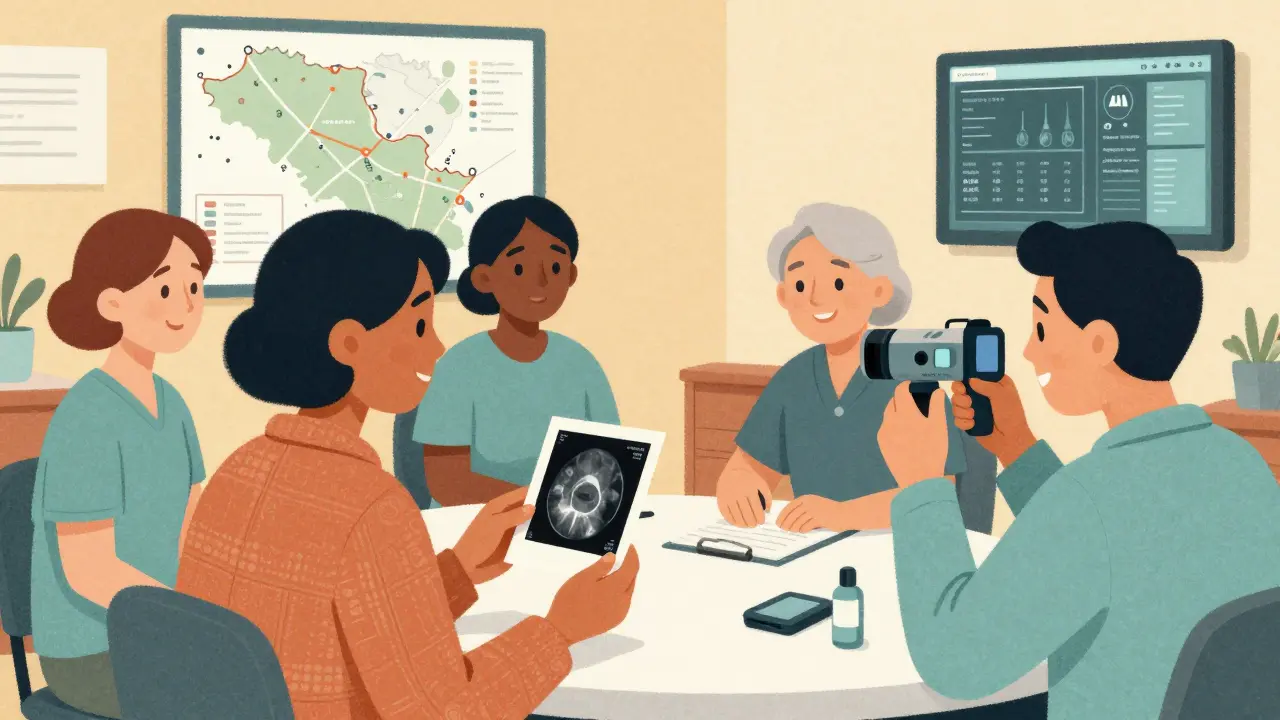
Teleophthalmology means getting your eye screen without stepping into an eye doctor’s office. A technician takes high-resolution photos of your retina using a special camera. Those images get sent to a specialist, who reviews them remotely. No dilation? Sometimes. But most programs still use drops for the clearest pictures.
It’s not science fiction. FDA-approved AI systems like LumineticsCore can analyze those photos in seconds. They’ve been tested on over 100,000 patients and catch more than mild retinopathy with 87% accuracy. That’s close to what a human specialist sees.
In rural areas, this changes everything. In Tamil Nadu, India, a teleophthalmology program reached 15,000 people. The results matched in-person exams 98.5% of the time. In the U.S., the Veterans Health Administration saw screening rates jump 32% after rolling out teleophthalmology across 136 clinics.
Can Teleophthalmology Replace a Full Eye Exam?
No. And that’s critical to understand.
Retinal photos only show one part of your eye. They won’t catch glaucoma, cataracts, or dry eye-common issues in people with diabetes. They also can’t check your eye pressure or measure how well your optic nerve is working. That’s why a full exam by an ophthalmologist or optometrist is still the gold standard, especially for your first screen.
But for follow-ups? Absolutely. If you’ve already had a full exam and your eyes are stable, teleophthalmology is a reliable, fast, and far more convenient option. Many clinics now use it as a first step. If the AI finds something, you’re referred for a full exam. If not, you’re cleared until next year.
Barriers to Getting Screened-And How Teleophthalmology Helps
Why do so many people skip screenings? Three big reasons:
- Transportation-68% of patients say getting to the eye doctor is too hard, especially in rural areas.
- Dilation discomfort-42% hate the blurry vision and light sensitivity that lasts for hours after drops.
- Wait times-in big cities, you might wait 37 days just to get an appointment.
Teleophthalmology cuts through all of that. You can get screened during your regular diabetes visit. No extra trip. No hours of blurry vision. And if your clinic uses AI, you get results the same day.
One patient, ‘Type1Warrior’ on the ADA community forum, said they missed screenings for three years because the nearest specialist was 75 miles away. After their clinic added teleophthalmology, they got screened every year without hassle.
Who’s Left Behind?
Teleophthalmology sounds perfect-but it’s not reaching everyone equally. A 2024 Health Affairs study found clinics serving mostly Medicaid patients were 47% less likely to offer it than those serving private insurance patients. That’s a problem. People with lower incomes are already at higher risk for diabetes complications. If they can’t access screening, the gap in outcomes will only grow.
And it’s not just about money. African American patients develop severe retinopathy 2.3 years earlier than white patients-even with the same blood sugar levels. That means waiting two years between screens could be dangerous for them. Screening intervals need to be personalized, not just based on how well your diabetes is controlled.
What’s Next for Diabetic Eye Screening?
The future isn’t just about more cameras or faster AI. It’s about smarter scheduling.
Right now, everyone gets screened yearly. But research is underway to predict who truly needs it. The T1D Exchange is testing an algorithm that looks at 17 risk factors-like how long you’ve had diabetes, your blood pressure, kidney function, and even genetics. Early results suggest some low-risk patients might safely go three years between screens.
That could free up resources for those who need more frequent checks. But until that system is proven and widely adopted, stick with the annual rule. Don’t gamble with your vision.
How to Make Sure You Don’t Miss Your Screen
Here’s how to stay on track:
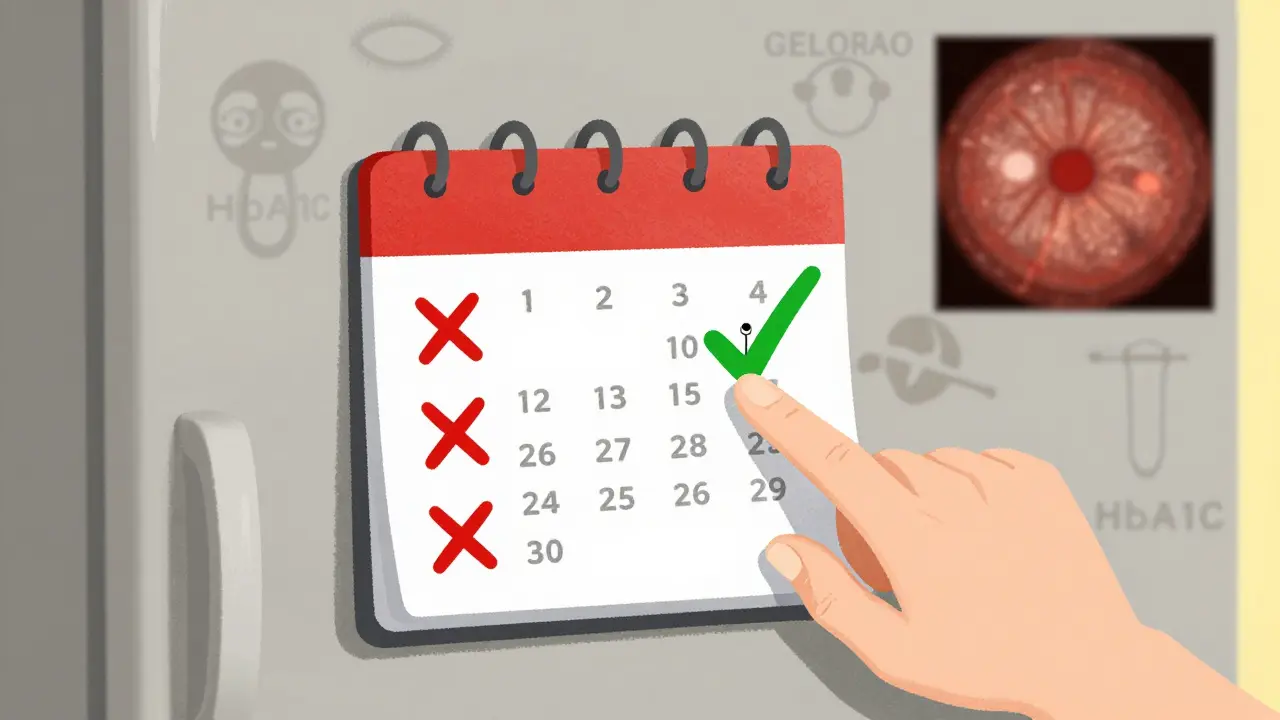
- Set a recurring calendar reminder for your screening date-don’t rely on your doctor’s office to remind you.
- Ask your endocrinologist to schedule your eye exam during your next diabetes visit.
- If your clinic offers teleophthalmology, ask if you’re eligible. It’s faster, cheaper, and easier.
- Don’t skip just because you feel fine. Diabetic retinopathy doesn’t cause pain.
- Keep a record. If you switch doctors or clinics, bring your last screening report with you.
Some clinics, like Kaiser Permanente, use automated SMS reminders. They cut missed appointments by 27%. If your clinic doesn’t do that, do it yourself.
Insurance and Costs: What You Need to Know
Medicare and most private insurers cover annual diabetic eye screenings. But teleophthalmology? Only 63% of private insurers covered it in 2024. Check your plan before you go.
For Medicare patients, teleophthalmology now counts toward Quality ID #117-the measure that affects how much providers get paid. That means more clinics are adopting it. But if your provider says it’s not covered, ask them to submit the claim under the standard diabetic retinopathy screening code. Sometimes, it works.
Don’t let cost be the reason you skip. Many community health centers offer free or low-cost screenings. Call your local health department. Ask your diabetes educator. They know where to go.
Final Thought: Your Eyes Are Worth It
You check your blood sugar every day. You track your carbs. You take your meds. But your eyes? They’re silent. They don’t beep. They don’t flash alerts. They just fade. And once vision is gone, you can’t get it back.
Diabetic eye screening is the simplest, most effective thing you can do to protect your sight. Whether it’s a full exam or a photo taken in your doctor’s office, do it every year. If teleophthalmology is available, use it. It’s not perfect-but it’s better than nothing.
Don’t wait for symptoms. Don’t wait for convenience. Don’t wait until it’s too late. Your eyes are watching you. Make sure you’re watching them back.
How often should I get a diabetic eye screening if I have type 2 diabetes?
You should get screened at the time of your diabetes diagnosis. After that, annual exams are standard unless your eye doctor says otherwise. If your eyes show no signs of damage and your HbA1c stays under 7% for two years, you might be able to wait 18 to 24 months-but only if your doctor confirms it’s safe.
Can I skip my eye exam if my blood sugar is under control?
No. Even with perfect blood sugar control, you can still develop diabetic retinopathy. Damage can happen silently. Studies show people with well-controlled diabetes still lose vision if they skip screenings. Blood sugar is just one factor-duration of diabetes, blood pressure, and genetics also play a role.
Is teleophthalmology as accurate as an in-person eye exam?
For detecting diabetic retinopathy and macular edema, yes-AI systems like LumineticsCore are 87% accurate. But they don’t replace a full eye exam. They can’t check for glaucoma, cataracts, or eye pressure. A comprehensive exam by an ophthalmologist or optometrist is still needed at least once, and whenever something unusual shows up on a photo.
Do I need dilation for a teleophthalmology screening?
Most teleophthalmology programs still use dilation drops to get the clearest images. Some newer systems use wide-field cameras that don’t require dilation, but they’re not widely available yet. If dilation bothers you, ask if your clinic offers a non-dilated option-but don’t refuse screening just because of temporary blurry vision.
What if I live in a rural area and can’t get to an eye doctor?
Teleophthalmology was built for this. Many rural clinics now have retinal cameras and send images to specialists remotely. The Indian Telemedicine Project and U.S. Veterans Health Administration both show success rates above 98% in matching specialist readings. Ask your primary care provider if they offer this service-or if they can refer you to a program nearby.
Does insurance cover teleophthalmology for diabetic screening?
Medicare covers it as of 2024. Private insurers cover it in 63% of cases. If your plan says no, ask your provider to bill it under the standard diabetic retinopathy screening code (CPT 92250). Many times, it gets approved that way. Community health centers and free clinics often offer it at low or no cost.
What happens if I miss my diabetic eye screening for a year?
You’re increasing your risk of permanent vision loss. Diabetic retinopathy can progress quickly-especially if you have high blood pressure or are African American. Studies show people who skip screenings are 23 times more likely to lose vision. Get back on track as soon as possible. Even if you’re late, screening now is better than waiting another year.
Are there any side effects from diabetic eye screening?
The only common side effect is temporary blurry vision and light sensitivity from dilation drops, which lasts 3-6 hours. Some people feel dizzy or have headaches. Rarely, dilation can trigger an angle-closure glaucoma attack in people with narrow eye angles-but this is extremely uncommon. If you have a history of glaucoma, tell your provider before the exam.


Stacey Smith
This is why we need real healthcare reform. People are dying because screenings aren't accessible. Stop pretending this is about health when it's about profit.