
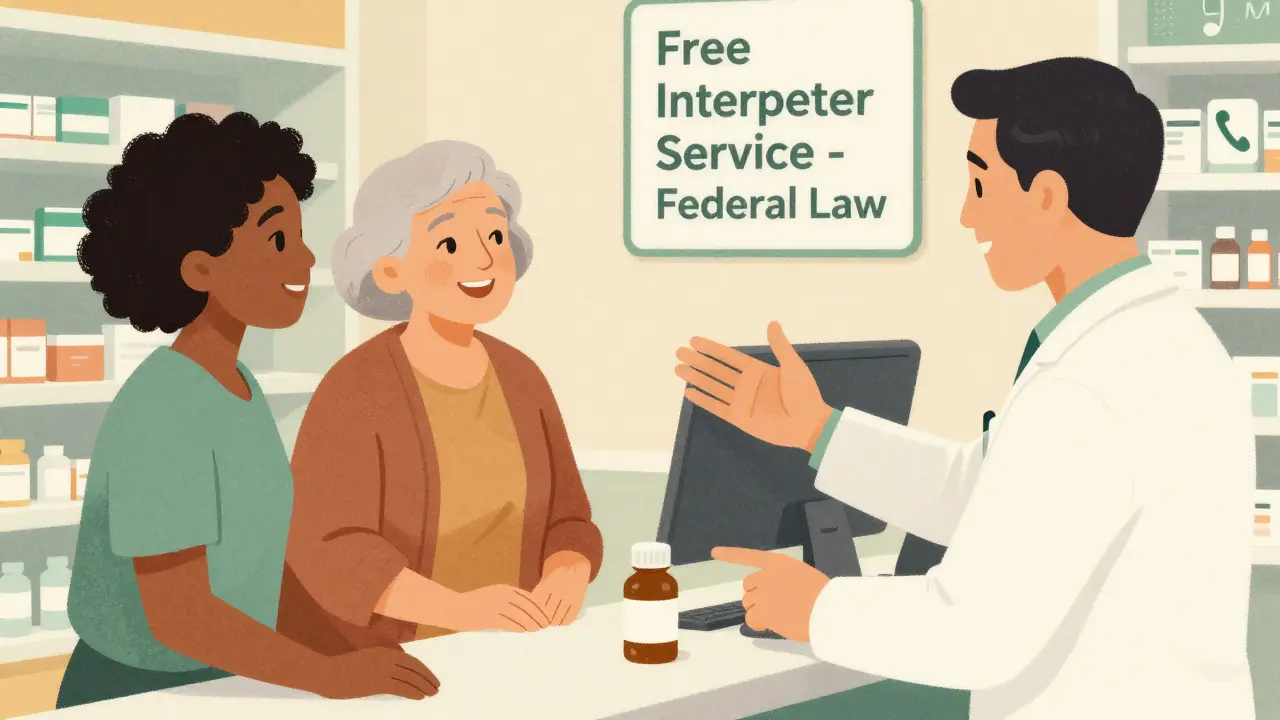
When you or a loved one is prescribed a new medication, understanding how to take it isn’t just helpful-it’s life-saving. But if English isn’t your first language, that understanding can slip away. Misreading a label, missing a warning, or not knowing when to take a pill can lead to dangerous mistakes. The good news? Federal law says you have the right to a qualified interpreter during medication counseling-and it’s free.
Why Language Help Matters in Pharmacy Counseling
People who don’t speak English well are three times more likely to make serious medication errors than those who do. That’s not a guess. It’s from a study by the University of California San Francisco. These errors aren’t just about forgetting a dose. They’re about taking the wrong amount, mixing dangerous drugs, or ignoring side effects because the instructions weren’t clear. Pharmacies that take federal money-like most chain pharmacies and many independent ones-are required by law to provide language help. That’s thanks to Section 1557 of the Affordable Care Act. It’s not optional. It’s not a favor. It’s a legal duty. And it’s not just about speaking the same language. Medical terms are tricky. Words like “take on an empty stomach,” “avoid alcohol,” or “may cause dizziness” need precise translation. A bilingual friend or family member might know how to say “take two pills,” but they probably don’t know the medical term for “hypotension” or how to explain drug interactions. Using them as interpreters increases the risk of serious errors by nearly half, according to JAMA Pediatrics.What Services Are Available?
There are three main ways pharmacies provide interpreter services: phone, video, and in-person.- Phone interpreting is the most common. You call a service, wait under a minute, and get connected to a professional interpreter. It’s cheap-around $2.50 to $3.50 per minute-and available 24/7. But it’s not perfect. Some older patients get confused without seeing the pharmacist’s face or gestures. One study found that 32% of elderly patients struggled with phone-only interpretation.
- Video interpreting gives you both voice and face. You can see lip movements, hand signals, and expressions. It’s more expensive than phone-$3 to $5 per minute-but better for complex discussions. Over two-thirds of healthcare providers now use it, according to CMS data.
- In-person interpreters are the gold standard. A trained interpreter sits with you and the pharmacist. They catch subtle cues, help with paperwork, and build trust. But they’re hard to find outside big cities. Most small-town pharmacies can’t afford to keep one on staff.
How to Ask for Help-Step by Step
You don’t have to wait for the pharmacist to offer. You have the right to ask. Here’s how to do it clearly:- When you pick up your prescription, say: “I need a professional interpreter to explain my medication. I don’t speak English well.”
- Don’t accept “I’ll just write it down” or “My cousin can help.” Those aren’t legal or safe options.
- If the pharmacist says they don’t have an interpreter, ask: “Can you connect me to your language service provider right now?” Most pharmacies use services like RxTran or Language Line.
- If they hesitate, remind them: “Federal law requires this service to be free.”
- Once the interpreter joins, make sure they’re introduced as a professional. Ask: “Are you certified in medical interpreting?”
What’s Included in Medication Counseling?
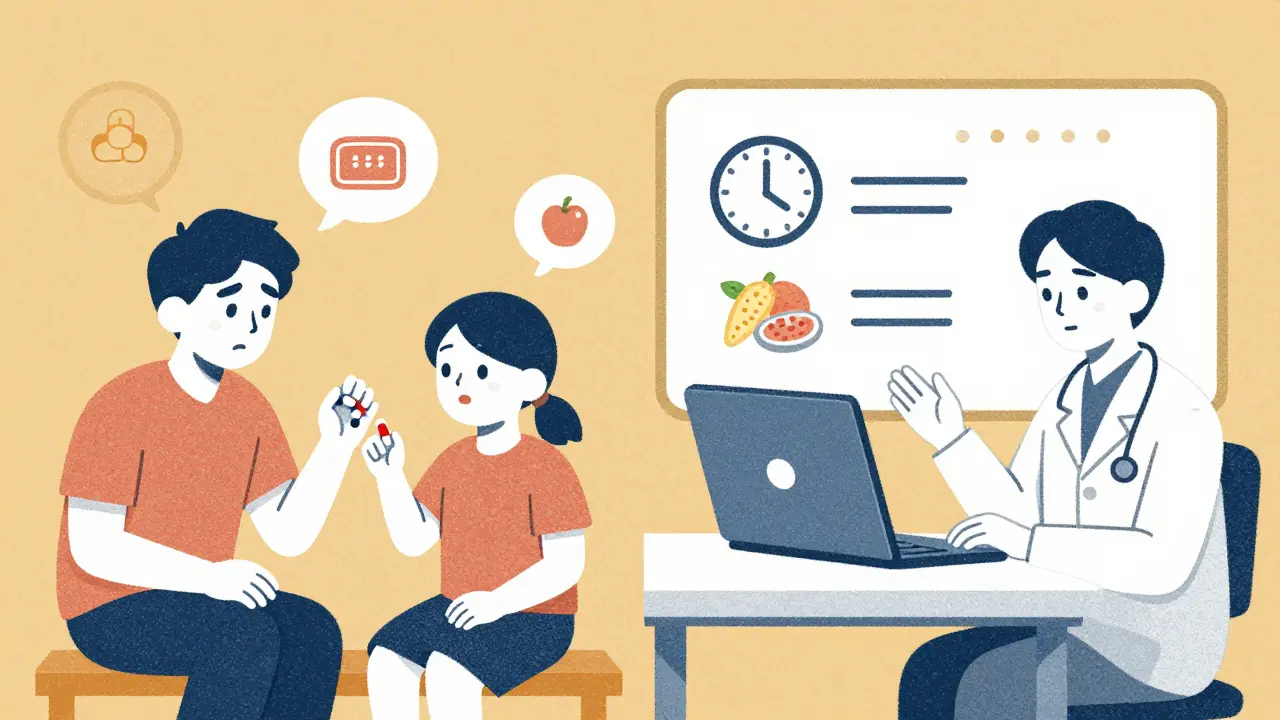
A proper counseling session with an interpreter covers more than just dosage. It includes:- How often and when to take the medicine (morning, night, with food)
- What to avoid (alcohol, other drugs, certain foods)
- Possible side effects and what to do if they happen
- What to do if you miss a dose
- How to store the medicine
- When to call your doctor or come back
What to Do If You’re Refused
If a pharmacy refuses to give you an interpreter, or pressures you to use a family member, you have options. First, ask to speak to the manager. Many technicians don’t know the law. Managers usually do. If that doesn’t work, file a complaint. You can report violations to the U.S. Department of Health and Human Services’ Office for Civil Rights. Since 2016, they’ve settled 47 cases against healthcare providers for failing to provide language help-including a $1.2 million fine against a national pharmacy chain in 2022. You can also call your state’s pharmacy board. California’s SafeRx program, for example, explicitly says pharmacies must provide interpreters free of charge during counseling. Other states have similar rules.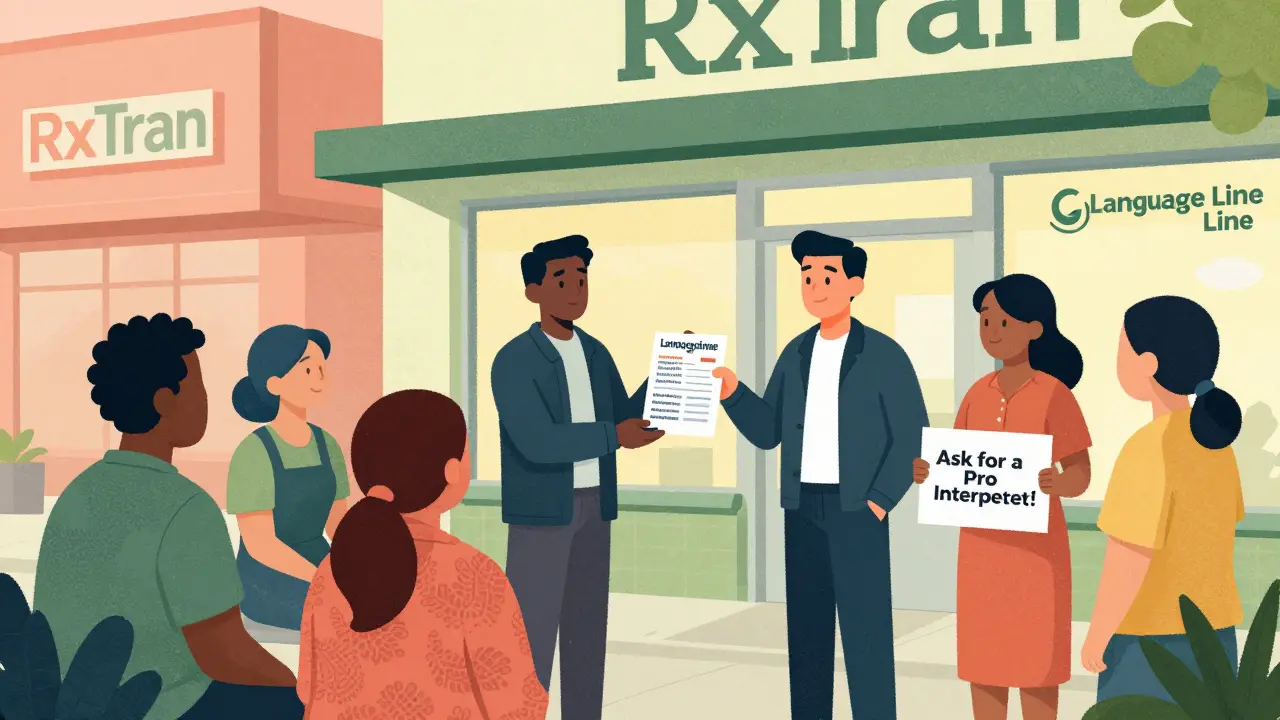
What’s Changing in 2025?
New rules took effect January 1, 2025. AI translation tools-like Google Translate or chatbots-are now strictly banned for use on prescription labels or medication counseling materials unless reviewed by a human. That’s because automated translations often get medical terms wrong. One study found AI misclassified 23% of common drug warnings. Also, Medicaid is now paying more for interpreter services. For children in non-English-speaking homes, the federal government now covers 75% of the cost instead of 50%. That means more pharmacies will be able to afford better services. California is adding translations for Tagalog and Arabic this year, after realizing that nearly a quarter of their LEP patients speak languages outside the original five.What You Can Do Now
You don’t need to wait for the system to fix itself. Here’s what you can do today:- Write down your language needs before you go to the pharmacy. Say it out loud: “I need an interpreter.”
- Ask for written copies of your medication instructions in your language. Most pharmacies can print them on the spot.
- If you’re helping an elderly relative, go with them. Don’t assume they’ll speak up.
- Know your rights. You are not asking for a privilege. You’re exercising a legal right.
Common Questions About Medication Counseling Interpreters
Do I have to pay for a translator at the pharmacy?
No. Federal law requires pharmacies that receive federal funding-including those that accept Medicare or Medicaid-to provide interpreter services at no cost to you. You should never be asked to pay for an interpreter during medication counseling.
Can I use my child or a friend as an interpreter?
While you can choose to use them, the pharmacy should still offer a professional interpreter. Using family members increases the risk of serious medication errors by 49%, according to JAMA Pediatrics. They may not understand medical terms, skip parts of the conversation, or avoid discussing sensitive topics like side effects or addiction risks.
What if the interpreter doesn’t know medical terms?
Professional interpreters must complete at least 40 hours of medical terminology training and pass certification exams. If the person seems unsure, ask: “Are you certified in medical interpreting?” If they can’t answer confidently, ask for someone else. You have the right to a qualified professional.
Can I get written instructions in my language?
Yes. Many pharmacies, especially in states like California, have pre-translated labels for common medications in multiple languages. Ask the pharmacist for printed directions in your language. If they don’t have it, they can often print it on the spot using services like RxTran.
Is video interpreting as good as in-person?
Video interpreting is nearly as effective as in-person for most medication counseling. It lets you see facial expressions and gestures, which helps with understanding. It’s especially useful in rural areas where on-site interpreters aren’t available. However, for patients with hearing or vision impairments, in-person may still be better.
What if I speak a language not covered by the pharmacy?
Most professional interpreter services offer over 200 languages. Even if the pharmacy doesn’t have a translator for your language on site, they can connect you by phone or video. Don’t assume they can’t help-ask them to try. Services like RxTran and Language Line support languages from Amharic to Zulu.


Alec Stewart Stewart
Just had to ask for an interpreter last week for my grandma’s new blood pressure med. The pharmacist was like, ‘Oh, we can just write it down.’ I said nope, and within 90 seconds we were on video with a certified interpreter. She even explained ‘hypertension’ in Spanish like it was a story. 🙌