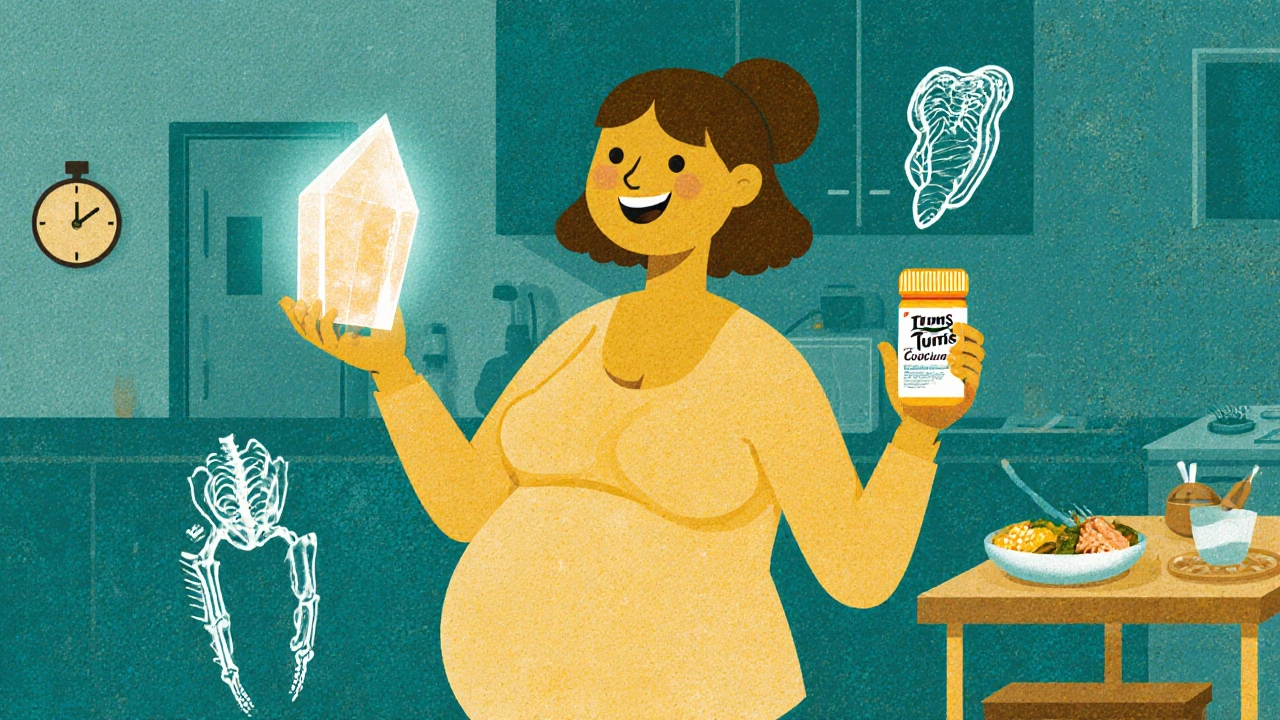
Antacids Safe in Pregnancy: What Works and What to Avoid
When you're pregnant, heartburn isn't just annoying—it can feel constant. Antacids, over-the-counter medications that neutralize stomach acid to relieve heartburn and indigestion. Also known as acid reducers, they're one of the most common remedies used by pregnant women, but not all are created equal. The good news? Many antacids are considered safe during pregnancy, especially when used as directed. But some ingredients can cross the placenta or affect nutrient absorption, so knowing what’s in your bottle matters more than ever.
Calcium carbonate, the active ingredient in Tums and other popular brands, is one of the safest choices. It works quickly, doesn’t get absorbed into the bloodstream in large amounts, and even gives you extra calcium—something your growing baby needs. Magnesium hydroxide, found in milk of magnesia, is also generally okay, but should be used sparingly in the third trimester because it can trigger premature contractions in rare cases. On the flip side, sodium bicarbonate, commonly called baking soda, is best avoided. It can cause fluid retention and raise blood pressure, which is risky during pregnancy. Aluminum-based antacids? Skip them too. They’ve been linked to lower birth weight in some studies, and aluminum can build up in your body over time.
It’s not just about the active ingredient. Some antacids come with added sugars, artificial flavors, or even aspirin or NSAIDs—ingredients you should never take while pregnant. Always check the label. If you’re unsure, talk to your doctor or pharmacist before reaching for a new bottle. Even "natural" remedies like chewing gum or drinking milk can help, but they’re not replacements for proven treatments when symptoms are severe.
What you’ll find below is a collection of real, practical guides that dig into how antacids interact with pregnancy, what alternatives exist, and how to avoid common mistakes that could affect your health—or your baby’s. You’ll see comparisons between brands, insights on dosing, and warnings about ingredients that seem harmless but aren’t. Whether you’re in your first trimester and just starting to feel the burn, or you’re in your third and struggling to sleep, these posts give you the facts you need—no fluff, no guesswork.
Learn which heartburn medications are safe during pregnancy, including antacids like Tums, H2 blockers like famotidine, and PPIs like omeprazole. Discover what to avoid and simple lifestyle changes that help.