Bleeding Risk: Understand the Causes, Medications, and How to Stay Safe
When we talk about bleeding risk, the chance that a person will experience abnormal or excessive bleeding due to medical conditions or medications. Also known as hemorrhagic risk, it’s not just about getting a cut—it’s about how your body responds when something goes wrong inside. Many people don’t realize that everyday drugs like aspirin, blood thinners, or even certain herbal supplements can turn a simple bruise into a dangerous situation. This isn’t rare—it’s common, especially in older adults or those managing chronic conditions.
Anticoagulants, medications that slow down the blood’s ability to clot. Also known as blood thinners, it includes drugs like warfarin, apixaban, and rivaroxaban. These are lifesavers for people with atrial fibrillation or deep vein thrombosis—but they also raise your bleeding risk significantly. Then there are antiplatelets, drugs that stop blood cells called platelets from sticking together. Also known as platelet inhibitors, it like clopidogrel or aspirin, often used after heart attacks or stents. Even when taken as directed, combining these with NSAIDs, alcohol, or certain supplements like fish oil or ginkgo can push your bleeding risk into dangerous territory. And it’s not just drugs—conditions like liver disease, kidney failure, or even severe vitamin K deficiency can make your blood less able to stop bleeding.
What you’ll find in these posts isn’t theory—it’s real-world guidance. You’ll learn how pharmacy warning labels, color-coded stickers, and prescription instructions are designed to protect you from hidden bleeding dangers. You’ll see how deprescribing unnecessary meds can cut your risk, how medication shortages force risky substitutions, and why older adults need special attention under the Beers Criteria. You’ll also discover how opioid nausea treatments, antiviral drugs, and even allergy meds can interact in ways that increase bleeding, often without anyone realizing it. This isn’t about scaring you—it’s about giving you the tools to ask the right questions, spot the red flags, and work with your doctor to stay safe without giving up the treatments you need.
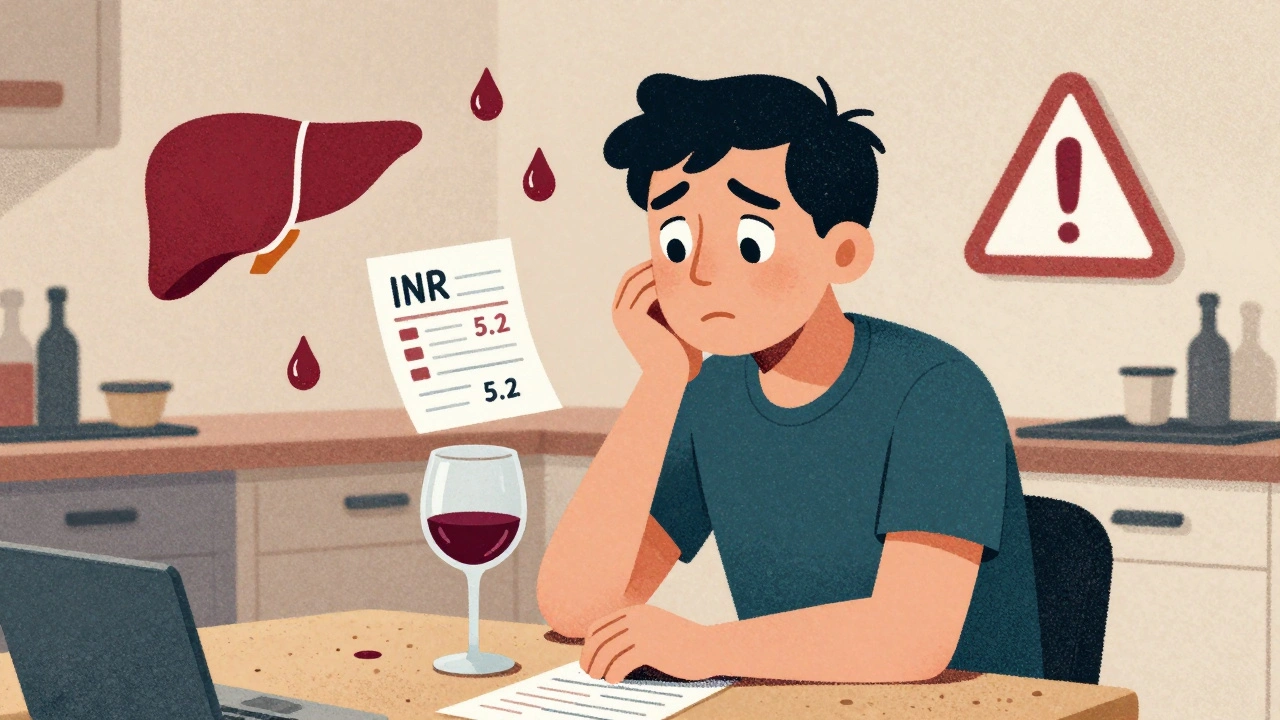
Alcohol can dangerously raise your INR levels when you're on warfarin, increasing bleeding risk. Learn how drinking affects your blood thinner, what safe limits are, and what to do if your INR spikes.