
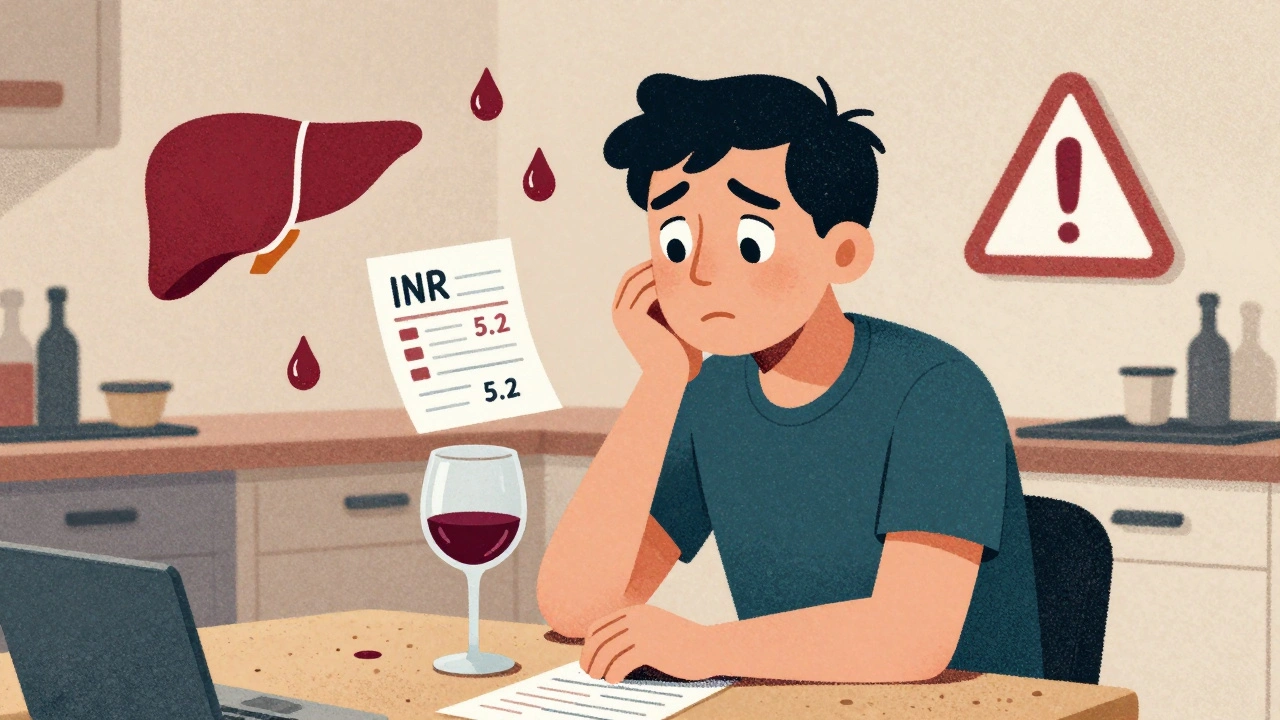
INR Risk Calculator for Warfarin Patients
This tool estimates how alcohol consumption may affect your INR levels and bleeding risk while taking warfarin. Remember: every 0.5-point increase above your target INR raises bleeding risk by 30-50%.
When you're on a blood thinner like warfarin, even a small change in your routine can throw your blood off balance. One of the most common, yet often misunderstood, triggers? Alcohol. It’s not just about getting drunk - it’s about how alcohol interacts with your medication in ways that can turn a routine night out into a medical emergency.
What Happens When Alcohol Meets Warfarin?
Warfarin, sold under the brand name Coumadin, has been the go-to blood thinner for over 70 years. It works by blocking vitamin K, which your body needs to make clotting factors. Too little clotting, and you bleed. Too much, and you risk clots, strokes, or heart attacks. The balance is razor-thin. That’s where INR comes in. INR - International Normalized Ratio - is the number doctors use to measure how long it takes your blood to clot. For someone not on blood thinners, it’s around 1.0. If you’re on warfarin, your target range is usually between 2.0 and 3.0. For some conditions, like a mechanical heart valve, it might go up to 3.5. But if your INR climbs above 3.5, your bleeding risk starts shooting up. And alcohol? It can push it there - fast. Alcohol doesn’t just make warfarin stronger. It messes with how your liver breaks down the drug. One night of heavy drinking can slow down warfarin metabolism, making it build up in your system. The result? Your INR spikes. One patient in the UK saw his INR jump from 2.8 to 5.2 after six pints of beer. That’s not an outlier. It’s a pattern.Why INR Fluctuations Are Dangerous
Every 0.5-point rise in INR above your target increases your bleeding risk by 30 to 50%. That means if your INR goes from 3.0 to 3.5, your risk of internal bleeding goes up nearly half. If it hits 9.0 - which can happen after binge drinking - the chances of serious bleeding are over 35% in hospitalized patients. And 17% of those patients don’t survive. It’s not just about the number. It’s about what happens next. High INR doesn’t always mean you’ll bleed. But when you do, it’s often sudden and severe: blood in your urine, black or tarry stools, vomiting blood, nosebleeds that won’t stop, or even a brain bleed from a minor bump. The British Heart Foundation warns that even moderate alcohol use can increase bleeding risk by interfering with how warfarin is processed.Alcohol Isn’t the Only Culprit - Genetics Play a Role Too
Not everyone reacts the same way to alcohol on warfarin. Your genes matter. Studies from the NIH found that people with specific variants in the CYP2C9 and VKORC1 genes break down warfarin slower. When these people drink, their INR spikes more dramatically. One study showed a statistically significant link between these genetic markers and major bleeding events when alcohol was involved. This isn’t theoretical. It’s why two people can have the same drink, same dose of warfarin, and one ends up in the ER while the other doesn’t. If you’ve been on warfarin for over a year and notice your INR swings after drinking, it might not be about how much you drank - it might be about your DNA.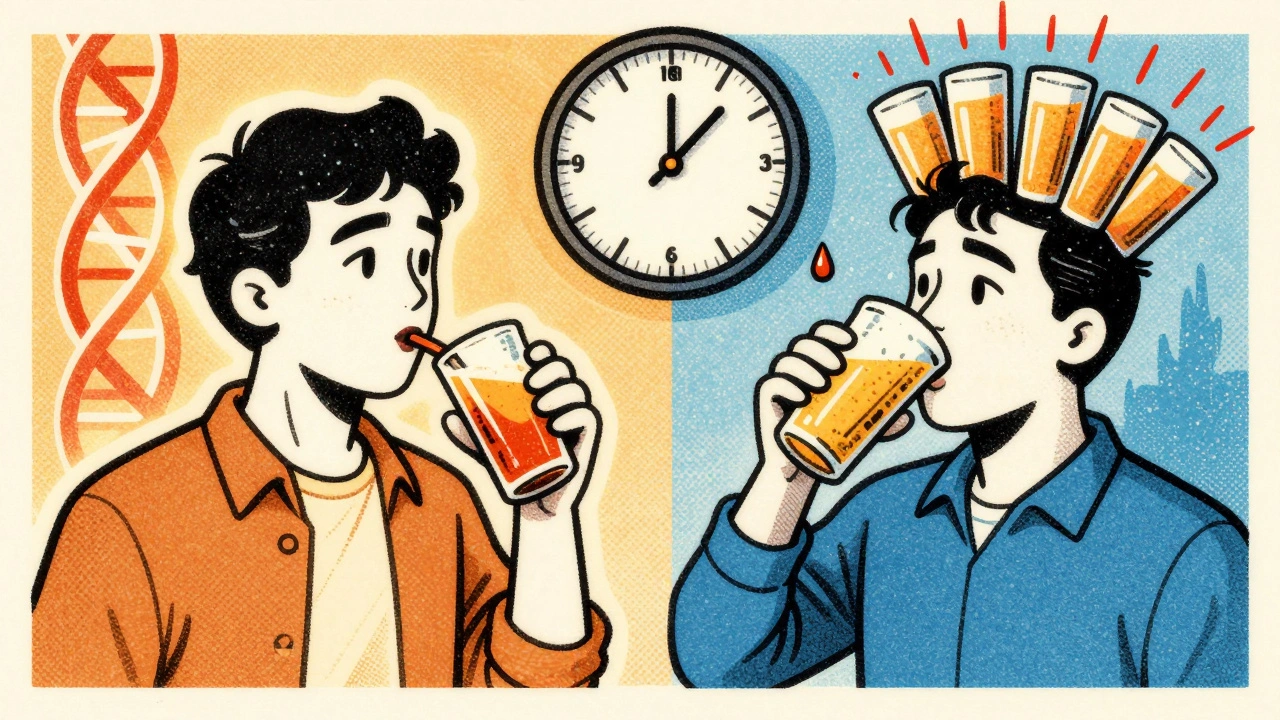
What Counts as ‘Safe’ Drinking?
The NHS and the British Heart Foundation agree: you don’t have to quit alcohol completely. But you need to be smart about it. The UK Chief Medical Officers recommend no more than 14 units of alcohol per week - that’s about six pints of beer or six 175ml glasses of wine. Spread it out. Don’t save it all for Friday. Binge drinking - four or more drinks in one sitting - is the real danger. It causes wild INR swings that are hard to predict or control. A 2023 Reddit thread from people on warfarin had dozens of posts with the same story: “I had 3 glasses of wine on Saturday. My INR went from 2.4 to 3.8 on Monday.” Their doctors didn’t blame them for drinking - they blamed the pattern. Consistency is key. If you drink, drink the same amount, on the same days, every week. That helps your doctor adjust your dose accurately.What About Newer Blood Thinners?
If you’re on a DOAC - like apixaban (Eliquis), rivaroxaban (Xarelto), or dabigatran (Pradaxa) - you might think you’re off the hook. And you’re partly right. These drugs don’t interact with alcohol the same way warfarin does. They don’t rely on vitamin K, and they don’t need regular INR checks. But that doesn’t mean you’re safe. Heavy drinking still increases bleeding risk on its own. Alcohol thins your blood, irritates your stomach lining, and can cause falls or injuries. Combine that with a drug that prevents clotting, and even a small cut can turn dangerous. Plus, if you bleed badly, there’s no easy way to reverse DOACs like there is with vitamin K for warfarin. So while DOACs are more predictable, alcohol is still a risk factor. The message stays the same: moderation matters.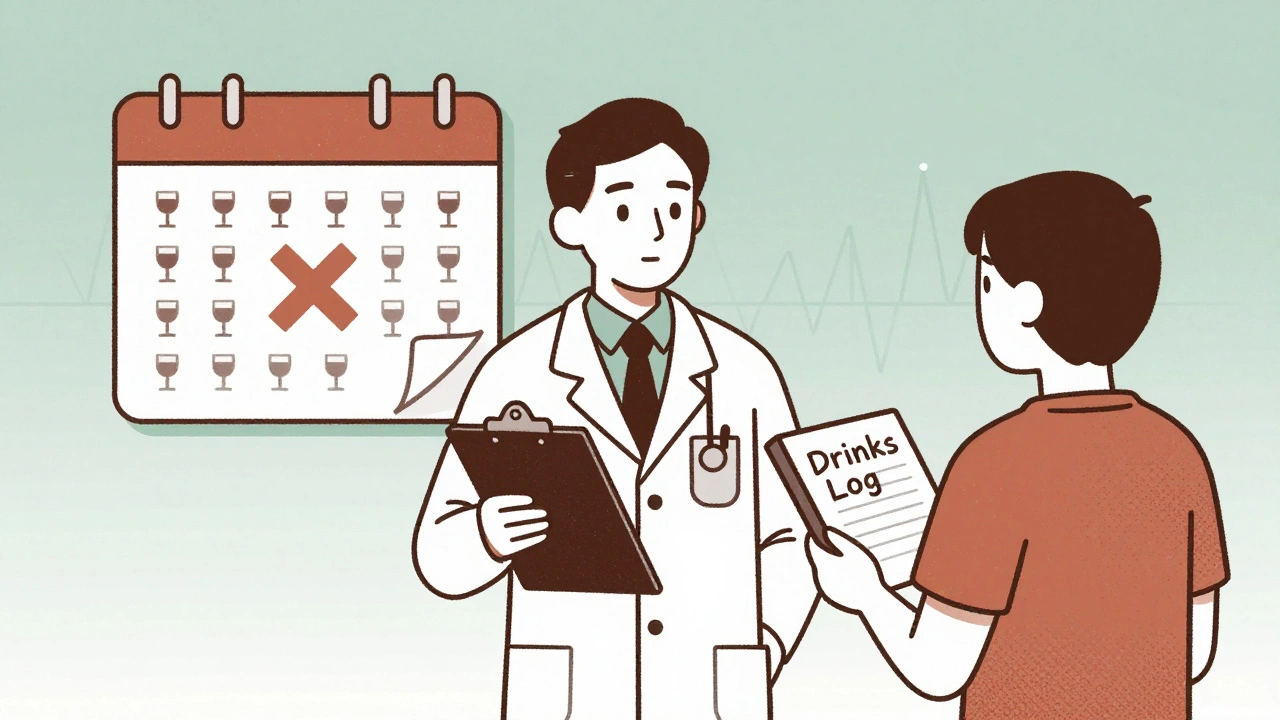
Red Flags: When to Call Your Doctor
You don’t need to panic every time you have a drink. But you need to know the warning signs:- Red or brown urine
- Black, tarry, or bright red stools
- Bleeding gums or nosebleeds that won’t stop
- Unusual bruising without injury
- Heavier-than-normal menstrual bleeding
- Vomiting blood - brown like coffee grounds or bright red
- Severe headache, dizziness, or confusion (could mean brain bleed)
Managing Alcohol and Warfarin: Practical Tips
Here’s what works for people who need to stay on warfarin but still want to enjoy an occasional drink:- Stick to the limit: No more than 14 units a week. That’s about one drink a day, max.
- Avoid binge drinking: Even one night of heavy drinking can spike your INR.
- Be consistent: If you drink, drink the same amount on the same days each week. This helps your doctor predict your INR.
- Get your INR checked: If you’ve had more than your usual alcohol in the past week, tell your clinic. They may want to test your INR sooner.
- Track your drinks: Use a simple app or journal. Write down what, when, and how much. Bring it to your appointments.
- Know your genetics: If you’ve had unexplained INR swings, ask about genetic testing for CYP2C9 and VKORC1 variants.
What’s New in 2025?
In 2023, the FDA approved andexanet alfa as a reversal agent for certain DOACs - a big step forward. But warfarin still relies on vitamin K or plasma infusions to reverse bleeding. That’s slower and less reliable. Meanwhile, telehealth programs are now offering specialized warfarin management, including alcohol counseling. One study showed a 25% drop in INR-related emergencies among patients who got regular coaching on drinking habits. The bottom line? Alcohol and warfarin can coexist - but only if you treat it like a controlled variable, not a free pass. Your INR is your lifeline. Don’t let a drink mess with it.Can I drink alcohol while taking warfarin?
Yes, but only in moderation. Stick to no more than 14 units of alcohol per week, spread over three or more days. Avoid binge drinking - even one heavy night can spike your INR and increase bleeding risk. Consistency matters more than occasional drinking.
Does alcohol raise or lower INR?
Alcohol can do both, but it usually raises INR. Heavy or binge drinking slows how your liver breaks down warfarin, causing it to build up in your blood. This makes your blood thinner and increases your INR. Even moderate drinking can cause unpredictable swings, which is why consistency is key.
How long after drinking alcohol should I wait to check my INR?
Wait at least 48 to 72 hours after your last drink before getting an INR test. Alcohol’s effect on warfarin can last a couple of days. Testing too soon may give a false reading. If you’ve had more than usual, tell your clinic - they may want to test sooner.
Is it safer to use DOACs instead of warfarin if I drink alcohol?
DOACs like Eliquis or Xarelto have fewer interactions with alcohol than warfarin, so they’re more predictable. But they don’t eliminate bleeding risk. Heavy drinking still increases your chance of bleeding, and unlike warfarin, there’s no easy way to reverse DOACs in an emergency. So moderation is still essential.
What should I do if my INR is too high after drinking?
If your INR is above 5.0 or you have signs of bleeding (bruising, blood in urine, nosebleeds), contact your doctor immediately. For INR above 9.0, emergency treatment like plasma infusion may be needed. Never stop your warfarin on your own - this can cause clots. Your doctor will adjust your dose and may recommend vitamin K or plasma.
Can I drink alcohol if I’ve been on warfarin for years?
Long-term use doesn’t make you immune to alcohol’s effects. In fact, people on warfarin for over a year with certain genetic variants are at higher risk of bleeding when they drink. Your body’s ability to process alcohol and warfarin doesn’t improve over time - so stick to the same limits no matter how long you’ve been on the medication.



Victoria Graci
It’s wild how something as simple as a glass of wine can turn into a biological earthquake inside your body. I used to think alcohol was just a social lubricant - turns out it’s more like a rogue algorithm rewriting your liver’s code. Warfarin doesn’t care if you’re ‘just having one’ - your DNA does. And if you’ve got those CYP2C9 variants? You’re basically playing Russian roulette with a teaspoon of ethanol.
It’s not about fear. It’s about respect. Like handling a live wire with bare hands and thinking, ‘I’ve done this a hundred times.’ But your body doesn’t remember - it just reacts. And when it does? It doesn’t ask permission.