
More than 9 out of 10 prescriptions filled in the U.S. are for generic drugs. Yet, many patients still hesitate to take them. Why? Because they don’t understand what generics really are. They see a pill that looks different-smaller, cheaper, maybe a different color-and assume it’s not the same. That’s where infographics about generics come in. They turn confusing science into clear pictures that patients actually understand.
What Makes a Generic Drug the Same?
It’s not magic. It’s science. Generic drugs contain the exact same active ingredient as the brand-name version. Same molecule. Same dose. Same way it works in your body. The FDA requires them to be bioequivalent-meaning they deliver the same amount of medicine into your bloodstream at the same speed. No more, no less.
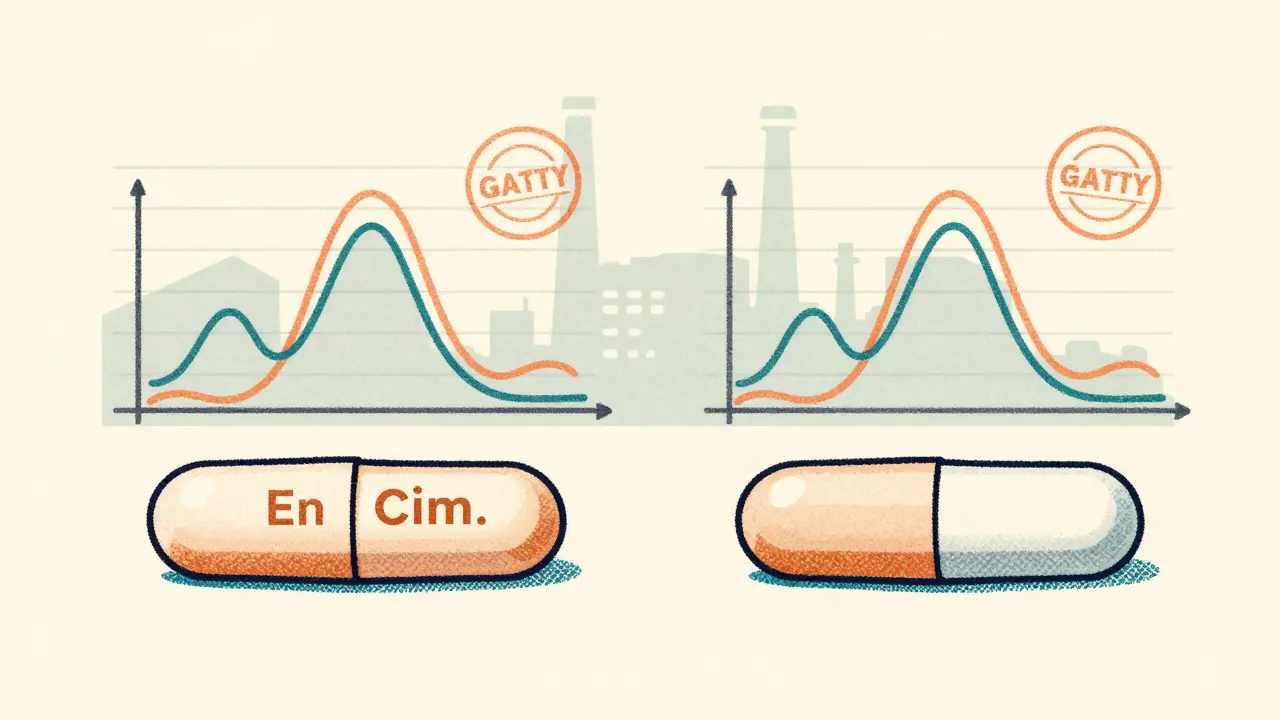
Infographics break this down visually. One popular FDA graphic shows two pills side by side. One is the brand name, the other the generic. Below them, matching graphs show how the medicine enters the blood over time. The lines overlap almost perfectly. That’s bioequivalence. In FDA testing, 89% of patients understood this concept just from the graphic. No jargon. No fine print. Just two lines that prove they work the same.
What about the color? The shape? The name on the pill? Those are inactive ingredients. They don’t affect how the drug works. They’re just there to make the pill easier to swallow or distinguish. But patients worry. They think a different shape means a weaker drug. Infographics tackle this head-on. They show a pill factory-same active ingredient, same quality control, same testing. Only the packaging changes.
Why Do People Still Doubt Generics?
It’s not about the science. It’s about trust. A 2021 FDA survey found that 43% of patients worried generics weren’t as effective. Among Black and Hispanic patients, that number was even higher-over 30%. Why? Because they’ve seen stories online. Or a friend said their generic didn’t work. Or they were told, "You get what you pay for."
Infographics don’t just explain-they reassure. They show the FDA’s approval process step by step. How every generic must pass the same tests as the brand name. How the FDA inspects manufacturing plants-same ones, sometimes. How post-market surveillance tracks side effects in real time, no matter the brand.
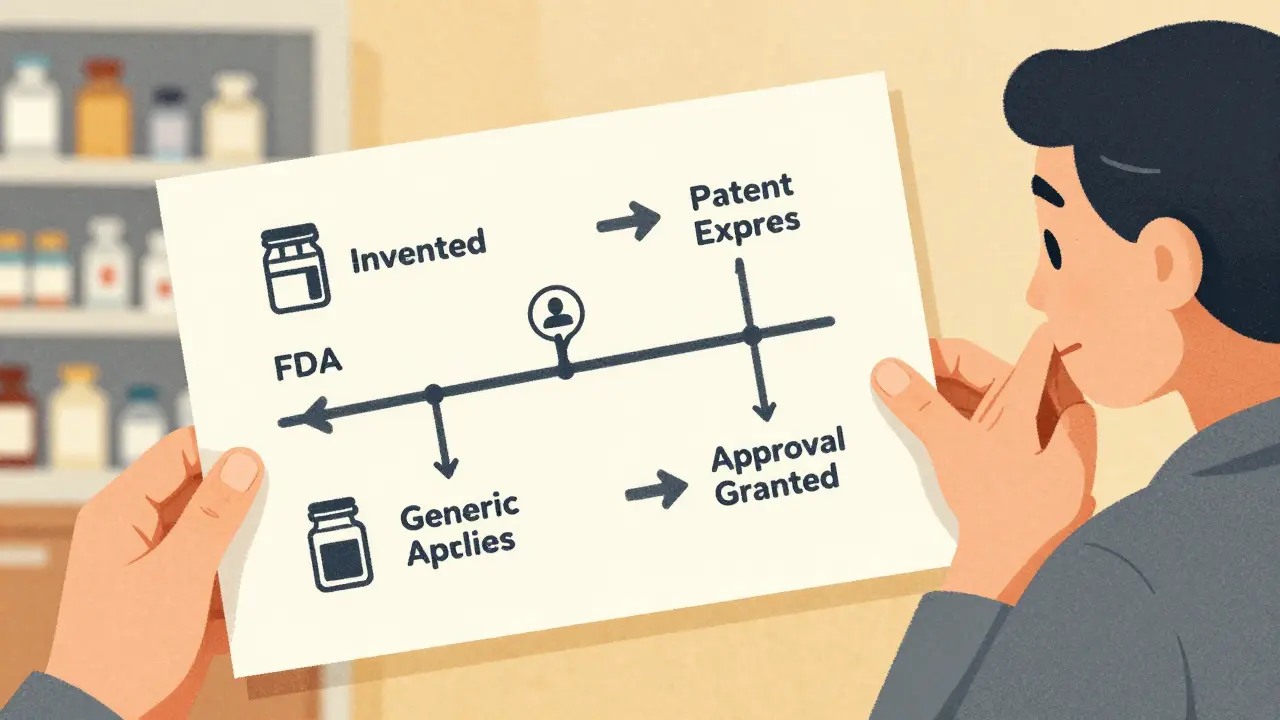
One infographic, "What Makes a Generic the Same as a Brand-Name Drug?", uses a simple timeline: Drug invented → Patent expires → Generic company applies → FDA reviews → Approval granted. It’s clear. It’s short. And it answers the question patients whisper to pharmacists: "Is this really the same?"
How Do These Infographics Actually Help?
At Kaiser Permanente clinics in Southern California, pharmacists started printing and handing out FDA infographics during consultations. Within months, patient refusals of generic substitutions dropped by 63%. Why? Because patients weren’t just told-they were shown.
One pharmacist on Reddit said: "I’ve printed this and keep it behind the counter. Cuts counseling time in half for generic questions." That’s the power of a visual. A patient sees the matching blood level graphs, nods, and says, "Okay, I’ll take it." No argument. No fear.
Doctors notice it too. The American Medical Association rated FDA generic infographics 4.7 out of 5 for helping explain substitution to patients. One doctor said, "I used to spend 10 minutes convincing someone. Now I hand them the graphic. They read it. They get it. We move on."
But it’s not just about saving time. It’s about money. Generics saved the U.S. healthcare system $1.68 trillion between 2010 and 2019. That’s billions in savings for families, insurers, and taxpayers. When patients choose generics, everyone wins.
Who Makes These Infographics-and Are They All the Same?
The FDA leads the pack. Their infographics are standardized, tested with real patients, and available in Spanish. They’re designed for an 8th-grade reading level. They use high-contrast colors so they’re readable for older eyes. And they include alt text for screen readers-because accessibility isn’t optional.
Other groups like the GTMRx Institute and BeMedWise also make infographics. But they’re different. GTMRx focuses on how generics fit into broader medication management-useful for clinicians. BeMedWise ties them to pill logs and trackers. But only the FDA covers the full picture: science, safety, cost, and equity.
Here’s the catch: most infographics ignore a big problem. Minority patients are more likely to distrust generics. Only one FDA graphic-"Generic Drugs and Health Equity Handout"-directly addresses this. It shows how generics make life-saving drugs affordable for people on fixed incomes, in rural areas, or without good insurance. That’s not just education. That’s justice.
What’s Missing-and What’s Coming Next?
Not all generics are created equal when it comes to safety. For drugs like warfarin or levothyroxine, tiny changes in how the body absorbs the medicine can matter. Some experts warn that current infographics oversimplify this. They don’t show which drugs need extra care.
The Institute for Safe Medication Practices says infographics should include a visual flag for these high-risk drugs. Right now, they don’t. That’s a gap.
But things are changing. In March 2023, the FDA updated its main infographic with new numbers: generics now save $313 billion a year. In January 2023, GTMRx launched interactive versions where patients input their meds and get a personalized risk score. And by 2024, the FDA plans to roll out augmented reality features. Point your phone at a pill bottle, and a 3D model pops up-showing how the brand and generic molecules match.
These aren’t just pretty pictures. They’re tools that save lives, cut costs, and build trust. And they’re working.
How to Use These Infographics in Real Life
You don’t need a degree to use them. Here’s how:
- At the pharmacy: Ask for the FDA’s "What Makes a Generic the Same as a Brand-Name Drug?" infographic. Keep it in your wallet or phone.
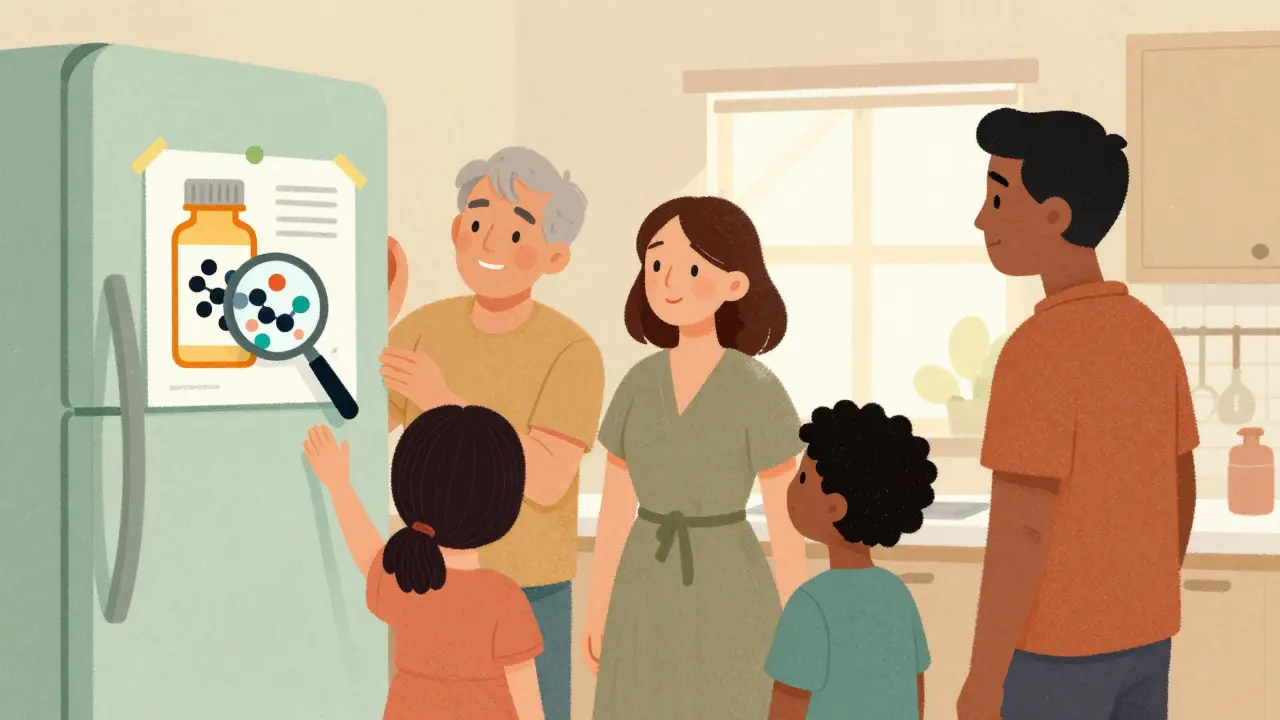
- At home: Print it. Put it on the fridge. Show it to family members who are skeptical.
- With your doctor: Bring it to your next visit. Say, "I read this. Can we talk about whether my prescription is one of the ones that needs extra care?"
- For caregivers: Use it to explain to elderly parents why switching to a generic isn’t a compromise-it’s a smart choice.
The FDA offers these for free. No login. No cost. Just go to fda.gov/generics and download them. They’re made for you-not for doctors, not for regulators. For the person holding the pill bottle wondering if it’s good enough.
Why This Matters More Than Ever
Healthcare costs are rising. Insurance deductibles are higher. More people are choosing generics-not because they have to, but because they finally understand they can.
Infographics about generics are changing that. They turn fear into facts. Confusion into clarity. And skepticism into confidence. They’re not flashy. They’re not viral. But they’re working.
Every time someone picks up a generic pill without hesitation, it’s because someone showed them the truth in a way they could see.
Are generic drugs really as good as brand-name drugs?
Yes. Generic drugs must meet the same strict standards as brand-name drugs. They contain the same active ingredient, work the same way in your body, and are tested to prove they’re bioequivalent. The FDA requires them to be just as safe and effective. The only differences are in color, shape, or inactive ingredients-none of which affect how the medicine works.
Why do generic pills look different from brand-name ones?
By law, generic drugs can’t look exactly like the brand-name version. That’s to avoid trademark issues. The color, shape, or markings are changed, but the active ingredient is identical. Think of it like two different brands of aspirin-they might look different, but they both contain acetylsalicylic acid. The difference is only in appearance, not effect.
Can I trust generics if they’re so much cheaper?
Absolutely. Generics are cheaper because their manufacturers don’t have to repeat expensive clinical trials. The original drug company already proved the medicine works. Generic makers just need to prove their version acts the same in your body. That’s why they cost less-because they’re not paying for marketing or research, not because they’re lower quality.
Do generics take longer to work?
No. FDA testing shows that generics enter your bloodstream at the same rate and to the same level as brand-name drugs. Infographics often show this with matching graphs of blood concentration over time. If the lines overlap, the timing is the same. Any delay you feel is likely due to your body’s natural variation-not the drug.
Are there any drugs I should avoid switching to generic?
For most drugs, switching is safe. But for a small number-like warfarin, levothyroxine, or some seizure meds-tiny differences in absorption can matter. These are called narrow therapeutic index drugs. If you take one of these, talk to your doctor or pharmacist. They’ll tell you if your situation requires sticking with one version. Most infographics don’t highlight this yet, so it’s important to ask.
Where can I get these infographics?
The FDA offers all their generic drug infographics for free on their website at fda.gov/generics. They’re available as downloadable PDFs, in English and Spanish, and optimized for printing or viewing on phones. Many pharmacies and clinics also have printed copies available in waiting rooms.


Paula Villete
Okay but let’s be real-how many of us have been handed a generic pill and immediately thought, ‘Wait, is this the same thing?’ I’ve done it. I’ve stared at it like it’s a foreign object. Then I saw that FDA graphic with the overlapping blood curves and thought… huh. Turns out my body can’t tell the difference. And my wallet sure can.
Also, the fact that they’re designed for 8th-grade reading level? Genius. Not because we’re dumb, but because medicine shouldn’t require a PhD to understand.
Also also-why isn’t this on every pharmacy counter? Like, right next to the hand sanitizer? Someone’s sleeping on this.
Also also also-can we make this a meme? ‘When you realize your $3 generic is just as good as your $40 brand-name’? I’d share it.
Also also also also-thank you for writing this. I needed this today.