
Diarrhea Severity Checker
Assess Your Symptoms
This tool helps identify diarrhea severity based on medical guidelines. Always consult your healthcare provider.
Diarrhea Severity
Next Steps
Important: This tool provides general guidance only. Always consult your healthcare provider for personalized medical advice.
When you're taking medication to treat one health issue, the last thing you expect is to end up with another - especially something as disruptive and uncomfortable as diarrhea. But it happens more often than you think. Medication-induced diarrhea isn't just a minor inconvenience. For many people on chemotherapy, antibiotics, or immunotherapy, it can become a serious medical problem that leads to hospital visits, treatment delays, or even life-threatening complications.
Think about it: if you're undergoing cancer treatment, every day counts. A single episode of severe diarrhea might force your doctor to pause your therapy. That delay can reduce your chances of recovery. Or if you're on antibiotics for a simple infection, diarrhea could mean you're dealing with a secondary infection like Clostridioides difficile - a bug that's hard to treat and even harder to prevent. This isn't just about stomach upset. It's about your overall health, safety, and ability to stick to your treatment plan.
What Causes Medication-Induced Diarrhea?
Not all diarrhea is the same. Medication-induced diarrhea comes from specific drugs that interfere with how your gut works. The most common culprits are:
- Chemotherapy drugs - especially 5-fluorouracil and irinotecan. Up to 80% of patients on these drugs experience diarrhea, and about 1 in 4 develop severe cases.
- Antibiotics - they kill off good bacteria in your gut, letting bad ones take over. This is why C. difficile infections are so common after antibiotic use.
- Immunotherapy - drugs like pembrolizumab or nivolumab can trigger inflammation in the colon, leading to watery stools and cramping.
- Other medications - including metformin (for diabetes), SSRIs (for depression), and even some supplements like magnesium.
What makes this tricky is that the same drug might cause mild diarrhea in one person and severe, dangerous diarrhea in another. Genetics, age, existing gut health, and other medications all play a role. For example, people with a specific genetic variation in the UGT1A1 gene are far more likely to get severe diarrhea from irinotecan. That’s why doctors are now starting to test for this before treatment begins.
How Bad Is It? The Grading System
Doctors don’t just say "you have diarrhea." They grade it - and the grade determines what you do next. Here’s how it breaks down:
- Grade 1: You have 1-3 more bowel movements than normal per day. No dehydration. No hospitalization needed.
- Grade 2: 4-6 bowel movements a day. May need to miss work or school. Some dehydration.
- Grade 3: 7 or more bowel movements a day. Incontinence. Hospitalization required.
- Grade 4: Life-threatening. Requires urgent care. Could mean sepsis or organ failure.
Here’s the scary part: if you wait too long to act, grade 1 can turn into grade 3 in less than 24 hours. That’s why timing matters more than you think.
First-Line Treatment: Loperamide
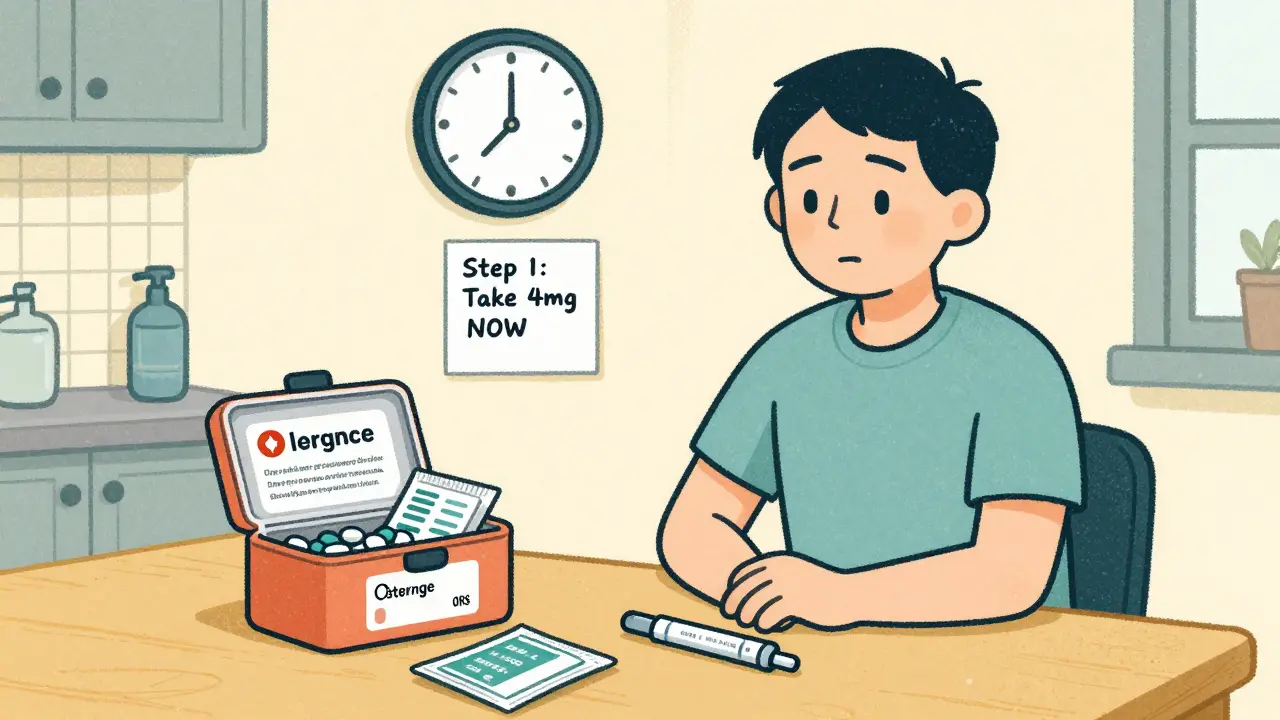
If you start having loose stools while on chemotherapy or another high-risk medication, the first thing you should do is take loperamide - and don’t wait. The standard advice? Take 4 mg right away. Then, take 2 mg after every loose stool, up to a maximum of 16 mg per day (or 24 mg for irinotecan patients).
Why loperamide? Because it works fast. It slows down your gut, letting your body absorb more water. Studies show it stops diarrhea in 60-75% of grade 2 cases. But it’s not magic. If you don’t start within 24 hours of the first loose stool, your chances of avoiding hospitalization drop by more than half.
Here’s a real-world tip from patients: keep loperamide pills in your purse, your car, and next to your bed. Don’t wait until you’re in a panic to find them. Set alarms on your phone to remind you to take doses every 4 hours. Missing one dose can mean the difference between managing it at home and ending up in the ER.
When Loperamide Isn’t Enough: Octreotide
What if you’ve taken loperamide every 4 hours for a full day and you’re still having 7+ bowel movements? Then it’s time for the next step: octreotide.
This is a hormone-like drug given by injection under the skin. It’s not a first-choice drug because it’s more expensive and requires training. But for severe cases, it’s the most effective tool doctors have. Studies show it works in 60-95% of grade 3-4 cases - far better than loperamide alone.
Patients often complain about the injections - they can sting and leave bruising. But here’s what experienced patients say: "Pre-mix the dose the night before. Store it in the fridge. That way, when you’re too tired or nauseous to handle it, your partner or caregiver can give it without fumbling." Some even use a small pen device that makes the injection less painful.
Doctors recommend starting octreotide within 4 hours of severe diarrhea to cut hospitalization risk by 35%. Delaying it means you’re more likely to need IV fluids, longer stays, and possibly a treatment delay.
What About Antibiotic-Induced Diarrhea?
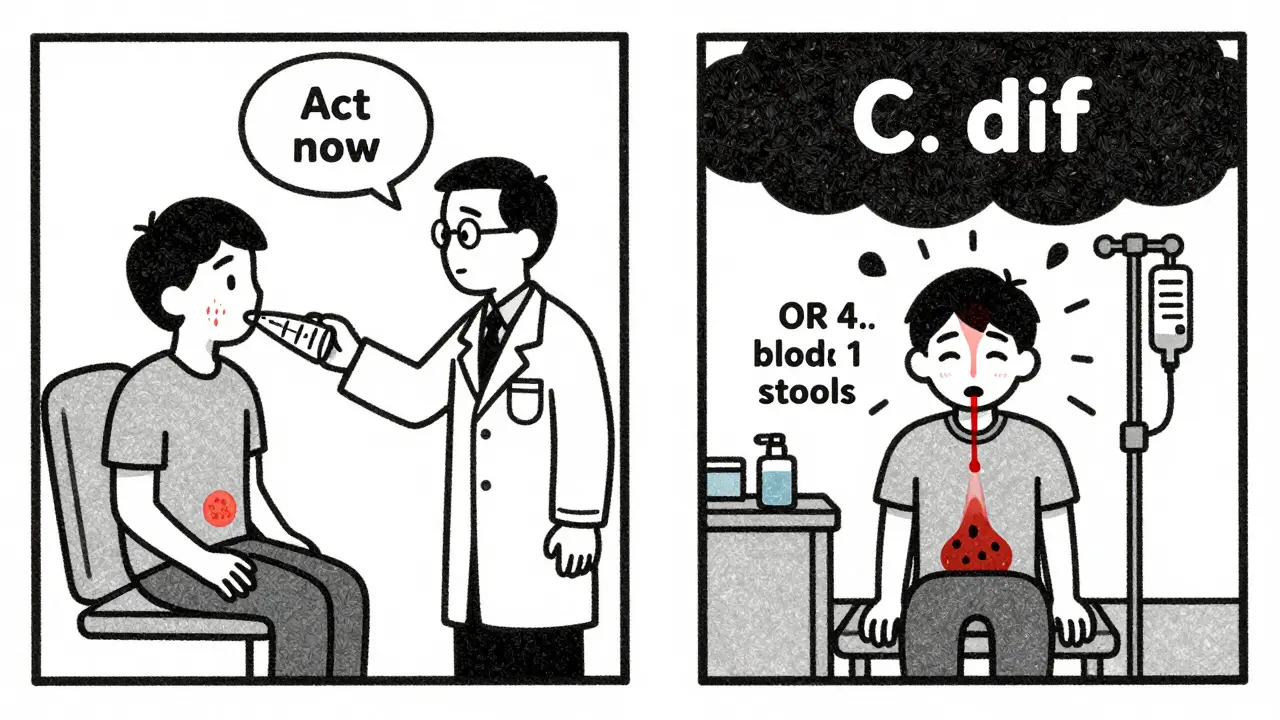
If you got diarrhea after taking an antibiotic, the rules change completely. Don’t reach for loperamide. Why? Because if it’s caused by C. difficile, slowing down your gut could trap toxins and lead to toxic megacolon - a life-threatening condition.
Instead, the first step is testing. If you have fever, bloody stools, or diarrhea lasting more than 48 hours after antibiotics, your doctor should test for C. difficile. If it’s positive, you’ll likely get vancomycin - 125 mg four times a day for 10 days. It’s expensive (around $1,200 for a full course), but it cures 97% of cases. Metronidazole, which used to be the go-to, is now only used if vancomycin isn’t available.
Probiotics? Maybe. The American Gastroenterological Association says they cut the risk of antibiotic diarrhea by half. But only two strains matter: Lactobacillus rhamnosus GG and Saccharomyces boulardii. Other probiotics? They don’t help. And they’re not regulated - so don’t assume your store-bought yogurt or supplement will do anything.
Non-Drug Strategies That Actually Work
Medication isn’t the only tool. What you eat and drink matters just as much.
- Hydration is critical. Use oral rehydration solutions (ORS) with 75 mmol/L sodium, 75 mmol/L glucose, and 20 mmol/L potassium. These aren’t just sports drinks - they’re specially formulated. One packet mixed in 200 mL of water is enough for one dose. Drink one every 2-4 hours.
- Avoid dairy and fatty foods. Your gut can’t digest them well when it’s inflamed. Stick to bananas, rice, applesauce, toast - the BRAT diet. It’s simple, but it works.
- Track your stools. Use a notebook or phone app to count how many times you go each day. This helps your doctor decide if you need to change treatment.
- Don’t use bismuth subsalicylate (Pepto-Bismol) if you’re on blood thinners or have kidney issues. It contains aspirin-like compounds that can be dangerous.
What You Should Never Do
There are dangerous myths out there. Don’t fall for them.
- Don’t delay treatment. Waiting 24 hours to start loperamide triples your risk of severe diarrhea.
- Don’t use antimotility drugs (like loperamide) if you have fever or bloody stools. It could be C. difficile - and those drugs can kill you.
- Don’t take more than the maximum daily dose of loperamide. Overdosing can cause heart rhythm problems. 24 mg is the absolute limit - even if you’re still having diarrhea.
- Don’t ignore signs of dehydration. Dry mouth, dizziness, dark urine, or confusion? That’s not normal. Call your doctor.

What’s New in 2026?
Things are changing fast. In 2023, the FDA approved a new drug called onercept - a treatment that helps repair the gut lining. In trials, it cut severe diarrhea by 63%. It’s still being rolled out, but it’s already being used in major cancer centers.
Also in 2024, ASCO updated its guidelines to recommend neomycin as a preventive step for high-risk patients on irinotecan. Taking it for two days before chemo cuts diarrhea risk from 65% down to 32%.
And look ahead: scientists are testing microbiome transplants - like SER-109 - to prevent recurring diarrhea from antibiotics. It’s already approved for C. difficile and shows promise for other types of medication-induced diarrhea.
What Patients Are Saying
Real people have been through this. One woman on chemotherapy told her nurse: "I didn’t know what to do until I got the step-by-step sheet from my oncology nurse. Now I keep loperamide, ORS packets, and my injection kit in a labeled bag by my bed. I don’t panic anymore. I act."
Another patient on antibiotics said: "I thought Pepto-Bismol would help. It made things worse. I ended up in the ER. Now I know: if I’m on antibiotics and have diarrhea, I call my doctor - no matter how small it seems."
Studies show patients who use clear management tools - like checklists, visual guides, or apps - cut their risk of hospitalization by 45%. Knowledge isn’t just power. It’s protection.
When to Call Your Doctor
Here’s a simple rule: if you’re on a high-risk medication and you have diarrhea, follow this checklist:
- Take loperamide 4 mg right away.
- Drink ORS every 2-4 hours.
- Stop dairy and fatty foods.
- Call your doctor if: diarrhea lasts more than 24 hours, you have 4+ loose stools in a day, you have fever, or you feel dizzy or weak.
- For severe cases (7+ stools/day), your doctor should consider octreotide within 4 hours.
You don’t have to suffer through this alone. The tools exist. The guidelines are clear. The key is acting fast - before it gets worse.
Can loperamide be used for all types of medication-induced diarrhea?
No. Loperamide is effective for chemotherapy-induced and most drug-related diarrhea, but it’s dangerous if the cause is Clostridioides difficile (C. diff) infection. Using loperamide in C. diff cases can trap toxins in the colon, leading to toxic megacolon - a life-threatening condition. Always rule out infection if you have fever, bloody stools, or diarrhea lasting more than 48 hours after antibiotics. Testing for C. diff is essential before starting antimotility drugs.
How soon should I start loperamide after my first loose stool?
Start loperamide immediately - within the first hour of noticing a loose stool. Delaying treatment by even 24 hours increases your risk of progressing to severe (grade 3-4) diarrhea by 3.2 times. The American Society of Clinical Oncology recommends taking 4 mg right away, followed by 2 mg after each loose stool, up to a maximum of 16 mg per day (24 mg for irinotecan patients). Early action prevents hospitalization and keeps your treatment on track.
Is octreotide painful to use, and are there alternatives?
Octreotide is given as a subcutaneous injection, which can cause brief stinging or bruising at the injection site. Many patients report discomfort, but it’s manageable. Pre-mixing the dose ahead of time, storing it in the fridge, and using a small pen injector can reduce pain. Alternatives include continuous octreotide infusion (via pump) if bolus doses aren’t working, or newer drugs like onercept (approved in 2023), which helps repair the gut lining. However, octreotide remains the gold standard for severe, refractory diarrhea, with response rates of 60-95% in grade 3-4 cases.
Can probiotics prevent medication-induced diarrhea?
Only two probiotic strains have strong evidence: Lactobacillus rhamnosus GG and Saccharomyces boulardii. These can reduce the risk of antibiotic-associated diarrhea by about 50%. Other probiotics - including most store-bought yogurts - show no benefit. The American Gastroenterological Association supports their use for prevention, but only if taken daily during antibiotic treatment. They don’t treat active diarrhea. Always check the label to confirm the strain and dose.
What should I do if I’m on chemotherapy and develop diarrhea?
Follow a clear, step-by-step plan: 1) Take 4 mg of loperamide immediately. 2) Drink oral rehydration solution (75 mmol/L sodium, 75 mmol/L glucose, 20 mmol/L potassium) every 2-4 hours. 3) Avoid dairy, fatty foods, and caffeine. 4) Track stool frequency. 5) Call your oncology team if diarrhea continues past 24 hours, exceeds 4 stools/day, or if you have fever, blood in stool, or dizziness. Do not delay - early intervention prevents hospitalization and keeps your treatment on schedule. Many cancer centers provide visual guides or apps to help patients manage this.


Full Scale Webmaster
Look, I've been through chemo three times and let me tell you something - loperamide is NOT a magic bullet. I had this one nurse who told me to take 4mg right away and I did, but then I got hit with a grade 3 bout because I didn’t realize my gut was already shredded from the last cycle. You can’t just throw pills at a systemic issue. The real problem? Doctors treat diarrhea like it’s a glitch, not a symptom of a body in full meltdown mode. And don’t even get me started on octreotide - I had to inject myself while vomiting in a hotel bathroom at 3am because my caregiver was asleep. No one tells you how much of this is just survival theater. Also, that ‘onercept’ thing? Sounds like a pharmaceutical marketing stunt. I’ve seen too many ‘breakthroughs’ that cost $20k and don’t work for people like me. This whole guide reads like a brochure from a hospital that doesn’t actually treat patients - just case numbers.
Also, why are we still using ‘BRAT diet’ like it’s 1998? Bananas? Really? My gut can’t even handle a banana anymore. I eat mashed sweet potatoes and bone broth. That’s what works. Not some outdated folk remedy.