Clinic Closures: What Happens When Your Local Pharmacy or Doctor’s Office Shuts Down
When a clinic closure, the permanent shutdown of a medical or pharmacy facility that serves a local community. Also known as healthcare facility shutdown, it leaves patients without access to prescriptions, chronic disease management, and urgent care. This isn’t just an inconvenience—it’s a health emergency for people who rely on daily meds, regular checkups, or same-day refills. In rural towns and even some urban neighborhoods, clinic closures are rising fast, and the ripple effects hit hardest for seniors, low-income families, and those with chronic conditions like diabetes, heart disease, or gout.
These shutdowns don’t happen in a vacuum. They’re tied to drug shortages, when essential medications like antibiotics, insulin, or pain relievers become unavailable across multiple pharmacies. When a clinic closes, it’s often because the pharmacy that supplied its patients can’t get enough stock. Or the doctor’s office shut down because insurers won’t pay enough to cover staff. That means your next refill might not be there, your blood pressure check might be delayed, or your thyroid med could be replaced with a less effective generic. And if you’re on something like warfarin or immunosuppressants, even a few days without your drug can be dangerous. medication access, the ability to reliably obtain prescribed drugs without long delays or financial hardship. That’s the real casualty when clinics vanish.
It’s not just about finding a new doctor. It’s about knowing what to do next. You need backup plans: how to transfer records, where to get emergency refills, how to spot fake online pharmacies, and when to push back if your new provider tries to cut your meds. You’ll find real stories here—like how one woman kept her gout under control after her clinic closed by learning to track expiration dates and use auxiliary labels to avoid dangerous mix-ups. Or how another person avoided a hospital trip during a morphine shortage by working with their pharmacist to switch to a similar drug. These aren’t theoretical fixes. They’re what people actually did when their care vanished overnight.
Below, you’ll find practical guides on managing medication shortages, understanding pharmacy labels, working with school nurses for pediatric meds, and even how to deprescribe safely if your care team changes. No fluff. No theory. Just what you need to keep taking your meds, staying healthy, and not getting left behind when the clinic shuts its doors.
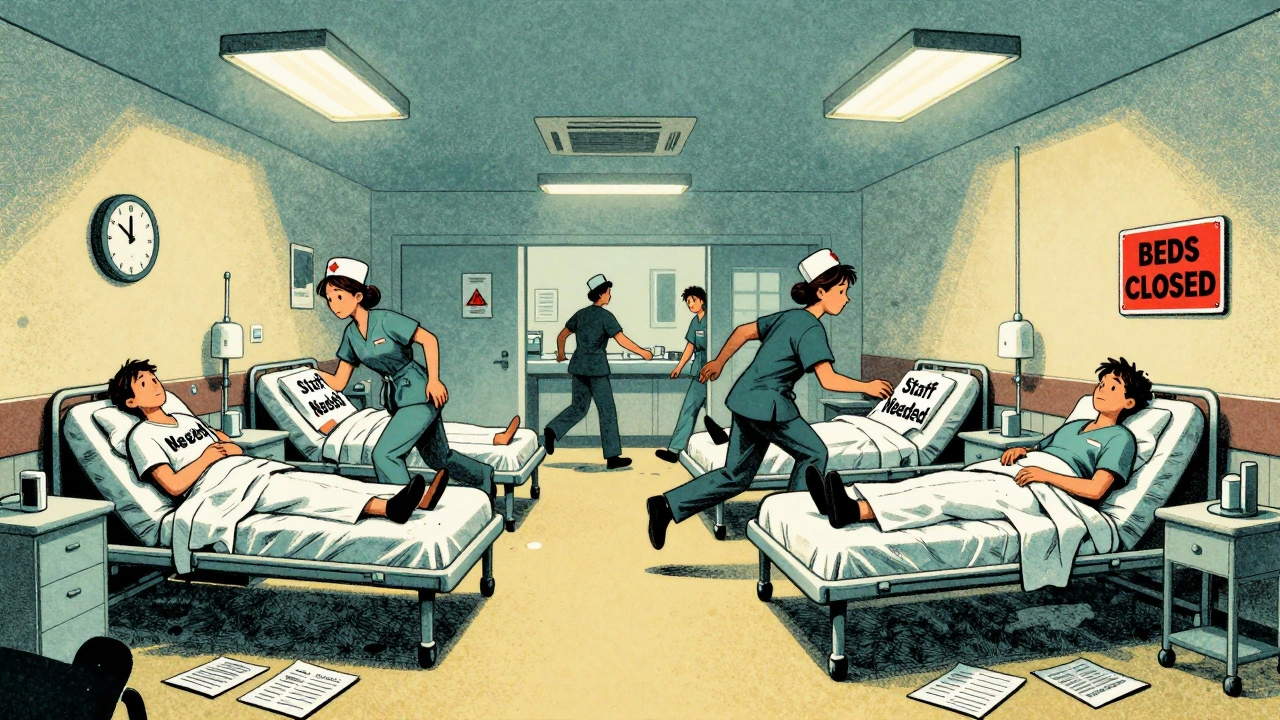
Hospitals and clinics across the U.S. are struggling to stay open due to severe staffing shortages. Nurses are burned out, patients wait days for care, and rural areas are hit hardest. This isn't a temporary issue-it's a systemic crisis with no easy fix.