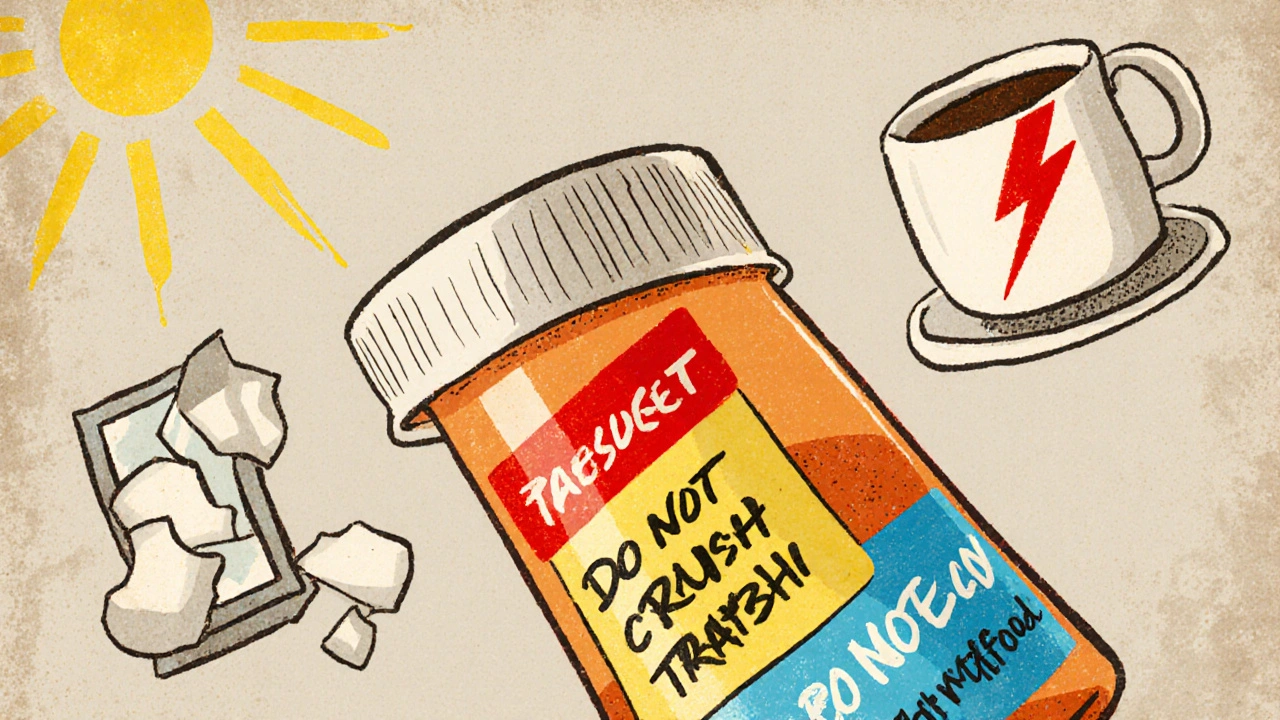
Do Not Crush: Why Crushing Pills Can Be Dangerous and What to Do Instead
When you see a big pill and think, "I can't swallow this," it’s tempting to crush it. But do not crush, a warning found on many prescription labels that means breaking, chewing, or dissolving the pill could change how it works in your body. This isn’t just a rule—it’s a safety line. Many medications are designed to release slowly over hours, and crushing them can dump the full dose into your system at once, leading to overdose, side effects, or even death. It’s not just about pills either—patches, capsules, and even some liquids have special formulations that can be ruined by tampering.
Take extended-release pills, medications built to deliver a steady amount of drug over 12 or 24 hours. If you crush a pill like oxycodone ER or metformin XR, you lose that slow release. One study found that patients who crushed extended-release opioids had a 40% higher risk of serious side effects. Even common drugs like blood pressure pills or antidepressants can become unsafe when crushed. Then there’s enteric-coated tablets, pills with a hard shell that prevents them from dissolving in the stomach. Crush those, and the drug irritates your stomach lining or gets destroyed by acid before it can work. Some meds, like certain antibiotics or cancer drugs, are so potent that even tiny amounts of dust from crushed pills can be harmful to caregivers or kids nearby.
So what do you do if swallowing is hard? Talk to your pharmacist or doctor. Many drugs come in liquid, chewable, or dissolving forms. Some capsules can be opened and mixed with soft food—like applesauce—if the label says it’s safe. But never assume. Always check the packaging or ask. A simple switch to a different formulation can make a big difference without risking your health. The do not crush warning exists because real people have been hurt by ignoring it. You’re not being difficult—you’re being smart.
Below, you’ll find detailed guides on medications that are especially sensitive to crushing, what happens when you break the rules, and safer alternatives that actually work. Whether you’re managing chronic pain, heart disease, or mental health, these posts give you the facts you need to take your meds right—without guessing.
Prescription label warnings are life-saving instructions-but most people don’t understand them. Learn what black box warnings, color-coded stickers, and phrases like 'do not crush' really mean, and how to avoid dangerous mistakes.