Doctor Medication Review: What It Is and Why It Saves Lives
When you see your doctor for a doctor medication review, a structured check-up of all the drugs you’re taking to spot risks, redundancies, and errors. Also known as a medication reconciliation, it’s not just a formality—it’s a safety net that stops thousands of preventable hospitalizations every year. Most people don’t realize they’re on too many pills, or that one drug is canceling out another, or that an old prescription is still active when it shouldn’t be. A doctor medication review fixes that.
This process isn’t just about counting pills. It’s about connecting the dots between what your primary care doctor prescribed, what your specialist added, what your pharmacist flagged, and what you’re actually taking at home. Drug interactions, when two or more medications create harmful side effects when taken together are one of the biggest risks—especially for older adults. The Beers Criteria, a list of potentially dangerous drugs for people over 65, is often used in these reviews to flag risky prescriptions. You might be taking a medication that’s fine on its own but becomes dangerous when mixed with your blood pressure pill or your sleep aid. That’s exactly what a doctor medication review catches.
It’s not just about avoiding bad reactions. It’s also about cutting the clutter. Many people take five, six, even ten different pills daily. Some were prescribed years ago for a condition that’s now gone. Others are duplicates—two different doctors gave you the same drug under different names. A good review strips away the noise and leaves only what’s necessary. That means fewer side effects, lower costs, and less confusion. Pharmacy review, when pharmacists double-check prescriptions for accuracy and safety before dispensing is part of this too. But it’s not enough on its own. Only your doctor can decide what to stop, change, or add based on your full health picture.
And it’s not just for seniors. Anyone on multiple prescriptions—especially those with chronic conditions like diabetes, heart disease, or autoimmune disorders—benefits. If you’ve seen more than one specialist recently, or if you’ve been to the ER in the last six months, you’re at higher risk for medication errors. Even if you think you’re doing everything right, a fresh look from someone who’s not involved in your daily care can spot what you’ve gotten used to ignoring.
The posts below show real examples of what goes wrong when medication reviews are skipped—or done poorly. You’ll find guides on how to prepare for your own review, what questions to ask, how to read warning labels on your bottles, and how to handle situations where drugs are hard to get. There’s advice on managing side effects like nausea from opioids, how to track expiration dates, and why color-coded stickers on your medicine bottle matter more than you think. These aren’t theoretical tips. They’re drawn from real patient experiences and clinical practices that keep people out of the ER.
Whether you’re managing a long-term illness, helping an aging parent, or just trying to make sense of your own medicine cabinet, a doctor medication review is the single most effective step you can take to stay safe. It’s not about trusting your doctor more. It’s about working with them smarter.
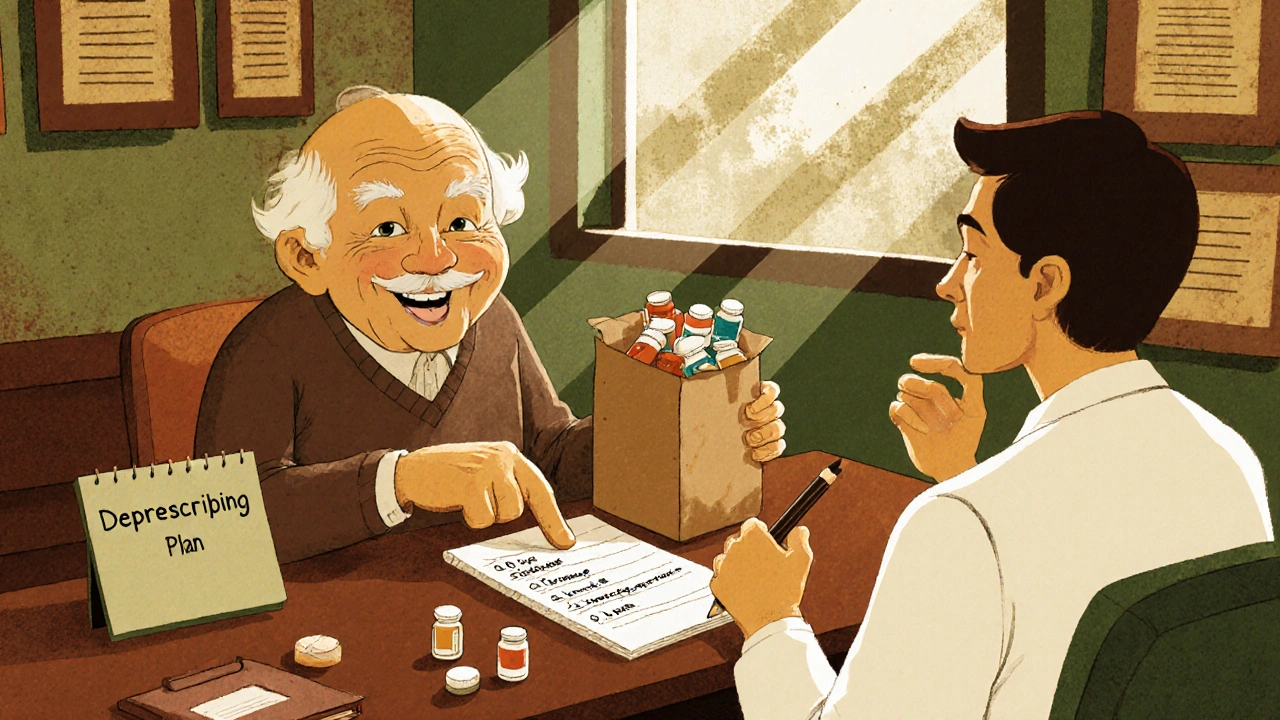
Learn how to work with your doctor to safely stop unnecessary medications, reduce side effects, and save hundreds or thousands of dollars a year on prescriptions through deprescribing.