Febuxostat: What It Is, How It Works, and What You Need to Know
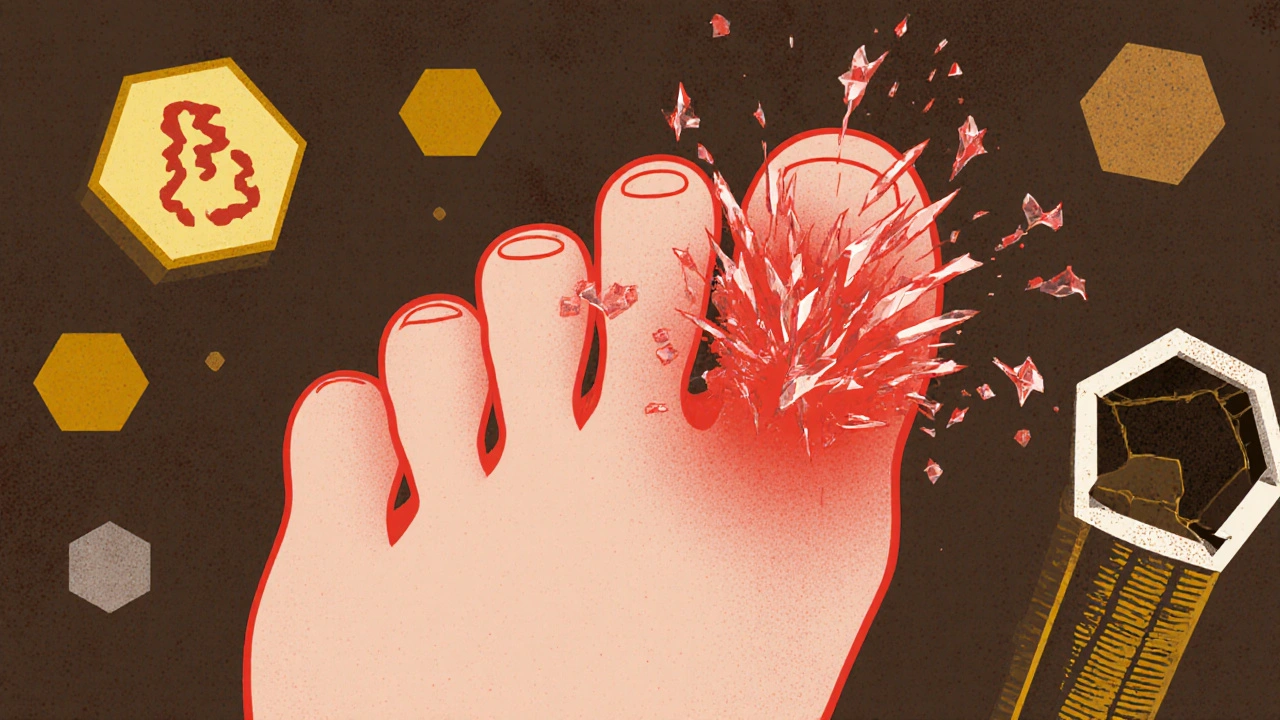
When your body makes too much uric acid, a waste product that can form sharp crystals in joints. Also known as hyperuricemia, this condition often leads to painful gout flare-ups. Febuxostat is a medication designed to lower uric acid at its source — not by flushing it out, but by stopping your body from making too much in the first place.
Unlike older drugs like allopurinol, which block one enzyme in the uric acid pathway, febuxostat targets a broader enzyme called xanthine oxidase, making it more effective for people who don’t respond well to traditional treatments. It’s often prescribed when allopurinol causes side effects like rashes or when kidney function is poor. Studies show it can reduce uric acid levels by 40–60% in most users, which helps prevent future gout attacks and slow joint damage over time.
But it’s not without risks. Some people experience liver enzyme changes, nausea, or joint pain when starting febuxostat. The FDA added a warning in 2019 about a slightly higher risk of heart-related death compared to allopurinol — especially in those with existing heart disease. That’s why doctors don’t just hand it out; they check your heart health, kidney function, and medical history first. If you’ve been told you need to lower uric acid for good, febuxostat might be part of your plan — but only after weighing the benefits against your personal risks.
You’ll find posts here that dig into how febuxostat stacks up against other gout meds, what lab tests matter while you’re on it, and how to spot early signs of trouble. There’s also advice on managing side effects, avoiding drug interactions, and what to do if your insurance won’t cover it. Whether you’re newly diagnosed or have been taking it for years, the information below gives you real, practical ways to stay in control — without the fluff.
Gout is caused by uric acid crystals from disrupted purine metabolism. Learn how allopurinol, febuxostat, and other urate-lowering drugs work, why most patients fail treatment, and what actually helps control this painful condition.