
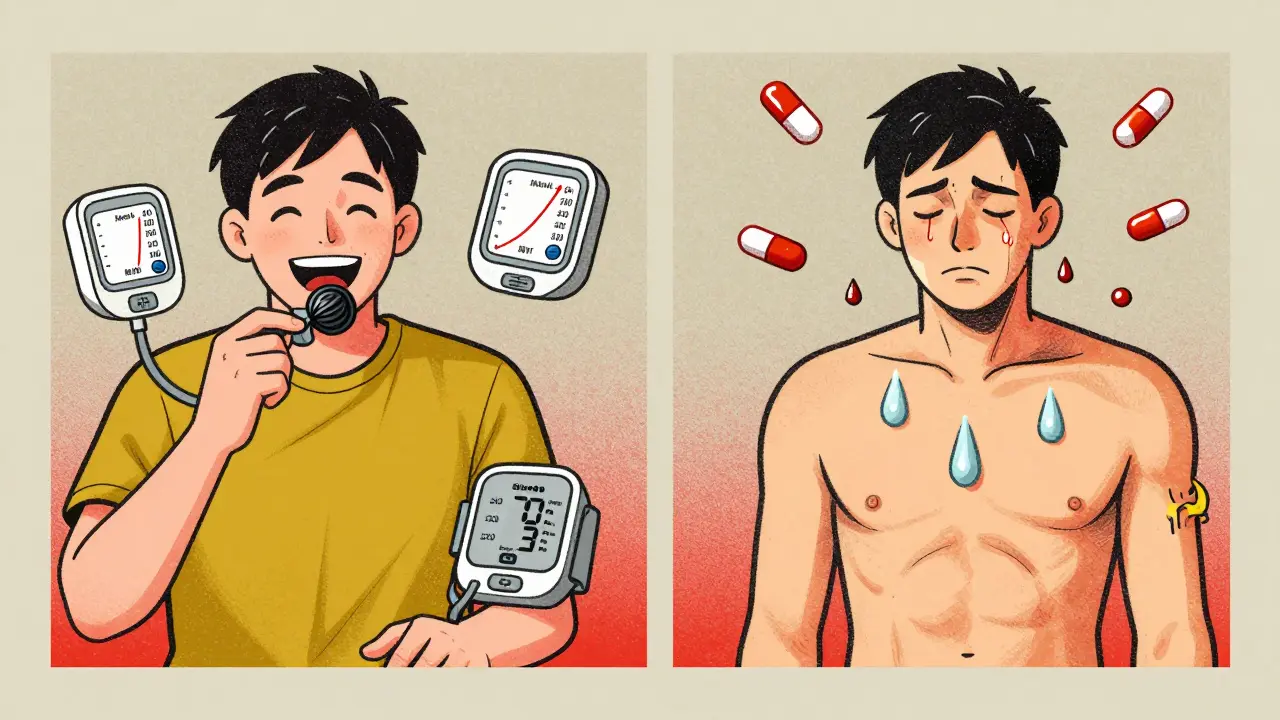
Have you ever enjoyed a piece of black licorice candy, sipped licorice tea, or taken a herbal supplement labeled "licorice root" while on blood pressure medication? If so, you might be risking more than just a sweet tooth - you could be undoing the work of your prescription.
How Licorice Actually Raises Blood Pressure
Licorice isn’t just a flavor. The real culprit is glycyrrhizin, a compound found in the root of the licorice plant (Glycyrrhiza glabra). When you consume it, your body breaks glycyrrhizin down into glycyrrhetinic acid, which blocks an enzyme called 11β-HSD2. This enzyme normally protects your kidneys from being overstimulated by cortisol, a stress hormone. Without that protection, cortisol acts like aldosterone - the hormone that tells your body to hold onto salt and water and flush out potassium. This isn’t theoretical. In clinical studies, people who ate more than 100 mg of glycyrrhizin daily - about 60 to 70 grams of traditional black licorice candy - saw their systolic blood pressure rise by an average of 5.45 mmHg. That might not sound like much, but for someone already struggling to control hypertension, that’s enough to push them out of target range. Your body holds onto 5-10% more fluid, increasing blood volume and forcing your heart to work harder. At the same time, potassium drops by 0.5 to 1.0 mmol/L, which can trigger muscle weakness, cramps, and dangerous heart rhythms.Why This Messes With Your Blood Pressure Pills
All blood pressure medications work to lower pressure - either by relaxing blood vessels, reducing fluid, or slowing heart rate. Licorice does the exact opposite. It doesn’t just interfere with one type of drug. It undermines them all.- Diuretics like hydrochlorothiazide or furosemide make you pee out extra fluid. But if licorice is making you retain salt and lose potassium, the diuretic becomes less effective - and you’re at higher risk of dangerously low potassium levels.
- ACE inhibitors like lisinopril or captopril help relax blood vessels and reduce fluid. Licorice counteracts this by increasing sodium retention and volume. Studies show patients on these drugs often see no improvement in BP when they regularly consume licorice.
- Potassium-sparing diuretics like spironolactone are designed to keep potassium up. But licorice forces potassium out anyway, making these drugs less useful and increasing the chance of side effects like high potassium levels if the dose is adjusted blindly.
- Digoxin, used for heart failure and irregular heartbeat, becomes especially dangerous. Low potassium lets digoxin bind too tightly to heart cells, leading to toxicity. There are documented cases of older adults ending up in the hospital with heart failure after taking licorice-containing laxatives or teas while on digoxin.
Who’s at the Highest Risk?
Not everyone reacts the same way. Some people can eat a small piece of licorice candy once in a while with no issue. But certain groups are far more vulnerable:- People over 60 - metabolism slows, and kidney function declines, making it harder to clear glycyrrhizin.
- Women - research shows higher sensitivity to glycyrrhizin, possibly due to hormonal differences.
- Those with existing high blood pressure - even small increases in BP can trigger complications like stroke or heart attack.
- People with heart disease or kidney problems - fluid overload and low potassium can worsen both conditions.
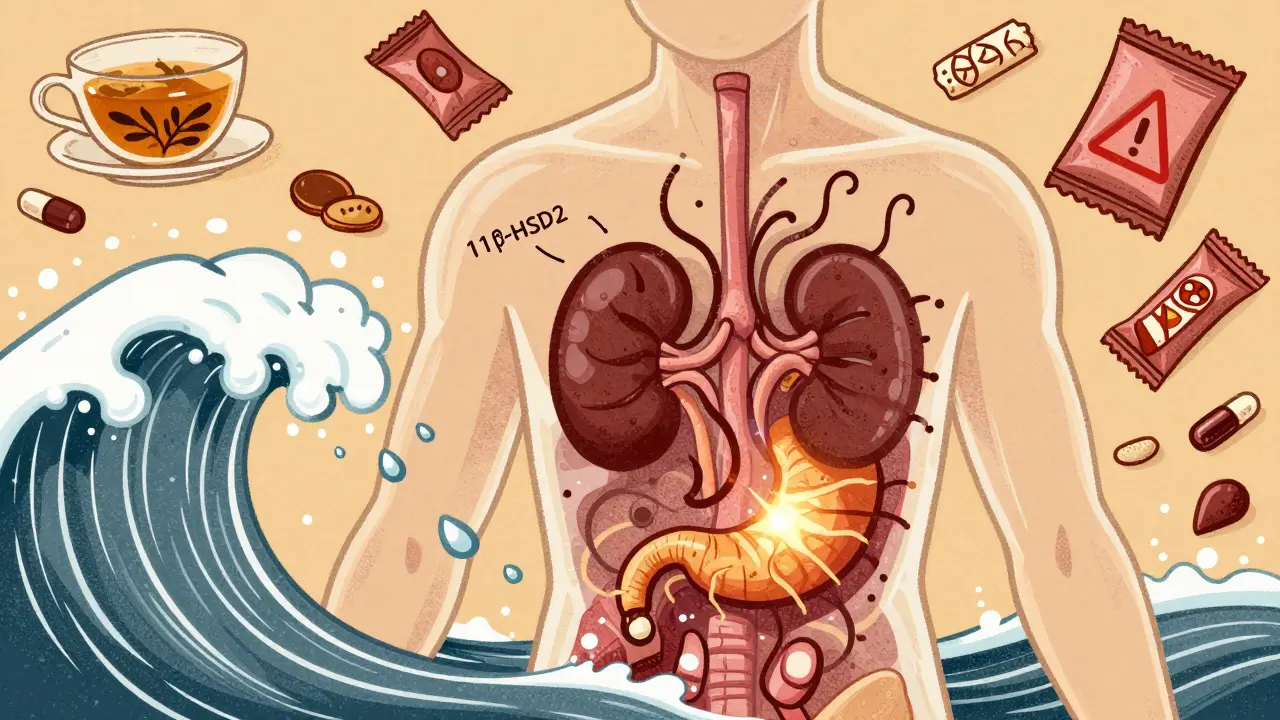
What’s in Your Licorice? Not All of It Is the Same
Here’s the tricky part: not every product labeled "licorice" contains glycyrrhizin. Many modern candies, especially red or sweet varieties, use anise oil for flavoring instead. These are generally safe. But you need to check the label - and not just on candy. Licorice root is also common in:- Herbal teas (especially digestive or "detox" blends)
- Supplements for digestion, adrenal support, or "natural energy"
- Traditional remedies like cough syrups or throat lozenges
- Some chewing gums and tobacco products
Signs You Might Be Affected
If you’re on blood pressure medication and notice any of these symptoms, consider licorice as a possible cause:- Your blood pressure readings have suddenly gotten worse - even though you’re taking your meds as prescribed
- You feel unusually tired, weak, or have muscle cramps
- Your ankles or feet are swelling more than usual
- You’re experiencing palpitations or an irregular heartbeat
- You’ve been diagnosed with low potassium (hypokalemia) without another clear reason
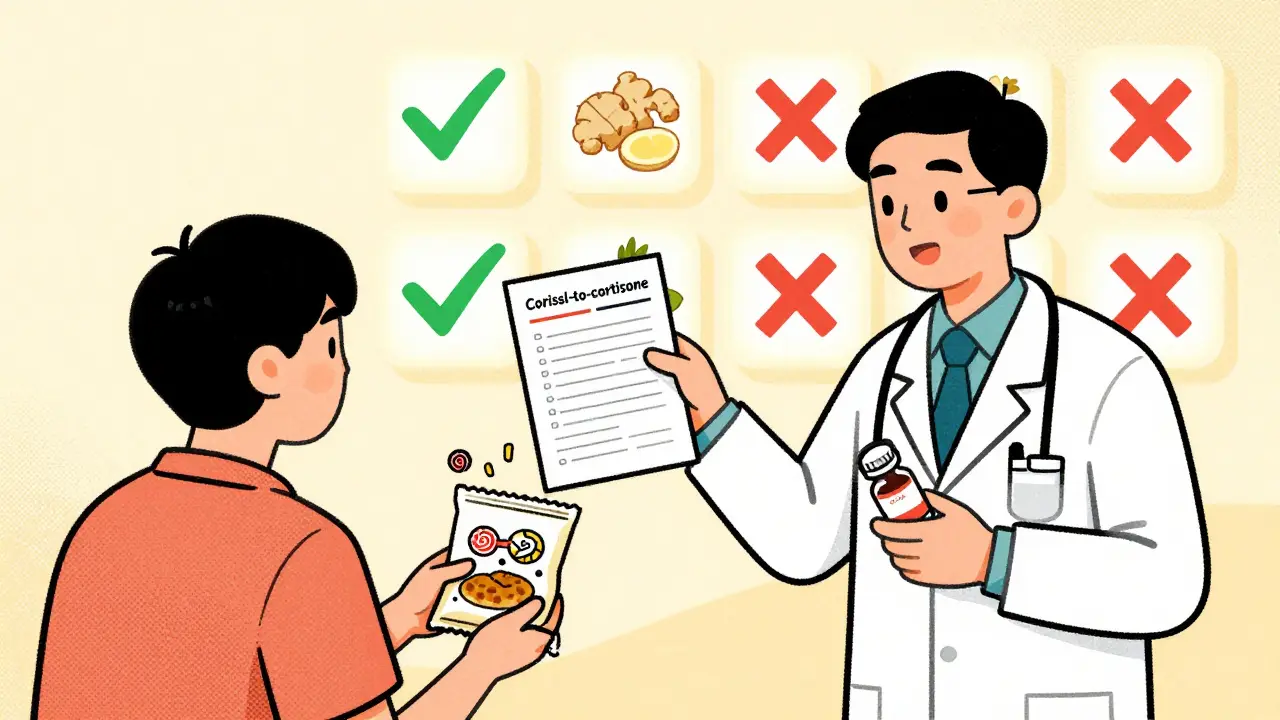
What Should You Do?
If you’re taking blood pressure medication:- Stop eating black licorice candy - even occasionally. There’s no safe amount if you’re on meds.
- Check all herbal teas and supplements for "licorice root" or "Glycyrrhiza glabra." If it’s there, switch brands or avoid.
- Talk to your doctor - even if you think you only had it once. They may want to check your potassium and blood pressure trends.
- Don’t assume "natural" means safe - herbal doesn’t mean harmless. Licorice is a potent biochemical agent, not a harmless treat.
What About Deglycyrrhizinated Licorice (DGL)?
You might see "DGL" on some supplements. That stands for deglycyrrhizinated licorice - meaning the glycyrrhizin has been removed. These products are marketed for stomach issues like heartburn or ulcers. DGL is generally considered safe for people on blood pressure meds because it doesn’t contain the compound that causes the interaction. But always check the label. Some DGL products may still contain trace amounts. And if you’re buying from a non-regulated source, there’s no guarantee they removed it properly.The Bigger Picture
This isn’t just about licorice. It’s a warning about how easily we overlook food and supplement interactions. People assume that because something is natural, it won’t interfere with medicine. But herbs are powerful. They contain active chemicals - just like drugs. And when you combine them, the results can be dangerous. The American Heart Association doesn’t have a formal guideline on licorice, but they do advise clinicians to ask patients with resistant hypertension: "Have you been eating licorice?" That’s how serious this is. If you’re managing high blood pressure, your medication is your lifeline. Licorice doesn’t just reduce its effectiveness - it can turn it into a ticking time bomb. Skip it. Your heart will thank you.Can I have licorice tea if I’m on blood pressure medication?
No - most licorice teas contain real licorice root and enough glycyrrhizin to interfere with blood pressure meds. Even one cup a day over several weeks can raise your blood pressure and lower your potassium. Look for teas labeled "anise" or "fennel" instead.
How long does it take for licorice to affect blood pressure?
Effects can start within days, but clinically significant changes usually appear after two to four weeks of daily consumption of more than 100 mg of glycyrrhizin. Some people notice symptoms like swelling or fatigue sooner, especially if they’re older or already have high blood pressure.
Is red licorice safe?
Yes - most red licorice candies in the U.S. and U.K. are flavored with anise, not licorice root. They don’t contain glycyrrhizin and won’t interfere with your medication. Always check the ingredients: if it says "licorice extract" or "Glycyrrhiza glabra," avoid it.
Can licorice cause low potassium even if I’m not on diuretics?
Yes. Licorice causes potassium loss directly by acting on the kidneys, regardless of whether you’re taking a diuretic. This is why even people on ACE inhibitors or beta-blockers can develop hypokalemia from licorice. Low potassium can lead to muscle weakness, heart rhythm problems, and even paralysis in severe cases.
What should I do if I’ve been eating licorice and now feel weak or have heart palpitations?
Stop consuming licorice immediately. Contact your doctor or go to urgent care. You may need a blood test to check potassium levels and possibly an ECG to check your heart rhythm. Do not wait - low potassium combined with high blood pressure can lead to serious complications, including cardiac arrest.
Are there any safe herbal alternatives to licorice for digestion or energy?
Yes. For digestion, try peppermint, ginger, or chamomile. For energy, consider adaptogens like ashwagandha or rhodiola - but always check with your doctor first. Avoid any herb labeled "licorice root," even if it’s marketed as "for energy" or "adrenal support."


laura Drever
licorice is bad? shocker. i ate a whole bag last week and my bp went up. my doctor said "lol" and wrote me a new script.