Medical Workforce Crisis: Why We're Running Out of Doctors and Pharmacists
When you need a prescription filled, a doctor’s appointment, or even a simple vaccine, you’re counting on a system that’s running on empty. The medical workforce crisis, a widespread shortage of healthcare professionals across hospitals, clinics, and pharmacies isn’t just a headline—it’s something you’re already feeling. It’s why your pharmacy calls three days later to say your meds aren’t in, why you wait six weeks for a specialist, and why your nurse practitioner is juggling three rooms at once. This isn’t a temporary glitch. It’s a structural collapse built over decades of underinvestment, burnout, and broken training pipelines.
The pharmacist shortage, a critical gap in medication safety and access is just one part of this. In rural areas, some towns have no pharmacist on-site at all. In cities, pharmacies are running on skeleton crews, forcing staff to skip double-checks just to keep up. Meanwhile, the doctor shortage, especially in primary care and mental health means millions go without regular checkups. The American Medical Association estimates we’ll be short by over 120,000 physicians by 2034. And it’s not just about numbers—it’s about who’s left. Older providers are retiring faster than new ones can replace them. Younger ones are walking away after just a few years, exhausted by bureaucracy, endless hours, and impossible patient loads.
This crisis doesn’t just slow things down—it puts lives at risk. When pharmacists are stretched too thin, medication errors rise. When doctors can’t see patients on time, chronic conditions like diabetes and hypertension spiral out of control. The medical workforce crisis is why you’re seeing more medication shortages, more delayed treatments, and more avoidable hospital visits. It’s why your school nurse has to manage 1,200 kids with no backup. Why your aging parent’s pill organizer gets mixed up because no one’s left to review their meds. Why you’re being told to wait three months for a simple blood test.
But here’s the thing: you’re not powerless. The posts below show you exactly how this crisis plays out in real life—from how drug shortages hit your cabinet, to how pharmacies use color-coded labels to prevent deadly mistakes, to how patients are learning to deprescribe unnecessary pills just to stay safe. You’ll see how schools are managing pediatric meds with limited staff, how older adults are being put at risk by outdated prescriptions, and why even something as simple as a pill’s color matters when the system is crumbling. These aren’t abstract problems. They’re your problems. And understanding them is the first step to protecting yourself, your family, and your health.
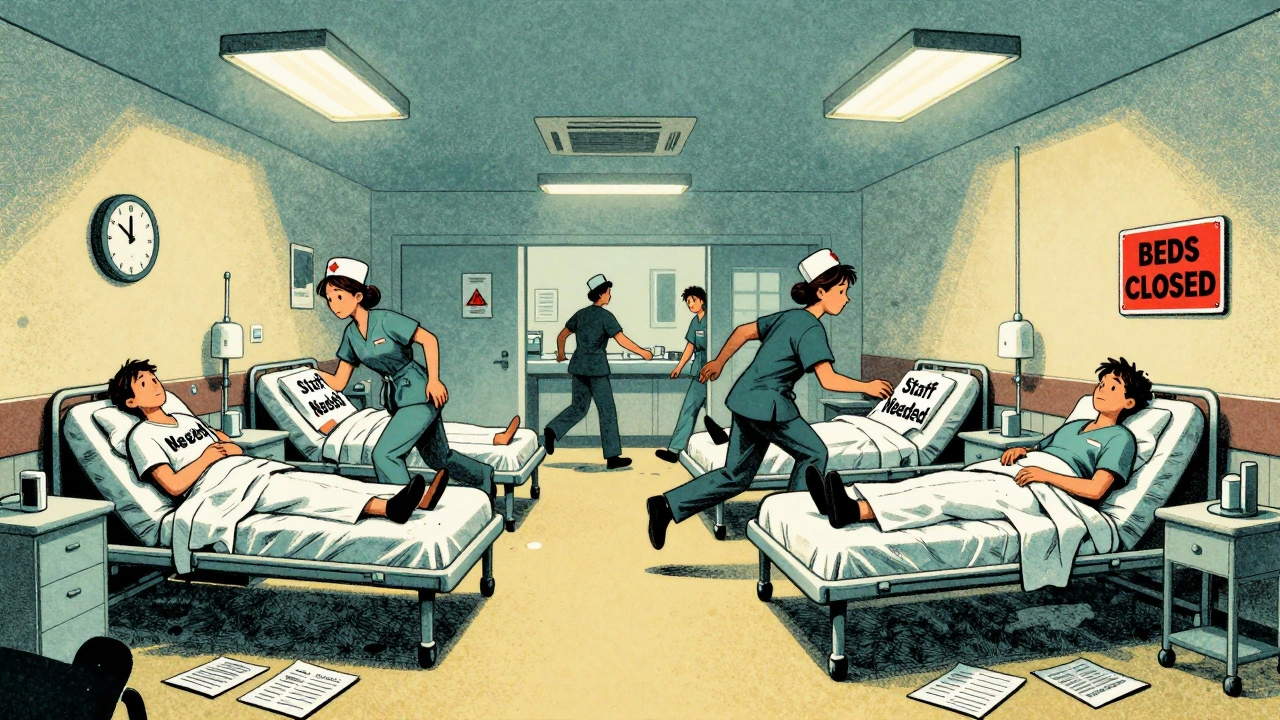
Hospitals and clinics across the U.S. are struggling to stay open due to severe staffing shortages. Nurses are burned out, patients wait days for care, and rural areas are hit hardest. This isn't a temporary issue-it's a systemic crisis with no easy fix.